Annual vs Perennial Pollinator Seed Mix: Which One Should You Buy?
Annual vs perennial pollinator seed mix explained: annuals bloom in the season sown, perennials return, and mixed blends carry annual and perennial kinds.

On this page
Top picks at a glance
As an Amazon Associate I earn from qualifying purchases.
- 1
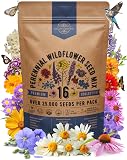 Organo Republic 16 Perennial Wildflower Seeds Mix9.6/10View on Amazon
- 2
 Paper Street Perennials 16-Species Wildflower Seed Mix9.6/10View on Amazon
- 3
 Eden Brothers All Perennial Wildflower Seed Mix9.5/10View on Amazon
- 4
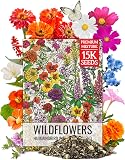 Seed Needs Flower Seeds Hummingbird and Butterfly Mix 1 OunceView on Amazon
- 5
 23 Wildflower Seeds Annual & Perennial Mix for Indoor &View on Amazon
- 6
 Eden Brothers All Annual Wildflower Mixed Seeds for PlantingView on Amazon
- 7
 Outsidepride Deer Proof Wildflower Seed MixView on Amazon
- 8
 Outsidepride Texas & Oklahoma Wildflower Seed MixView on Amazon
- 9
 Outsidepride Gulf Coast Wildflower Seed MixView on Amazon
Spring brings a patch of bare soil and a choice: annual vs perennial pollinator seed mix. Annual mixes bloom in the season they are sown, then finish, while perennial mixes come back in later seasons from the same sowing. Mixed blends put annual and perennial kinds in the same bag, so a patch can bloom early and keep returning. This guide explains each side, then ranks the listed mixes in the gear section by what their listings state.
Other hives and gear to compare
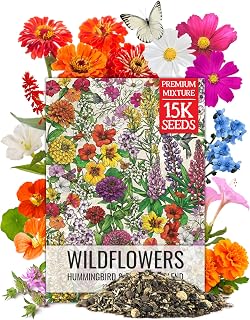 Seed Needs Flower Seeds Hummingbird and Butterfly Mix 1 OunceCheck price on Amazon
 23 Wildflower Seeds Annual & Perennial Mix for Indoor &Check price on Amazon
 Eden Brothers All Annual Wildflower Mixed Seeds for PlantingCheck price on Amazon
 Outsidepride Deer Proof Wildflower Seed MixCheck price on Amazon
 Outsidepride Texas & Oklahoma Wildflower Seed MixCheck price on Amazon
 Outsidepride Gulf Coast Wildflower Seed MixCheck price on Amazon
HiveKeeperGear earns a commission when you buy through links on this site, at no extra cost to you. As an Amazon Associate I earn from qualifying purchases. Affiliate disclosure.
Annual vs Perennial Pollinator Seed Mix: The Short Answer
Pick an annual mix when you want bloom in the season you sow and you are willing to sow again for the next season. Pick a perennial mix when you want plants that return in later seasons without fresh sowing. Pick a mixed blend when you want early bloom from annual kinds and returning plants from perennial kinds. None of the listed mixes is perennial only, so the perennial side of this guide shows up inside mixed blends and in a listing whose season is given as biennial or perennial.
Annual mixes: bloom in the season they are sown
The Eden Brothers listing is the clearest annual example in this set. Its style name is All Annual, and its bullets name 20 easy-to-grow species, including cornflower, cosmos, scarlet flax, Indian blanket and wild annual sunflower. The title states 120,000+ seeds in a 1/4 lb pack, and the bullets give 250-500 square feet of ground cover. Planting is listed as spring, sunlight as full sun, soil as sandy soil, and moisture as moderate watering. Blooming is listed as Early Fall/Fall/Late Summer/Summer, so the bloom window runs through the warm months and into fall. The bullets also note zones 3-10, and the spec table lists zones 3, 4, 5, 6, 7, 8, 9, 10, which matches. An annual mix like this suits a patch you plan to refresh each season, since the plants finish after blooming and do not return from the same roots.
Perennial mixes: plants that return in later seasons
A perennial mix often trades early speed for return: plants put down roots in the season sown and come back in later seasons. The Outsidepride listing carries the season note biennial or perennial in its spec table, and its bullets describe hardy varieties such as lupine and foxglove, with continuous color from spring to fall once established. Its bullets give heights of 24-48 inches, while the spec table lists height as 36-48 inches in a row and expected plant height as 3 feet in another, so the listing does not agree with itself on height; this guide follows the bullets at 24-48 inches. Sunlight is another spot where the listing disagrees with itself: the bullets describe partial shade, the spec table lists sunlight exposure as partial sun, and a separate spec row lists the environment as full sun. This guide follows the bullets and the sunlight row, partial shade and partial sun, and notes the full sun row as the odd row out. The spec table also lists zones in differing forms, as 3-10 in a spec row and as 3 in another, so no zone figure is quoted for this mix here. For a keeper, the point stands: perennial kinds ask for patience in the sowing season and reward it with return in later seasons, while a biennial kind blooms in its second season and then finishes.
The gear: listed mixes, ranked
The mixes below are ranked by what their listings state: breadth of species, stated coverage, clarity of sunlight and soil notes, and how cleanly the listing agrees with itself. No total score is printed here; the ranking order is the ranking.
1. Earth Science Wildflower Pollinator Mix
This 3-in-1 mix puts wildflower seed, mulch, plant food and soil conditioners in the same bag, which is the widest package in this set. The title states 6 lb, over 56,000 seeds, and coverage up to 1,000 sq ft, and the bullets name 13 species, including annual candytuft, Siberian wallflower, zinnia, purple coneflower, rocket larkspur and lacy phacelia. Sunlight is listed as 6+ hours and full sun, zones as 4, 5, 6, 7, 8, 9, blooming as Spring to Fall, and moisture as moderate watering. The listing describes the mix as non-GMO and as safe for people and pets, and it states no warranty term. It leads this ranking because it states the largest coverage, a clear species count, and a complete package of seed plus soil help in the same bag.
2. Organo Republic 23 Wildflower Seeds Mix
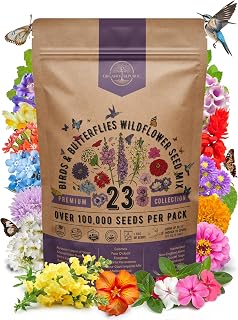
This mix names 23 varieties and over 100,000 seeds in a 4oz packet, with annual and perennial kinds in the same blend. Blooming is listed as Spring to Fall, sunlight as partial sun, and planting periods as Summer, Spring, Winter, Autumn. Expected plant height is 15 inches, soil is listed as loam soil and potting mix, and moisture as moderate watering and regular watering. Colors are listed as pink, yellow, purple and green, and the care note says to store wildflower seeds in a cool, dry and airtight container, away from moisture, temperature fluctuations and direct sun. Zones are listed in the spec table as 1, 2, 3, 4, 5, 6, 7, 8, 9, 10, 12. It follows the Earth Science mix here because it states the highest variety count and the widest planting window, with a clear storage note, while its packet is smaller than the Earth Science bag.
3. Eden Brothers All Annual Wildflower Mixed Seeds
This is the all-annual pick, covered above: 20 species, 120,000+ seeds, 1/4 lb, 250-500 square feet of ground cover, full sun, sandy soil, moderate watering, spring planting, and zones 3-10. Its bullets state no fillers and favorites only, and the material features are listed as GMO free, heirloom and organic. It follows the mixes above here because its annual-only makeup answers only the annual side of the annual vs perennial question, while its coverage and species list are clearly stated. For a patch you plan to sow fresh each season, that narrow focus is a strength rather than a gap.
4. Outsidepride Deer Proof Wildflower Seed Mix
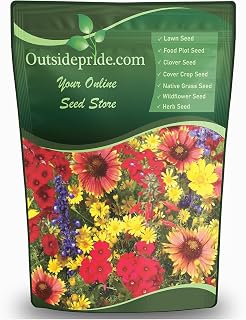
This annual and perennial mix is listed as a 1 lb pack, with other sizes available at 1/4 lb and 5 lbs. The listing describes the blend as drought-tolerant and as less appealing to deer, with nectar-rich flowers such as blanketflower and zinnia that attract butterflies, bees and other pollinators. Blooming is listed as Spring to Fall, soil as loam soil, and moisture as little to no watering, which is the lowest watering note in this set. It sits behind the other mixes here because its listing disagrees with itself on height, sunlight and zones, as noted above, even though its drought and low-watering notes are clear. Follow the bullets for height at 24-48 inches and for partial shade, and treat the spec table rows that differ as the listing’s own inconsistencies.
Matching a mix to your patch
Start with sunlight. The Eden Brothers and Earth Science mixes list full sun, while the Organo Republic mix lists partial sun and the Outsidepride bullets describe partial shade, so a shaded patch points toward the Organo Republic or Outsidepride listings and a sunny patch toward the Eden Brothers or Earth Science listings. Then check coverage: Earth Science states up to 1,000 sq ft, Eden Brothers states 250-500 square feet, and the Organo Republic and Outsidepride listings state packet weight rather than coverage. Then check soil and water: Eden Brothers lists sandy soil and moderate watering, Organo Republic lists loam soil and potting mix with moderate and regular watering, Outsidepride lists loam soil with little to no watering, and Earth Science lists moderate watering. A dry patch points toward the Outsidepride low-watering note, while prepared loam points toward the Organo Republic or Outsidepride soil notes. Finally, check storage: the Organo Republic care note, cool, dry and airtight, is the only storage note stated in this set, so keep any leftover seed that way until sowing.
FAQs for beekeepers
Do annual mixes need sowing again each season?
Yes, for reliable bloom. Annual kinds bloom in the season they are sown and then finish, so fresh sowing is the way to be sure of bloom the next season, as the Eden Brothers all-annual listing shows.
Can a bag give early bloom and returning plants?
Yes, when the bag is a mixed blend. The Organo Republic, Outsidepride and Earth Science listings all mix annual and perennial kinds, so a sowing can bloom early and return in later seasons.
Which listed mix states the largest coverage?
The Earth Science listing states up to 1,000 sq ft, ahead of the Eden Brothers listing at 250-500 square feet. The Organo Republic and Outsidepride listings state packet weight rather than coverage.
What sunlight do these mixes need?
Eden Brothers and Earth Science list full sun, Organo Republic lists partial sun, and the Outsidepride bullets describe partial shade. Match the listing to the light your patch actually gets.
How should leftover seed be stored?
The Organo Republic care note says to store wildflower seeds in a cool, dry and airtight container, away from moisture, temperature fluctuations and direct sun.
More hive guides
See our pollinator seed mix for school gardens picks, our pollinator seed mix for small yards picks, and our pollinator seed mix vs wildflower seed packet guide, plus every beehives guide.