Coffee Filters vs Cheesecloth for Honey: Which One Should You Buy?
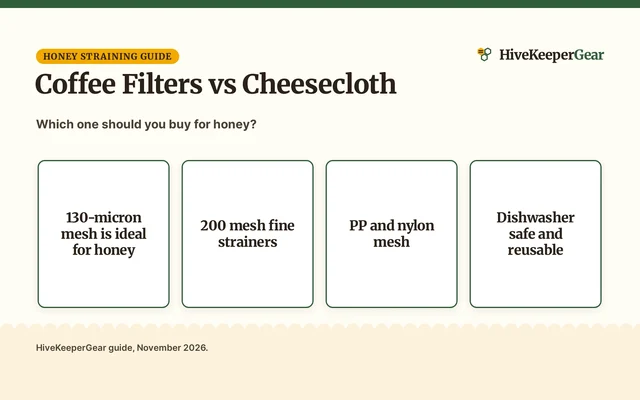
Coffee filters and cheesecloth are common honey straining substitutes, but two of the listings point to a 130-micron mesh strainer instead, with three compared…


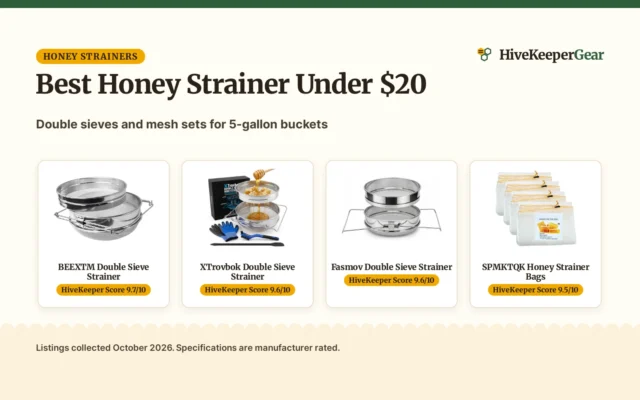
Honey strainers compared by 304 or 201 stainless steel, 1875 and 650 micron double sieves, fine cloth bags, bowl size and arm reach for 5 gallon buckets.
Coffee filters and cheesecloth are common honey straining substitutes, but two of the listings point to a 130-micron mesh strainer instead, with three compared…
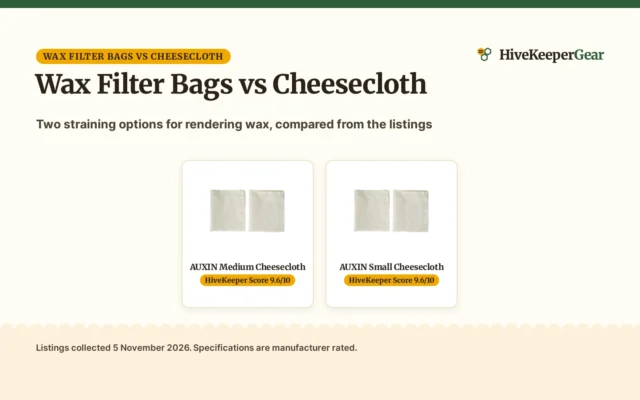
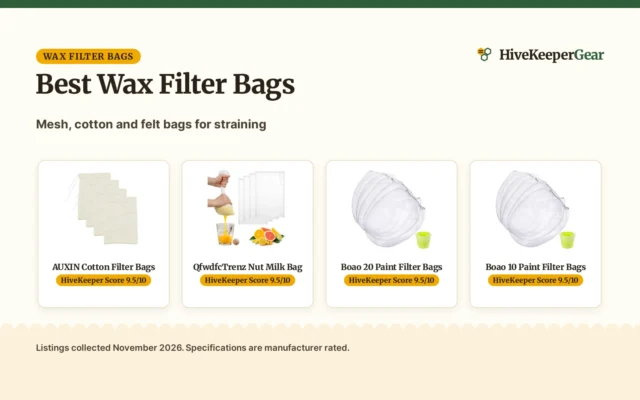
Wax filter bags vs cheesecloth, compared on 2 AUXIN cotton straining bags in medium and small sizes, with the wax bag side left unclear…
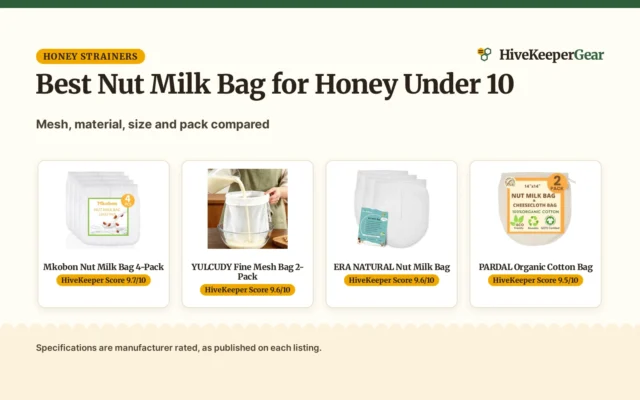
Nut milk bags for honey straining compared by mesh, material, size and pack count, with cotton and nylon picks for small harvest batches.
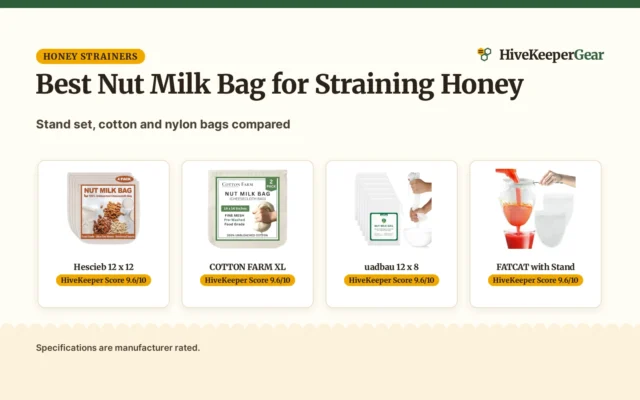
Five nut milk bags for straining honey compared by size, weave, material and pack count, from a stand set with a funnel to simple…
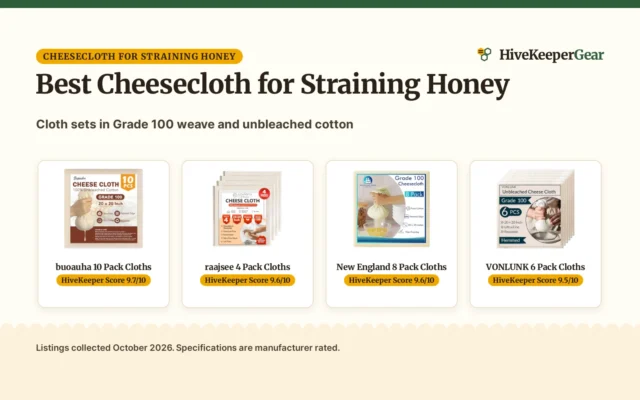
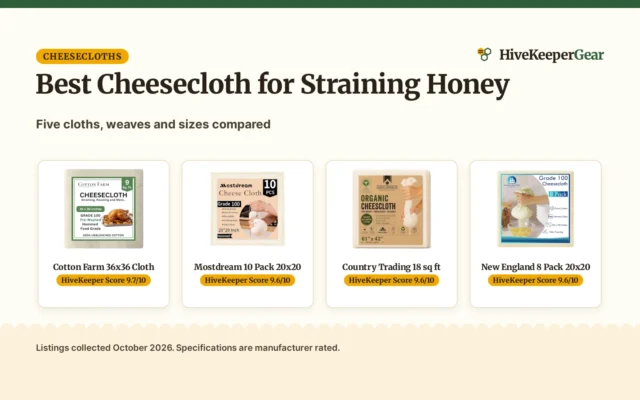
Five cheesecloth sets for straining honey compared by pack count, cloth size, Grade 100 weave, and unbleached cotton, with packs from 4 cloths to…
Mesh and felt filter bags compared by mesh fineness, pack count, size and material, for straining liquids at harvest time.
Five cheesecloths compared by weave, size, pack and edge finish, with Grade 100 cotton cloths and an organic sheet for straining honey.
Five strainers for 5-gallon buckets compared by mesh size, arm span, materials, and included tools, from double sieves to reusable mesh bags.
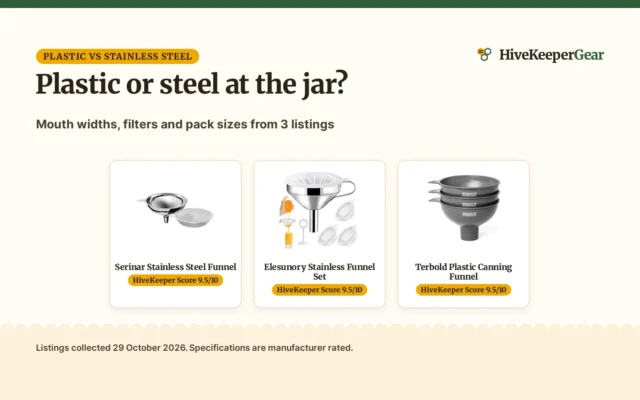
Plastic vs stainless steel honey funnel, compared on 3 listings: mouth widths, filters, pack sizes and cleaning, with a verdict on who should pick…
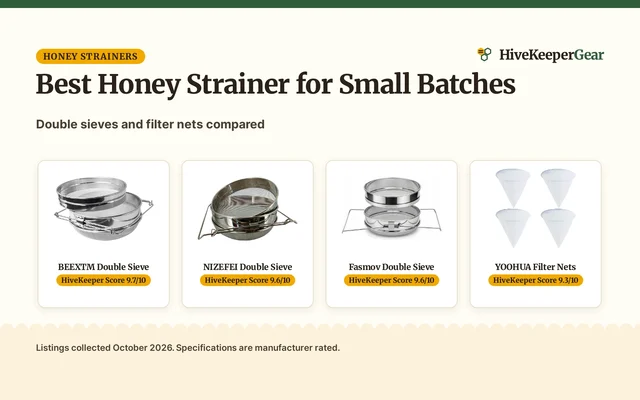
Stainless double sieves and nylon filter nets for small honey batches, compared by mesh size, bowl size, bucket fit and cleaning.