Fine vs Coarse Honey Strainer (2026): A Beekeeper’s Guide
Fine or coarse mesh for straining honey? How the two differ, and two 5-gallon bucket strainers compared: a 200-micron insert and a stainless double sieve.

On this page
Top picks at a glance
As an Amazon Associate I earn from qualifying purchases.
- 1
 BEEXTM Honey Strainer Filter Stainless Steel Double Sieve for9.7/10View on Amazon
- 2
 Stainless Steel Honey Strainer9.7/10View on Amazon
- 3
 VIVO Double Sieve Stainless Steel Honey Strainer Bee Keeping9.6/10View on Amazon
- 4
 BayTec 5 Gallon 200 Micron Fine EZ-Strainer Insert for PailsView on Amazon
- 5
 Flexzion 304 Stainless Steel Honey StrainerView on Amazon
- 6
 Honey StrainerView on Amazon
- 7
 Fine Mesh StrainerView on Amazon
- 8
 5 Gallon 600 Micron Coarse EZ-Strainer Insert for a 5 GallonView on Amazon
- 9
 5 Pcs Premium Ultra Fine Mesh Strainer Bags with StainlessView on Amazon
The fine vs coarse honey strainer question has a direct answer: coarse first for speed, fine second for clarity. A fine strainer, like a 200-micron mesh, catches wax bits and debris for clear honey but runs slower. A coarse strainer moves honey through fast and works best as a first pass. Many beekeepers run both in sequence, which is exactly what a double-layer sieve does in one pour.
Other hives and gear to compare
 BayTec 5 Gallon 200 Micron Fine EZ-Strainer Insert for PailsCheck price on Amazon
 Flexzion 304 Stainless Steel Honey StrainerCheck price on Amazon
 Honey StrainerCheck price on Amazon
 Fine Mesh StrainerCheck price on Amazon
- 5 Gallon 600 Micron Coarse EZ-Strainer Insert for a 5 GallonCheck price on Amazon
 5 Pcs Premium Ultra Fine Mesh Strainer Bags with StainlessCheck price on Amazon
HiveKeeperGear earns a commission when you buy through links on this page, at no extra cost to you. As an Amazon Associate I earn from qualifying purchases. Affiliate disclosure.
Fine vs coarse honey strainer: what the mesh means
Mesh size is measured in microns: smaller numbers mean smaller openings and clearer honey. The BayTec EZ-Strainer states a 200-micron fine nylon mesh, which is a genuinely fine filter that holds back wax particles and debris while the honey passes through. The Flexzion double sieve states fine and coarse mesh layers without giving micron figures, so read it as a two-stage unit: the coarse layer takes the big pieces, the fine layer polishes.
Neither listing gives a flow rate, and honey thickness changes with temperature and moisture, so there is no stated figure for how fast a 5-gallon bucket drains through either one. What the listings do state is the tradeoff in plain terms: fine mesh catches more, coarse mesh resists clogging. If you only buy one strainer, a fine one does the whole job more slowly; if you buy the double sieve, the coarse layer keeps the fine layer from loading up.
The gear: two strainers for 5-gallon buckets
Both strainers here fit the standard harvest setup: a 5-gallon bucket. They are ranked by what their listings state for honey work.
| Strainer | Mesh | Material | Fits | Hands-free |
|---|---|---|---|---|
| Flexzion double sieve | Fine and coarse layers (sizes not stated) | 304 stainless steel | 5-gal bucket | Extendable arms |
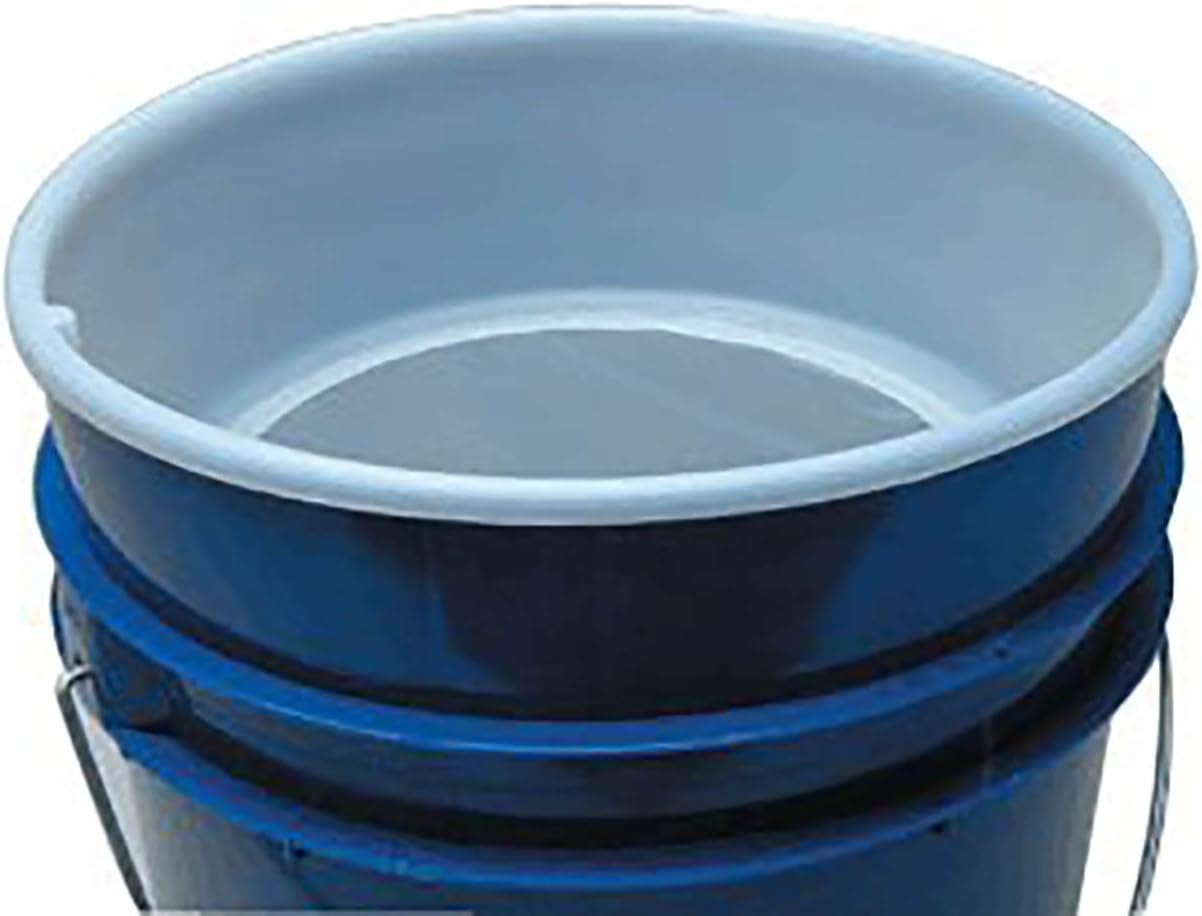
| BayTec EZ-Strainer | 200-micron fine nylon | HDPE rim | 5-gallon pails and buckets | Lays on the rim |
1. Flexzion double sieve strainer
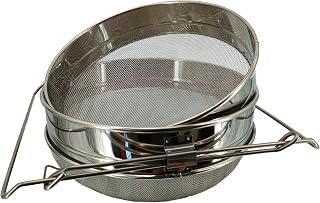
The Flexzion is the only dedicated honey strainer of the two, and it ranks first for that reason. The listing describes a 304 stainless steel double sieve with fine and coarse mesh layers, designed to sit over a 5-gallon bucket with extendable arms for hands-free filtering. It states that the sieve filters out wax, pollen and debris, and that the stainless build resists rust. The arms adjust to sit over a variety of containers, which matters when your bucket is not the only vessel in the honey house.
The listing also notes the sieve works for tea, soymilk, soup stock, flour and fried oil, so it is a multi-use tool rather than a honey-only one. No dimensions, weight or micron figures are stated beyond the 5-gallon fit. For a beekeeper who wants one strainer that does both passes in a single pour, the dual layers are the point.
2. BayTec 200-micron EZ-Strainer insert
The BayTec is a fine-mesh insert that lays on top of an open 5-gallon pail: pour through it, particles stay in the strainer, clear product lands in the container. The listing states a 200-micron fine nylon mesh with a heavy-duty HDPE rim, an 11.75 inch diameter, 11.75 x 5.88 x 4 in dimensions and a 4 ounce weight. It is marketed for paints, coatings, silicones and inks as well as honey, which the listing names as a use.
As a single fine layer it will run slower than the coarse stage of the Flexzion, and the listing states no coarse option. What it does give is a stated micron figure, which the Flexzion does not, so you know exactly how fine the filter is. For a beekeeper who already owns a coarse strainer and wants a known 200-micron finishing pass, it fits the bill. See our plastic vs stainless steel honey strainer comparison for the material tradeoff.
How to strain honey with a bucket setup
The routine is the same for both: set the strainer over an open 5-gallon bucket, pour the extracted honey through, and let gravity work. The Flexzion’s extendable arms hold it steady for hands-free pouring; the BayTec lays its HDPE rim on the pail’s mouth. A honey bucket with a lid keeps the strained honey clean while it settles, and a bucket gate or spout makes bottling easier afterward.
Strain soon after extracting, while the honey flows easily, and rinse the mesh before residue sets. With a single fine layer, pour in stages rather than filling the strainer to the brim; with the double sieve, the coarse layer does that work for you.
FAQs for beekeepers
What micron is a fine honey strainer?
The BayTec insert states 200 microns. The Flexzion double sieve states fine and coarse layers without micron figures.
Should I strain with coarse or fine first?
Coarse first, then fine. The Flexzion double sieve builds that sequence into one unit: the coarse layer catches the big pieces so the fine layer does not clog.
Will a fine strainer remove pollen from honey?
The Flexzion listing states its sieve filters out wax, pollen and debris. The BayTec listing states its 200-micron mesh keeps unwanted particles out of the product.
What size bucket do these strainers fit?
Both fit 5-gallon buckets or pails. The BayTec states an 11.75 inch diameter and the Flexzion states a 5-gallon bucket fit with extendable arms.
Can I use a paint strainer for honey?
The BayTec listing names honey among its uses, alongside paints, coatings, silicones and inks. It is a nylon mesh with an HDPE rim, not a coating or chemical of its own.
Is stainless steel or plastic better for a honey strainer?
The listings offer both: the Flexzion is 304 stainless steel and the BayTec is HDPE and nylon. Our plastic vs stainless steel honey strainer guide compares the two materials in detail.
More hive guides
Browse every guide by category: beehives, protective gear, hive tools and honey harvesting, or see our best honey strainer picks.
More picks: our honey strainer roundup, honey buckets with lids and the bucket gate vs spout guide.