Coffee Filters vs Cheesecloth for Honey: Which One Should You Buy?
Coffee filters and cheesecloth are common honey straining substitutes, but two of the listings point to a 130-micron mesh strainer instead, with three compared below.

On this page
Top picks at a glance
As an Amazon Associate I earn from qualifying purchases.
- 1
 Foxhound 2-Pack Honey Filter9.6/10View on Amazon
- 2
 buoauha 10 Pack Cheesecloth9.7/10View on Amazon
- 3
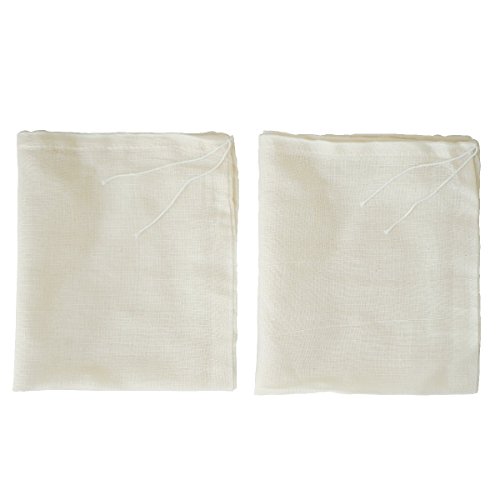 AUXIN Cheesecloth Bags for Straining9.6/10View on Amazon
- 4
 Amazon Basics Basket Coffee Filters for 8-12 Cup Coffee MakersView on Amazon
- 5
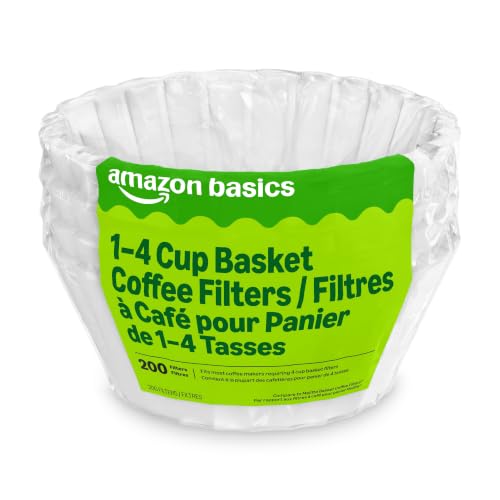 Amazon Basics Basket Coffee Filters for 1-4 Cup Coffee MakersView on Amazon
- 6
 Melitta #4 Unbleached Coffee FiltersView on Amazon
- 7
 Hario V60 Paper Coffee FilterView on Amazon
- 8
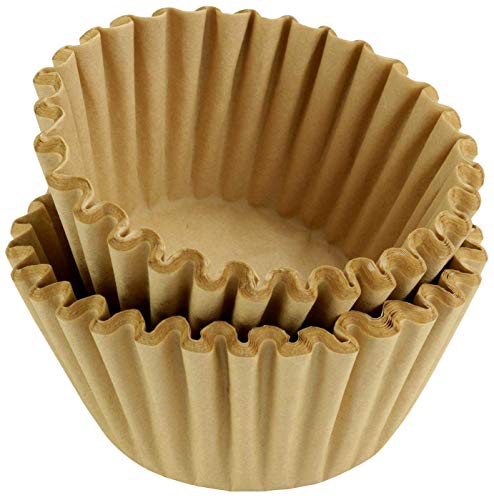 8-12 Cup Basket Coffee FiltersView on Amazon
- 9
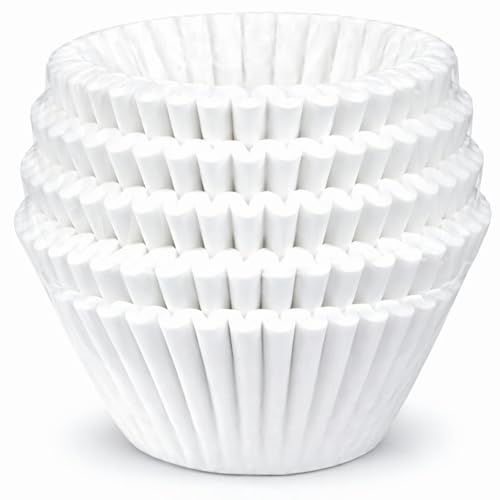 Katy's Extra Large Coffee FiltersView on Amazon
For honey, the short answer to coffee filters vs cheesecloth for honey is neither: a fine mesh strainer is the gear for the job. Coffee filters and cheesecloth are kitchen substitutes that many keepers try at harvest time, and both leave you wishing for a tool made for straining honey. A mesh strainer with a handle is made for the work, and the gear section below compares them.
Other hives and gear to compare
 Amazon Basics Basket Coffee Filters for 8-12 Cup Coffee MakersCheck price on Amazon
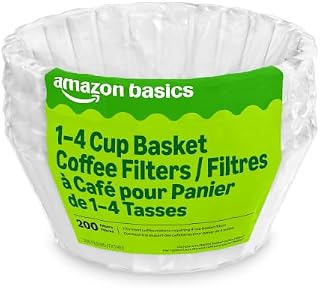 Amazon Basics Basket Coffee Filters for 1-4 Cup Coffee MakersCheck price on Amazon
 Melitta #4 Unbleached Coffee FiltersCheck price on Amazon
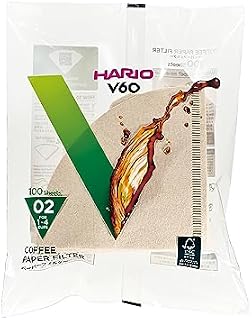 Hario V60 Paper Coffee FilterCheck price on Amazon
 8-12 Cup Basket Coffee FiltersCheck price on Amazon
 Katy's Extra Large Coffee FiltersCheck price on Amazon
HiveKeeperGear earns a commission when you buy through links on this site, at no extra cost to you. As an Amazon Associate I earn from qualifying purchases. Affiliate disclosure.
The short answer: coffee filters vs cheesecloth for honey
Cheesecloth is a loose woven cloth, and a coffee filter is a paper filter made to catch fine grounds. Neither one states a mesh size, so there is nothing stated to compare on fineness, and neither is made to sit over a bucket or a funnel while honey drains. A mesh strainer states its mesh and has a handle, and all three listings state dishwasher-safe cleaning. That is why the strainers below, not a kitchen substitute, are the gear we rank.
If you already own cheesecloth, it will catch wax and bee parts, and a coffee filter will catch finer bits, but both slow the work and leave you wringing cloth or waiting on paper. A 130-micron mesh, which both the PRINKROOMY and MIATTCLD listings state for honey, lets honey through while holding back the larger wax bits. Use the strainer over a bucket, let gravity do the work, and wash it when you finish.
The strainers, ranked
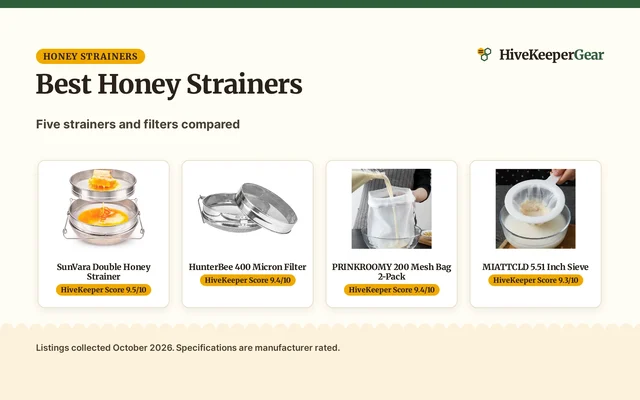
The three strainers below are listed in the order we rank them, from the most complete listing to the thinnest. All three are 200 mesh sieves, and all three state dishwasher-safe cleaning. PRINKROOMY and MIATTCLD state food-grade PP and nylon, and Cunhill states a PP frame with nylon mesh.
| Strainer | Mesh | Diameter | Material | Pack | Cleaning |
|---|---|---|---|---|---|
| PRINKROOMY Fine Mesh Strainer | 200 mesh | 5.71-inch | Food-grade PP and nylon | 1 | Dishwasher safe |
| MIATTCLD Nylon Mesh Strainer | 200 mesh | 5.51 inch | Food-grade PP and nylon | 1 | Dishwasher safe |
| Cunhill Fine Mesh Filter | 200 mesh | 5.12 inches | PP frame, nylon mesh | 4 | Dishwasher safe, hand washable |
PRINKROOMY’s strainer is a 200 mesh sieve with a 5.71-inch diameter and a heat-resistant handle with a hanging hole, listed at 0.1 pounds and 9.25 by 5.71 by 0.59 inches. The listing offers 130-micron mesh for soy milk, juice and honey, and 75-micron mesh for milk, rice milk and herbal preparations. The size field says 200Mesh-1PCS while the bullets offer two micron versions, so check which version you are ordering.
MIATTCLD’s strainer is a 200 mesh sieve, 5.51 inch in diameter, with a comfortable lightweight handle and a hanging hole, listed at 0.11 pounds. The listing states 130 microns for soy milk, juice, honey and more, and 75 microns for Chinese medicine, milk and rice milk. It is dishwasher safe, and the listing states the filtering leaves no impurities. The size field says 200 mesh while the bullets offer two micron versions, so check which version you are ordering.
Cunhill sells a pack of 4 strainers, each 200 mesh, listed at 0.33 pounds for the pack. The listing states the diameter as about 13 cm or 5.12 inches, and says the strainer fits kitchen funnels about 5 inches in diameter. The title says 5 inch and the spec table says 5.39 inches, so the listing states three diameters; we follow the bullets. The mesh is nylon on a PP frame, and the strainers are hand washable and dishwasher safe, with a hanging hole for drying.
How to choose a honey strainer
Mesh size
Mesh size decides what stays in the strainer. Both the PRINKROOMY and MIATTCLD listings state 130-micron mesh for honey, and 75-micron mesh for milk and rice milk. All three strainers are labelled 200 mesh, while the PRINKROOMY and MIATTCLD listings also offer 130-micron and 75-micron versions, so check which version you are ordering. Pick the 130-micron version for honey, and keep the finer mesh for milk and herbal preparations.
Diameter and fit
The strainer has to sit over your bucket or funnel. PRINKROOMY states a 5.71-inch diameter, MIATTCLD states 5.51 inch, and Cunhill states about 5.12 inches and fits funnels about 5 inches in diameter. Measure your bucket or funnel before you order, and check the Cunhill listing, which states three diameters.
Cleaning and storage
Honey is sticky, so cleaning matters. All three listings state dishwasher safe, and Cunhill is also hand washable. The PRINKROOMY and MIATTCLD handles have hanging holes, and Cunhill says to hang the mesh up to dry. A strainer that dries on a hook is ready for the next harvest.
One strainer or a pack
PRINKROOMY and MIATTCLD sell a single strainer each, while Cunhill sells a pack of 4. A pack gives you a spare while one is in the wash, and a single strainer is enough if you harvest once a season. See our honey strainers for more picks, and the 200-micron honey strainer guide for a coarser mesh.
FAQs for beekeepers
What mesh size is best for straining honey?
The PRINKROOMY listing calls 130-micron mesh ideal for honey, and the MIATTCLD listing states 130 microns for soy milk, juice, honey and more. Both offer a 75-micron version for milk and rice milk instead.
Can I use a coffee filter for honey?
You can, but the strainers above are the gear made for the job. A coffee filter states no mesh size, while the PRINKROOMY and MIATTCLD listings state 130-micron mesh for honey, with a handle, a hanging hole and dishwasher-safe cleaning.
Is cheesecloth fine enough for honey?
Cheesecloth states no mesh size in these listings, so there is nothing stated to compare. The PRINKROOMY and MIATTCLD strainers above state 200 mesh with a 130-micron option for honey. See our cheesecloth for straining honey picks if you want to compare cloth options.
How do I clean a honey strainer?
All three listings state dishwasher safe. Cunhill is also hand washable, and the PRINKROOMY and MIATTCLD handles have hanging holes, so the strainer can dry on a hook.
What size strainer fits my bucket?
Measure the bucket or funnel first. PRINKROOMY states a 5.71-inch diameter, MIATTCLD states 5.51 inch, and Cunhill states about 5.12 inches and fits funnels about 5 inches in diameter.
More hive guides
Browse every guide by category: honey harvesting and honey strainers.
More picks: honey extractors, uncapping knives and funnels for filling honey jars.