Bee Hotel vs Insect Hotel: Which One Should You Buy?
Bee hotels and insect hotels compared by occupants, materials, shelter and kit contents, with four wooden houses for gardens, yards and balconies.

On this page
Top picks at a glance
As an Amazon Associate I earn from qualifying purchases.
- 1
 Cestari Bamboo Tube Bee Hotel with 75 Tubes in Fir Wood9.6/10View on Amazon
- 2
 Rebecca Wooden Insect Hotel in Blue9.6/10View on Amazon
- 3
 Pollen Patch Redwood Mason Bee House9.6/10View on Amazon
- 4
 Wooden Insect Hotel for GardenView on Amazon
- 5
 Niteangel Natural Wooden Insect Hotel: Hanging & WaterproofView on Amazon
- 6
 Bee House Hanging Insect HotelView on Amazon
- 7
 Maitys 3 Pcs Wooden Mason Insect Bee Hotel Butterfly HouseView on Amazon
- 8
 ZSZLZM Large Wooden Insect Hotel for OutdoorsView on Amazon
A quiet corner of the garden in spring, with blossom open and insects moving between flowers, is where the question of housing starts. For bee hotel vs insect hotel, the short answer is that a bee hotel focuses on solitary bees, while an insect hotel offers varied openings for a wider range of garden insects, and the choice depends on which visitors the garden is meant to shelter.
Other hives and gear to compare
 Wooden Insect Hotel for GardenCheck price on Amazon
 Niteangel Natural Wooden Insect Hotel: Hanging & WaterproofCheck price on Amazon
 Bee House Hanging Insect HotelCheck price on Amazon
 Maitys 3 Pcs Wooden Mason Insect Bee Hotel Butterfly HouseCheck price on Amazon
 Redwood Mason Bee HouseCheck price on Amazon
 ZSZLZM Large Wooden Insect Hotel for OutdoorsCheck price on Amazon
HiveKeeperGear earns a commission when you buy through links on this site, at no extra cost to you. As an Amazon Associate I earn from qualifying purchases. Affiliate disclosure.
bee hotel vs insect hotel: the short answer
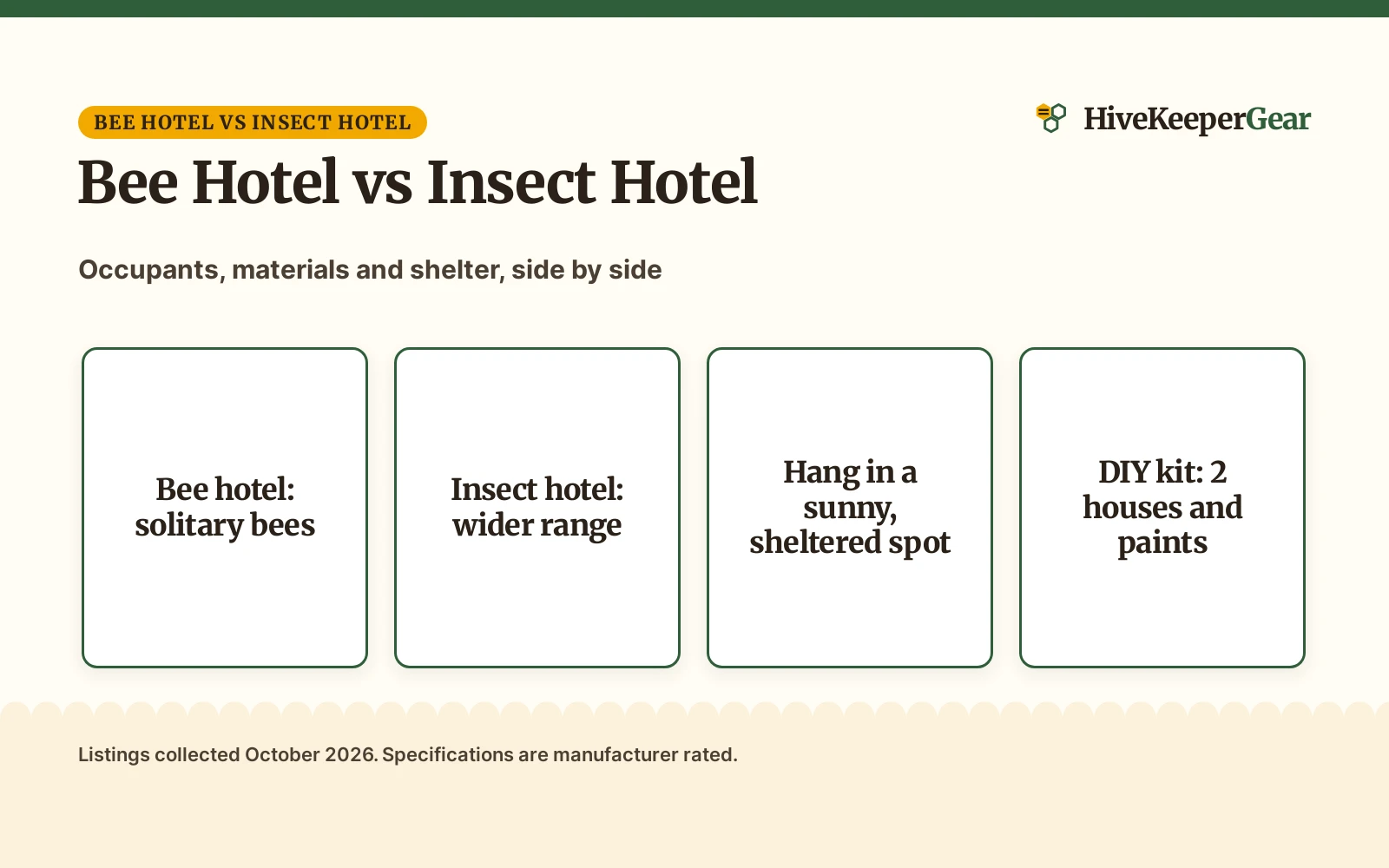
A bee hotel is a nesting shelter built around bees, especially solitary bees. An insect hotel is a broader shelter, with varied textures, openings and filling materials that suit bees alongside ladybugs, lacewings and butterflies. The listings in this guide show both patterns: some name bees first in the title, while others name a mix of bees, ladybugs, lacewings and butterflies. Neither type is a hive for a honey bee colony, and neither listing in this guide describes colony equipment, frames or honey harvest.
What each one houses
Bee hotels in this guide name solitary bees as the main visitor, with butterflies and ladybugs named alongside them in the wider listings. The Rebecca online bee house title names bees, butterflies and ladybugs, and its bullets name solitary bees, ladybugs and butterflies as beneficial pollinators. The Niteangel listing names butterflies, bees, ladybugs and other garden visitors, and describes resting, shelter, hibernation and nesting uses. The RattanView kit names butterflies, bees, ladybugs and lacewings, with distinct grids filled with varying materials for different insects. A shelter with varied grids and fillings, like the RattanView kit, is set up to attract a wider list.
Side by side
| Shelter | Visitors named | Materials | Size stated |
|---|---|---|---|
| RattanView DIY Kit | Butterflies, bees, ladybugs, lacewings | Cedar, pine, bamboo, pine cones | 13.6 x 10.8 x 2.8 in |
| Niteangel Insect Hotel | Butterflies, bees, ladybugs | Dry wood, bamboo, iron roof | 4.2 x 2.7 x 9.8 in |
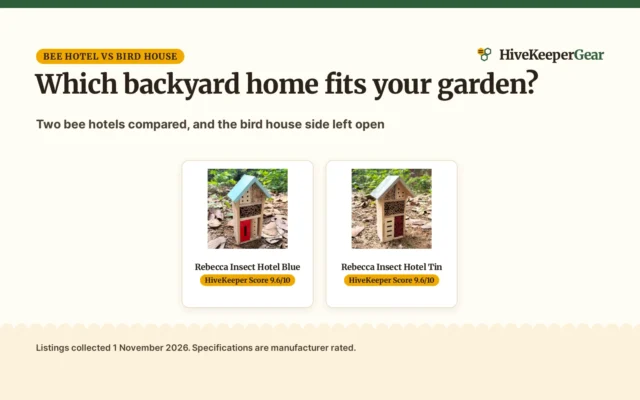
| Rebecca Bee House | Solitary bees, ladybugs, butterflies | Untreated pine wood, bamboo | 2 x 1 x 1 in |
| Rebecca Insect Hotel | Solitary bees, ladybugs, butterflies | Untreated pine wood, bamboo | 2 x 4 x 6 in |
The gear in this guide
RattanView DIY Insect Hotel Kit
The RattanView kit includes 2 wooden insect houses, 2 paint boxes, 4 paint brushes, 2 glues at 100 ml each, and 2 screwdrivers. The houses are crafted from natural components like pine, bamboo and pine cones, and the title names cedar wood craft for butterfly, ladybird and beneficial insect habitat, with a mason bee house use. Distinct grids filled with varying materials are designed to attract butterflies, bees, ladybugs and lacewings, and the kit is unpainted, so the painting supplies in the box are part of the build. The title gives dimensions of 13.6 x 10.8 x 2.8 inches, while the spec table gives 12.2 x 8.46 x 6.89 inches. This kit suits a garden project where building and painting the shelter is part of the plan, and it suits a yard or garden where two houses can be placed.
Niteangel Natural Wooden Insect Hotel
The Niteangel insect hotel is made with dry wood and bamboo, with an iron roof that helps shield the house from rain and direct exposure. Its hanging design suits a balcony, patio, garden or yard where ground space is limited, and the listing describes resting, shelter, hibernation and nesting uses for butterflies, bees, ladybugs and other garden visitors. The spec table gives dimensions of 4.2 inches by 2.7 inches by 9.8 inches. This shelter suits a small outdoor space where a compact hanging habitat, with varied textures and openings, is wanted, and where a roof over the openings matters in changing weather.
Rebecca Bee House
The Rebecca bee house is made from durable, untreated pine wood and bamboo, with a sturdy hanging rope for setup in a sunny, sheltered spot. Its bullets name solitary bees, ladybugs and butterflies, and describe cleaning with a dry brush when needed. The spec table gives a weight of 0.4 pounds, dimensions of 2 inches by 1 inch by 1 inch, and a warranty description of one month. This house suits a sunny, sheltered hanging spot on a tree, fence or wall, where a light wooden shelter for bees, butterflies and ladybugs is wanted.
Rebecca Insect Hotel
The Rebecca insect hotel is made from durable, untreated pine wood and bamboo, with a sturdy hanging rope for setup in a sunny, sheltered spot. Its bullets name solitary bees, ladybugs and butterflies, and describe cleaning with a dry brush when needed, with hanging on trees, fences or walls. The spec table gives dimensions of 2 inches by 4 inches by 6 inches and a tin color. This hotel suits the same sunny, sheltered hanging spots as the bee house above, with a larger stated size and the same untreated pine and bamboo build.
How to choose for a garden, yard or balcony
Start with the visitor list. If the aim is solitary bees alone, a bee house that names solitary bees fits, while a wider visitor list calls for varied grids and fillings like those in the RattanView kit. Materials matter for outdoor placement: untreated pine wood and bamboo appear in both Rebecca listings, dry wood and bamboo appear in the Niteangel listing, and cedar, pine, bamboo and pine cones appear in the RattanView kit. For a closer look at material choices, see wood vs bamboo bee hotel.
Placement follows the listings: a sunny, sheltered spot, hung on a tree, fence or wall, or hung on a balcony where ground space is limited. The Niteangel iron roof helps shield the interior from rain and direct exposure, which matters for an unsheltered hanging spot. Cleaning is simple in the Rebecca listings, with a dry brush when needed, and no listing in this guide describes opening the shelter for inspection like a hive, so treat these as set-and-leave garden shelters rather than managed colony equipment.
FAQs for beekeepers
Is a bee hotel the same as an insect hotel?
Not quite. A bee hotel focuses on bees, especially solitary bees, while an insect hotel offers varied openings for bees alongside ladybugs, lacewings and butterflies. The listings here show both: the bee house names bees first, while the Niteangel and RattanView insect hotels name a wider mix that includes lacewings.
Where should an insect hotel hang?
In a sunny, sheltered spot, hung on a tree, fence or wall, or on a balcony, patio, garden or yard. The Niteangel listing adds that its iron roof helps shield the house from rain and direct exposure.
What comes in the RattanView DIY kit?
The kit includes 2 wooden insect houses, 2 paint boxes, 4 paint brushes, 2 glues at 100 ml each, and 2 screwdrivers. The houses use pine, bamboo and pine cones, with distinct grids filled with varying materials.
Do these shelters house a honey bee colony?
No. The listings describe resting, nesting and shelter for solitary bees and other garden insects, with no frames, boxes or harvest equipment named. For colony equipment, see the beehive guides linked below.
More hive guides
See every beehives guide. Also see bee hotel vs bumble bee house and mason bee house vs bee hotel.