Bee Suit Size Chart: How to Measure and Choose Your Fit
How to read a bee suit size chart, take chest and torso measurements, allow room for clothing, and choose between ventilated and cotton suits for apiary work.

On this page
Top picks at a glance
As an Amazon Associate I earn from qualifying purchases.
- 1
 3-Layer Ultra Ventilated Sting Proof Bee Suit for Men & Women9.7/10View on Amazon
- 2
 ANDES 3-Layer Mesh Ventilated Bee Suit with 2 Veils &9.7/10View on Amazon
- 33-Layer Ultra Ventilated Sting Proof Bee Suit for Men & Women9.7/10View on Amazon
- 4
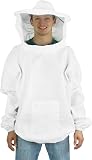 VIVO Professional XL Beekeeping Suit JacketView on Amazon
- 5VIVO Professional L Beekeeping Suit WhiteView on Amazon
- 6
 VIVO Professional White XXL Beekeeping SuitView on Amazon
- 7
 Humble Bee 410 Polycotton Beekeeping Suit with Round VeilView on Amazon
- 8
 3 Layer Ventilated Bee Suit for Men & WomenView on Amazon
- 9
 Humble Bee 430 Ventilated Beekeeping Suit with Round VeilView on Amazon
A bee suit size chart pairs your height, chest circumference, and torso length with suit sizes ranging from Small to XXL, but choosing the right fit requires sizing for mobility rather than street clothing dimensions. Because a beekeeping coverall must fit loosely over regular work clothing to keep fabric from pulling tight against the skin where bees could sting, you should choose a size based on torso length and height rather than standard street sizes. This guide explains how to measure accurately, interpret manufacturer specifications, and select the proper cut for apiary work.
Other hives and gear to compare
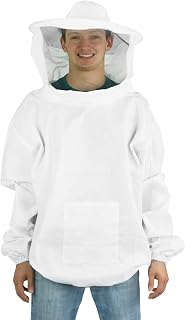 VIVO Professional XL Beekeeping Suit JacketCheck price on Amazon
- VIVO Professional L Beekeeping Suit WhiteCheck price on Amazon
 VIVO Professional White XXL Beekeeping SuitCheck price on Amazon
 Humble Bee 410 Polycotton Beekeeping Suit with Round VeilCheck price on Amazon
 3 Layer Ventilated Bee Suit for Men & WomenCheck price on Amazon
 Humble Bee 430 Ventilated Beekeeping Suit with Round VeilCheck price on Amazon
HiveKeeperGear earns a commission when you buy through links on this site, at no extra cost to you. As an Amazon Associate I earn from qualifying purchases. Affiliate disclosure.
Before you buy: why bee suit sizing differs from street clothes
Standard street clothing is tailored to drape close to the body, but protective bee suits rely on air space between the fabric and your skin to keep stingers from reaching you. When a suit pulls tight across your shoulders, back, or thighs, guard bees can easily drive stingers through the weave. A proper fit remains roomy and billowy across every working posture.
Coveralls also join the jacket and trousers into a continuous garment. Reaching up to lift a honey super or bending forward to inspect a bottom brood box pulls fabric along the entire vertical trunk line. Sizing strictly by waist or chest measurement often results in coveralls that bind painfully in the crotch and drag the veil downward against the face.
Bee suit size chart: reference specifications by size
Manufacturer sizing charts vary across brands, with some makers designing generous ease and others offering narrower cuts. The table below compiles published specifications from reference suit listings, showing how stated sizes correspond to fabric construction, veil styles, and overall garment weight.
| Brand | Stated Size | Fabric Composition | Veil Style | Listed Weight | Key Specifications |
|---|---|---|---|---|---|
| GAIACOLMEIA | L (range S to XXL) | 70% cotton, 30% polyester | Detachable veil | 1.74 pounds | 4.5mm safety gap, resin zippers with dual metal pulls |
| KANYO-AUTO | XL | 65% cotton, 35% polyester | Detachable veil | 1.83 pounds | 3 tool pockets, high-elasticity wrist and ankle bands |
| QHZHANG | S | 65% cotton, 35% polyester | Detachable fencing veil | Not stated | Includes goatskin gloves, loose fit cut |
| QHZHANG | S to XXL | 70% cotton, 30% polyester | 2 veils (fencing and round) | 2.25 pounds | Includes goatskin gloves, resin zippers with metal pulls |
| FOREST BEEKEEPING SUPPLY | XL | 3-layer polyester mesh | Fencing veil | 6.05 pounds | 3-layer ventilated airflow construction |
| FOREST BEEKEEPING SUPPLY | XL | 3-layer polyester mesh | Round veil | 6.98 pounds | 3-layer ventilated construction, YKK brass zippers |
All specs repeat what the manufacturer lists, not our own measurements. As shown, polycotton models such as the 1.74-pound suit from GAIACOLMEIA and the 1.83-pound suit from KANYO-AUTO remain light, while 3-layer ventilated suits from FOREST BEEKEEPING SUPPLY weigh over 6.05 pounds due to their structured mesh layers.
Measuring torso length and vertical trunk line
The vertical trunk line is the most critical measurement on any bee suit chart. Hold a flexible tape at the base of your neck where the shoulder meets the collarbone, run it down across the fullest part of your chest, through your legs at the crotch, and up your back to the starting point. This full loop represents your vertical torso measurement.
Because coveralls do not stretch along their vertical seams, sufficient torso length ensures you can bend and lift without tension. When sitting or bending over a hive, your spine lengthens. Ample torso room keeps the collar from pulling the veil down against your face when working low hive boxes.
Measuring chest circumference and shoulder width
Measure around the fullest part of your chest, keeping the tape level under your armpits and across your shoulder blades while your arms rest naturally at your sides.
Select a suit chest measurement that provides generous room beyond your body dimensions. Hive inspections require lifting heavy boxes and working hive tools with extended arms. If the chest or shoulders fit snugly, reaching forward pulls sleeve cuffs back toward your elbows, exposing your wrists. A loose chest cut preserves full arm reach and maintains wrist coverage.
Accounting for clothing layers worn underneath
Bee suits are worn over regular clothing: typically durable jeans, a long-sleeve shirt, and boots. In cooler weather, you may add sweaters or thermal layers. Take your measurements while wearing these work clothes, or allow extra clearance when reading sizing charts. When listings note a loose fit profile, extra room is already factored into the cut, but whenever your measurements fall near the upper limit of a size bracket, selecting the larger size ensures comfortable layering.
Sleeve length, ankle cuffs, and bending mobility
Sleeve and leg lengths must be longer than those on everyday clothing. Bending your elbows or squatting down pulls cuffs away from wrists and ankles. Suits with long limbs and high-elasticity bands at the wrists and ankles seal firmly around footwear and beekeeping gloves. Thumb loops keep sleeves anchored inside glove gauntlets during active hive work.
Ventilated mesh versus polycotton suit weight and drape
Polycotton suits, such as the 65% cotton and 35% polyester models from KANYO-AUTO and QHZHANG or the 70% cotton and 30% polyester blend from GAIACOLMEIA, drape softly over everyday clothes. These suits are light: GAIACOLMEIA lists an item weight of 1.74 pounds with a 4.5mm safety gap weave, while KANYO-AUTO lists an XL suit at 1.83 pounds.
In contrast, 3-layer ventilated suits from FOREST BEEKEEPING SUPPLY use open polyester mesh to circulate air, resulting in listed weights of 6.05 pounds with a fencing veil and 6.98 pounds with a round veil. The thicker mesh holds its shape rather than draping, feeling bulkier while preventing fabric from collapsing against sweaty skin. Compare specific models in our guide to the best ventilated bee suits or browse all styles in our best beekeeping suit reviews.
Checking suit fit before entering the apiary
Put on your hive work clothing and boots, step into the suit, and zip all closures completely. Raise both arms overhead, bend forward to touch your shins, and drop into a deep squat. If the fabric pulls tight across your back, shoulders, or crotch during these movements, or if the veil touches your face, exchange the suit for a larger size before heading into the apiary.
Additional fit features to check on a suit
- Veil style: Fencing veils unzip to fold back flat, while round veils provide 360-degree viewing clearance around the head.
- Neck seals: Overlapping flaps over zipper junctions block entry points near the collar.
- Tool pockets: Roomy pockets, like the 3 tool pockets on the KANYO-AUTO suit (on Amazon), keep hive tools accessible.
- Leg zippers: Long leg openings let you pull the suit on and off over work boots.
Common sizing mistakes to avoid
The most common mistake is ordering your everyday street clothing size. Street clothes are tailored for a close fit, but bee suits require loose space to prevent stings. Always prioritize torso length over pant inseam: excess leg length can be tucked into boots, but a short torso restricts bending and pulls the veil out of position. Taller beekeepers can check our guide to bee suits for tall people for cuts with longer torsos and limbs.
FAQs for beekeepers
How should a bee suit fit?
A bee suit should fit loosely with ample extra room throughout the chest, shoulders, and crotch. Loose fabric prevents the cloth from pulling taut against your skin when you bend or reach, stopping bee stingers from making contact.
Should I size up when buying a bee suit?
Yes, sizing up is generally recommended when your measurements fall between sizes or near the top of a size bracket. Extra room accommodates work pants and shirts worn underneath while ensuring the suit does not bind during deep bending.
What is the most critical measurement on a bee suit size chart?
Torso length, measured from the base of the neck through the crotch, is the most critical measurement because coveralls cannot stretch vertically. If the torso measurement is too short, the suit will pull uncomfortably against your shoulders and groin whenever you bend over hive boxes.
How does suit weight differ between ventilated and cotton suits?
Cotton and polycotton suits are lightweight, with GAIACOLMEIA listing a suit at 1.74 pounds and KANYO-AUTO listing an XL suit at 1.83 pounds. In contrast, FOREST BEEKEEPING SUPPLY lists 3-layer ventilated suits in size XL at 6.05 pounds and 6.98 pounds due to their thicker, open-mesh structure.
What should I do if my height and chest point to different sizes?
Always prioritize the larger size to guarantee enough torso length and sleeve reach. For beekeepers seeking alternative protective setups, pairing separate beekeeping jackets with loose work trousers provides greater sizing flexibility between upper and lower body.
More hive guides
See every Bee Suits guide and all Protective Gear guides.
More picks: our reviews of budget bee suits, kids bee suits, and ventilated bee jackets. New to beekeeping? Start with our beekeeping equipment list for beginners.