Beeswax Wraps DIY: Supplies and Kits for Reusable Wraps
Make reusable beeswax wraps at home from beeswax, pine resin and jojoba oil on cotton fabric, using a pre-mixed kit or a ratio you measure yourself.

On this page
Top picks at a glance
As an Amazon Associate I earn from qualifying purchases.
- 1
 Mr-Label White Lip Balm Labels with Tamper Tab9.7/10View on Amazon
- 2
 Avery Printable Lip Balm Labels9.6/10View on Amazon
- 3
 Spartan Industrial Matte White Lip Balm Labels9.6/10View on Amazon
- 4
 ECLHTLNY Yellow Beeswax Pellets10LBView on Amazon
- 5
 CAKETYCG 10 LB Yellow Beeswax PelletsView on Amazon
- 6
 ECLHTLNY White Beeswax Pellets10LBView on Amazon
- 7
 10 LB White Beeswax PelletsView on Amazon
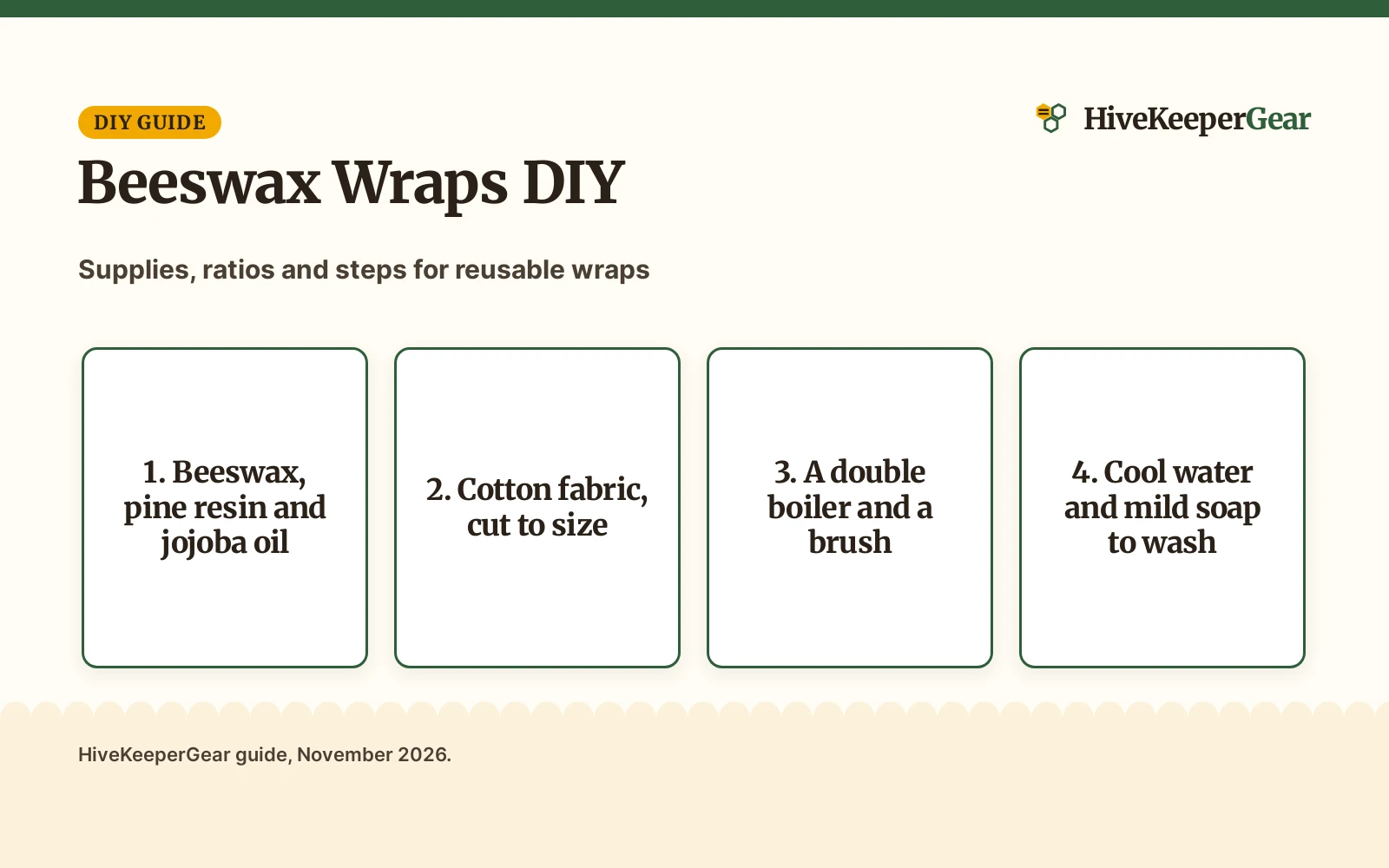
After the honey harvest, when the uncapping knife has done its work and the wax cappings sit in a bucket by the extractor, a keeper with wax to spare has a use for it. Beeswax wraps diy means making reusable food wraps at home from beeswax, pine resin and jojoba oil brushed onto cotton fabric. The warm mixture coats the cloth, and the cloth cools into a wrap that seals around a bowl or a piece of food with the warmth of your hands. This guide covers the supplies, the ratios, the steps, and the washing and reuse.
Other hives and gear to compare
 ECLHTLNY Yellow Beeswax Pellets10LBCheck price on Amazon
 CAKETYCG 10 LB Yellow Beeswax PelletsCheck price on Amazon
 ECLHTLNY White Beeswax Pellets10LBCheck price on Amazon
 10 LB White Beeswax PelletsCheck price on Amazon
HiveKeeperGear earns a commission when you buy through links on this site, at no extra cost to you. As an Amazon Associate I earn from qualifying purchases. Affiliate disclosure.
What you need for beeswax wraps diy
A wrap starts with beeswax, pine resin, jojoba oil and cotton fabric. The beeswax is the base of the coating, the pine resin adds the stickiness that lets the wrap seal, and the jojoba oil joins them in the blend the listings state. Some kits use tree resin and coconut oil instead, so check the kit you buy for its own blend.
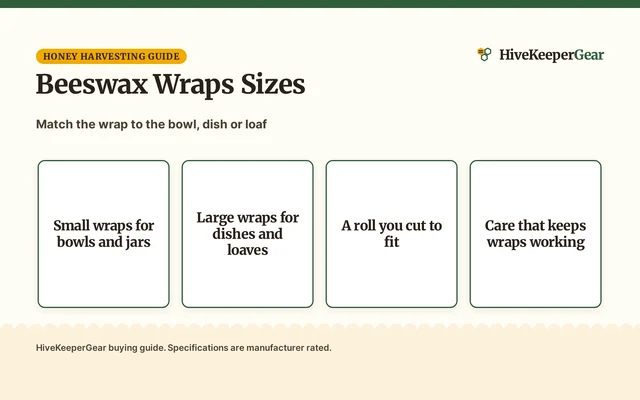
Cotton fabric is the cloth the listings name for wraps. The SuperBee listing states that you add cotton fabric to its beeswax bar, and the Conelist kit (on Amazon) states the same for its pre-mixed blocks. Keep in mind that natural beeswax has a yellow tint that will likely alter the color of lighter fabrics, so darker or patterned fabric shows the change less. The beeswax wraps sizes guide covers the common sizes.
For the wax, start with pellets or a block. The Natureonics listing states 2 lb (32 oz) of triple-filtered beeswax pellets in a resealable bag, and its pellets melt at 90-149°F (32-65°C). The pellet form allows accurate portioning and faster melting than a block, with no cutting or shaving. For a comparison of pellets and sheets, see the beeswax sheets vs beeswax pellets guide.
Start with a kit or mix your own
Pre-mixed kits take the measuring out of the work. The SuperBee bar blends beeswax, tree resin and coconut oil and yields up to 10 reusable wraps, or one square meter, depending on fabric size and method. The Conelist kit holds 3 pre-mixed blocks of 50g each, 150g in total, and each block yields about 6 wraps, for 18 wraps per set. The Jenny Joy’s kit holds 6 pre-mixed bars of 0.50 oz each, makes 6 wrap sheets, and includes a 5 ml Pinon Salve for sticky fingers. The Kline crafting bar weighs 1.5 oz and needs no measuring or mixing: melt it, apply it, and make reusable wraps in minutes. If you would rather buy finished wraps, the beeswax wrap kit vs premade beeswax wraps guide covers that choice.
| Kit or bar | Blend | Size | Wraps the listing states |
|---|---|---|---|
| SuperBee wax bar | Beeswax, tree resin, coconut oil | 75g bar | Up to 10 |
| Conelist kit | Beeswax, coconut oil, pine resin | 3 blocks, 150g total | 18 per set |
| Jenny Joy’s kit | Beeswax, pine resin, jojoba oil | 6 bars, 0.50 oz each | 6 sheets |
| Kline crafting bar | Beeswax, pine rosin, jojoba oil | 1.5 oz bar | Not stated |
One figure in the Conelist listing needs care: the title says up to 20 wraps, while the bullets say each 50g block yields about 6 wraps and the complete kit lets you create 18 wraps. Trust the bullets and count on 18 wraps for the set.
To mix your own, buy the ingredients separately. The Threlaco listing states 1.1 pounds of pine resin in a bag, and the Lunhans listing states 2.2 lbs of pine resin. Use either with beeswax pellets and jojoba oil, and follow the ratio in the next section. The Threlaco title also says 100g, which does not match the 1.1 pounds in its bullets and spec table, so use 1.1 pounds.
The ratios the listings state
The Threlaco listing states the ratio: 4 parts beeswax and 4 parts pine resin to 1 part jojoba oil. Stir the mixture now and then while it melts, brush it onto the cloth, and adjust the ratio to suit your needs: if the wrap does not feel sticky enough, increase the share of resin.
The Lunhans listing states a different measure: 1 cup beeswax pellets, 1 tbsp jojoba oil and 1 to 2 tbsp pine resin, melted in a boiler. Melt the oil and the beeswax first, then add the rosin a little at a time so it blends evenly and does not burn. The same listing warns that a double boiler is not recommended for rosin, because of its high melting point, while the Threlaco instructions use a double boiler, so follow the instructions with the materials you buy.
Melt, brush and cool
For the Threlaco method, set up a double boiler with a pot and a bowl, fill the pot with water to just below the bottom of the bowl, and bring it to a simmer. Pour the beeswax pastilles, resin and oil into the bowl and stir now and then until the mixture blends. The Threlaco listing states that block resin takes a long time to melt, so be patient and keep the heat low: long heating over direct fire can scorch the resin.
Brush the warm mixture onto the cloth, then let it dry. The Lunhans listing states the same order: melt slowly, stir until smooth, brush onto cloth, and let dry. Store the resin in a cool, dry place, and handle the hot mixture carefully to prevent spills and burns.
Once the coating cools, the wrap is ready to use. Warm it with your hands to make it moldable, press it around a bowl or a piece of food, and it holds its shape as it cools. The Kline listing states that the wrap forms a moldable, self-adhering seal that keeps food fresh.
Wash and reuse
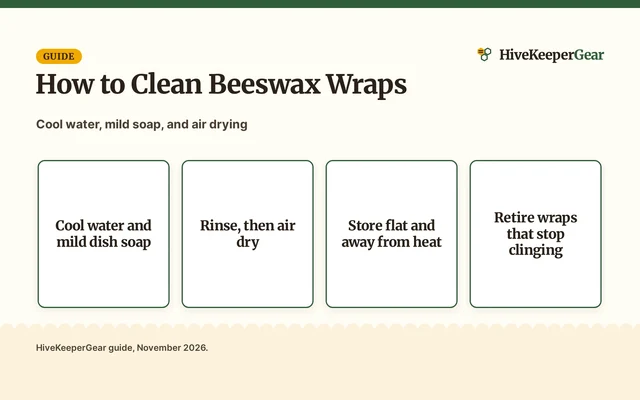
Hand wash the wraps with cool water and mild soap, then air dry them. The Kline listing states exactly that, and the Jenny Joy’s kit adds that you place them on a dish rack to air dry. Do not use hot water, and keep the wraps away from microwaves, hot temperatures, raw meat and seafood.
With proper care, a wrap lasts up to a year. The Kline and Jenny Joy’s listings state that figure, and the Jenny Joy’s kit adds that when a wrap starts to crease and wear out, you re-wax it with another pre-mixed bar. The Kline bar is made for the same job: refreshing and repairing old wraps.
FAQs for beekeepers
What do I need to make beeswax wraps at home?
Beeswax, pine resin, jojoba oil and cotton fabric, plus a pot, a bowl and a brush. Pre-mixed kits blend the wax, resin and oil for you, while raw materials need measuring: the Threlaco ratio is 4 parts beeswax and 4 parts pine resin to 1 part jojoba oil.
How many wraps does one bar or kit make?
The SuperBee bar yields up to 10 wraps, the Conelist kit makes 18 wraps from 3 blocks, and the Jenny Joy’s kit makes 6 wrap sheets from 6 bars. The yield depends on fabric size and method, so the SuperBee listing also states one square meter for its bar.
What ratio of beeswax, resin and oil should I use?
Follow the ratio of the materials you buy. Threlaco states 4 parts beeswax and 4 parts pine resin to 1 part jojoba oil, and Lunhans states 1 cup beeswax pellets, 1 tbsp jojoba oil and 1 to 2 tbsp pine resin. If the wrap does not feel sticky enough, increase the share of resin.
How do I wash beeswax wraps?
Hand wash them with cool water and mild soap, then air dry them on a dish rack. Do not use hot water, and keep them away from microwaves and hot temperatures. Do not use them for raw meat or seafood.
How long do beeswax wraps last?
Up to a year with proper care, according to the Kline and Jenny Joy’s listings. When a wrap starts to crease and wear out, re-wax it with another pre-mixed bar and repeat the process.
More hive guides
Browse every guide by category: beeswax crafts and honey harvesting. For other uses of hive wax, see the candle making guide, and for the harvest itself, the honey extractor and honey strainer guides.