Binoculars vs Monocular for Birding: Which One Should You Buy?
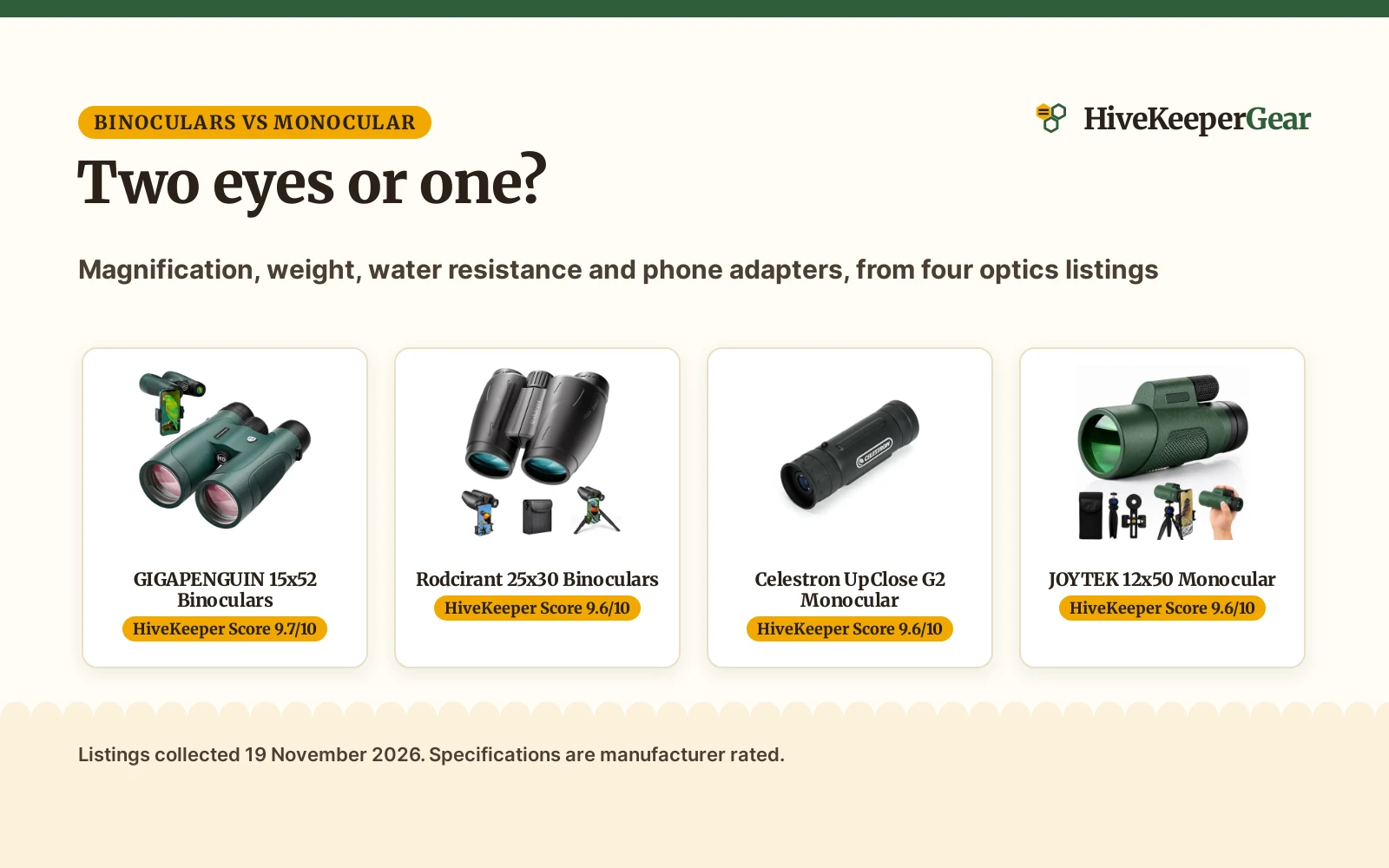
Binoculars vs monocular for birding, compared on four optics: magnification, weight, water resistance, phone adapters and who each side suits.

On this page
Top picks at a glance
As an Amazon Associate I earn from qualifying purchases.
- 1
 GIGAPENGUIN 15x52 Binoculars9.7/10View on Amazon
- 2
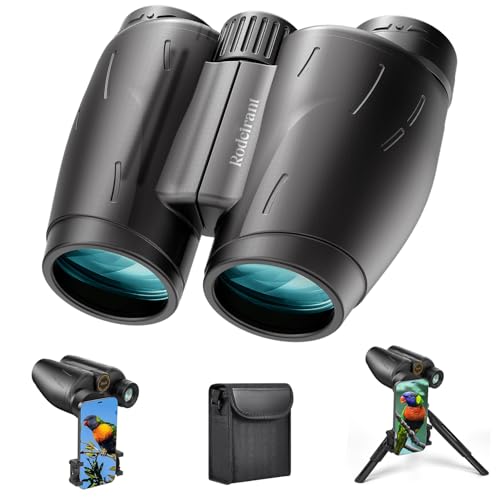 Rodcirant 25x30 Binoculars9.6/10View on Amazon
- 3
 Celestron UpClose G2 Monocular9.6/10View on Amazon
- 4
 JOYTEK 12x50 Monocular9.6/10View on Amazon
The binoculars vs monocular for birding choice comes down to how you watch: with both eyes for long looks, or with one eye for a quick check on a bird that may not stay put. A warbler slips between branches at the edge of the yard, and the glass you lift decides how much of it you see. This comparison covers two binoculars and two monoculars, using only what each listing publishes, to show what separates the two sides.
HiveKeeperGear earns a commission when you buy through links on this page, at no extra cost to you. As an Amazon Associate I earn from qualifying purchases. Affiliate disclosure.
Quick verdict: choose binoculars if you watch with both eyes for long spells. Choose a monocular if you want the lowest-weight carry and one-hand viewing for quick looks. The GIGAPENGUIN 15×52 binoculars score highest in this comparison, while the JOYTEK 12×50 monocular leads the monocular side on power and waterproofing. Three of the four picks include a phone adapter, so the real difference is how you hold the glass and how long you watch.
Four examples
| # | Product | HiveKeeper Score | Buy |
|---|---|---|---|
| 1 | GIGAPENGUIN 15x52 Binoculars | 9.7/10 | Buy on Amazon |
| 2 | Rodcirant 25x30 Binoculars | 9.6/10 | Buy on Amazon |
| 3 | Celestron UpClose G2 Monocular | 9.6/10 | Buy on Amazon |
| 4 | JOYTEK 12x50 Monocular | 9.6/10 | Buy on Amazon |
GIGAPENGUIN 15x52 Binoculars
15x binoculars with a 52mm objective lens, 22mm eyepieces and an upgraded phone adapter, listed as waterproof with twist-down eyecups for glasses wearers.
Pros
- 15x magnification with a 52mm objective lens for long-distance viewing
- 22mm eyepieces give an image 1.5 times larger than 16mm eyepieces
- Upgraded phone adapter included for binocular photography
- Twist-down rubber eyecups suit glasses wearers and non-wearers
Cons
- 2.19 lb is the heaviest weight in this comparison
- At 6.5 x 5.4 x 2.5 in, it is larger than either monocular
- 15x is the lower magnification of the two binoculars here
- No tripod adapter is in the box, while the Rodcirant kit includes one
Rodcirant 25x30 Binoculars
25x30 binoculars with 20mm eyepieces, a 411 ft field of view at 1000 yds, a 0.6 lb foldable design and an IPX7 waterproof and fogproof rating.
Pros
- 25x magnification with a 411 ft field of view at 1000 yds
- 0.6 lb foldable palm-size design for carrying
- IPX7 waterproof and fogproof rating
- Phone adapter and tripod adapter included
Cons
- 30mm objective lens is smaller than the 52mm and 50mm objectives here
- No tripod is included, only a tripod adapter
- 20mm eyepieces are smaller than the 22mm eyepieces of the GIGAPENGUIN
- 2 year warranty is shorter than the lifetime terms of the GIGAPENGUIN and Celestron
Celestron UpClose G2 Monocular
10x25 monocular with multi-coated optics, a rubber covered aluminum body and a soft carrying case, listed at 0.25 lb.
Pros
- Multi-coated optics increase light transmission for brighter images
- 0.25 lb is the lowest weight in this comparison
- 5.5 x 1.5 x 1.5 in rubber covered aluminum body for one-hand viewing
- Celestron Limited Lifetime Warranty
Cons
- 10x is the lowest magnification in this comparison
- 25mm objective lens is the smallest objective here
- Water resistant, while the Rodcirant and JOYTEK list IPX7 waterproof ratings
- No phone adapter is included, unlike the other three picks
JOYTEK 12x50 Monocular
12x50 monocular with a BAK4 prism, fully multi-coated lens, IPX7 waterproof rating and a 400g (0.88 lbs) body with a phone adapter, tripod and case.
Pros
- 12x magnification with a 50mm objective lens
- IPX7 waterproof and nitrogen-filled to prevent internal fogging
- 400g (0.88 lbs) with a phone adapter, tripod and case included
- One-hand focus with a twist-up eyecup for glasses wearers
Cons
- 400g (0.88 lbs) is heavier than the Celestron monocular at 0.25 lb
- One Year Manufacture warranty is the smallest warranty term in this comparison
- 12x magnification is lower than the 15x and 25x binocular powers here
- One-eye viewing does not suit birders who prefer two-eye viewing for long watches
As an Amazon Associate I earn from qualifying purchases.
Other hives and gear to compare
 JHdril 20-60x60 Monocular Telescope with TripodCheck price on Amazon
 Maven M.1 10x42mm MonocularCheck price on Amazon
 Bushnell PowerView 10x50 Porro Prism Instafocus BinocularsCheck price on Amazon
 Celestron Outland X 8x42 Binoculars for Birding & NatureCheck price on Amazon
 Celestron UpClose G2 8x40 Porro Binoculars for Birding &Check price on Amazon
 Celestron UpClose G2 7x35 Porro BinocularCheck price on Amazon
Binoculars vs monocular for birding: side by side
| Optic | HiveKeeper Score | Magnification | Objective lens | Weight | Water resistance | Warranty |
|---|---|---|---|---|---|---|
| GIGAPENGUIN 15×52 Binoculars | 9.7/10 | 15x | 52mm | 2.19 lb | Waterproof | Unlimited, unconditional lifetime warranty |
| Rodcirant 25×30 Binoculars | 9.6/10 | 25x | 30mm | 0.6 lb | IPX7 waterproof and fogproof | 2 year |
| JOYTEK 12×50 Monocular | 9.6/10 | 12x | 50mm | 400g (0.88 lbs) | IPX7 waterproof | One Year Manufacture |
| Celestron UpClose G2 Monocular | 9.6/10 | 10x | 25mm | 0.25 lb | Water resistant | Celestron Limited Lifetime Warranty |
Sizes, materials and capacities are the manufacturer’s ratings as each listing states them, collected 19 November 2026.
Magnification and objective size
The two binoculars list 25x and 15x magnification, while the two monoculars list 12x and 10x. The Rodcirant binoculars list 25x magnification with a 411 ft field of view at 1000 yds, and the maker says the image stays clear from over 700 feet away. The GIGAPENGUIN binoculars list 15x magnification with a 52mm objective lens and 22mm eyepieces, which the maker says give an image 1.5 times larger than 16mm eyepieces. On the monocular side, the JOYTEK lists 12x magnification with a 50mm objective lens, and the Celestron lists 10x magnification with a 25mm objective lens. Do not call one side better on magnification alone: the binocular listings state the higher powers, and the monocular listings state the lower powers, so the difference is real but the choice is about how you watch, not about a single number.
Weight and size
The Celestron monocular lists 0.25 lb and dimensions of 5.5 x 1.5 x 1.5 in, which makes it the lowest-weight optic in this comparison. The JOYTEK monocular lists 400g (0.88 lbs) with dimensions of 5.0 x 2.0 x 3.0 in, so it is heavier than the Celestron but still a one-hand optic. The Rodcirant binoculars list 0.6 lb in a foldable palm-size design, while the GIGAPENGUIN binoculars list 2.19 lb with dimensions of 6.5 x 5.4 x 2.5 in, the heaviest and bulkiest of the four. Weight here does not follow the side: the Rodcirant binoculars at 0.6 lb weigh less than the JOYTEK monocular at 400g (0.88 lbs), and the Celestron shows how light a single barrel can be at 0.25 lb.
Water resistance and low light
The Rodcirant binoculars and the JOYTEK monocular both list an IPX7 waterproof rating. The Rodcirant listing adds a fogproof rating, and the JOYTEK listing says its nitrogen-filled body prevents internal fogging. The GIGAPENGUIN binoculars are listed as waterproof with no IP rating given, and the Celestron monocular is listed as water resistant. For low light, the GIGAPENGUIN listing describes 18mm BAK4 dielectric-coated prisms and high-transmission glass for daybreak and the last light of the day, and the JOYTEK listing describes a BAK4 prism with fully multi-coated lenses for early morning and dusk. The Rodcirant listing describes fully multi-coated lenses and a BAK4 prism for brighter vision in low light, while the Celestron listing describes multi-coated optics for brighter and sharper images.
Phone adapters and what is in the box
Three of the four picks include a phone adapter. The Rodcirant kit includes a phone adapter and a tripod adapter, the GIGAPENGUIN listing includes an upgraded phone adapter, and the JOYTEK kit includes a smartphone adapter, a tripod and a case. The Celestron monocular includes a soft carrying case and lists no phone adapter, so birders who want to photograph through the optic need one of the other three. The Rodcirant kit lists a tripod adapter, not a tripod, and the JOYTEK tripod is the only tripod stated in the box among the four.
Listing gaps to check
The Rodcirant listing states no dimensions, so check the folded size against your pack before ordering. The GIGAPENGUIN listing states a waterproof body with no IP rating, so ask the seller what rating applies if you watch in heavy rain. The Celestron listing states no phone adapter and no field of view figure, so check both before ordering if you photograph birds or compare views. The JOYTEK listing states a One Year Manufacture warranty, the smallest warranty term in this comparison, so read the warranty terms before you buy.
Which should you choose?
Choose binoculars if you watch with both eyes, sit or stand in one spot for long spells, and want the higher magnification of the Rodcirant at 25x or the GIGAPENGUIN at 15x with a 52mm objective lens. The 8×30 vs 10×30 binoculars comparison covers more two-barrel choices.
Choose a monocular if you want the lowest-weight carry and one-hand viewing, with the Celestron at 0.25 lb or the JOYTEK at 400g (0.88 lbs) with a 50mm objective lens and IPX7 waterproofing. The best monocular for wildlife viewing roundup covers more single-barrel optics.
Whichever you choose, check the magnification, the objective lens and the weight against how you watch, and read the roof vs porro prism binoculars guide before you buy.
Inside the HiveKeeper Score
| Product | HiveKeeper Score | Perf. /35 | Build /25 | Value /25 | Safety /10 | Warranty /5 |
|---|---|---|---|---|---|---|
| GIGAPENGUIN 15×52 Binoculars | 9.7 | 32 | 21 | 21 | 4 | 4 |
| Rodcirant 25×30 Binoculars | 9.6 | 30 | 21 | 21 | 5 | 3 |
| Celestron UpClose G2 Monocular | 9.6 | 28 | 20 | 21 | 3 | 4 |
| JOYTEK 12×50 Monocular | 9.6 | 32 | 21 | 21 | 5 | 0 |
HiveKeeper Scores sit between 9.2 and 9.8, and a hive item’s weighted total lands on that range in proportion, so a higher total always gives a higher score.
The HiveKeeper Score weighs performance, build, value, safety and warranty, as explained on the how we pick page. For birding optics, safety means stated water resistance, waterproofing, fogproofing and rubber armored bodies that protect the glass in the field. All four picks state a warranty term: two lifetime warranties, a 2 year term and a one year term. The GIGAPENGUIN binoculars score highest in this comparison for 15x magnification with a 52mm objective lens, and the JOYTEK monocular leads the monocular side for 12x magnification with a 50mm objective lens and IPX7 waterproofing.
FAQs for beekeepers
Are binoculars or a monocular better for birding?
It depends on how you watch. Binoculars suit two-eye viewing for long spells, and the picks here list 25x and 15x magnification. A monocular suits quick one-hand looks, and the picks here list 12x and 10x magnification with weights of 400g (0.88 lbs) and 0.25 lb. Choose the side that matches your watching style, not the higher number alone.
What magnification do these binoculars and monoculars offer?
The Rodcirant binoculars list 25x magnification and the GIGAPENGUIN binoculars list 15x magnification. The JOYTEK monocular lists 12x magnification and the Celestron monocular lists 10x magnification. Higher magnification is not better on its own: the 25x Rodcirant lists a 411 ft field of view at 1000 yds, so check the field of view with the power.
Which of these optics are waterproof?
The Rodcirant binoculars and the JOYTEK monocular both list an IPX7 waterproof rating. The GIGAPENGUIN binoculars are listed as waterproof with no IP rating given, and the Celestron monocular is listed as water resistant. The Rodcirant listing also states a fogproof rating, and the JOYTEK listing states a nitrogen-filled body to prevent internal fogging.
Do these optics include a phone adapter?
Three of the four do. The Rodcirant kit includes a phone adapter and a tripod adapter, the GIGAPENGUIN listing includes an upgraded phone adapter, and the JOYTEK kit includes a smartphone adapter with a tripod and a case. The Celestron monocular includes a soft carrying case and lists no phone adapter.
More hive guides
See every birding optics guide and all backyard wildlife guides.
More picks: best waterproof monocular, best mini monocular, best backyard bird camera.