Fencing Veil vs Round Veil: Which One Should You Buy?
Compare fencing veils and round veils by sightlines, overhead clearance, folding storage, and bee yard protection to pick the right style.

On this page
Top picks at a glance
As an Amazon Associate I earn from qualifying purchases.
- 1
 Bee Suit with Fencing Veil and Gloves9.6/10View on Amazon
- 2
 Humble Bee 220 Ultravent Beekeeping Veil with Round Hat9.7/10View on Amazon
- 3
 Humble Bee 211 Polycotton Beekeeping Veil with Fencing HoodView on Amazon
- 4
 Three Layer Ventilated Beekeeping Veil in RoundView on Amazon
- 5
 Bee Jacket with Fencing VeilView on Amazon
- 6
 Beekeeping Three Layer Mesh ventilated Jacket Fencing Veil inView on Amazon
- 7
 Humble Bee 221 Ultravent Beekeeping Veil with Fencing HoodView on Amazon
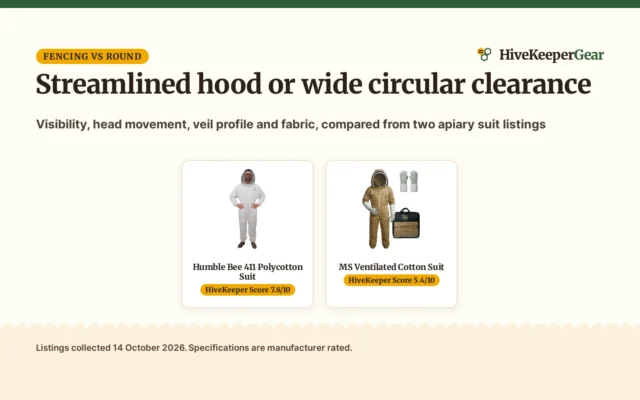
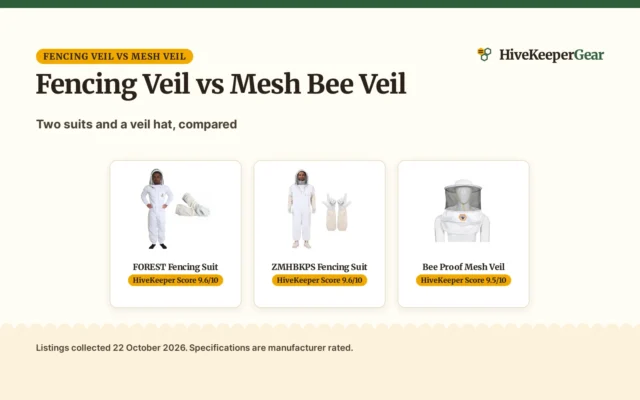
When you light your smoker for a midsummer hive inspection and pull on your headwear, the choice of fencing veil vs round veil comes down to whether you prioritize compact forward visibility, packability, and wind stability or broad peripheral sightlines and continuous head clearance. A fencing veil contours close to your face, folds flat, and stays stable in gusts without catching the wind. A round veil uses rigid circular hoops to hold mesh away from your head in every direction, providing wide peripheral vision and steady airflow. For most backyard keepers, a fencing veil offers the most convenient balance of compact handling and downward visibility over frames, while keepers who prioritize maximum stand-off distance in calm weather often choose a round veil.
Other hives and gear to compare
 Humble Bee 211 Polycotton Beekeeping Veil with Fencing HoodCheck price on Amazon
 Three Layer Ventilated Beekeeping Veil in RoundCheck price on Amazon
 Bee Jacket with Fencing VeilCheck price on Amazon
 Beekeeping Three Layer Mesh ventilated Jacket Fencing Veil inCheck price on Amazon
 Humble Bee 221 Ultravent Beekeeping Veil with Fencing HoodCheck price on Amazon
HiveKeeperGear earns a commission when you buy through links on this site, at no extra cost to you. As an Amazon Associate I earn from qualifying purchases. Affiliate disclosure.
Before you choose: how veil shape affects apiary work
A beekeeping veil keeps honey bees away from your face, eyes, ears, and neck while you examine brood combs and manage colonies. When working over an active hive, bees investigate the dark, carbon dioxide rich areas around your head. Both veil designs create an effective barrier, but they position that screen differently relative to your face, directly influencing sightlines, head clearance, ventilation, and gear packability during routine yard chores.
Fencing veil vs round veil: key feature comparison
A fencing veil uses a contoured fabric hood with vertical stiffeners that arch over the head to present a flat front screen, while a round veil combines a circular brimmed hat with rigid hoops that suspend mesh in a cylinder around you.
| Feature | Fencing veil | Round veil | Practical difference |
|---|---|---|---|
| Forward sightlines | Direct view with minimal mesh distortion | Broad view through circular mesh | Fencing hoods keep the screen closer for examining eggs in comb cells |
| Peripheral vision | Hood side panels can narrow extreme peripheral angles | Full circular mesh affords unobstructed side views | Round veils offer wider panoramic awareness across the apiary |
| Overhead clearance | Contoured hood profile follows head height | Wide circular brim extends outward | Fencing hoods clear low tree branches and shed doors easily |
| Skin stand-off distance | Fabric sits closer to ears and forehead | Circular rings keep mesh away from head on all sides | Round veils keep mesh away from skin even during sudden turns |
| Packability and storage | Collapses flat for transport in gear bags | Rigid rings require flat shelf space | Fencing hoods pack without risking bent or warped support rings |
| Apparel integration | Available as zip-on hoods or standalone veils | Available as zip-on hoods, standalone hats, or in dual-veil kits | Both styles integrate with modern suits and jackets; compare options in our bee suit vs bee jacket and beekeeping veil guides |
1. Sightlines and visibility
When examining newly laid eggs in the bottom of worker cells, the distance between your eyes and the protective screen influences your focus. A fencing veil places a flat, dark screen close to your eyes, minimizing optical distortion and reducing reflections from overhead sunlight so you can spot queens and verify brood patterns without straining.
A round veil positions mesh further away, creating a wider panoramic view that helps when watching flight paths or monitoring yard activity. However, because the curved front screen sits further from your face, ambient sunlight can cause glare across the mesh. Apis Tactical lists a ventilated fencing veil weighing 1.26 pounds that includes a black under-brim layer specifically designed to reduce glare on sunny inspection days, showing how veil makers address contrast in the yard.
2. Head clearance and sting distance
Safety around honey bees depends on keeping mesh far enough from skin so that crawling bees cannot reach you. Round veils excel at maintaining consistent stand-off distance because rigid hoops support the netting away from your temples, ears, and cheeks even if you turn your neck quickly or bend sideways.
Fencing veils contour closer to your head, so turning your face inside the hood without turning your shoulders can occasionally bring fabric against your cheek or nose. Many beekeepers wear a standard baseball cap under a fencing veil to provide a firm bill that holds the front screen away from the face at all times.
3. Packability and folding storage
Fencing veils excel at portability because their hoods collapse flat. Humble Bee lists its 211 polycotton veil with a fencing hood weighing 9.2 ounces, with product dimensions of 13.2 by 13.2 by 1 inches, constructed from a 50% cotton and 50% synthetic blend at 260 gsm. For jackets and suits, Forest Beekeeping Supply lists a canvas jacket (model FB-212) weighing 2 pounds that folds to 14 by 14 by 2 inches, and Bee Smart lists its 400 suit with fencing veil in a package measuring 13.39 by 13.39 by 3.15 inches weighing 3.31 pounds. These listings demonstrate how fencing gear compresses into flat packages that fit into toolboxes or vehicle trunks without damage.
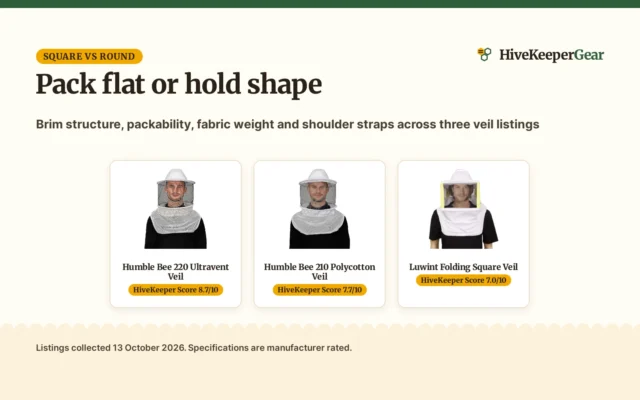
Round veils require more dedicated storage space. Because they rely on circular wire or formed plastic hoops to maintain a cylindrical standoff around the head, crushing them in a crowded gear tote can permanently bend the rings or warp the brim. Hang a round veil from a hook in your honey house or lay it flat on an apiary shelf where heavier equipment will not be placed on top of it.
4. Ventilation and summer heat
Hive inspections during peak summer nectar flows demand effective airflow. Round veils provide continuous cross-ventilation around the entire perimeter of your head and neck because circular mesh allows breezes to pass freely from any direction, keeping you cooler during long colony evaluations.
Traditional fencing veils with solid fabric panels can trap more radiant heat around the head, but modern ventilated apparel uses multi-layer mesh to restore airflow. Massive Bee lists a 3-layer ventilated jacket weighing 2.8 pounds with breathable mesh and detachable veils. OZ ARMOUR provides a 3-layer ventilated suit constructed with double layer air mesh fabric that promotes air circulation while maintaining a protective barrier. When choosing a fencing style for warm yards, pairing it with a ventilated jacket helps offset heat retention. Browse our ventilated bee jacket picks for breathable summer options.
5. Suit and jacket zipper integration
Most modern veils connect directly to a suit or jacket with neck zippers and overlapping hook-and-loop flaps that prevent bees from finding an entrance along the collar line.
Several manufacturers offer interchangeable setups with both styles. OZ ARMOUR includes 2 detachable veils (both fencing and round) with its protective suit, which also features 8 strong pockets for hive tools and apiary equipment. Massive Bee also supplies both round and fencing veils with its zip-on jackets. These multi-veil kits allow beekeepers to select the fencing hood for windy days or quick checks and swap to the round veil for long harvest sessions. Compare full gear options in our beekeeping suits with detachable veil guide and our ventilated bee jacket with round veil review.
A seasonal yard comparison
During spring buildup, colonies are smaller and inspections focus on brood patterns and queen cups. A compact fencing veil works well during this period, offering crisp visibility over frames while staying stable in gusty spring winds.
As colonies expand into summer honey supers, inspections take longer under direct sun. The wide brim of a round veil shields your neck and face from overhead sun exposure while keeping air moving across your skin in warm weather. During late summer harvests and fall feeding, guard bees become more defensive, and the reliable stand-off distance of a round veil provides extra peace of mind when carrying heavy supers. For winter storage, fencing veils fold flat into bins, while round veils require hanging pegs.
Practical tips for apiary comfort
- Wear a baseball cap under a fencing veil to keep front mesh held away from your face.
- Verify neck zippers overlap completely and secure the hook-and-loop flap before lighting your smoker.
- Hang round veils from a peg between inspections to prevent circular support rings from warping.
- Keep a spare standalone veil from our bee veils guide in your apiary kit for visitors.
- Combine your chosen veil with protective gloves from our beekeeping gloves guide to protect your hands while maintaining frame dexterity.
What neither veil style solves
While choosing the right veil improves visibility and comfort, headwear alone cannot prevent all apiary mishaps. Neither style prevents stings if mesh is pressed directly against skin, and neither design eliminates the need for cool, gentle smoke to mask alarm pheromones. Protective headwear also cannot substitute for calm, deliberate movements. Avoid bumping frame rests or swatting at foraging bees, inspect during warm, calm weather, and keep your veil securely zipped until you have walked away from the yard.
FAQs for beekeepers
Which veil style gives better visibility when inspecting brood frames?
A fencing veil provides clearer downward sightlines because the front screen sits closer to your eyes with minimal distortion, making it easier to spot tiny eggs in comb cells.
Can bees sting through a fencing veil?
Bees can sting through any mesh that rests against skin. Because fencing veils contour closer to the head, beekeepers often wear a baseball cap underneath to hold the front screen off the forehead and nose.
Why do some bee suits include both a fencing veil and a round veil?
Makers like OZ ARMOUR and Massive Bee supply 2 detachable veils with their 3-layer suits and jackets so keepers can choose the fencing hood for windy days and swap to the round veil for long harvest sessions.
How do I store a fencing veil compared to a round veil?
A fencing veil folds flat for compact storage in a gear bag, such as the Humble Bee 211 veil which packs to 13.2 by 13.2 by 1 inches. A round veil must hang from a peg or sit flat on a shelf so its circular rings do not bend.
Are round veils cooler than fencing veils in hot weather?
Round veils feel cooler because the brim holds mesh away from your neck and ears on all sides, allowing cross breezes to circulate freely. Fencing veils with solid fabric panels retain more radiant heat.
More hive guides
See every bee jackets and veils guide and all protective gear guides, or explore our bee suit vs bee jacket and beekeeping suit comparisons.