Foam Board vs Winter Wrap: Which One Should You Buy?
Rigid foam board and fabric winter wraps compared as hive insulation, and how to pick the right option for wintering your bees.

On this page
Top picks at a glance
As an Amazon Associate I earn from qualifying purchases.
- 1
 Premium Screened Bottom Board 10 Frame Langstroth for Wood9.7/10View on Amazon
- 2
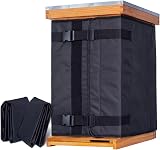 MayBee 2 Pack Winter Bee Hive Wrap for 8 and 10 Frame Hives9.7/10View on Amazon
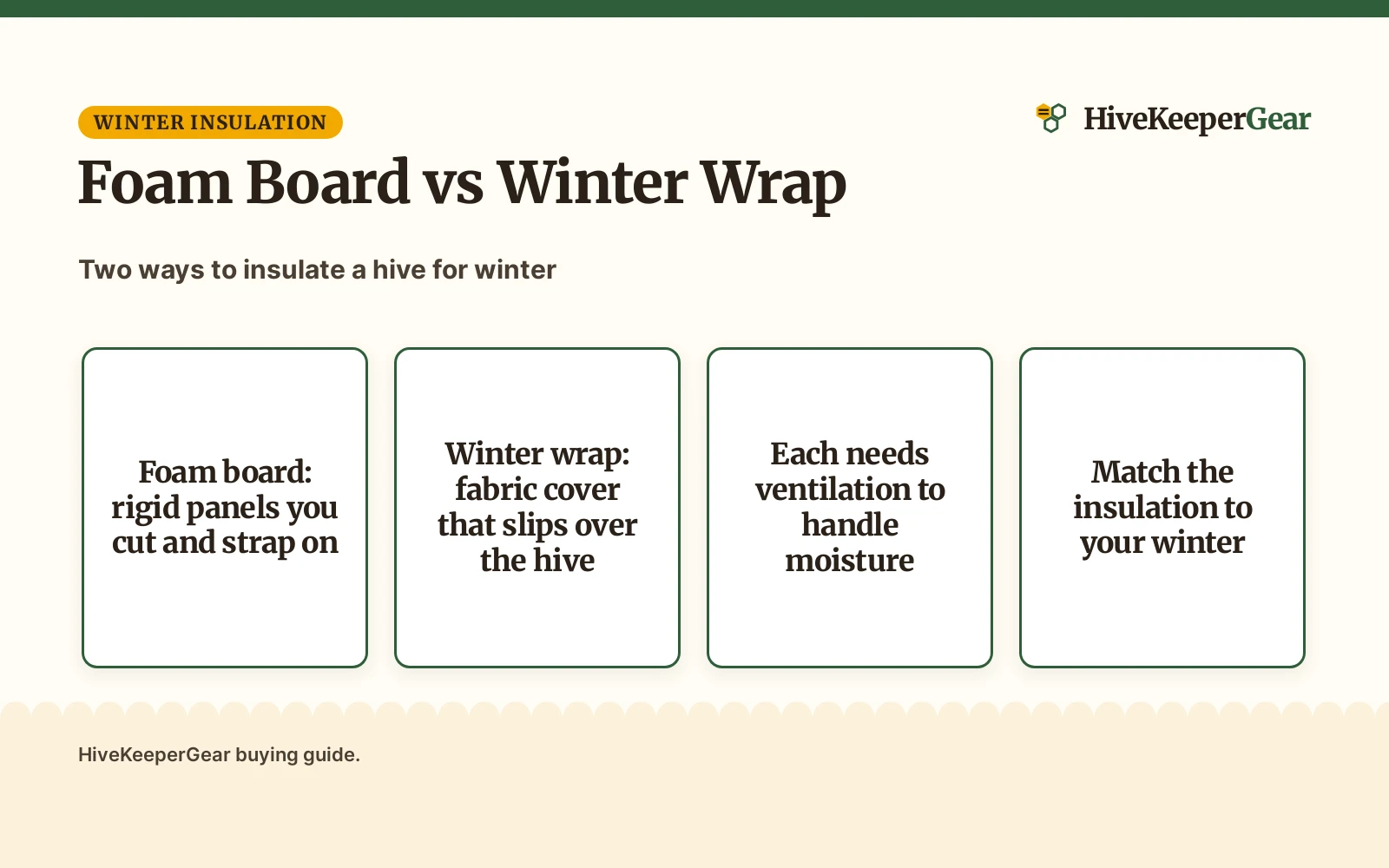
Foam board vs winter wrap comes down to this: rigid foam boards insulate the hive from the outside with stiff panels you cut and strap on, while winter wraps are fabric covers that slip over the hive like a coat. Each slows heat loss through the hive walls. Foam board generally insulates more and lasts for many seasons of reuse, while wraps go on faster and store flat when spring arrives. In a cold climate, each option beats leaving the hive uninsulated.
HiveKeeperGear earns a commission when you buy through links on this site, at no extra cost to you. As an Amazon Associate I earn from qualifying purchases. Affiliate disclosure.
What foam board does on a hive
Rigid foam board is the stiff insulation sold in large sheets at building supply stores. You cut panels to fit the sides of the hive, and sometimes the top, then hold them in place with straps, tape or friction. Once strapped on, the rigid panels stay put in wind and can be reused for many winters if you store them dry. Foam board does not breathe, so moisture management matters: pair it with upper ventilation and a clear entrance so damp air can escape instead of condensing inside the hive.
What a winter wrap does
A winter wrap is a fabric cover made to slip over the hive, often with insulation sewn in and a separate top piece. Installation is quick: lift it over the boxes, fasten it, and you are done, which matters when you winterize many hives in an afternoon. Wraps fold or roll for storage, taking little shed space. Most wraps leave the entrance accessible, and many include a top cover, so check that the design you choose keeps the entrance and ventilation open.
Foam board vs winter wrap side by side
| Aspect | Foam board | Winter wrap |
|---|---|---|
| Install effort | Cut panels to fit, then strap on | Slip over the hive and fasten |
| Reuse | Rigid panels last many seasons | Fabric can wear with repeated handling |
| Storage | Bulky panels need dry storage | Folds or rolls flat |
| Moisture | Does not breathe; needs ventilation | Varies by design; check vents |
| Best for | Coldest climates, few hives | Many hives, quick install |
Our best bee hive winter wrap guide compares fabric covers in detail, and insulated bee hive vs standard hive covers hives with insulation built into the boxes.
A note on moisture and ventilation
Insulation keeps heat in, but a winter cluster also gives off moisture, and a tight hive turns that moisture into condensation that drips back on the bees. Whichever option you choose, keep the entrance clear and leave a path for damp air to exit near the top. Foam board needs this more than wraps because it does not breathe at all. Never seal a hive airtight: bees need fresh air all winter. See our best hive entrance reducer for winter guide for entrance options.
Which one should you buy?
If your winters are long and harsh, foam board gives strong insulation for the effort, and the panels come back out of storage year after year. If you run many hives, a wrap saves real time at install and takedown, and it stores in little space. You can also combine them, with a wrap over foam-boarded hives for the coldest snaps, as long as ventilation stays open. For a mild winter a wrap alone is often enough; for a harsh one foam board is the stronger choice. Match the insulation to your winter, not your neighbor’s.
What to check before you buy
Fit the insulation to the hive, not the other way round
Foam board comes in panels you cut to the hive, so measure the boxes first and cut the panels to sit flat against the walls with no bowing. A panel that bows leaves an air channel that leaks heat exactly where the cluster sits. Wraps come sized for standard hive stacks, so count your boxes before ordering; a wrap made for two deeps will not close properly over three. Either way, the entrance and the upper ventilation must stay open after the insulation goes on, because a sealed hive kills colonies faster than cold ever does.
Think about the whole winter, not just the coldest night
Insulation goes on once and stays for months, so plan for the awkward middle of winter as well as the deep freeze. Foam board panels strapped or taped on in late autumn can stay until spring buildup, and they come off clean for storage. A wrap slips on and off in minutes, which matters when a warm spell arrives early and the hive needs to breathe. If your winters swing between thaws and hard freezes, the option you can adjust without a full teardown wins.
Count the hives, then choose
The math that matters is time, not temperature ratings. Cutting and fitting foam board for a couple of hives is an afternoon well spent, and the panels last for seasons. Cutting and fitting for a large apiary is a long weekend, while wraps go on hive after hive in minutes each. Beekeepers with a handful of hives usually pick foam board for its strength; beekeepers with rows of hives usually pick wraps for their speed. Either choice beats leaving the hives bare in a hard winter.
FAQs for beekeepers
Do beehives need winter insulation?
In cold climates, insulation helps the cluster hold its warmth with less effort. In mild climates many beekeepers skip it. Watch your own hives: if winter losses run high, insulation is one of the things to try early.
Can I use foam board and a wrap together?
Yes, as long as the entrance stays clear and damp air can still escape near the top. Layering adds insulation but also adds moisture risk, so ventilation matters more with layers, not less.
Should I insulate the top of the hive too?
Heat rises, so the top matters as much as the sides. Many wraps include a top cover; with foam board, add a panel above the inner cover while keeping ventilation open.
When should I put winter insulation on?
Once the colony has slowed for the season and before hard cold sets in. Take it off when spring buildup starts so the hive does not overheat on warm days.
Does insulation replace winter feeding?
No. Insulation slows heat loss; it does not feed bees. A colony still needs enough stores going into winter, and our best bee fondant for winter guide covers cold-weather feed.
More hive guides
Browse every guide by category: beehives, protective gear, hive tools and honey harvesting.