Glass vs Plastic Ant Farm: Which One Should You Buy?
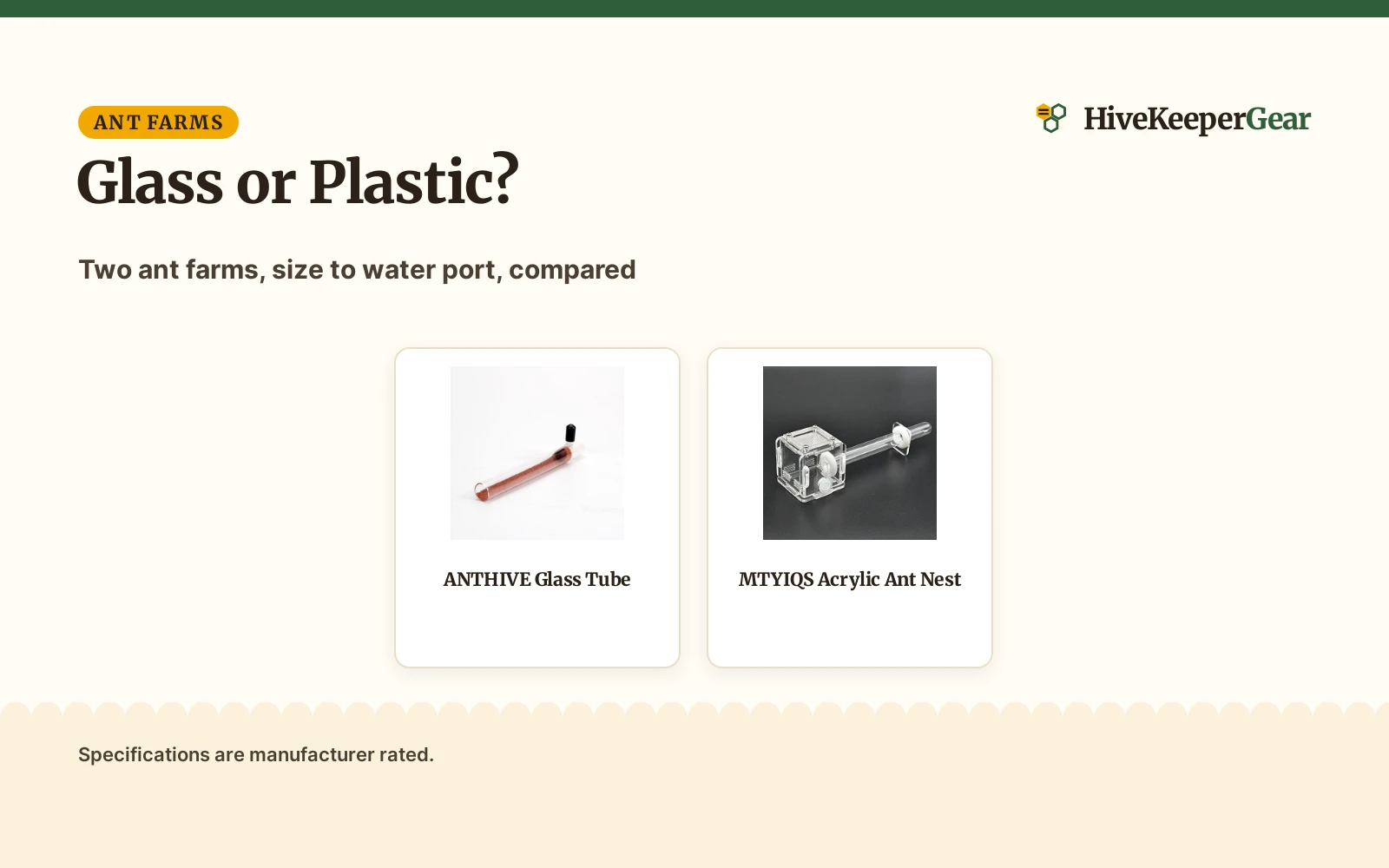
Glass vs plastic ant farm, compared on a clear glass tube and an acrylic nest: size, water port, assembly and who each one suits.

On this page
Top picks at a glance
As an Amazon Associate I earn from qualifying purchases.
- 1
 ANTHIVE Glass Tube9.4/10View on Amazon
- 2
 MTYIQS Acrylic Ant Nest9.4/10View on Amazon
The glass vs plastic ant farm choice comes down to how much nest you want to watch and how much setup you want to do. Pick the glass tube if you want a simple water-port tube for starting a colony and watching it grow. Pick the plastic nest if you want a larger observation area with a feeding zone and do not mind assembling it. We compared a glass farm and an acrylic farm below, using only what each maker states.
HiveKeeperGear earns a commission when you buy through links on this page, at no extra cost to you. As an Amazon Associate I earn from qualifying purchases. Affiliate disclosure.
Quick verdict: choose the glass tube if you want the simplest start for a new colony, with a water port for hydration and a clear view of the ants. Choose the acrylic nest if you want a bigger observation area with a feeding zone and are happy to put the pieces together with a screwdriver. Both let you watch the ants through the wall, so pick the tube for the simplest start and the nest for the bigger build.
Two examples
ANTHIVE Glass Tube
A clear glass tube, 15 by 150 mm, with a water port for hydration, serving as a formicarium and nesting tube.
Pros
- Water port for hydration without disturbing the colony
- Clear glass for a full view of ant activity
- Serves as both a formicarium and a nesting tube
- Suits starting new colonies or housing existing ones
Cons
- No warranty term is stated
- No feeding area in this tube
- One tube per purchase, so each colony needs its own
- One size only, 15 by 150 mm
MTYIQS Acrylic Ant Nest
An acrylic ant nest with a 50 by 50 by 50 mm active zone and a 180 by 15 mm tube, in 33 pieces for feeding and observation.
Pros
- Active zone and tube give a feeding area and observation space
- Acrylic about 3 mm thick, stated to last longer than other materials
- Most of the area is transparent for watching ants
- Package includes 33 pieces for the full nest
Cons
- Needs a small screwdriver to fit the small screws
- Protective film must be removed before installation
- No warranty term is stated
- No water port for hydration
As an Amazon Associate I earn from qualifying purchases.
Glass vs plastic ant farm: side by side
| Ant Farm | HiveKeeper Score | Material | Size | Water port |
|---|---|---|---|---|
| ANTHIVE Glass Tube | 9.4/10 | Clear glass | 15 x 150 mm | Water port |
| MTYIQS Acrylic Ant Nest | 9.4/10 | Acrylic, about 3 mm thick | 50 x 50 x 50 mm zone | Not stated |
These figures come from the product listings and are the brand’s own claims, gathered 25 November 2026.
Material and clarity
The ANTHIVE tube is clear glass, and the maker says the transparent glass allows a clear view of ant activity and colony development. The MTYIQS housing is acrylic about 3 mm thick, and most of the area is transparent for observation. The maker says the thick acrylic gives the nest a longer life than other material products. A protective film covers the acrylic surface to avoid scratches, and it comes off before installation.
Size and shape
The glass tube measures 15 by 150 mm, about 0.6 by 5.9 inches, a slim single tube. The acrylic nest has an active zone of 50 by 50 by 50 mm, about 1.97 inches on each side, plus a tube of 180 by 15 mm, about 7.09 by 0.59 inches. The acrylic nest is the larger of the two, with a boxy feeding zone and a longer tube, while the glass tube is a single straight tube.
Water and feeding
Only the glass tube states a water port: a specialized port for feeding water and keeping the colony hydrated without disturbing it. The acrylic nest states a feeding area instead, with the active zone sized for feeding and observation. Neither listing states a water port for the acrylic nest, and neither states a feeding area for the glass tube, so pick the side that matches the job you need done.
Assembly and setup
The glass tube arrives as a single tube with no assembly described. The acrylic nest ships as 33 pieces and needs a small screwdriver for the small screws, and the protective film comes off the surface before installation. If you want to watch ants the day the package arrives, the tube is ready first; if you enjoy putting a nest together, the acrylic kit gives you that job.
Listing gaps to check
Neither listing states a warranty term. The acrylic nest is sold as 33 pieces, so count the parts before assembly, and keep the small screwdriver handy for the small screws. The glass tube states no size options and no feeding area, so check the 15 by 150 mm size against the colony you plan to house.
Which should you choose?
Choose a glass ant farm if you want the simplest start for a new colony, a water port for hydration and a clear glass tube with nothing to build. Our best insect keeping box picks compare more small boxes for keeping insects.
Choose a plastic ant farm if you want a larger nest with a feeding area and an observation zone, and you are happy to assemble 33 pieces with a small screwdriver. Our best insect habitat kit picks compare more kits for watching insects.
Whichever you choose, both farms let you watch the colony through the wall. Read our insect observation habitat vs bug viewer comparison for more ways to watch insects.
Inside the HiveKeeper Score
| Product | HiveKeeper Score | Perf. /35 | Build /25 | Value /25 | Safety /10 | Warranty /5 |
|---|---|---|---|---|---|---|
| ANTHIVE Glass Tube | 9.4 | 28 | 21 | 20 | 0 | 0 |
| MTYIQS Acrylic Ant Nest | 9.4 | 28 | 19 | 20 | 0 | 0 |
Shown scores begin at a 9.2 minimum and reach a 9.8 maximum; an item climbs that scale only by earning more points.
The HiveKeeper Score weighs performance, build, value, safety and warranty, as explained on our how we pick page. The glass tube leads on build for its clear glass, and the acrylic nest matches it on performance for its feeding area and observation zone. Neither earns safety or warranty points because neither listing states a safety feature or a warranty term.
FAQs for beekeepers
Which ant farm material is better for watching ants?
Both let you watch the ants. The glass tube is clear glass for a full view of ant activity, and the acrylic nest has most of its area transparent for observation. The acrylic is about 3 mm thick, and the maker says the thick material gives a longer life.
Do these ant farms come with ants?
Neither listing states that ants are included; both describe the nest or tube only.
How do you water ants in a glass tube farm?
The glass tube has a water port for feeding water and keeping the colony hydrated without disturbing it. The acrylic nest states no water port.
How big is the acrylic ant nest?
The active zone measures 50 by 50 by 50 mm, about 1.97 inches on each side, and the tube measures 180 by 15 mm, about 7.09 by 0.59 inches. The package includes 33 pieces.
Do you need tools to assemble the acrylic ant nest?
Yes, a small screwdriver is needed for the small screws. Remove the protective film from the acrylic surface before installation.
More hive guides
Related: best insect habitat kit, best insect keeping box, insect observation habitat vs bug viewer, and plastic vs wood worm bin.