Hazmat Suit vs Bee Suit: Which One Should You Buy?
A hazmat suit is a disposable coverall for dust and paint, while a bee suit is made for the bee yard, with a veil and cuffs.

On this page
Top picks at a glance
As an Amazon Associate I earn from qualifying purchases.
- 1
 3-Layer Ultra Ventilated Sting Proof Bee Suit for Men & Women9.7/10View on Amazon
- 2
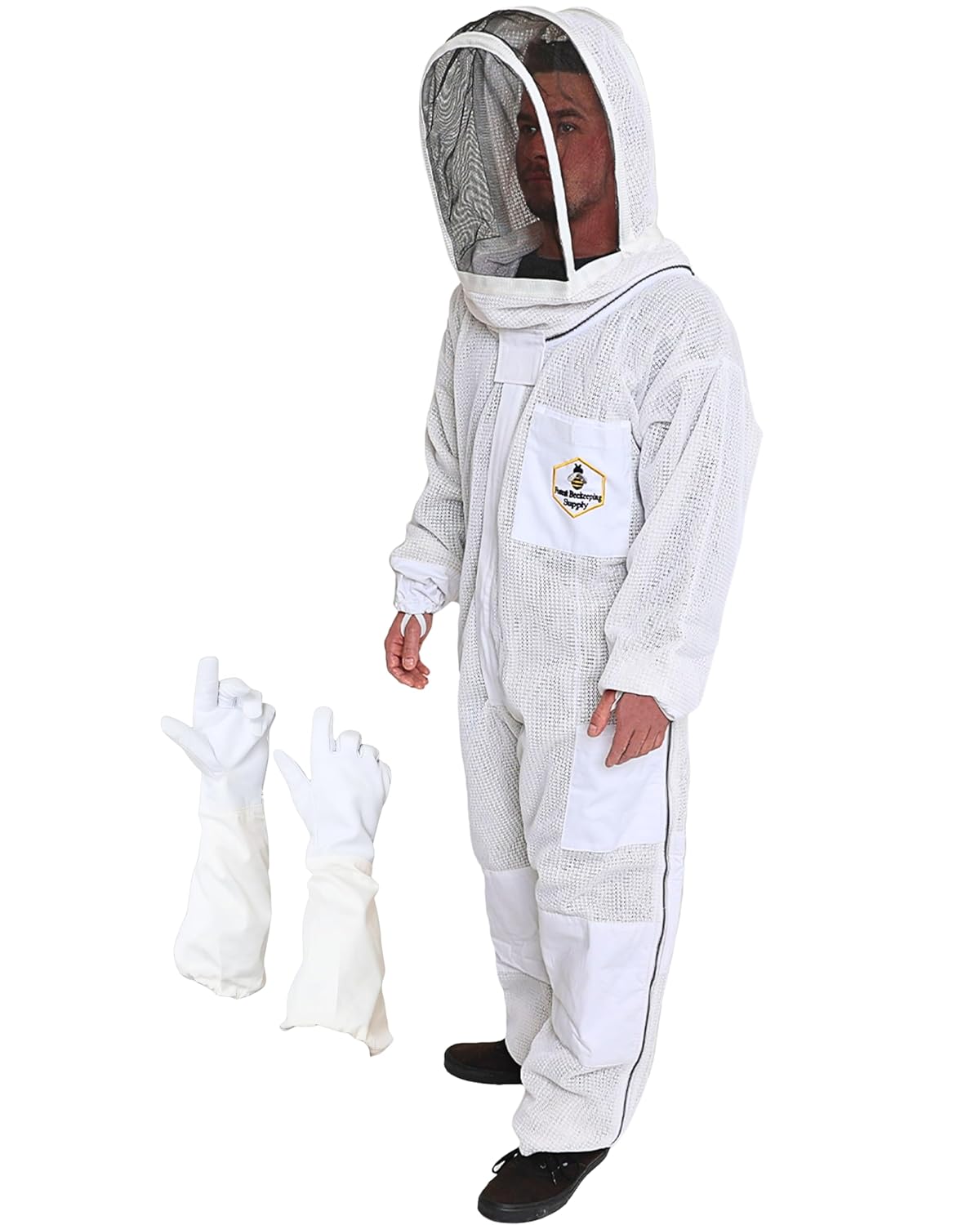 Forest Beekeeping Supply 3-Layer Ventilated Bee Suit Kit with9.6/10View on Amazon
- 3
 LONGADS Bee Suit with Gloves and Veil9.6/10View on Amazon
- 4
 Andes Safety Hazmat SuitView on Amazon
- 5
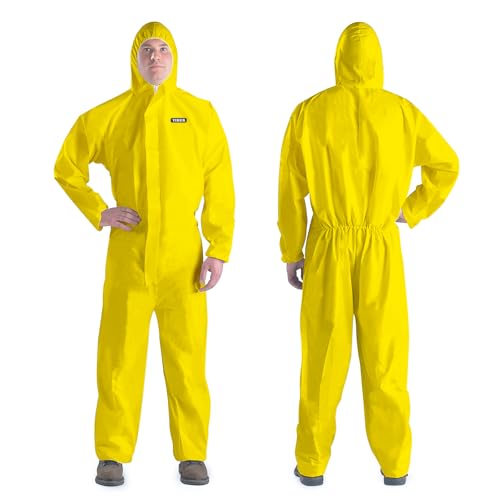 YIBER Disposable Hazmat Suit with HoodView on Amazon
- 6
 YIBER Disposable Hazmat SuitsView on Amazon
- 7
 TICONN Hazmat Suit Disposable CoverallsView on Amazon
- 8
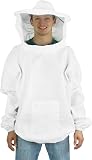 VIVO Professional XL Beekeeping Suit JacketView on Amazon
- 9VIVO Professional L Beekeeping Suit WhiteView on Amazon
At the first spring inspection, when the colony is building up and every frame is covered in bees, a new keeper looks at the white disposable coverall hanging in the garage and wonders about a hazmat suit vs bee suit. The short answer is the bee suit. A hazmat coverall is a disposable barrier made for dust, paint and dry particulates, while a bee suit is built for the bee yard, with a veil and cuffs made for working hives. The four coveralls below show what a hazmat suit does well, and where it falls short in the bee yard.
Other hives and gear to compare
 Andes Safety Hazmat SuitCheck price on Amazon
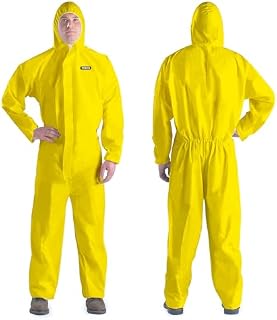 YIBER Disposable Hazmat Suit with HoodCheck price on Amazon
 YIBER Disposable Hazmat SuitsCheck price on Amazon
 TICONN Hazmat Suit Disposable CoverallsCheck price on Amazon
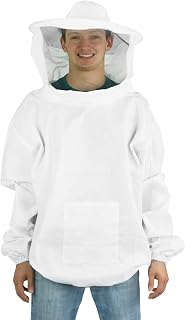 VIVO Professional XL Beekeeping Suit JacketCheck price on Amazon
- VIVO Professional L Beekeeping Suit WhiteCheck price on Amazon
HiveKeeperGear earns a commission when you buy through links on this page, at no extra cost to you. As an Amazon Associate I earn from qualifying purchases. Affiliate disclosure.
Hazmat suit vs bee suit: the difference
A hazmat suit and a bee suit solve different problems, and the difference starts at the head. The coveralls in this guide all have a hood, which sits close to the face and covers the head, neck and hair. A bee suit has a veil, a mesh screen held away from the face, so the mesh stays off the skin. That gap is the whole point of a veil, and a hood does not provide it.
Next is the seal. A bee suit closes at the wrists and ankles to help keep bees out while you work a hive. The coveralls here also list elastic wrists and ankles, which helps, but they are built to keep dust and paint off clothing, not to keep bees out. Then there is the fabric. A bee suit is made for repeated hive work, while a hazmat coverall is disposable, made to be worn once and thrown away. For a closer look at real bee suits, see our best beekeeping suit picks.
| Suit | Made for | Head cover | Wear |
|---|---|---|---|
| Hazmat coverall | Dust, paint and dry particulates | Hood | Disposable |
| Bee suit | Working hives | Veil with mesh | Reusable |
The four coveralls, ranked
All four listings below are disposable hazmat coveralls, not bee suits. They rank here by the protection the listing states, from the strongest stated rating to the plainest coverall.
1. Medtecs Hazmat Suit with Seal Tape, Type 4. This coverall lists the strongest stated protection of the four: AAMI Level 4 protection and seal tape, Type 4. The listing states PPSB laminated with PE film, an elastic hood, elastic wrists and elastic ankles, and a front zipper. The listing offers 6 size options, from 5’4″ to 6’7″.
2. Andes Safety Hazmat Suit, Large. This coverall lists a microporous PE film fabric with an anti-static feature and a 4-thread overlock stitch, which the maker says makes a stronger seam. It has an integrated hood with elastic wrists and ankles, and the listing states protection from dry particulates such as dirt, dust and paint. The listed size is Large.
3. YIBER Disposable Hazmat Suit with Hood, Large. This coverall lists a nonwoven multilayer fabric with a microporous film over spunbonded polypropylene, with elastic cuffs, waist and ankles and a zipper front. The listing states sizes Small to 4XL for adult unisex wear, and the listed size here is Large. It is made for painting, dust, cleaning and work.
4. YIBER Hazmat Suit Disposable with Hood, Small. This listing carries the same description as the YIBER coverall above, with the same fabric, hood, elastic cuffs, waist and ankles, and sizes Small to 4XL. The listed size here is Small, so it ranks last only because the listed size is Small. The description matches the Large listing, so the difference here is the listed size alone.
None of the four is a bee suit, and none has a veil. Ranked against each other, the Medtecs coverall states the strongest protection rating, while the YIBER listings state the same coverall in different listed sizes. If the job is painting, cleaning or dusty work, any of the four fits. If the job is opening a hive, buy a bee suit instead.
How to choose the best hazmat suit vs bee suit
Start with the job, not the suit
If the job is painting, cleaning, insulation work or dusty workshop tasks, a disposable coverall fits: the listings here cover dirt, dust, paint and light splashes. If the job is opening a hive, the veil matters more than the fabric, and a hazmat coverall has a hood, not a veil. Choose the suit by what it must keep out, not by how it looks on the hanger.
Check the hood, the cuffs and the zipper
A bee suit needs a veil that holds mesh away from the face, cuffs that close at the wrists and ankles, and a front zipper. Between them, the coveralls here list a hood, elastic wrists and ankles, and a front zipper, which is the right shape for dusty work but not a veil. For the difference between a veil alone and a full suit, see our bee veil vs bee suit guide.
Match the size and the fabric to the season
The YIBER listings state sizes from Small to 4XL, and the Medtecs listing gives sizes from 5’4″ to 6’7″. A loose fit leaves room to move and keeps fabric off the skin, which matters when bees are out. The YIBER listings describe the fabric as breathable, and the Medtecs listing says the coverall provides enhanced breathability. For hive work, the veil matters more than the fabric.
When a hazmat suit is the right call
A hazmat suit is the right call for messy work away from the bees: painting the hive boxes, cleaning the shed, insulation work or dusty workshop jobs. It keeps dirt, dust and paint off your clothes, and you throw it away when the job is done. It is not the right call for opening a hive, where the veil and the seal matter. Keep the coveralls for the workshop and the bee suit for the bee yard.
FAQs for beekeepers
Can I wear a hazmat suit to inspect a hive?
You can, but it is a poor substitute. The coveralls here have a hood, not a veil, so the fabric sits close to the face, and they are made to keep dust and paint off clothing, not to keep bees out.
What does a bee suit have that a hazmat suit does not?
A veil, a mesh screen held away from the face, and a suit made for repeated hive work. The coveralls here list a hood, elastic wrists and ankles, and a disposable one-piece design.
Are these coveralls reusable?
No. All four listings describe disposable one-piece coveralls. The YIBER listing says to forget heavy, reusable overalls that need cleaning, and the Medtecs listing sells the coverall as 1 Pc.
Which coverall lists the strongest protection rating?
The Medtecs coverall, with AAMI Level 4 protection and seal tape, Type 4. The Andes coverall lists a microporous PE film fabric and a 4-thread overlock stitch, with no stated protection level.
What sizes do these coveralls come in?
The YIBER listings state sizes Small to 4XL for adult unisex wear. The Medtecs listing offers 6 size options, from 5’4″ to 6’7″. The Andes listing states size Large.
More hive guides
Browse every guide by category: beehives, protective gear, hive tools and honey harvesting.