Honey Warming Blanket vs Bucket Heater: Which One Should You Buy?
A comparison of honey warming blankets and immersion bucket heaters for liquefying crystallized honey gently while safeguarding flavor and natural raw hive enzymes.

On this page
Top picks at a glance
As an Amazon Associate I earn from qualifying purchases.
- 1
 4oz Glass Mason Jars with Airtight Lids9.7/10View on Amazon
- 2
 Powerblanket BB05 Bee Blanket 5 gal Pail HeaterView on Amazon
- 3
 Upgraded 5 Gallon Honey Warmer Bucket Heater with ThermostatView on Amazon
- 4
 Metal Drum HeaterView on Amazon
As the honey harvest winds down and autumn temperatures cool the honey house, buckets of raw honey begin to firm up and crystallize on the storage shelves. Deciding between a honey warming blanket vs bucket heater comes down to whether you prioritize gentle, uniform heat distribution or rapid core melting. For most hobby beekeepers, a honey warming blanket is the better choice because it warms the container evenly from the outside, keeping raw honey enzymes, natural aroma, and delicate floral flavors intact without risking hot spots or scorched sugars. An immersion bucket heater melts through solid crystallization faster by dropping an electric element directly into the honey, but it requires continuous monitoring, frequent stirring, and messy cleanup after every session.
Other hives and gear to compare
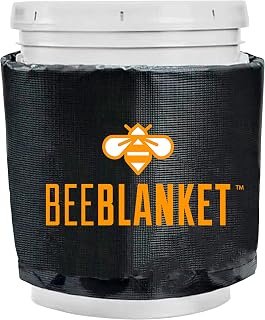 Powerblanket BB05 Bee Blanket 5 gal Pail HeaterCheck price on Amazon
 Upgraded 5 Gallon Honey Warmer Bucket Heater with ThermostatCheck price on Amazon
 Metal Drum HeaterCheck price on Amazon
HiveKeeperGear earns a commission when you buy through links on this site, at no extra cost to you. As an Amazon Associate I earn from qualifying purchases. Affiliate disclosure.
Before you heat: understanding crystallized honey
Crystallization is a natural occurrence in raw honey. Liquid nectar brought in by foraging bees consists primarily of natural glucose and fructose dissolved in water. Over time, especially during cool seasonal storage in an apiary shed or basement, glucose separates from the solution and forms solid crystals around microscopic pollen grains. Different floral sources crystallize at varying rates, with some honeys setting solid quickly while others stay liquid for a long duration.
When honey sets firmly inside a pail, beekeepers must gently reliquefy it before straining, bottling, or pouring through a gate. Applying uncontrolled heat can irreparably damage raw honey by breaking down heat-sensitive enzymes like invertase and diastase, darkening the natural amber hue, and driving off delicate floral aromas. Choosing the right heating tool ensures your harvest returns to a smooth, pourable state while preserving every bit of quality the bees produced.
Honey warming blanket vs bucket heater: key differences
Both tools restore crystallized honey to liquid form, but their heating methods and handling are completely distinct. An external blanket acts like an insulated thermal wrap around the container walls, whereas an immersion heater functions as a heating element placed directly inside the honey mass. Here is how their primary features compare:
| Comparison Factor | Honey Warming Blanket | Bucket Heater |
|---|---|---|
| Heating Method | External wrap around container perimeter | Direct immersion coil inside honey |
| Heat Distribution | Gentle and uniform through container walls | Concentrated localized heat near element |
| Raw Honey Quality | Protects natural enzymes and floral bouquet | Risks hot spots and scorching without stirring |
| Container Sealing | Warms sealed bucket with airtight lid attached | Requires open bucket or modified lid opening |
| Cleaning Requirements | Wipe exterior insulated fabric clean | Wash and dry sticky heating coils after each use |
| Liquefying Speed | Steady and gradual through outer convection | Rapid melting directly through solid core |
Heating mechanics and element placement
A honey warming blanket uses flexible heating elements sewn into insulated fabric that wraps snugly around the exterior perimeter of a honey pail or drum. Fastened with adjustable straps, the blanket delivers warmth directly to the outside container surface. Heat conducts through the bucket wall and creates a gentle convective cycle within the honey: warmed liquid rises along the outer walls while cooler crystals sink toward the center, circulating warmth throughout the container without touching the honey directly.
In contrast, an immersion bucket heater consists of a metal heating wand that descends from the top of the container into the honey itself. The lower portion containing the heating element rests in the crystalline mass, while the upper handle and controls stay above the surface. When powered, the element heats up directly against the honey, melting a liquid pocket adjacent to the coil. Because honey conducts heat slowly, warmth remains concentrated around the metal element until you stir the container to blend the warmed liquid into the surrounding solid mass.
Heat distribution and raw honey quality
Preserving raw honey quality is paramount for backyard beekeepers. Raw honey contains active enzymes, antioxidants, and delicate aromatic compounds that degrade under excessive thermal exposure. When honey is heated too quickly or subjected to harsh contact temperatures, sugars scorch, the liquid darkens, and fresh floral notes are replaced by a cooked profile.
A warming blanket minimizes thermal stress by dispersing gentle warmth across a large surface area. Because the heating elements stay at moderate temperatures, the honey absorbs warmth gradually without hot spots. An immersion bucket heater, by comparison, concentrates thermal energy across a compact element to melt through crystallization. The honey touching the metal coil can overheat before the rest of the pail begins to soften. Without frequent stirring, an immersion heater creates uneven zones of scalding liquid and cold solid crystallization.
Moisture protection and container sealing
Honey is hygroscopic, meaning it absorbs moisture from surrounding air. When honey moisture rises above acceptable levels, wild yeasts can begin to ferment, spoiling stored buckets. Maintaining an airtight seal during processing is critical, especially in humid basements, honey houses, or workshops.
A honey warming blanket holds a clear advantage here. Because it wraps around the outside of the container, you can keep the bucket lid tightly sealed throughout the entire warming cycle. Ambient humidity, dust, bee hairs, and insect pests are locked out while the honey reliquefies. With an immersion bucket heater, the pail must remain open or covered with a loose cloth to accommodate the heater shaft and cord. This leaves your harvest exposed to ambient humidity and airborne debris during warming.
Cleaning and food contact maintenance
Equipment that comes into direct contact with honey requires thorough cleaning before and after each use. A honey warming blanket is an external accessory that never touches the honey. The outer fabric stays clean, and if stray drips land on it during bottling, a quick wipe with a damp cloth is all that is needed. Once the bucket is warm, you can remove the blanket, fold it flat, and store it safely.
An immersion bucket heater is submerged directly into thick honey. After every warming session, you must lift the coated heater out of the bucket, let excess honey drain, and thoroughly clean every bracket and spiral coil. Washing electrical tools around water requires care to keep the control housing dry while scrubbing sticky residue off the immersion wand. Any moisture left on the coils before the next use can introduce water into your honey.
Liquefying speed versus gentle processing
While warming blankets excel in quality control and convenience, immersion bucket heaters hold an advantage in raw speed. Because the heating element makes direct physical contact with the crystallization, an immersion heater begins melting the central core immediately upon powering on. If you have several crystallized pails that must be liquefied on a tight harvesting schedule, an immersion heater breaks through solid blocks faster than an external wrap.
Warming blankets operate on a slower, more deliberate timeline. Warming through the walls of a plastic pail requires patience, as thermal energy conducts inward layer by layer. For beekeepers who value raw honey integrity over sheer speed, this gentle pace is an asset rather than a drawback. It allows the crystalline structure to dissolve smoothly into liquid honey without shocking natural enzymes or altering the bouquet.
A honey warming routine
Inspect the container: Ensure your honey is stored in a clean, food-grade bucket with an intact lid and functional honey gate. Place the bucket on a raised wooden board or insulation pad rather than cold concrete, which draws warmth away from the base.
Fit the heater properly: Wrap the warming blanket firmly around the bucket circumference, fastening all straps so the heating element makes direct contact with the container wall. If using an immersion heater, center the element in the crystalline mass and secure the bracket so the coil does not touch the bucket bottom or sides.
Monitor and stir gently: Allow the unit to warm steadily. If using an immersion wand, stir the honey periodically with a clean, sanitized stainless steel paddle to blend hot zones into cooler areas. Keep stirring smooth to prevent folding air bubbles into the liquid.
Settle before bottling: Once all crystals have dissolved and the honey flows freely, turn off the heat and let the pail rest undisturbed for a period. This allows micro-bubbles introduced during processing to rise cleanly to the surface before you open the gate to fill your jars.
Helpful accessories for warming honey
- A food-grade container with a tight-closing valve, such as a honey bucket with gate, makes dispensing smooth honey into retail containers clean and drip-free.
- A heavy-duty settling pail with an ergonomic pour spout, like our recommended honey bucket with spout, helps transfer liquid honey without spills.
- A stainless double mesh sieve, featured in our guide to the best honey strainer options, captures wax cappings and hive debris before you warm your crop.
- A reliable optical or digital moisture refractometer, covered in our review of the best honey refractometer tools, lets you verify moisture content before heating begins.
- Quality uncapping gear, such as an uncapping tank or an electric uncapping knife, keeps comb processing clean during extraction day.
- Choosing between durable containers, as detailed in our guide on glass vs plastic honey jars, ensures your reliquefied harvest looks attractive on the shelf.
What is not covered in this guide
This comparison focuses strictly on backyard and small-scale apiary heating tools for crystallized honey in standard pails and small containers. We do not evaluate large industrial jacketed warming tanks, commercial flash-heating pasteurizers, or bulk drum warming cabinets used in commercial bottling facilities. Furthermore, HiveKeeperGear does not provide veterinary advice, bee disease treatments, or health and medicinal claims regarding honey consumption. For regulations on commercial bottling facilities, honey labeling requirements, and cottage food rules, consult your state department of agriculture or local beekeeping extension office.
FAQs for beekeepers
Does warming honey destroy its raw qualities?
Excessive heat degrades delicate enzymes and alters floral flavor notes. Using gentle indirect heat from a warming blanket maintains raw honey characteristics, while high direct heat risks scorching sugars.
Can you use a warming blanket on plastic buckets?
Yes, warming blankets designed for honey containers wrap safely around food-grade plastic pails as well as stainless steel drums. They distribute gentle warmth across the container surface without melting plastic.
Why does honey crystallize in storage?
Crystallization is a natural physical process that occurs when glucose separates from water and forms solid crystals. Raw honey containing natural pollen grains crystallizes readily during cool seasonal storage.
Can I leave a honey warming blanket on unattended?
Warming blankets with controlled heating elements are designed for steady, unattended warming over extended periods. Check the container periodically and ensure the blanket fits snugly against the bucket exterior.
Do I need to stir honey while warming?
Occasional gentle stirring helps distribute liquefied honey and evens out warmth throughout the container. Avoid vigorous whipping, which introduces tiny air bubbles that make honey appear cloudy.
More hive guides
Browse every guide by category: honey harvesting, hive tools, beehives and protective gear.
More picks: Explore our beekeeping supplies for beginners checklist, or discover the top tools in our best honey extractor guide.