How to Use a Bee Smoker: Step-by-Step Apiary Guide
Learn how to use a bee smoker step by step, from choosing clean burlap or pellet fuel and lighting the fire chamber to calming honey bees during apiary hive inspections.

On this page
Top picks at a glance
As an Amazon Associate I earn from qualifying purchases.
- 1
 VIVO Stainless Steel Bee Hive Smoker Heat Shield9.6/10View on Amazon
- 2
 Bee Smoker Beekeeping Domed Shaped 11 inch Heavy-Duty9.6/10View on Amazon
- 3
 Bee Hive Smoker Kit9.6/10View on Amazon
- 4
 Hahafelt 8.2 Pound Burlap Bee Smoker Fuel PelletsView on Amazon
- 5
 ZffXH 216 PCS/lot Bee Hive Smoker Pellet- Natural Bee HiveView on Amazon
- 6
 Honey Keeper Bee Hive Smoker Stainless Steel with Heat ShieldView on Amazon
- 7
 11-inch Stainless Steel Bee Hive Smoker with 3 Pack of SmokeView on Amazon
- 8
 Foxhound Bee Co Stainless Steel 12.5-inch Pro Bee Hive SmokerView on Amazon
- 9
 SunVara Bee Smoker Stainless Steel Heat Shield High StandardView on Amazon
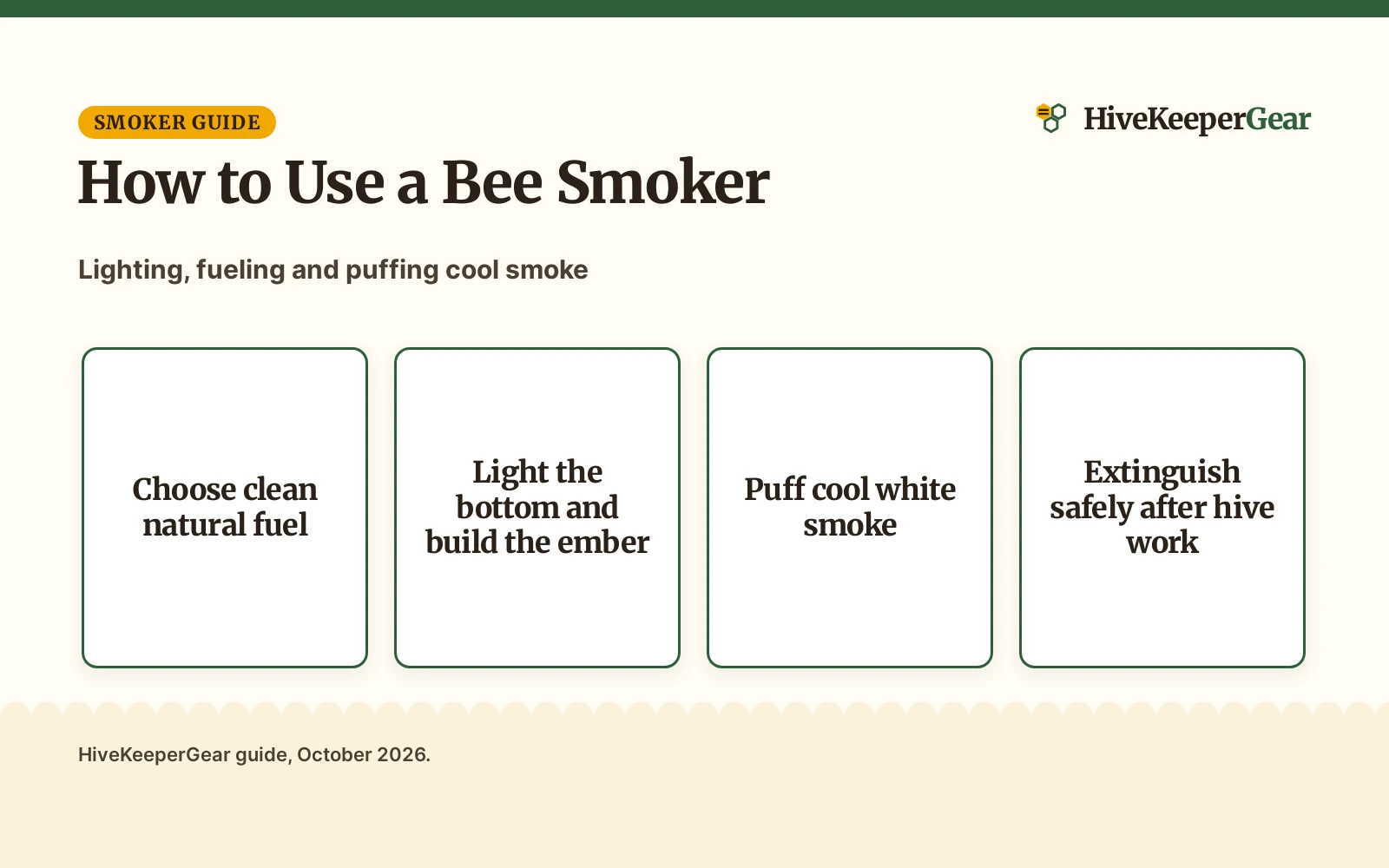
Learning how to use a bee smoker is essential for calming honey bees during hive inspections. Place dry starter fuel in the fire chamber, ignite it until embers form, pack natural fuel on top, and pump the bellows until cool white smoke puffs from the nozzle. Puff gently across the hive entrance and under the inner cover to mask alarm pheromones, then keep the smoker upright nearby.
Other hives and gear to compare
 Hahafelt 8.2 Pound Burlap Bee Smoker Fuel PelletsCheck price on Amazon
 ZffXH 216 PCS/lot Bee Hive Smoker Pellet- Natural Bee HiveCheck price on Amazon
 Honey Keeper Bee Hive Smoker Stainless Steel with Heat ShieldCheck price on Amazon
 11-inch Stainless Steel Bee Hive Smoker with 3 Pack of SmokeCheck price on Amazon
 Foxhound Bee Co Stainless Steel 12.5-inch Pro Bee Hive SmokerCheck price on Amazon
 SunVara Bee Smoker Stainless Steel Heat Shield High StandardCheck price on Amazon
HiveKeeperGear earns a commission when you buy through links on this site, at no extra cost to you. As an Amazon Associate I earn from qualifying purchases. Affiliate disclosure.
Before you start: how smoke affects honey bees
Bees communicate through alarm pheromones released when a colony is disturbed. Cool white smoke masks these alarm scents, interrupting defensive signals among worker bees. The smoke also encourages bees to move into comb spaces and feed on open honey, keeping the colony subdued. Proper smoker technique delivers cool smoke rather than hot air or flame, keeping bees calm while protecting comb and brood.
How to use a bee smoker step by step
Operating a bee smoker requires dry fuel, proper airflow, and steady temperature control. The table below outlines smoker fuel choices and smoker specifications published by manufacturers, including stated burn durations, package weights, and dimensions.
| Fuel or equipment | Listing brand | Stated specifications | Material format |
|---|---|---|---|
| Stainless steel smoker kit | Hillsuren | 13.78 by 7.87 by 5.91 inches package dimensions, 4.5 pounds package weight, with 51 burlap pads (about 2.2 pounds) | Smoker kit with heat shield |
| Jute burlap rolls | Golden Bay | 2 pounds with 36 rolls of natural burlap | Pre-rolled burlap strips |
| Untreated jute rope | GliCraft | 3 pounds supply (3.45 pounds item weight) | Untreated rope fiber |
| Jute burlap rolls | Moukeren | 6 pounds supply (6.06 pounds item weight) | Rolls of burlap strips |
| Burlap smoker fuel | Lawei | 4 pounds supply (4.07 pounds item weight) | Cut burlap pieces |
| Bee smoker pellets | ZffXH | 2 to 4 pellets burn for about 20 minutes (54 pellets, 1.4 pounds) | Compressed plant pellets |
| Mugwort smoker pellets | Queen Excluder | 4 to 6 pellets burn for 15 to 20 minutes (108 pellets per pack) | Mugwort herbal pellets |
Fuel preparation: choose clean natural smoker fuel
Selecting the right fuel is critical for producing cool smoke. Beekeepers rely on untreated burlap, jute fiber, or compressed pellets. In manufacturer listings, Golden Bay packages 36 rolls of natural burlap in a 2-pound box, GliCraft supplies 3 pounds of untreated jute rope fiber, and Moukeren provides 6 pounds of natural jute rolls. These fuels ignite readily and form a steady ember bed.
Compressed pellets offer another option. In listing data, ZffXH indicates that burning 2 to 4 pellets provides about 20 minutes of smoke, while Queen Excluder notes that 4 to 6 compressed mugwort pellets produce 15 to 20 minutes of smoke. Avoid synthetic fabrics, treated wood, and chemical starters. Explore our guide to beekeeping smoker fuel for material details.
Ignition: light starter tinder in the fire chamber
A lasting fire begins with a well-ventilated base. Most stainless steel smokers include a raised interior floor plate. For example, Hillsuren highlights a triple leg base gasket designed to elevate fuel and promote bottom airflow. Place a handful of dry starter tinder, such as shredded burlap or pine needles, directly on the base grate.
Ignite the starter with a match or lighter. Pump the bellows gently to feed oxygen through the lower grate. Let starter fuel burn down until glowing embers form across the bottom before loading main fuel, preventing premature flameout.
Airflow and pumping: build cool white smoke
Once embers coat the bottom grate, pack primary fuel into the chamber. Add handfuls of burlap or pellets over the embers, pumping between additions. Use the flat edge of your hive tool to compress fuel gently into a smoldering bed without blocking airflow.
Close the lid and pump in slow pulses until thick, cool white smoke emerges. Check smoke temperature against your wrist; if air feels hot or sparks appear, pack green grass over the fuel to filter sparks and cool the draft. Smoker models like Hillsuren incorporate a protective wire heat shield and an integrated hanging hook. Our guide to the best bee smoker compares stainless models with shields.
Hive application: smoke the entrance and frames
Stand to the side or behind the hive to keep the entrance flight path clear. Direct several soft puffs of smoke across the bottom entrance, pausing briefly while guard bees retreat inward and spread the calming cue.
Pry the outer cover loose gently with your hive tool and remove it. Next, crack the inner cover slightly, puff gentle smoke into the gap, wait a moment, and lift it off. Puff lightly across the top bars to move bees downward, clearing frame lugs so you can lift frames without crushing bees. Use smoke sparingly, as excessive smoke agitates colonies and disrupts foraging.
Safe shutdown: extinguish the smoker after inspection
A smoker can harbor smoldering embers for hours, creating a fire hazard if left unattended. After inspection, extinguish the smoker by cutting off oxygen. Push a wooden plug, green grass, or a metal cap into the nozzle to stop chimney draft and starve the fire.
Place the smoker in a dedicated metal container, such as an empty ammo box or galvanized pail, until it cools completely. Never dump hot ash into dry grass. Once cool, empty spent ash and scrape soot from the rim so the lid seals cleanly.
An apiary inspection timeline
Before opening: Put on your beekeeping suit, veil, and beekeeping gloves. Light the smoker away from dry brush, confirm cool white smoke, and keep tools accessible. At the entrance: Stand to the side, puff smoke into the entrance, wait for the colony to settle, and remove the outer lid. During inspection: Apply light puffs across frame top bars when bees crowd margins. Keep the smoker upright on a stable surface, pumping gently if smoke thins. Closing the hive: Replace frames carefully, puff lightly to clear box rims, and replace covers. Afterward: Plug the nozzle to extinguish embers, store the cooled smoker in a metal container, and clean tools.
Helpful smoker gear and habits
- A dedicated metal box to store your smoker and cold fuel securely in your vehicle or shed.
- A reliable long-reach lighter kept inside your tool kit for breezy days.
- A soft bee brush for sweeping bees off frame edges without heavy smoke.
- A sealed container to keep burlap and pellets dry between hive visits.
- An apiary logbook to record colony temperament during inspections.
Consistent habits make hive inspections smoother, turning smoker management into a calm routine.
What a bee smoker does not do
A bee smoker calms honey bees and masks alarm pheromones, but it does not replace protective gear or careful handling. Smoke does not eliminate defensiveness in aggressive colonies, and excessive smoke agitates bees. We do not provide health, disease, or veterinary advice; consult your local extension office for colony health guidance.
FAQs for beekeepers
What fuel should I put in a bee smoker?
Use clean, untreated natural fibers or compressed pellets. Maker listings show popular options including jute burlap rolls from Moukeren and Golden Bay, untreated jute rope from GliCraft, and compressed mugwort pellets from Queen Excluder and ZffXH. Avoid synthetic fabrics and treated wood.
How long does bee smoker fuel stay lit?
Burn duration varies by fuel and compression. In listing specifications, ZffXH states that 2 to 4 pellets burn for about 20 minutes, while Queen Excluder lists 4 to 6 mugwort pellets providing 15 to 20 minutes of smoke. Burlap burns steadily when packed firmly over glowing embers.
Why does my bee smoker keep going out?
A smoker goes out if the starter ember bed was too small or fuel was packed too tightly. Build a strong starter flame, pump the bellows steadily to establish embers, and add fuel gradually so bottom airflow remains clear.
How much smoke should I use on a beehive?
Use a few light, cool puffs at the entrance and across the top bars. The goal is masking alarm pheromones, not filling the hive with hot smoke that panics the colony.
What size bee smoker should a beginner choose?
Beginners do well with a standard stainless steel smoker featuring an outer wire heat shield and mounting hook. Kit listings vary; for example, Hillsuren packages a smoker with 51 burlap fuel pads in a box measuring 13.78 by 7.87 by 5.91 inches with a package weight of 4.5 pounds. Prioritize heat shield protection over package size.
More hive guides
Browse every guide by category: hive tools, bee smokers, protective gear, beehives and honey harvesting.
More picks: Explore our best bee smoker comparisons, see smoker fuel picks, compare hive tools, or start with our beekeeping equipment list for beginners.