Latex vs Nitrile Beekeeping Gloves: Which One Should You Buy?
Latex stretches and fits snug for frame handling; nitrile resists punctures and skips the latex allergy risk. Three disposable gloves compared.

On this page
Top picks at a glance
As an Amazon Associate I earn from qualifying purchases.
- 1
 ANBOSON 10 Mil Heavy Duty Nitrile Gloves with Diamond Grip9.8/10View on Amazon
- 2
 BEASTEK 8Mil Nitrile Gloves9.7/10View on Amazon
- 3
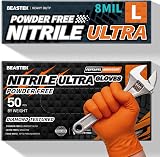 BEASTEK 8Mil Orange Nitrile Gloves9.7/10View on Amazon
- 4
 Ansell Microflex Diamond Grip MF-300 Disposable Latex GlovesView on Amazon
- 5
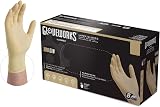 GLOVEWORKS HD Industrial White Latex GlovesView on Amazon
- 6
 Schneider Black Nitrile GlovesView on Amazon
Latex vs nitrile beekeeping gloves is a material question first and a fit question second. Latex stretches, fits snug and keeps your grip on frames; nitrile resists punctures and chemicals and carries no latex allergy risk. This guide compares the three disposable gloves in data: the Ansell Microflex Diamond Grip MF-300 and the GLOVEWORKS HD, both latex, and the TitanFlex Heavy Duty nitrile.
Other hives and gear to compare
 Ansell Microflex Diamond Grip MF-300 Disposable Latex GlovesCheck price on Amazon
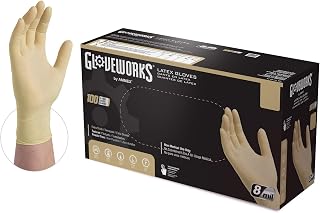 GLOVEWORKS HD Industrial White Latex GlovesCheck price on Amazon
 Schneider Black Nitrile GlovesCheck price on Amazon
HiveKeeperGear earns a commission when you buy through links on this page, at no extra cost to you. Affiliate disclosure.
The short answer
Pick latex if you want the snuggest, most tactile glove and no one in your household has a latex allergy: the Ansell MF-300 states 7 mils thickness, powder free, stretchable latex with an Exam Grade and Food Contact Approved certification, and the GLOVEWORKS HD states 8 mil latex, powder free and textured. Pick nitrile if you want puncture resistance and a latex-free material: the TitanFlex states 8-mil nitrile with raised diamond texture, chemical resistant, puncture proof and latex free. All three are disposable, waterproof and ambidextrous with a 9.5 inch length.
Latex gloves for beekeeping
Latex is the stretchier material, and that shows in the two latex picks. The Ansell Microflex Diamond Grip MF-300 states powder free, stretchable latex at 7 mils thickness with textured fingers, in a 100 count box, natural color, sized XS to 2XL. It is the only one of the three with stated certifications: Exam Grade and Food Contact Approved under FDA regulations. Its spec table lists 6.3 millimeters for item thickness, which conflicts with the 7 mils figure; take 7 mils.
The GLOVEWORKS HD Industrial White Latex Gloves state 8 mil, powder free, textured, disposable latex in a 100 count box, double chlorinated finish, sized S to XXL, at 1.4 pounds. One spec line says Latex Free while the material is stated as latex; take latex. The GLOVEWORKS warranty line only points to a warranty information page with no term, so no warranty term is stated.
Both latex gloves are pull-on and ambidextrous. The Ansell states its warranty as No Warranty outright.
Nitrile gloves for beekeeping
The TitanFlex Heavy Duty Industrial Nitrile Gloves state 8-mil nitrile with raised diamond texture, latex free, powder free, chemical resistant, food grade, non-sterile and puncture proof, waterproof and ambidextrous. The box here holds 50 count, with sizes S to XXL stated and packaging options up to 10 boxes per case. The stated warranty is a manufacture warranty with no term given, so no warranty term is counted.
Nitrile does not stretch like latex, but the TitanFlex states a stretch fit type. For hive work the puncture proof and chemical resistant statements are the practical difference: the listing states them for the TitanFlex, not for the latex picks.
Thickness and count
Thickness is stated in mils: the Ansell at 7 mils, the TitanFlex at 8-mil and the GLOVEWORKS at 8 mil. The Ansell’s spec table also lists 6.3 millimeters for item thickness, which conflicts with the 7 mils figure; the article uses 7 mils. At these thicknesses the material matters more than the mil count, and the TitanFlex’s stated puncture proof construction is the bigger difference.
Count per box differs: the two latex picks come 100 count per box, while the TitanFlex nitrile is 50 count with packaging options up to 10 boxes per case. The GLOVEWORKS box weighs 1.4 pounds. For a keeper going through a pair per inspection, the 100 count boxes last longer between orders.
Latex vs nitrile beekeeping gloves: the three gloves, ranked
1. Ansell Microflex Diamond Grip MF-300: the only glove here with stated certifications, Exam Grade and Food Contact Approved, at 7 mils with textured fingers. The stated warranty is No Warranty, so nothing to claim there.
2. TitanFlex Heavy Duty Nitrile: the latex-free option, 8-mil with raised diamond texture, chemical resistant and puncture proof. Best for anyone with latex sensitivity or rough work.
3. GLOVEWORKS HD Latex: 8 mil, powder free, textured and double chlorinated, a solid 100 count box. It trails the Ansell only on stated certifications.
Sizes and fit
The Ansell states the widest size range, XS to 2XL. The TitanFlex and GLOVEWORKS state S to XXL. All three are ambidextrous, so either hand fits either glove, and all three state a 9.5 inch length, which covers the wrist but not the forearm.
Grip texture differs by pick. The Ansell states textured fingers, the TitanFlex a raised diamond texture, and the GLOVEWORKS a textured finish. The Ansell is natural color; the TitanFlex and GLOVEWORKS listings state their own colors. All three state powder free, and the Ansell adds a stretchable latex fit while the TitanFlex states a stretch fit type.
Latex allergy: the deciding factor
If you or anyone helping at the hives has a latex allergy, the choice is made for you: use the TitanFlex nitrile, which states latex free. For keepers with no sensitivity, the stretchable, textured latex picks give the snugger feel; nitrile is stated puncture proof. Both materials are disposable, so treat them as single-use: a fresh pair each inspection costs little.
FAQs for beekeepers
Are disposable gloves enough for beekeeping?
For calm hives and quick inspections, yes: they keep propolis and honey off your hands while leaving full dexterity. For defensive colonies, pair them with gauntlet-style bee gloves or a suit; disposables offer no sting protection up the forearm.
Which is thicker, the latex or the nitrile here?
The TitanFlex nitrile states 8-mil and the GLOVEWORKS latex states 8 mil; the Ansell latex states 7 mils. At these thicknesses the material matters more than the mil count.
Do any of these state a warranty term?
No. The Ansell states No Warranty, and the TitanFlex and GLOVEWORKS state only a manufacture warranty or a warranty information link with no term.
Which sizes are available?
The Ansell states XS to 2XL, the TitanFlex and GLOVEWORKS state S to XXL. All three are ambidextrous with a 9.5 inch length.
Latex or nitrile for propolis cleanup?
Nitrile. The TitanFlex states chemical resistance and puncture proof construction, which suits solvent and scraper work. No chemical resistance is stated for the latex picks.
Which have textured grip?
All three: the Ansell states textured fingers, the TitanFlex a raised diamond texture, and the GLOVEWORKS a textured finish.
More hive guides
See the nitrile vs vinyl beekeeping gloves and ventilated vs leather beekeeping gloves comparisons, plus the best beekeeping gloves for large hands roundup.