Mason Bee Cocoons vs Mason Bee Tubes: Which One Should You Buy?
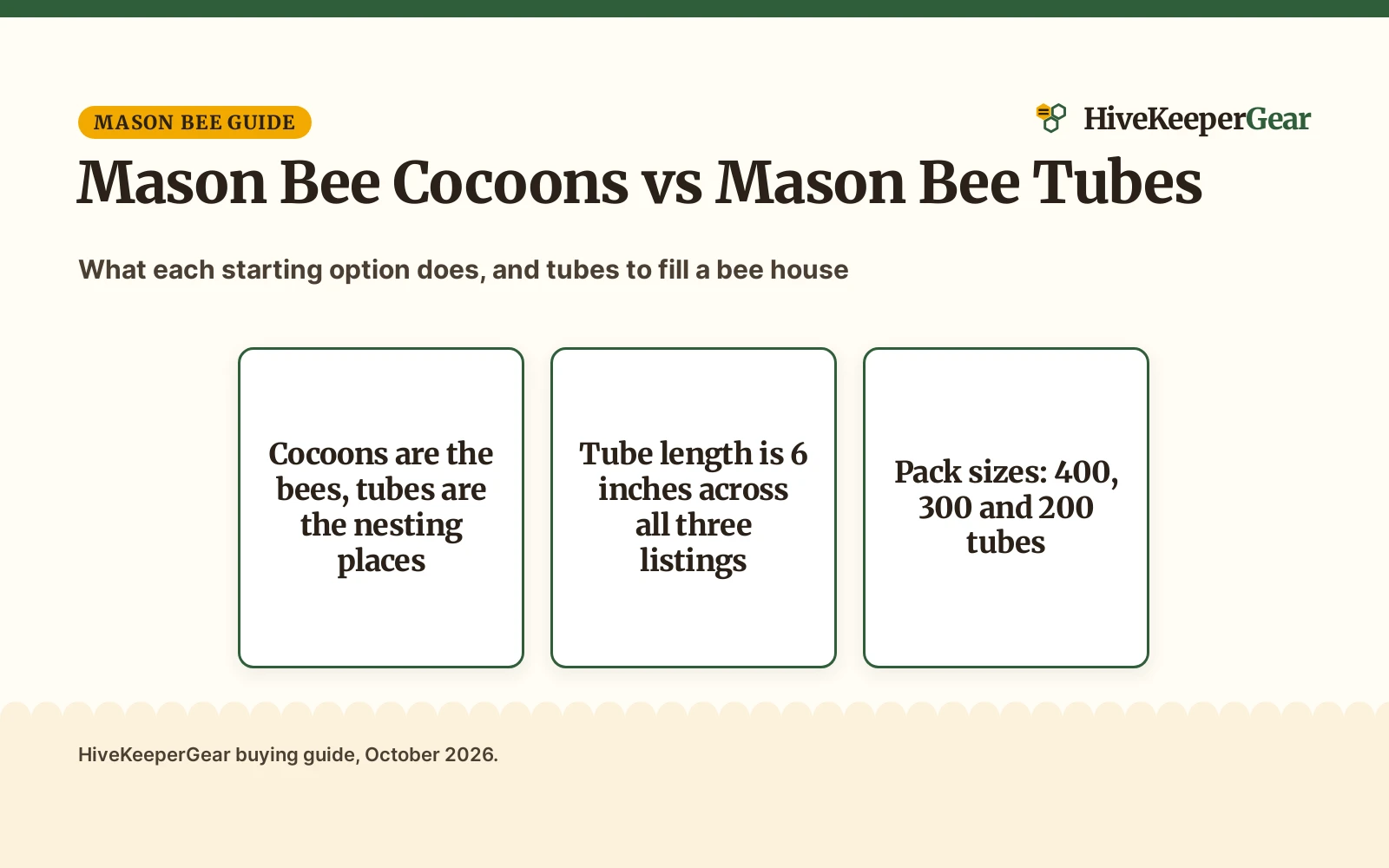
Cocoons and tubes are different parts of the same mason bee setup, with tubes in 6 inch length and packs of 400, 300 and 200 tubes.

On this page
Top picks at a glance
As an Amazon Associate I earn from qualifying purchases.
- 1
 Rivajam 150 Mason Bee Tubes with 75 Cardboard Tubes and 759.6/10View on Amazon
- 2
 Rivajam 125 Mason Bee Cardboard Nest Tubes Refill Pack9.6/10View on Amazon
- 3
 Veezy Natural Reed Mason Bee Tubes with Clay Sealer9.6/10View on Amazon
- 4
 Gueevin 400 Pcs Mason Beehive Tubes 6 Inch Long x 5/16"View on Amazon
- 5
 100PCS Mason Bee TubesView on Amazon
- 6
 Mason Bee TubesView on Amazon
- 7
 AukBeeFun Cardboard Mason Bee House Tubes 6 Inches PaperView on Amazon
- 8
 INature Solitary Bee Bamboo TubesView on Amazon
In spring, when mason bees visit garden flowers, many keepers ask whether to start with mason bee cocoons vs mason bee tubes. The short answer is that cocoons and tubes are different parts of the same setup, not rival choices. Cocoons are bees in dormant form, placed near a bee house to bring mason bees to the garden. Tubes are paper nesting places that fill a bee house and give those bees somewhere to nest. In short, cocoons are the bees placed near a bee house, and tubes are the nesting places inside it.
Other hives and gear to compare
 Gueevin 400 Pcs Mason Beehive Tubes 6 Inch Long x 5/16"Check price on Amazon
 100PCS Mason Bee TubesCheck price on Amazon
 Mason Bee TubesCheck price on Amazon
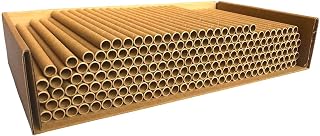 AukBeeFun Cardboard Mason Bee House Tubes 6 Inches PaperCheck price on Amazon
 Rivajam 150 Mason Bee House Tubes Refill PackCheck price on Amazon
 INature Solitary Bee Bamboo TubesCheck price on Amazon
HiveKeeperGear earns a commission when you buy through links on this site, at no extra cost to you. As an Amazon Associate I earn from qualifying purchases. Affiliate disclosure.
How mason bee cocoons vs mason bee tubes differ
Cocoons and tubes answer different questions in the same setup. Cocoons answer where the bees come from: they are bees in dormant form, placed near a bee house. Tubes answer where those bees nest: they are paper tubes that fill a bee house. A bee house that relies on tubes has no tube nesting places ready until tubes are inserted, and tubes alone do not supply bees to fill them. The listings in the gear section below cover tubes, since tubes are the gear part of the setup, while cocoons are the bees that use that gear.
| Starting option | What it is | What it does in a bee house |
|---|---|---|
| Cocoons | Bees in dormant form, placed near a bee house | Bees placed near the house |
| Tubes | Paper nesting tubes that fill a bee house | Give bees nesting places |
That distinction shapes the buying order. Start with the house and its tubes, so nesting places are ready when bees arrive. Then bees in cocoon form are placed near the house. The rest of this guide covers tubes in detail, because pack size and material detail are the points where the listings differ, while the cocoon side of the setup is about bringing bees rather than choosing gear.
Gear: mason bee tubes in the listings
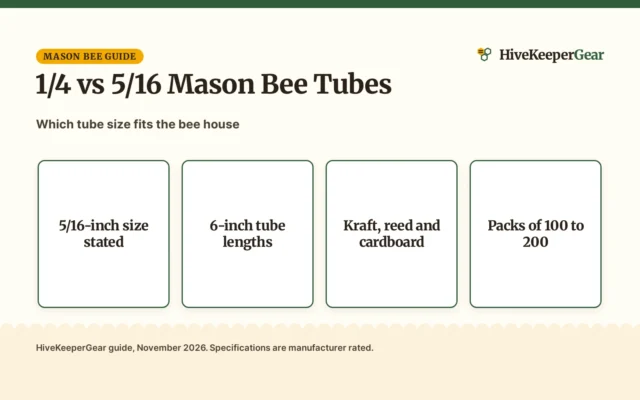
The gear section lists the tube packs in order, starting with the listing that gives the fullest picture. The Gueevin pack states pack size, material, size and weight, while the other listings state pack size, material and size, with no weight stated. All three listings share a stated 6 inch length, so pack size and material detail are what separate them.
Gueevin 400 tubes
Gueevin lists 400 pieces of paper beehive tubes, with a spec table weight of 2.11 pounds. The title lists a 6 inch length and a 5/16 inch diameter, and the bullets list a total length of 15 cm and 6 inches, with an inner diameter given as 0.3 inches and 8 mm. That gives two inner diameter figures in the same listing, 5/16 inch in the title and 0.3 inches in the bullets, so treat the exact inner diameter as stated in both forms rather than as a single figure. The spec table lists dimensions of 14.17 x 9.84 x 2.95 inches, which do not match the tube size in the title and bullets, so use the title and bullets for tube size. The paper material is described as sturdy, not easy to break or deform, and able to keep the beehive dry, for a long time in use. Tubes can be cut to the right size if too long, and old tubes can be replaced easily. The listing describes the tubes as promoting pollination of flowers and plants, with enough quantity to expand previous hives and to share with beekeepers and gardeners.
BeeQuestify 300 tubes
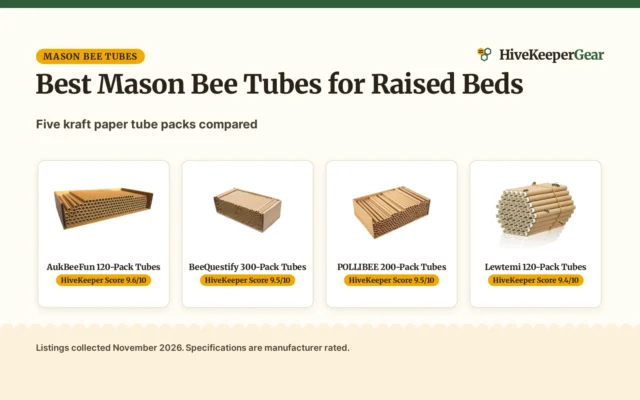
BeeQuestify lists 300 kraft paper bee nesting tubes, in a 5/16 inch by 6 inch size, described as the exact size mason bees prefer for nesting, with smooth walls for easy access and safety in a bee house setup. The tubes are crafted from high-density, biodegradable cardboard, described as durable, eco-conscious and recyclable, for a durable habitat for bees. Refills are hassle-free: worn-out tubes can be replaced easily, with no scrubbing required, and the removable design makes maintenance quick. The listing describes the tubes as attracting friendly mason bees and enhancing flower and crop health through natural pollination. Extras can be stored dry for next season, and the pack can refill multiple mason hotels or be shared with fellow enthusiasts. The spec table lists dimensions of 6.0 x 2.0 x 2.0 inches, which do not match the tube size in the title and bullets, so use the title and bullets for tube size.
POLLIBEE 200 tubes
POLLIBEE lists 200 kraft paper bee tubes, each measuring 6 inches in length with a 5/16-inch inner diameter, described as a size that mason bees prefer, with smooth inner walls for easy access. The kraft paper material is described as sturdy, holding its shape well during use, and providing a stable space for bee nesting. The tubes are compatible with most bee houses and bee hotels, and worn tubes can be replaced without scrubbing or scraping, by removing used liners and inserting fresh ones. The listing describes mason bees as garden helpers that visit a wide range of garden plants and fruit trees, supporting flower-to-fruit transfer for flowers and crops. Unused tubes can be stored properly and remain in good condition for next season, and the pack can restock multiple mason bee houses. The spec table lists dimensions of 10.6 x 6.3 x 3.5 inches, which do not match the tube size in the title and bullets, so use the title and bullets for tube size.
Choosing tubes for a bee house
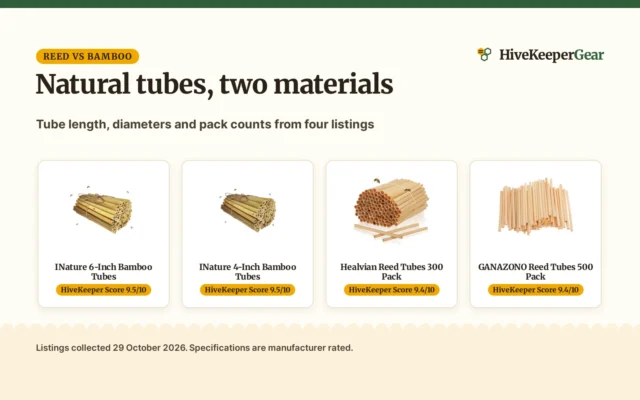
Tube length does not separate these three listings: all three list a 6 inch length, with Gueevin also giving a metric figure of 15 cm for length. For diameter, BeeQuestify and POLLIBEE list 5/16 inch, while Gueevin lists 5/16 inch in the title and 0.3 inches and 8 mm in the bullets. Pack size does separate them: Gueevin lists 400 pieces, BeeQuestify lists 300 tubes, and POLLIBEE lists 200 tubes, so the choice turns on how many houses need refilling and how many extras to keep for next season. Material is paper-based in all three listings, with BeeQuestify describing high-density, biodegradable cardboard and POLLIBEE describing sturdy kraft paper that holds its shape well. For a closer look at tube materials, see the reed vs bamboo mason bee tubes comparison and the mason bee tubes with paper liners guide.
Replacement and storage are the other practical points. BeeQuestify and POLLIBEE both describe replacing worn tubes without scrubbing, and POLLIBEE adds without scraping, while Gueevin describes replacing old tubes and cutting tubes to size if too long. For storage, BeeQuestify says to store extras dry for next season, and POLLIBEE says to store unused tubes properly for next season, while the Gueevin listing states no storage instruction for unused tubes.
FAQs for beekeepers
What is the difference between mason bee cocoons and mason bee tubes?
Cocoons are bees in dormant form, placed near a bee house to bring mason bees to the garden. Tubes are paper nesting places that fill a bee house and give those bees somewhere to nest. They work together, rather than as rival choices.
Do all three tube packs fit the same bee house?
All three listings give a stated 6 inch length. For diameter, BeeQuestify and POLLIBEE list 5/16 inch, while Gueevin lists 5/16 inch in the title and 0.3 inches in the bullets. Only POLLIBEE describes its tubes as compatible with most bee houses and bee hotels, and BeeQuestify describes its tubes as ideal for filling mason bee houses, so the listings do not state that all three fit the same bee house.
How many tubes come in each pack?
Gueevin lists 400 pieces, BeeQuestify lists 300 tubes, and POLLIBEE lists 200 tubes. Pack size is the clearest difference among the three listings, since tube size is shared.
Can tubes be cut or replaced?
Gueevin says tubes can be cut to the right size if too long, and old tubes can be replaced easily. BeeQuestify says worn-out tubes can be replaced with no scrubbing required, and POLLIBEE says worn tubes can be replaced without scrubbing or scraping.
How should unused tubes be stored?
BeeQuestify says to store extras dry for next season, and POLLIBEE says to store unused tubes properly for next season. The Gueevin listing states no storage instruction for unused tubes.
More hive guides
Browse every beehives guide. Also see our mason bee house vs bee hotel comparison, our bee hotel vs mason bee tubes comparison and our mason bee house for fruit trees guide.