Pollinator Seed Mix vs Live Plants: Which One Should You Buy?
Seed mixes fill large ground from packets while live plants give started plants for small spots, and four seed mixes show what each packet covers.

On this page
Top picks at a glance
As an Amazon Associate I earn from qualifying purchases.
- 1
 LUOJIBIE Wildflower Seeds Mix9.5/10View on Amazon
- 2
 Wildflower Seeds Butterfly and Humming Bird MixView on Amazon
- 3
 BBB Seed Monarch Butterfly Wildflower SeedsView on Amazon
- 4
 BBB Seed Partial Shade Wildflower Seeds MixView on Amazon
- 5
 BBB Seed Shade Wildflower Seeds MixView on Amazon
- 6
 BBB Seed Sunflower Seeds For Planting MixView on Amazon
- 7
 Pacific Northwest Regional MixView on Amazon
On a spring walk past the hives, a keeper notices a bare strip of ground at the edge of the yard and starts to picture it in bloom. For pollinator seed mix vs live plants, the choice comes down to the ground you have and the patience you bring to it. A seed mix suits a larger patch you want to fill from packets, while live plants suit a small spot where you want started plants in place from the start. The four seed mixes below show what each packet states, including where a packet states no coverage, sunlight or planting season figure, so the comparison rests on stated facts rather than guesswork.
Other hives and gear to compare
 Wildflower Seeds Butterfly and Humming Bird MixCheck price on Amazon
 BBB Seed Monarch Butterfly Wildflower SeedsCheck price on Amazon
 BBB Seed Partial Shade Wildflower Seeds MixCheck price on Amazon
 BBB Seed Shade Wildflower Seeds MixCheck price on Amazon
 BBB Seed Sunflower Seeds For Planting MixCheck price on Amazon
 Pacific Northwest Regional MixCheck price on Amazon
HiveKeeperGear earns a commission when you buy through links on this page, at no extra cost to you. As an Amazon Associate I earn from qualifying purchases. Affiliate disclosure.
Pollinator seed mix vs live plants: how to choose
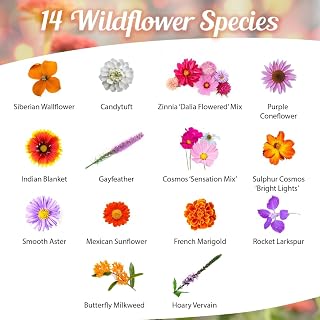
A seed mix is a packet of many species sown together, and a live plant is a started plant set into the ground. Seed mixes trade a started plant for breadth: a packet can hold many species, and the mixes below range from a wildflower blend of 23 species to a clover and grass mix for lawn ground. Live plants give you a plant you can see from the start, but each plant covers only its own spot, so filling a large patch takes many plants. If the patch is large, a mix is the practical route; if the patch is a pot or a small bed, started plants are simpler to place.
The four seed mixes in this guide
| Mix | Packet | Stated coverage | Sunlight |
|---|---|---|---|
| SWEET YARDS wildflower mix | 1 ounce | 100 sq ft | Not stated |
| BBB Seed monarch butterfly mix | 1 ounce | Not stated | Full Sun |
| BBB Seed partial shade mix | 4 ounces | 375 sq ft | Partial Shade |
| Pennington clover and grass mix | 7 pounds | 1,400 sq ft | 4-6 Hours of Sun Per Day |
1. SWEET YARDS wildflower mix
The listing states a 1-ounce packet with over 7,500 seeds across 23 open pollinated annual and perennial species, sold as a pack of 3, and coverage of 100 square feet per packet. The mix is aimed at hummingbirds, butterflies, honey bees and ladybugs, and the packet includes planting instructions with a reusable zipper. The maker offers a refund within 30 days if seeds do not germinate. For a keeper, this is the only mix here with a stated species count, 23 species in one packet, suited to a patch you want to fill with varied blooms.
2. BBB Seed monarch butterfly mix
The listing states a 1-ounce packet, sold as a pack of 2, of open-pollinated, non-GMO wildflower seed with no fillers, including milkweed seed for monarch butterflies. The mix pairs nectar-rich flowers with host plants, is listed for full sun, and the planting period is winter to spring. The maker has sold seed since 1985. For a keeper planting for monarchs, the milkweed content is the point: this is the only mix here that names milkweed, and the full-sun listing fits an open spot near the yard.
3. BBB Seed partial shade mix
The listing states a 4-ounce package, sold as a pack of 2, with approximately 155,000 pure wildflower seeds and coverage for up to 375 sq ft per package. The mix is selected for 4-6 hours of sunlight daily, with a planting period of winter, spring and fall, and it suits ground under trees, along fences or near buildings. For a keeper with shaded ground, this is the partial-shade option here, with a stated sunlight range and a planting window across three seasons.
4. Pennington clover and grass mix
The listing states a 7-pound mix of clover and lawn grass seed, sold as a pack of 2, covering up to 1,400 sq ft per pack for lawn establishment, with a planting period of fall and a sunlight listing of 4-6 hours of sun per day. The mix is listed as growing best in the northern region of the US, and the expected blooming period is fall and spring. For a keeper, this is the lawn option rather than a flower bed option: it covers the largest stated area here, but it is clover and grass, not a wildflower blend.
Sunlight and planting season
Sunlight decides more than species choice. The monarch mix lists full sun, while the partial shade mix and the Pennington mix list 4-6 hours of sun per day. Match the listing to the spot: an open yard suits the full-sun mix, and ground under trees suits the partial shade mix. Planting season matters too: the monarch mix lists winter to spring, the partial shade mix lists winter, spring and fall, and the Pennington mix lists fall. Sow in the listed window for the mix you buy, and keep any packet instructions with the seed until planting day. See our pollinator seed mix for beekeepers picks for more mixes.
Coverage: read the packet, not the pack
The listings state coverage plainly: a 1-ounce SWEET YARDS packet covers 100 square feet, a 4-ounce partial shade package covers up to 375 sq ft, and a 7-pound Pennington bag covers up to 1,400 sq ft. The monarch mix states no coverage figure, so compare it on species and sunlight instead. When you measure your patch, compare the measured ground against the stated figure for the mix you plan to buy.
FAQs for beekeepers
Should I choose a seed mix or live plants for a new pollinator patch?
Choose a seed mix for a large patch and live plants for a small spot. The mixes here cover from 100 square feet per 1-ounce packet to 1,400 sq ft per 7-pound bag, so a mix fills ground that would take many started plants. Live plants suit a pot or a small bed where you want started plants in place from the start.
What sunlight does a pollinator seed mix need?
It depends on the mix. The monarch mix lists full sun, while the partial shade mix and the Pennington mix list 4-6 hours of sun per day. Match the listing to your spot before you buy.
When should I plant a pollinator seed mix?
The monarch mix lists winter to spring, the partial shade mix lists winter, spring and fall, and the Pennington mix lists fall. Plant inside the window the listing gives for the mix you buy.
Do these seed mixes attract honey bees?
The SWEET YARDS mix names honey bees among the visitors it attracts, and the monarch and partial shade mixes describe themselves as pollinator-friendly blends that support bees and butterflies. Plant the mix whose sunlight and season fit your ground.
How many species are in a pollinator seed mix?
The SWEET YARDS mix lists 23 open pollinated annual and perennial species. The other mixes here do not state a species count, so compare them on coverage, sunlight and planting season instead.
More hive guides
Browse every guide by category: beehives and beekeeping guides.