Types of Bee Hive Frames: Guide to Sizes and Materials
A complete guide to the types of bee hive frames, comparing deep, medium, and shallow sizes in wood or plastic alongside wax and plastic foundation options.

On this page
Top picks at a glance
As an Amazon Associate I earn from qualifying purchases.
- 1
 Gold Standard 8 Frame Bee Hive Beeswax Coated Includes9.6/10View on Amazon
- 2
 BeeCastle Heavy Wax Coated Langstroth Unassembled Deep/Brood9.6/10View on Amazon
- 3
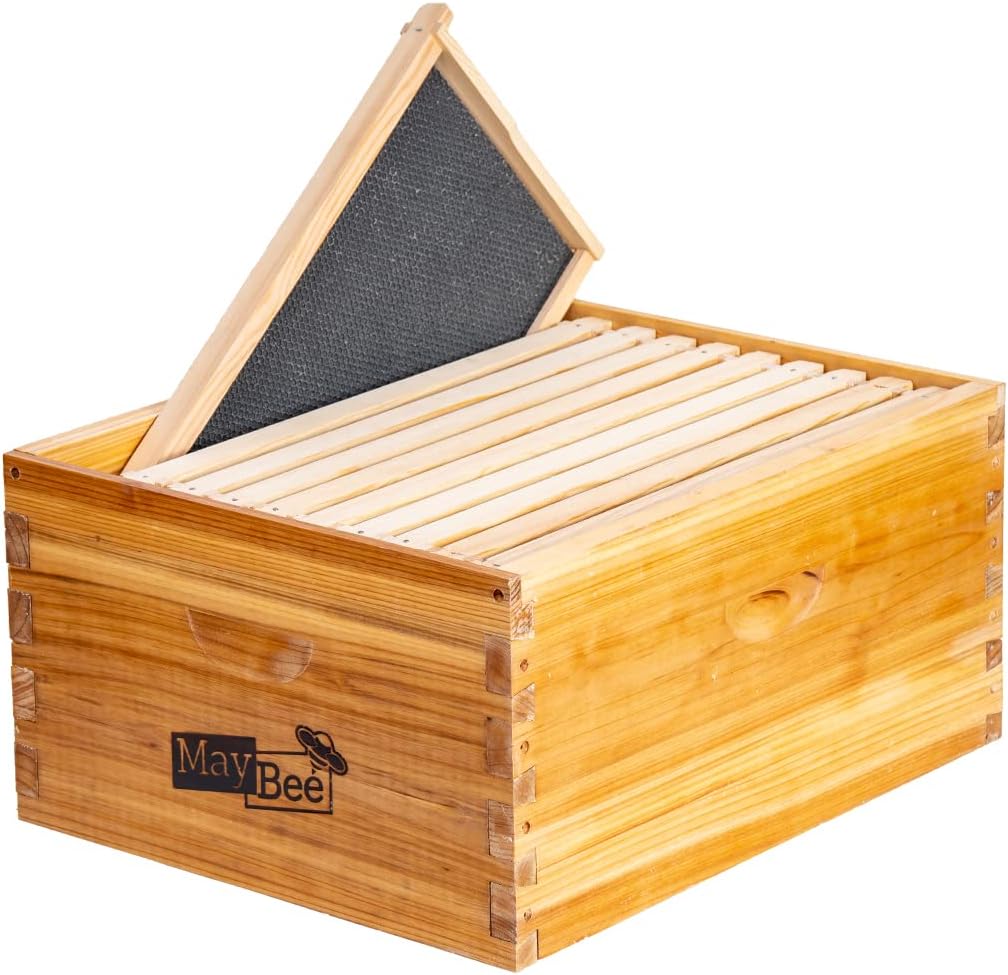 MayBee 10-Frame Deep Brood Box with Wood Frames and Waxed9.5/10View on Amazon
- 4
 BeeCastle 20 Pack Beehive Frames and Waxed Foundations forView on Amazon
- 5
 BeeCastle 10 Pack Beehive Frames and Wax Foundations for DeepView on Amazon
- 6
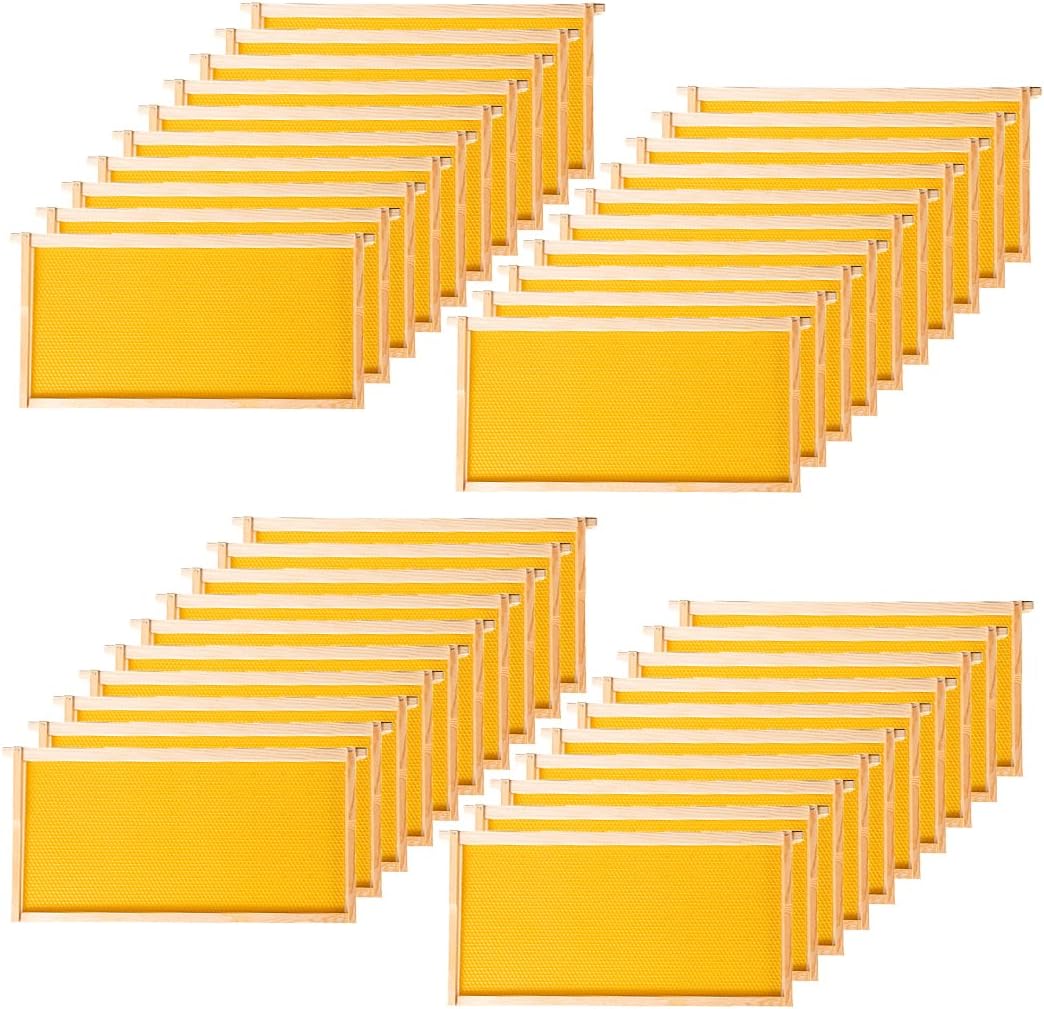 BeeCastle 40-Pack Beehive Frames Bee Hive Frame with WaxedView on Amazon
- 7
 BeeCastle 20 Pack Medium Beehive Frames and Waxed FoundationsView on Amazon
- 8
 Bee Foundation Sheets for Bee Frames Beehive Beeswax CoatedView on Amazon
- 9
 vensovo 10 Pack Bee Frames DeepView on Amazon
The main types of bee hive frames are divided by depth into deep frames, medium frames, and shallow frames, and by material into wooden frames and molded plastic frames. In a Langstroth hive, frames hang vertically inside boxes to give bees a border for brood rearing and honey storage. Choosing the right frame depends on box depth, material preferences, and lifting weight. This guide explains each frame type, manufacturer dimensions, foundation styles, and apiary setups.
Other hives and gear to compare
 BeeCastle 20 Pack Beehive Frames and Waxed Foundations forCheck price on Amazon
 BeeCastle 10 Pack Beehive Frames and Wax Foundations for DeepCheck price on Amazon
 BeeCastle 40-Pack Beehive Frames Bee Hive Frame with WaxedCheck price on Amazon
 BeeCastle 20 Pack Medium Beehive Frames and Waxed FoundationsCheck price on Amazon
 Bee Foundation Sheets for Bee Frames Beehive Beeswax CoatedCheck price on Amazon
 vensovo 10 Pack Bee Frames DeepCheck price on Amazon
HiveKeeperGear earns a commission when you buy through links on this site, at no extra cost to you. As an Amazon Associate I earn from qualifying purchases. Affiliate disclosure.
Before you choose: understand hive box depths
Bee hive frames must correspond to the depth of the hive box they hang within. Langstroth boxes use standardized depths to maintain precise bee space beneath the bottom bars. Placing a shallow frame in a deep box causes bees to build wild burr comb below the bar, while a deep frame will not fit in a shallower box.
Langstroth hives are commonly built in 10-frame and 8-frame widths. Hoover Hives notes that an 8-frame hive weighs 20% less than a 10-frame hive. While box widths differ, both use standard-length frames, with BeeCastle listing medium frames measuring 19 inches long. The primary decision for beekeepers comes down to frame depth and material construction.
Types of bee hive frames by size and function
The table below summarizes the primary types of bee hive frames, their roles, materials, and links to our dedicated equipment guides.
| Frame Type | Primary Hive Role | Typical Material | Our guide |
|---|---|---|---|
| Deep frames | Brood rearing and winter honey stores | Pine or fir wood with plastic foundation | Beehive frames |
| Medium frames | Honey supers and versatile brood chambers | Pine or fir wood with plastic or wax foundation | Medium frames |
| Shallow frames | Surplus honey harvesting and cut comb | Wood or one-piece plastic | Hive frames |
| Wooden frames | Traditional modular assembly with replaceable foundation | Pine or fir wood | Wood frames |
| Plastic frames | Single-piece molded frame and foundation | Molded plastic | Plastic frames |
1. Deep frames
Deep frames are the largest standard frame type and serve as the core of the brood nest. Their generous surface area provides uninterrupted comb where the queen lays circular brood patterns and workers store pollen and honey. Beekeepers commonly place deep frames in one or two deep brood boxes at the bottom of the hive.
Standard deep boxes provide ample room. ThxBees and MayBee list deep brood boxes measuring 14 by 19-7/8 by 9-5/8 inches, while BEEINN and BEEKNOWS list deep boxes measuring 19-7/8 by 14-1/4 by 9-5/8 inches. Honey Lake lists deep brood boxes measuring 19.88 by 14 by 9.56 inches. Because a deep frame filled with honey is heavy, beekeepers often prefer lighter medium or shallow supers for surplus honey.
2. Medium frames
Medium frames are the most versatile frame type. Originally designed for honey supers, many beekeepers now use medium frames throughout the entire hive. Standardizing on medium boxes creates complete interchangeability, allowing frames to move freely between brood chambers and supers.
BeeCastle lists medium beehive frames measuring 6-1/4 inches high by 19 inches long by 1-3/8 inches wide, designed with dovetails and paired with plastic foundation sheets measuring 5-5/8 by 16-3/4 by 3/16 inches. These fit medium super boxes measuring 14-1/4 by 19-7/8 by 6-5/8 inches, as specified by BeeCastle and BEEKNOWS. MayBee lists medium super boxes measuring 19.9 by 14 by 6.6 inches, and Honey Lake lists medium super boxes measuring 19.88 by 14 by 6.6 inches.
3. Shallow frames
Shallow frames are the shortest standard frame type and hang in shallow honey supers. Because honey is dense, full boxes can cause lifting strain. Shallow frames hold less honey per frame than deeper sizes, keeping super weight manageable when harvesting.
Shallow frames are also the traditional choice for cut comb honey. Because the vertical span is short, thin unwired foundation hangs securely without sagging under honey weight, letting beekeepers cut clean comb squares directly from the frame. They provide a practical option whenever lighter box weight is essential.
4. Wooden frames compared to plastic frames
Beyond depth, bee hive frames differ by material. Backyard beekeepers choose between traditional wooden frames and molded plastic frames.
Wooden frames remain the standard in most apiaries, consisting of a top bar, grooved side bars, and a bottom bar. MayBee supplies frames crafted from New Zealand pine, while BeeCastle and BEEKNOWS provide pine frames for fir or cedar boxes. Dovetail frame joints, featured in listings from BeeCastle and MayBee, provide corner rigidity. While unassembled frames require nails or screws, MayBee also offers pre-assembled frames ready for immediate use.
Plastic frames are molded as a single unit combining the frame borders and foundation. These one-piece units cannot rot or pull apart at the joints. However, damaged plastic frames cannot have foundation replaced, and bees often require a natural beeswax coating before drawing comb.
5. Foundation options: wax, plastic, and foundationless
Foundation provides a patterned guide for bees to build straight comb within frame borders rather than bridging across boxes.
Beeswax-coated plastic foundation is the most common option in modern kits. Honey Lake, ThxBees, BEEINN, BEEKNOWS, and BeeCastle all supply plastic foundation sheets coated in natural beeswax. Honey Lake and BeeCastle specify food-grade plastic for foundation sheets, and Hoover Hives uses 100% natural beeswax coating on CellTech foundations. MayBee offers natural honey-colored foundation sheets to help inspect cell contents. The rigid plastic core prevents blowout during extractor spinning.
Pure beeswax foundation consists of embossed wax sheets, often reinforced with wire. Bees draw wax foundation quickly, but sheets can sag in summer heat. Foundationless frames omit foundation entirely, using a top starter guide so bees build natural comb.
Frame spacing and hive capacity
Proper frame spacing inside boxes ensures ventilation and correct bee space. BeeCastle lists medium beehive frames with a width of 1-3/8 inches. Frame end bars have wider upper shoulders that act as self-spacing bumpers between adjacent combs.
Starter kits configure frame counts to match box size. Hoover Hives provides 24 wood frames across 2 deep boxes and 1 medium super. Honey Lake and Honey Lake with windows supply 16 frames across 1 deep brood box and 1 medium super box. ThxBees provides 8 deep frames and 8 medium frames, totaling 16 frames. During inspections, removing one outside frame first provides working room to lift center frames without rolling bees. In honey supers, spacing fewer frames across drawn comb encourages thick comb that is faster to uncap.
Nice to have frame accessories
Handling bee hive frames is easier with supportive tools:
- A frame grip to lift heavy frames securely with one hand.
- A metal frame perch hung on the hive side to hold removed frames safely.
- A sturdy J hook hive tool to pry propolis-sealed frames apart.
- A soft bee brush to clear bees gently from comb surfaces.
- A frame spacer to align super frames quickly.
What is not covered in this guide
This guide covers frame sizes and materials for standard Langstroth hives. It does not cover frameless top bar hives. Furthermore, this guide does not provide veterinary advice, bee disease treatments, or chemical mite management. For colony health questions, consult your local extension office or state apiary inspector.
FAQs for beekeepers
What are the main sizes of bee hive frames?
The main sizes are deep frames, medium frames, and shallow frames. Deep frames house brood, medium frames serve as versatile supers or brood boxes, and shallow frames provide lighter honey supers.
What are the standard dimensions of a medium bee hive frame?
BeeCastle lists medium beehive frames measuring 6-1/4 inches high by 19 inches long by 1-3/8 inches wide. These hold plastic foundation sheets measuring 5-5/8 by 16-3/4 by 3/16 inches and fit medium super boxes measuring 14-1/4 by 19-7/8 by 6-5/8 inches.
Are wooden frames better than plastic frames?
Wooden frames are traditional, made from renewable pine, and allow foundation replacement. Plastic frames are molded as a single unit that resists rotting and joint failure, though bees require a beeswax coating before drawing comb.
How many frames fit inside a standard hive box?
Langstroth boxes are built for 8 frames or 10 frames. Hoover Hives, BeeCastle, Honey Lake, and ThxBees configure 8-frame boxes to hold 8 frames, with kits providing 16 frames for 1 deep and 1 medium box, or 24 frames for 2 deep boxes and 1 medium super.
Can you mix different frame sizes in the same beehive?
Yes, as long as each frame matches its box depth. A hive often uses deep frames in brood boxes and medium frames in supers. However, frames cannot hang in boxes shallower than their depth.
More hive guides
See every 8-frame hives guide and all beehives guides.
More picks: compare beehive frames, medium frames for bee hives, and hive frames. New to beekeeping? Start with our beekeeping equipment list for beginners.