3 Layer Mesh vs Single Layer Bee Suit: Which One Should You Buy?
Compare 3 layer mesh and single layer bee suits to understand how fabric thickness, sting protection, and ventilation affect comfort in the yard.

On this page
Top picks at a glance
As an Amazon Associate I earn from qualifying purchases.
- 1
 3-Layer Ultra Ventilated Sting Proof Bee Suit for Men & Women9.7/10View on Amazon
- 2
 3-Layer Ventilated Beekeeper Suit Veil Ventilated MeshView on Amazon
- 3
 Ventilated Beekeeping JacketView on Amazon
- 4
 Beekeeping Three Layer Mesh ventilated Jacket Fencing Veil inView on Amazon
During a warm midsummer nectar flow, opening a crowded hive box means facing active bees defending their brood and honey stores. Deciding between a 3 layer mesh vs single layer bee suit comes down to how you balance sting protection against gear weight and fabric flexibility. For most beekeepers working in summer heat or managing defensive colonies, a 3-layer mesh suit is the reliable choice because its built-in depth barrier prevents stinger contact while allowing ambient breezes to pass directly through the fabric. A single layer bee suit remains a practical option for beekeepers in cooler climates who want a lighter, less bulky suit for quick colony checks.
Other hives and gear to compare
 3-Layer Ventilated Beekeeper Suit Veil Ventilated MeshCheck price on Amazon
 Ventilated Beekeeping JacketCheck price on Amazon
 Beekeeping Three Layer Mesh ventilated Jacket Fencing Veil inCheck price on Amazon
HiveKeeperGear earns a commission when you buy through links on this site, at no extra cost to you. As an Amazon Associate I earn from qualifying purchases. Affiliate disclosure.
3 layer mesh vs single layer bee suit: key differences
Understanding the difference between these suit designs begins with fabric construction. A traditional single layer bee suit is made from woven cotton, unbleached canvas, or a polycotton blend. It relies on a single sheet of dense fabric to create a barrier between the beekeeper and the colony. When the fabric hangs loose, bees cannot easily drive a stinger through to the skin. However, whenever you bend your knees, crouch beside a bottom board, or lift a heavy hive box, the single layer fabric stretches tightly across your shoulders, elbows, and thighs, allowing a stinger to reach skin through the weave.
In contrast, a 3 layer mesh suit uses a layered sandwich construction: an outer protective mesh, an open middle spacer mesh, and an inner lining mesh. The middle layer acts as a mechanical spacer that maintains continuous physical distance between the outer surface and your skin. Because the distance created by the spacer layer exceeds the reach of a worker bee stinger, bees cannot reach your skin even when they land directly on the garment and attempt to sting. Furthermore, the porous structure of all 3 layers allows air to circulate freely around your body, creating natural evaporative cooling during sweltering yard inspections.
| Feature | 3-Layer Mesh Bee Suit | Single Layer Bee Suit |
|---|---|---|
| Sting Defense | Depth barrier exceeds stinger reach | Relies on loose fit and dense weave |
| Airflow & Ventilation | Full breeze penetration across all layers | Restricted airflow through woven fabric |
| Fabric Weight | Heavier due to internal spacer mesh | Lightweight and packable |
| Mobility & Bulk | Thicker profile, structured feel | Soft drape, high flexibility |
| Snag Resistance | Open mesh can catch on thorns or wire | Smooth cotton slides past brush easily |
| Drying Speed | Synthetic mesh dries rapidly after rain | Cotton absorbs sweat and dries slowly |
| Yard Conditions | Hot apiaries and aggressive colonies | Mild weather and brief hive visits |
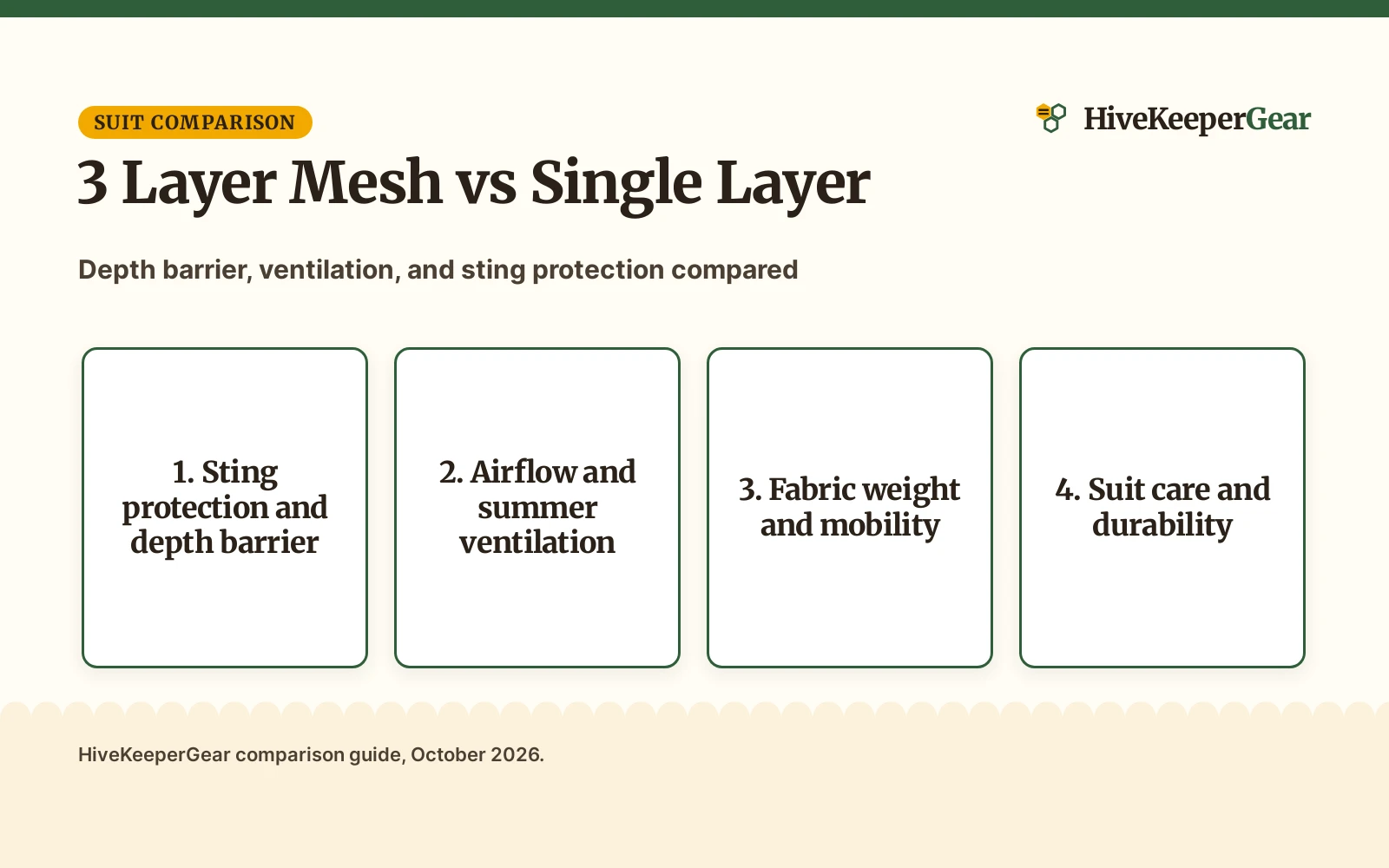
1. How the depth barrier stops stings
The fundamental advantage of a 3-layer mesh construction is its depth barrier. When a worker bee attempts to sting, she anchors her legs against the fabric surface and curves her abdomen to drive her stinger downward. A honey bee stinger has a defined physical length. On a single layer cotton suit, that stinger easily penetrates the fabric weave whenever the suit pulls tight against your body. Beekeepers often experience stings on the knees while kneeling in the grass, on the upper back while lifting brood boxes, or across the shoulders when adjusting outer covers.
A 3 layer mesh suit neutralizes this vulnerability by keeping the outer fabric separated from the inner lining. Even when the suit presses firmly against your body as you lean over an open hive, the springy middle spacer mesh resists compression. The bee lands on the outer mesh and pushes her stinger into the open space, but the stinger simply penetrates into empty air between the layers without making contact with your skin. This physical depth barrier provides substantial peace of mind, particularly for beginners who are developing confidence while handling frames during spring inspections. Beekeepers who want maximum full-body protection often look at our guide to the best beekeeping suit options to see how ventilated models compare across different yard conditions.
2. Ventilation and summer airflow
Hive inspections are concentrated during the warmest months of the year, when colonies are expanding rapidly and honey supers are filling up. Working over multiple hives in high heat while wearing heavy protective clothing can quickly lead to exhaustion and dehydration. In these conditions, suit ventilation becomes a critical comfort factor.
A single layer cotton or polycotton suit breathes like a heavy work shirt. While natural cotton fibers allow some heat dissipation, woven fabric blocks air movement. As you work through hive boxes, perspiration accumulates against the fabric, causing the suit to cling to your damp skin. Once wet, cotton loses its slight natural rigidity, making it cling tighter and increasing the likelihood of stings at tension points.
A 3 layer mesh suit functions completely differently in warm weather. Because each layer consists of an open mesh grid rather than a solid weave, any passing breeze flows straight through the suit to evaporate sweat from your skin. Even on calm afternoons without wind, your natural body heat rises and vents outward through the mesh rather than remaining trapped inside the garment. Many keepers who inspect apiaries in humid southern or midwestern climates consider ventilated mesh an indispensable upgrade for summertime management. If you manage colonies in hot regions, our review of the best ventilated bee suit models highlights suits designed specifically to maximize airflow while maintaining structural integrity.
3. Weight, mobility, and fabric feel
While 3-layer mesh excels at sting prevention and ventilation, single layer suits hold a clear advantage when it comes to weight and flexibility. The spacer mesh in a 3-layer suit adds physical thickness and weight to the overall garment. When you step into a 3-layer suit, it feels more like donning a light piece of armor than wearing casual workwear. The fabric has structural body, which means it takes up more space in your apiary gear tote and feels slightly heavier on your shoulders during long sessions in the yard.
A single layer cotton suit, by comparison, is lightweight, supple, and easy to pack. It drapes naturally over everyday clothes without feeling stiff or bulky. If you keep only a single backyard hive and your weekly inspections take just a short period, the effortless mobility and easy storage of a single layer suit can be very appealing. For beekeepers who prefer a lighter upper-body option instead of a full coverall, exploring a best beekeeping jacket offers similar protective benefits with even greater convenience and ease of movement.
4. Durability, cleaning, and yard maintenance
The physical environment of your bee yard also influences which suit construction holds up better over several seasons of use. Single layer cotton suits feature a smooth, tightly woven outer surface that glides smoothly past vegetation. If your apiary is situated near blackberry brambles, thorny bushes, or dense brush, a cotton suit is less prone to snagging or pulling loose threads as you walk between hives.
Open mesh fabrics require a bit more attentiveness around abrasive surfaces. Sharp wire corners on hive stands, rough splintered wooden boxes, or heavy briars can catch the outer mesh fibers and cause minor snags. However, high quality 3-layer suits utilize tough synthetic polymer mesh that resists tearing under normal hive handling.
When it comes to laundering propolis, wax, and honey smears, both suits require proper maintenance. Single layer cotton suits can be washed in warm water on a standard cycle once the veil is detached, though pure cotton can shrink if exposed to high dryer heat. 3 layer mesh suits are predominantly constructed from synthetic fibers like polyester, which wash cleanly on a gentle cycle and dry very quickly when hung on a line in the shade. Synthetic mesh does not retain moisture the way cotton does, reducing the risk of mildew forming if your gear is stored in a shed or vehicle between inspections.
5. Matching the suit to your bee yard needs
Choosing between a 3 layer mesh vs single layer bee suit ultimately depends on your local climate, colony temperament, and inspection schedule. Consider the following factors when selecting your suit:
Choose a 3 layer mesh suit if:
- You manage hives during hot, humid summer days when overheating impairs concentration.
- You keep defensive colonies or work with large, established hives that react strongly to inspections.
- You are a beginner seeking maximum sting defense to remain calm and deliberate during hive work.
- You prefer synthetic fabrics that rinse clean and air dry rapidly after yard sessions.
Choose a single layer bee suit if:
- You live in a northern climate with cooler summer temperatures and mild inspection days.
- You maintain gentle colonies and perform brief, routine checks without extended hive manipulation.
- You prefer lightweight clothing that folds flat and takes up minimal space in your storage container.
- You frequently walk through dense brambles or heavy brush to reach your apiary location.
No matter which suit construction you select, protective clothing works best when paired with suitable hand protection. Proper gauntlets that overlap securely over your suit cuffs prevent stray bees from crawling up your sleeves. Check our recommendations for the best beekeeping gloves to find durable wrist seals and flexible leather fingers that complement your chosen suit.
FAQs for beekeepers
Can bees sting through a 3 layer mesh bee suit?
Under normal apiary conditions, honey bees cannot sting through a 3 layer mesh suit because the middle spacer layer maintains a physical depth barrier that exceeds stinger reach. A sting is only possible if the mesh is squashed flat against your skin with heavy external pressure or if an unzipped seam leaves an open gap.
Can bees sting through a single layer cotton bee suit?
Yes, bees can sting through a single layer cotton suit whenever the fabric pulls tight against your skin, such as across your shoulders, elbows, or knees while bending over hive boxes. Keeping the suit sized loosely helps reduce fabric tension and minimizes direct stinger contact.
Is a 3 layer mesh bee suit too warm to wear in summer?
No, a 3 layer mesh suit is significantly cooler than a cotton suit in summer heat because the open mesh allows natural breezes to pass through and evaporate sweat. While the fabric is thicker, the superior ventilation keeps your core temperature lower during warm inspections.
What should you wear underneath a 3 layer mesh bee suit?
Most beekeepers wear lightweight athletic clothing, such as moisture-wicking shorts and a light t-shirt, under a 3 layer mesh suit to maximize airflow. In cooler spring weather or when handling defensive hives, wearing thin jeans and a long-sleeve cotton shirt provides additional security.
How do you wash a 3 layer mesh bee suit?
Always detach the veil first to prevent damaging the face mesh, then machine wash the suit body on a gentle cycle with mild detergent. Hang the suit to air dry out of direct sunlight, as synthetic mesh dries quickly and high dryer heat can damage internal spacer fibers.
More hive guides
Browse every guide by category: beehives, protective gear, hive tools and honey harvesting.
More protective gear comparisons: explore our cotton vs ventilated bee suit guide, compare a bee suit vs bee jacket, or see our top picks in the best bee suit for beginners and best beekeeping suit for hot weather reviews.