Double Zip vs Single Zip Bee Suit: Which One Should You Buy?
A comparison of double zip vs single zip bee suit designs, balancing entry speed and collar seal security for backyard hive inspections.

On this page
Top picks at a glance
As an Amazon Associate I earn from qualifying purchases.
- 1
 3-Layer Ultra Ventilated Sting Proof Bee Suit for Men & Women9.7/10View on Amazon
- 2
 3-Layer Ventilated Beekeeper Suit Veil Ventilated MeshView on Amazon
- 3
 Brutul Bee 3 Layer Beekeeping Ultralight Ventilated Suit withView on Amazon
- 4
 VIVO Professional XL Beekeeping Suit JacketView on Amazon
- 5VIVO Professional L Beekeeping Suit WhiteView on Amazon
- 6
 VIVO Professional White XXL Beekeeping SuitView on Amazon
- 7
 Humble Bee 410 Polycotton Beekeeping Suit with Round VeilView on Amazon
Stepping into the apiary during the warm summer nectar flow calls for reliable gear that seals completely before you pull frame one. When weighing a double zip vs single zip bee suit, choose a double zip suit if your priority is maximum collar seal security and the convenience of lower-torso adjustment while resting away from active colonies, or choose a single zip suit if you want fast dressing, simple operation, and fewer slider parts to manage. Both designs protect keepers when fitted properly, but their closure mechanics create distinct trade-offs in the bee yard.
Other hives and gear to compare
 3-Layer Ventilated Beekeeper Suit Veil Ventilated MeshCheck price on Amazon
 Brutul Bee 3 Layer Beekeeping Ultralight Ventilated Suit withCheck price on Amazon
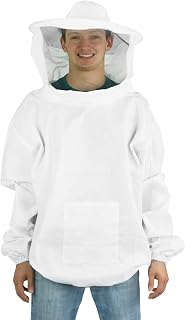 VIVO Professional XL Beekeeping Suit JacketCheck price on Amazon
- VIVO Professional L Beekeeping Suit WhiteCheck price on Amazon
 VIVO Professional White XXL Beekeeping SuitCheck price on Amazon
 Humble Bee 410 Polycotton Beekeeping Suit with Round VeilCheck price on Amazon
HiveKeeperGear earns a commission when you buy through links on this site, at no extra cost to you. As an Amazon Associate I earn from qualifying purchases. Affiliate disclosure.
Before you buy: understanding zipper layouts
Every protective bee suit relies on zippers to close entry openings around the torso and neck. Bees instinctively seek dark crevices, seam folds, and narrow gaps, particularly near the head where exhaled breath signals guard bees. Understanding how zipper layouts function helps keepers prevent unwanted bee entry while staying comfortable during hive work.
A single zip suit uses one central zipper running vertically from the crotch up to the neck. A single slider pulls upward to close the suit body, meeting the collar where the veil attaches. This layout is traditional, uncluttered, and quick to fasten.
A double zip suit incorporates dual sliders on the central track or dual overlapping zipper tracks connecting the torso and veil. Dual sliders allow keepers to zip upward from the bottom or downward from the top. Overlapping tracks provide redundant fabric barriers where tracks meet beneath the chin.
Double zip vs single zip bee suit: key differences
| Feature | Double Zip Suit | Single Zip Suit | Yard Advantage |
|---|---|---|---|
| Entry speed | Requires seating dual sliders together | Pulls up smoothly in one motion | Single zip offers faster dressing |
| Collar seal | Overlapping tracks under wide flaps | Single slider junction under chin | Double zip gives tighter crawl defense |
| Torso adjustment | Opens from the bottom once away from hives | Requires unzipping collar from neck down | Double zip allows venting without opening veil |
| Mechanical parts | Dual sliders on central track | Single slider on central track | Single zip has fewer wear points |
| Slider alignment | Both sliders must seat at the base stop | Single slider engages directly | Single zip is less prone to misthreading |
1. Entry speed and stepping into the suit
Dressing quickly at the apiary boundary saves time and reduces frustration on warm inspection mornings. Stepping into a suit while wearing heavy outdoor footwear requires wide leg openings and smooth torso zipping. Many protective suits feature long leg zippers to slip over footwear easily, leaving the central front closure as the primary dressing step.
A single zip design excels at entry speed. You step through the legs, pull the suit over your shoulders, insert the single slider at the base, and pull straight up to the neck in one fluid motion. There is only one pull tab to locate, making dressing straightforward even when you are eager to begin inspecting.
A double zip design requires extra care when starting the track. Both sliders must sit squarely against the base stop before the insertion pin seats properly. If the sliders are misaligned, the track can separate or fail to engage. While this takes a brief moment of patience, the reward is versatile adjustment once the suit is on.
2. Collar seal security and bee exclusion
The collar junction where the veil meets the suit jacket represents the most sensitive security area on any beekeeping garment. Guard bees congregate around the veil mesh and explore the seam beneath the chin. A secure seal prevents bees from crawling inside during defensive hive reactions.
In a single zip suit, the front slider meets the collar at a single focal point. Beekeepers must ensure the slider pulls fully to the top stop and that the hook-and-loop security flap covers the pull tab completely. If the slider slips downward even a tiny fraction, a narrow crevice can form where curious bees may enter.
A double zip configuration enhances collar security through overlapping zipper paths. Dual veil zipper sliders meet beneath a reinforced hook-and-loop flap where the tracks overlap, creating a continuous barrier. Makers often design the veil attachment with dual zippers that overlap past the center point, eliminating straight seam gaps under the throat. Citing stated specifications, US APIARY lists 2 veils, providing both a fencing veil and a round veil with zipper collars, showing how separate veil designs interface with the suit neck.
3. Zipper hardware and long-term durability
Apiary environments expose zipper tracks to sticky propolis, wax flakes, fine pollen, and sweat. Durable hardware prevents jammed teeth and broken sliders that could compromise protection during an inspection.
Makers of ventilated protective gear specify robust components for heavy wear. In its 3-layer ventilated suit specifications, Massive Bee lists YKK brass sliders. Brass hardware offers superior resistance against tooth bending, crushing, and mechanical strain compared to lightweight molded plastic. Because apiary suits undergo repeated washing and outdoor wear, robust metal sliders hold their shape through seasons of hive management.
When comparing durability between layouts, mechanical simplicity favors the single zip. With only one slider per track, there are fewer moving components to catch on fabric folds or accumulate propolis. A double zip track uses dual sliders that must both remain undamaged; if the lower slider jams on debris, upward zipping can fail. Keepers can explore material trade-offs in our comparison of brass zipper vs plastic zipper bee suit options.
4. Ventilation and yard adjustments
Lifting deep brood boxes and honey supers on hot summer afternoons generates substantial physical warmth. Ventilated suit fabrics allow breezes to reach the keeper, but adjusting airflow during a lengthy yard visit requires careful zipper management.
Ventilated fabrics provide primary passive cooling. Brutul Fight lists a 3 layer polycotton and mesh construction for its protective suit, and Massive Bee also lists 3-layer ventilated mesh. Air passes freely through the porous mesh layers while providing physical depth that separates fabric from the skin.
A double zip suit provides practical adjustment benefits when taking breaks away from active hives. By sliding the bottom runner upward once clear of the flight line, a beekeeper can introduce air into the lower torso or reach inside pockets without unfastening the veil. The veil remains securely locked around the collar, preventing bees that might still cling to the suit mesh from entering at the neck. Conversely, venting a single zip suit requires pulling the slider downward from the throat, which opens the collar and exposes the neck if straggler bees are on the fabric. In the immediate bee yard around open hives, neither zipper style should be opened, but the double zip allows safer partial venting once you step away. Read more on airflow fabrics in our guide to 3 layer mesh vs single layer bee suit designs.
5. Sizing, fit, and layering over clothing
Protective clothing must fit loosely to prevent fabric from pressing tightly against the skin where bees could sting through tension points. Proper sizing allows beekeepers to wear light undergarments in summer or heavier layers during cool autumn inspections.
Manufacturers publish broad size ranges to accommodate different heights and builds. Bee Stars lists chest measurements across adult sizes ranging from 37 inches for Small to 49 inches for 4X-Large. US APIARY similarly lists chest sizes starting at 37 inches for S and reaching 49 inches for 4XL. Massive Bee offers regular sizing from Small to XX-Large.
Zipper configurations influence how a suit hangs on the body. A single zip track provides a continuous front seam with minimal bulk that moves easily when keepers lean over brood boxes. A double zip track includes an additional slider and reinforced placket at the base, which adds slight weight along the center seam. Practical storage is also a consideration; US APIARY includes eight pockets on its suit, giving keepers ample space to carry hive markers, queen cages, and small accessories. Measure your build accurately using our bee suit size chart before making a final selection.
How to maintain and inspect suit zippers
Routine care keeps both single and double zipper mechanisms operating reliably across every inspection season:
- Inspect zipper teeth before donning the suit, clearing dried propolis or hive debris using a soft bristle brush.
- Seat sliders firmly against the retaining pin before pulling upward, avoiding forced pulls that strain nylon or brass teeth.
- Lubricate stiff metal tracks using clean beeswax along the teeth rather than chemical sprays that might agitate bees.
- Press hook-and-loop collar flaps down firmly over closed sliders to lock pull tabs flat against the neck seam.
- Close all zippers completely before washing the suit on a gentle cycle, preventing teeth from snagging suit mesh.
Which zipper style should you choose?
Your choice between a double zip vs single zip bee suit depends on your inspection routine, local yard conditions, and personal comfort priorities.
Choose a double zip bee suit if:
- You manage defensive colonies where overlapping collar seals provide essential peace of mind.
- You inspect multiple hives in warm weather and want lower-torso adjustment while keeping the veil locked.
- You appreciate heavy-duty hardware that withstands frequent adjustment during apiary visits.
Choose a single zip bee suit if:
- You want fast, effortless dressing for quick hive checks after work.
- You prefer lightweight, flexible garments with minimal seam bulk across the chest.
- You favor mechanical simplicity with only one slider to clean and maintain.
Explore full protective gear in our roundup of the best beekeeping suit models, compare breathable fabrics in our best ventilated bee suit guide, or browse beginner options in our best bee suit for beginners review. If you are comparing hood designs, read our guide on fencing veil bee suit vs round veil suit styles, or learn about detachable options in our guide to integrated veil suit vs detachable veil suit gear.
FAQs for beekeepers
Can bees crawl through a closed suit zipper?
Bees cannot squeeze between properly closed zipper teeth, but they can enter through loose slider junctions at the collar if hook-and-loop flaps are left open. Always press the neck flap securely over the closed sliders before approaching hives.
Are double zippers harder to replace if they break?
Yes. Replacing a dual-slider zipper track requires matching the gauge and slider orientation, whereas a single zipper repair is simpler for standard tailor repairs.
Why do some bee suits use brass zippers instead of plastic?
Brass hardware offers superior resistance against stripped teeth, bending, and mechanical strain when tracks are sticky with propolis, holding up well under heavy apiary use.
Can I open the bottom zipper of a double zip suit while bees are flying?
Keepers should avoid unzipping any part of a suit while working open hives or standing in active flight paths, as guard bees explore open waist or leg gaps. Use the lower slider only after stepping well away from the apiary.
Do double zip suits fit differently than single zip suits?
Double zip suits may feel slightly firmer along the center front due to dual sliders and reinforced plackets, while single zip suits drape with greater flexibility across the torso.
More hive guides
Browse every guide in bee suits, explore all protective gear, or check our guides for beehives, hive tools, and honey harvesting.