Bee Escape Board vs Bee Brush: Which One Should You Buy?
Bee escape board vs bee brush: passive one-way escapes against manual brushing for clearing honey supers, with figures from six listings.

On this page
Top picks at a glance
As an Amazon Associate I earn from qualifying purchases.
- 1
 BeeCastle 10 Frame Beehive Candy Board for Langstroth Bee Hive9.7/10View on Amazon
- 2
 2Pcs Beehive Screened Bottom Board 8 Frame Langstroth BeeView on Amazon
- 3
 Beehive Screened Bottom Board Dipped in 100% BeeswaxView on Amazon
- 4
 2Pcs Beehive Screened Bottom Board 10 Frame Langstroth BeeView on Amazon
- 5
 Foxhound Bee Co Universal Solar Fume Board A BeekeepersView on Amazon
- 6
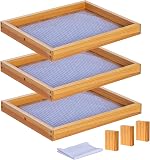 BeeCastle 10 Frame Beehive Candy Board for Langstroth Bee HiveView on Amazon
- 7
 10-Frame Beehive Candy Board Dipped in Beeswax for LangstrothView on Amazon
Harvest day is here: the supers are full of capped honey, and the frames are covered in bees that need to go somewhere else. Bee escape board vs bee brush comes down to when the bees leave. A bee escape board clears the super for you: fitted under the honey box the day before, its one-way valves let bees walk down and out but not back up. A bee brush clears frames by hand: you lift each frame and brush the bees off, one frame at a time. For a calm, low-effort harvest, the escape board wins; for a fast same-day harvest, the brush is the tool.
Other hives and gear to compare
 2Pcs Beehive Screened Bottom Board 8 Frame Langstroth BeeCheck price on Amazon
 Beehive Screened Bottom Board Dipped in 100% BeeswaxCheck price on Amazon
 2Pcs Beehive Screened Bottom Board 10 Frame Langstroth BeeCheck price on Amazon
 Foxhound Bee Co Universal Solar Fume Board A BeekeepersCheck price on Amazon
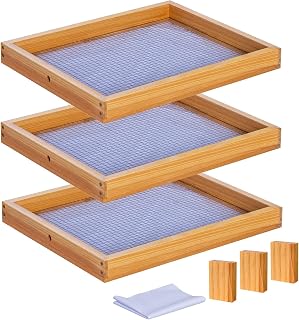 BeeCastle 10 Frame Beehive Candy Board for Langstroth Bee HiveCheck price on Amazon
 10-Frame Beehive Candy Board Dipped in Beeswax for LangstrothCheck price on Amazon
HiveKeeperGear earns a commission when you buy through links on our product pages, at no extra cost to you.
Every reference listing for this guide is a bee escape, escape board or bee repellent; none is a bee brush. The brush side below is explained from general beekeeping knowledge, without listing figures, and every number in this guide comes from the escape listings cited by brand.
Bee escape board vs bee brush: the short answer
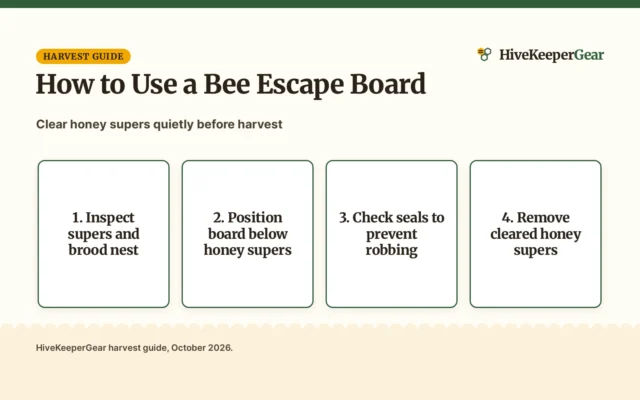
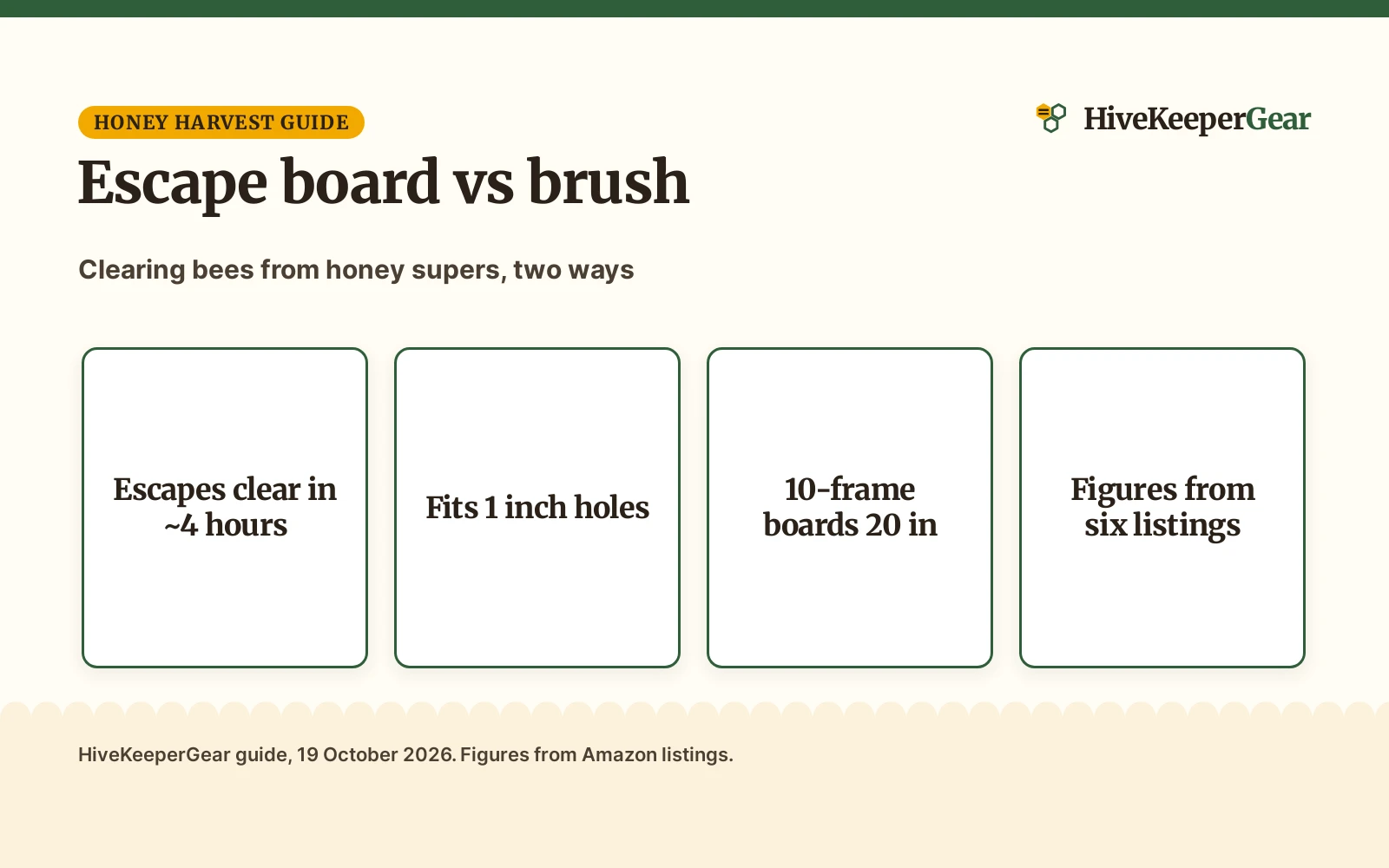
Choose the escape board when you can plan a day ahead. Fit the board under the super and the one-way valves do the work: the Mann Lake HD-105 works with any standard inner cover and clears supers in as few as 4 hours, and the Little Giant Porter-style escapes fit a 1 inch diameter hole in the inner cover, two to a pack. Choose the bee brush when you want the honey today: lift, brush, and carry the frame to the house. Many beekeepers keep both, the board for planned harvests and the brush for the frames the board misses. Our how to use a bee escape board guide walks through the setup.
How a bee escape board works
A bee escape board sits between the honey super and the rest of the hive, replacing or fitting into the inner cover. Its one-way valves let bees travel down out of the super but block the return trip, so over several hours the super empties itself. The Little Giant Porter-style escape is the classic form: a plastic one-way valve that inserts into the 1 inch hole of the inner cover. The Mann Lake HD-105 is the board form, a professional escape that works with any standard inner cover and, per its listing, clears supers in as few as 4 hours.
Full escape boards come sized for the hive. The Little Larue triangle escape board is a 10-frame board at 20 by 16.25 by 2 inches in select pine, fully assembled and ready to use with no chemicals required. The ENGAMEGURI bundle pairs two 16.25 by 19.92 by 0.98 inch beeswax-coated fir inner covers with two bee escapes at 3.99 pounds for the set. A third clearing method exists alongside both: the Bee-Quick 8 ounce pump spray, an organic-certified bee repellent that moves bees off the supers without harming them, for beekeepers who prefer a repellent to hardware.
How a bee brush works
The brush is the direct method. You pull a frame from the super, hold it over the hive, and sweep the bees off with long gentle strokes, then carry the cleared frame to a covered box. No waiting, no extra hardware in the hive, and it works on any frame the bees are on, including the stragglers an escape board leaves behind. The cost is effort and bee temperament: every frame you pull is a frame of disturbed bees, so a veil and a calm hand matter, and brushing is slower frame-by-frame than letting an escape board work overnight. For brush types, see our best bee brush guide on horsehair and flagged bristle brushes.
Time, effort and colony stress compared
| Bee escape board | Bee brush | |
|---|---|---|
| How bees leave | Walk out through one-way valves | Brushed off by hand |
| Clearing time cited | As few as 4 hours (Mann Lake HD-105) | Immediate, frame by frame |
| Planning needed | Fit the day before harvest | None; harvest any time |
| Sizes cited | 1 inch hole escapes; 20 in 10-frame boards | Not listed here |
| Colony disturbance | Low; bees leave on their own | Higher; every frame is handled |
| Leftover bees | Some stragglers remain | Brush catches what the board misses |
Which one suits which harvest
Match the method to the schedule. A planned weekend harvest suits the escape board: fit the Little Giant escapes or a full board like the Little Larue the evening before, and pull mostly bee-free supers in the morning. The Mann Lake HD-105’s 4-hour clearing figure means even a same-morning fit can work if you arrive early. A spontaneous harvest, or supers you need today, calls for the brush: no hardware to fit, no waiting, just frames and a steady hand.
Most beekeepers end up using both in sequence. The escape board clears the bulk of the bees with no effort, and the brush finishes the job on the frames that still have stragglers, which is faster and calmer than brushing a full super from scratch. If you are setting up the whole harvest workflow, our best honey extractor guide covers what happens after the supers are clear, and honey super vs medium explains the boxes themselves.
Common mistakes to avoid
- Fitting the board too late. The escape needs hours to work; the Mann Lake figure is as few as 4 hours. Fit it the evening before, not an hour before you want the honey.
- Leaving the board on too long. Once the super is clear, pull it. A board left for days can trap the queen above it.
- Brushing hard. The brush is for gentle sweeping, not scrubbing. Rough brushing crushes bees and releases alarm scent that sets the whole super buzzing.
- Forgetting the stragglers. No escape clears every bee. Keep the brush on hand for the frames the board misses instead of shaking the super.
- Harvesting without a plan for the frames. Cleared frames need a covered box for the trip to the house, or robbers find them before you do.
FAQs for beekeepers
How long does a bee escape board take to work?
The Mann Lake HD-105 listing says it clears supers in as few as 4 hours. Most beekeepers fit the board the evening before harvest and pull the supers the next morning.
Do bee escapes fit any hive?
The Little Giant Porter-style escapes fit a 1 inch diameter hole in the inner cover, the Mann Lake HD-105 works with any standard inner cover, and full boards like the Little Larue come sized for 10-frame Langstroth hives.
Can I use a brush and an escape board together?
Yes, and it is the common workflow: the board clears the bulk of the bees passively, and the brush handles the stragglers on individual frames.
Will an escape board remove the queen?
The one-way valves let bees walk down out of the super, so a queen in the super could leave with them. Check for her before fitting the board, and pull the board once the super is clear.
Is there a chemical-free alternative to both?
Both methods are already chemical-free. The Bee-Quick 8 ounce spray is the repellent option: an organic-certified product that moves bees off supers without harming them.
Related: the beekeeping tools hub, honey harvesting, our bee escape board guide and best bee brush picks.