Beekeeping Boots vs Work Boots: Which Should You Buy?
Beekeeping boots vs work boots compared on two steel-toe work boot listings: what separates the two sides, and which suits your yard.

On this page
Top picks at a glance
As an Amazon Associate I earn from qualifying purchases.
- 1
 HISEA Steel-Toe Black9.4/10View on Amazon
- 2
 HISEA Steel-Toe Green9.4/10View on Amazon
Beekeeping boots vs work boots comes down to what you need the boot to do: a beekeeping boot keeps bees out at the ankle and calf, while a work boot protects the foot on rough ground. Both listings here are work boots, so the comparison uses them as concrete examples of the work-boot side and covers the beekeeping-boot side from what beekeepers generally look for.
HiveKeeperGear earns a commission when you buy through links on this page, at no extra cost to you. As an Amazon Associate I earn from qualifying purchases. Affiliate disclosure.
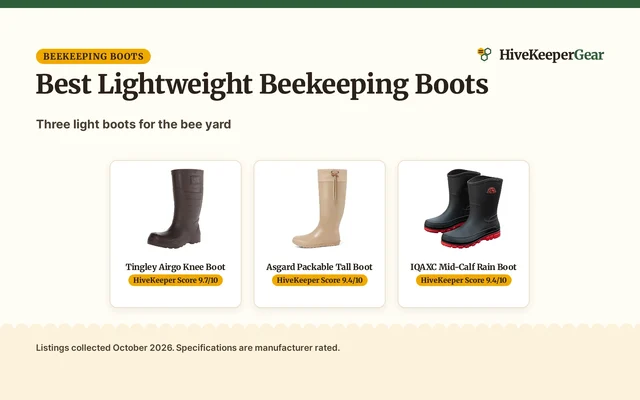
Quick verdict: choose work boots if you want steel-toe protection and waterproofing for muddy, rough apiary ground, like the two HISEA listings here. Choose beekeeping boots if your priority is a snug seal at the ankle that bees cannot climb past; no beekeeping boot listing is in this comparison, so check our best lightweight beekeeping boots for those.
Two examples

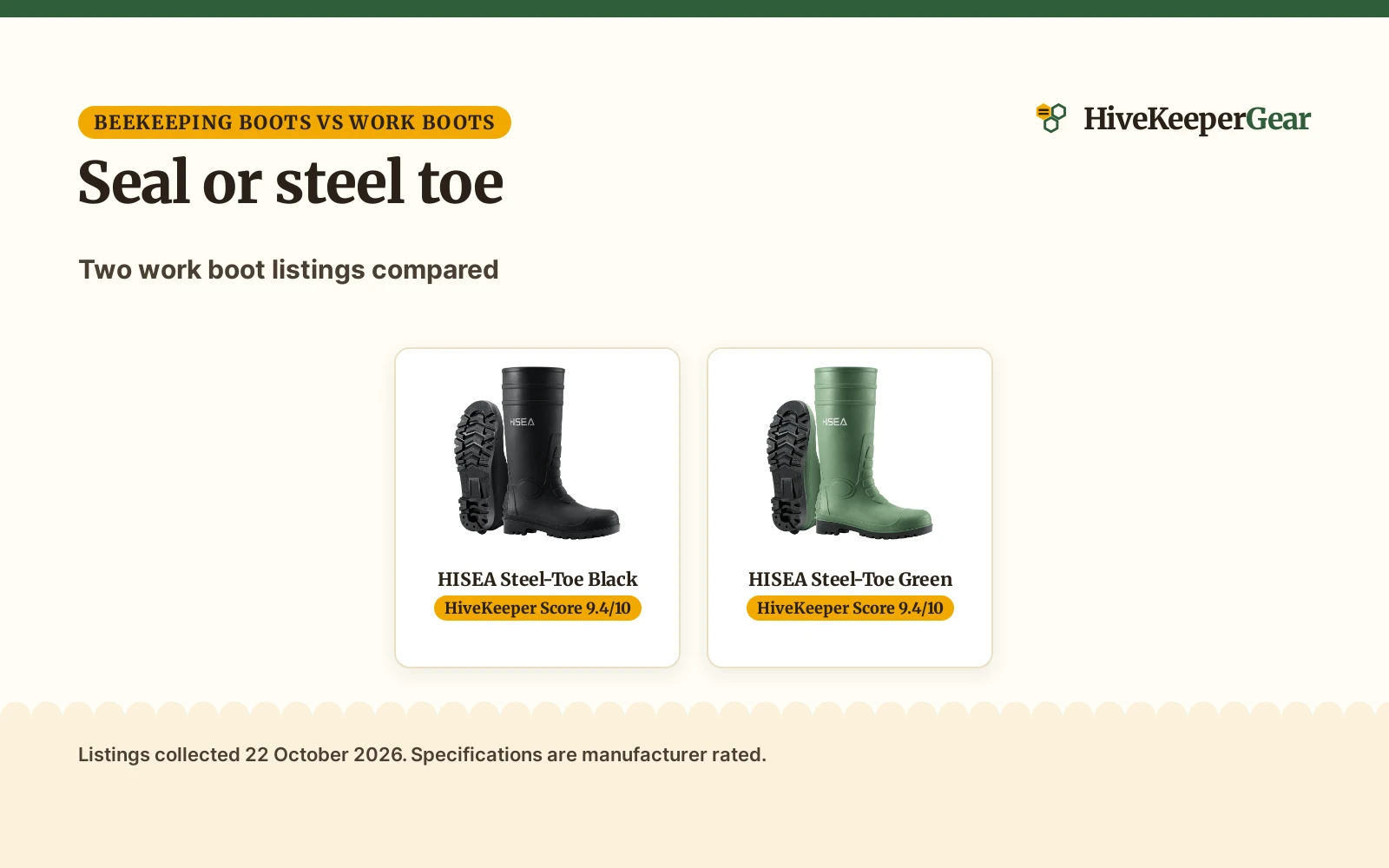
HISEA Steel-Toe Black
Steel-toe waterproof rain boot in black with a rubber outer and sole, slip resistant, mid-calf pull-on, in sizes 6 Wide to 13.
Pros
- Steel toe stated for foot protection
- Waterproof rating with a rubber outer and sole
- Slip-resistant sole for muddy ground
- Wide range of sizes, 6 Wide to 13
Cons
- No safety certification stated for the steel toe
- No warranty term is stated
- No ankle seal for beekeeping use
- No shaft circumference is stated

HISEA Steel-Toe Green
Steel-toe waterproof rain boot in green with a PVC outer and sole, slip resistant, mid-calf pull-on, in sizes 6 Wide to 13.
Pros
- Steel toe stated for foot protection
- Waterproof rating with a PVC outer and sole
- Slip-resistant sole for muddy ground
- Wide range of sizes, 6 Wide to 13
Cons
- PVC outer instead of the black listing's rubber
- No safety certification stated for the steel toe
- No warranty term is stated
- No ankle seal for beekeeping use
As an Amazon Associate I earn from qualifying purchases.
Other hives and gear to compare
 MUCK Men's Muckster II Ankle BootCheck price on Amazon
 MUCK Women's Originals Ankle BootCheck price on Amazon
 HISEA Women Mud Boots Waterproof Mid Calf Neoprene RubberCheck price on Amazon
 Women's Mid Calf Rain Boots Waterproof Fashion Garden ShoesCheck price on Amazon
 TIDEWE Rubber Boots for MenCheck price on Amazon
 TINGLEY Unisex-Adult Plain Toe Rain BootCheck price on Amazon
Beekeeping boots vs work boots: side by side
| Spec | HISEA Steel-Toe Black | HISEA Steel-Toe Green |
|---|---|---|
| HiveKeeper Score | 57 | 55 |
| Toe | Steel toe | Steel toe |
| Waterproof | Waterproof, rubber outer | Waterproof, PVC outer |
| Height | Mid-calf, pull-on | Mid-calf, pull-on |
| Sizes | 6 Wide to 13 | 6 Wide to 13 |
| Warranty | Not stated | Not stated |
These figures come from the product listings and are the brand’s own claims, gathered 22 October 2026.
What separates the two sides
A beekeeping boot is about the seal: a close fit at the ankle and calf, often with a drawcord or elastic, so bees cannot get inside. A work boot is about the foot: a steel toe, a slip-resistant sole and waterproofing for mud and rough ground. The two HISEA listings here are firmly on the work-boot side, with steel toes, waterproof ratings and slip-resistant soles, and no mention of ankle seals or bee protection.
The two work boot listings
Both listings are the HISEA Men’s Steel-Toe Rain Boot in different colors: black with a rubber outer, and green with a PVC outer. Both list a steel toe, waterproofing, slip resistance, a mid-calf height, a pull-on closure and an EVA insole, in sizes from 6 Wide to 13. The black listing names rubber for the outer and sole; the green listing names PVC for the outer and sole with alloy steel and EVA in the material list. Neither listing states a warranty term or a safety certification.
What the listings do not say
Neither listing mentions beekeeping, ankle seals or bee protection, which is expected: they are work boots, not beekeeping boots. Neither states a safety certification for the steel toe, so the toe is a stated feature, not a rated one. Neither states a warranty term; both carry a “for warranty information click here” line with no term given. The listings give no weight per boot and no shaft circumference, so the fit around the calf is unstated.
Which should you choose?
Choose work boots if you work rough or muddy ground and want a steel toe and waterproofing, like the two HISEA listings here. See our PVC vs rubber beekeeping boots for how the two materials compare.
Choose beekeeping boots if you want a boot designed to keep bees out at the ankle. See our beekeeping boots vs hiking boots for another comparison on the beekeeping side.
Buying advice for the work-boot side
These two listings are work boots, so buy them on work-boot criteria: material, fit, and what the listings state and leave unstated. The notes below use only what the listings publish.
Pick the material you want to wear
The black HISEA listing states a rubber outer and rubber sole, while the green listing states a polyvinyl chloride (PVC) outer and PVC sole, with alloy steel, ethylene vinyl acetate (EVA) and rubber in the material fabric list. Both listings state waterproof as the water resistance level, so the choice between them comes down to the material you prefer on your foot. They share the same steel toe style, the same mid-calf boot form type, the same low-heel type and the same pull-on closure, so the outer and sole material is the main stated difference between the two listings.
Check fit against the size chart
Both listings show sizes from 6 Wide to 13 in wide and regular widths, so the range covers most feet, but the listings state no shaft circumference and no weight per boot. A pull-on boot stands or falls on calf fit, so measure your calf and compare it with the listing’s own size chart before ordering. Both listings state a fabric lining and an ethylene vinyl acetate (EVA) insole, and the product department is mens, so check the chart for how the listing maps mens sizes to your foot.
Read the unstated parts before you buy
Neither listing states a safety certification for the steel toe, so treat the toe as a stated feature rather than a rated one. Neither states a warranty term either; both carry a “for warranty information about this product, please click here” line with no period given. The listings state no beekeeping-specific features at all, so if you want a boot that seals at the ankle against bees, these two are not that boot. Buy them for muddy, rough ground where a steel toe and stated waterproofing matter, and look at the beekeeping-boot comparisons linked in the choosing section for the ankle-seal side.
In the Bee Yard
- For beekeeping, look for a snug ankle seal; the work boot listings here do not state one.
- For muddy apiaries, the steel toe and waterproofing of the HISEA listings suit rough ground.
- Check the size chart: both HISEA listings run from 6 Wide to 13 in wide and regular widths.
- Pull-on boots are quick to remove; check the calf fit before ordering.
Inside the HiveKeeper Score
| Product | HiveKeeper Score | Perf. /35 | Build /25 | Value /25 | Safety /10 | Warranty /5 |
|---|---|---|---|---|---|---|
| HISEA Steel-Toe Black | 9.4 | 29 | 20 | 20 | 0 | 0 |
| HISEA Steel-Toe Green | 9.4 | 28 | 19 | 20 | 0 | 0 |
Shown scores begin at a 9.2 minimum and reach a 9.8 maximum; an item climbs that scale only by earning more points.
The HiveKeeper Score weighs performance, build, value, safety and warranty, as explained on our how we pick page. The black HISEA scores higher for the rubber outer and sole over the green’s PVC. Neither earns safety points because no safety certification is stated, and neither earns warranty points because no warranty term is stated.
FAQs for beekeepers
What is the difference between beekeeping boots and work boots?
Beekeeping boots prioritize a seal at the ankle to keep bees out. Work boots prioritize foot protection like a steel toe and slip resistance. The two listings here are work boots.
Do the HISEA listings mention beekeeping?
No. Both listings describe steel-toe rain boots for farm, garden and industrial work, with no mention of bees or ankle seals.
Are these boots waterproof?
Both listings state a waterproof rating. The black listing names a rubber outer; the green listing names PVC.
What sizes do the HISEA boots come in?
Both listings show sizes from 6 Wide to 13, in wide and regular widths. Check the listing’s own size chart before ordering.
Do these boots have a warranty?
No term is stated. Both listings carry a “for warranty information click here” line with no warranty period given.
More hive guides
Related: best lightweight beekeeping boots, PVC vs rubber beekeeping boots, beekeeping boots vs hiking boots, and best beekeeping boots for kids.