Beekeeping Boots vs Hiking Boots: Which One Should You Buy?
Beekeeping boots vs hiking boots: rubber pull-on boots suit the apiary better than hiking boots, and this guide compares four rubber boots by listing facts.

On this page
Top picks at a glance
As an Amazon Associate I earn from qualifying purchases.
- 1
 NINGO Men's Steel Toe Waterproof PVC Knee High Rain Boots9.7/10View on Amazon
- 2
 Tingley Airgo Ultralight Knee Boot9.7/10View on Amazon
- 3
 Asgard Women's Packable Lightweight Tall Rain Boots9.6/10View on Amazon
- 4
 Men's Military Boots Lightweight Army Combat TacticalView on Amazon
- 5
 NORTIV 8 Men's Hiking Winter Insulated Snow Boots WaterproofView on Amazon
- 6
 Furuian Tactical Boots for Men Women Soft Toe LightweightView on Amazon
- 7
 Women's Winter Snow BootsView on Amazon
- 8
 Mens Hiking Boots Comfortable: Breathable & Lightweight WorkView on Amazon
A hive inspection starts before the veil goes on: you walk the apiary, check the stands, and cross wet grass to reach the back hive. beekeeping boots vs hiking boots: which should you wear to the yard? Beekeeping boots are rubber, pull-on and easy to rinse; hiking boots are built for trails, not for bee yards. The short answer: choose rubber boots for the apiary, and save the hiking boots for the trail.
Other hives and gear to compare
 Men's Military Boots Lightweight Army Combat TacticalCheck price on Amazon
 NORTIV 8 Men's Hiking Winter Insulated Snow Boots WaterproofCheck price on Amazon
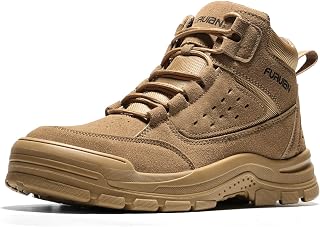 Furuian Tactical Boots for Men Women Soft Toe LightweightCheck price on Amazon
 Women's Winter Snow BootsCheck price on Amazon
 Mens Hiking Boots Comfortable: Breathable & Lightweight WorkCheck price on Amazon
HiveKeeperGear earns a commission when you buy through links on this site, at no extra cost to you. As an Amazon Associate I earn from qualifying purchases. Affiliate disclosure.
Beekeeping boots vs hiking boots: the short answer
Hiking boots have laces, seams and absorbent uppers. Lace eyelets give bees gaps to explore, and canvas or leather uppers hold propolis, honey and mud. Rubber beekeeping boots are pull-on with no laces, and the listings here are all water resistant or waterproof, so they rinse clean after a sticky inspection. If you wear hiking boots to the yard, you gain ankle support and lose the two things the apiary rewards most: a sealed top line and a surface that washes down.
The comparison is not about comfort on a trail. It is about what touches the ground in a bee yard: wet grass, mud and spilled syrup. Rubber boots handle all of it. Four rubber listings are ranked below by what each one states.
The gear: 4 rubber boots, ranked
MUCK Women’s Originals Ankle Boot is the tallest and the only waterproof pick with a stated 10 inch shaft, in a mid-calf height with a 14 inch shaft circumference. The listing says the outer material is rubber with a synthetic lining and a polyurethane insole, at 1.2 pounds, and it is made for women in green. The tallest shaft pairs best with suit legs, and waterproof beats water resistant on wet inspection days.
MUCK Men’s Muckster II Ankle Boot is the men’s ankle option: a 7 inch shaft with a 13 inch shaft circumference, rubber outer, fabric lining and a neoprene insole, at 1.2 pounds. The listing says water resistant and pull-on, in brown. The neoprene insole is the only neoprene one stated here, and the shorter shaft suits quick yard checks.
HISEA Steel-Toe Rain Boots are the work pick: the only steel-toe listing here, waterproof, mid-calf, in black with a fabric lining and an EVA insole. The listing says the material is a PVC polyblend with rubber, made for farm and industrial work. If your apiary work includes moving heavy hive bodies, the steel toe is the feature to note.
XTRATUF Men’s Ankle Deck Boot is the lightest-styled ankle boot: a 6 inch shaft, ankle-high, at 1.8 pounds, with a mesh lining and an EVA insole, in chocolate and tan. The listing says water resistant and pull-on. One inconsistency: the style name says rubber ankle deck boot while the spec table lists the outer material as leather, so trust the title and style name over the table and expect rubber.
What makes a boot work in the apiary
Pull-on beats lace-up
All four listings here are pull-on, and that is the point. Laces collect bees, propolis and mud, and tying laces with gloves on is slow. A pull-on rubber boot goes on over work pants and comes off at the door, and the rubber rinses clean. If you are choosing between rubber compounds, see our PVC vs rubber beekeeping boots comparison.
Waterproof or water resistant
The MUCK Women’s and HISEA listings state waterproof; the MUCK Men’s and XTRATUF state water resistant. The listings do not define either term, so take waterproof as the stronger stated claim. For dew-soaked grass and muddy yards, the waterproof pair is the safer read of the listings.
Insoles and linings
Comfort comes from what is inside the boot, and the listings state it plainly. The XTRATUF pairs an ethylene vinyl acetate insole with a mesh lining; the HISEA uses the same EVA insole material with a fabric lining. The MUCK Men’s Muckster II is the only one here with a neoprene insole, plus a fabric lining. The MUCK Women’s Originals lists a polyurethane insole with a synthetic lining. All four list rubber soles, and three list rubber outers outright, with the XTRATUF style name saying rubber against a leather line in its spec table. If you stand through long inspections, the insole material is the line to compare.
Round toe or steel toe
Three listings state a round toe: the XTRATUF, the MUCK Men’s and the MUCK Women’s. The HISEA is the only steel-toe listing, and its title aims it at farm, agriculture and industrial work. A steel toe adds protection when you lift supers and hive bodies; a round toe keeps the boot simpler for inspections. The stated weights line up with that split: both MUCK listings state 1.2 pounds and the XTRATUF 1.8 pounds, while the HISEA states no item weight at all. Match the toe to the heaviest thing you lift in the yard.
Seasons and occasion
The listings tag three boots for all seasons: the XTRATUF, the MUCK Men’s and the MUCK Women’s. The HISEA is tagged for spring, and its occasion is work rather than the casual tag on the other three. None of the listings states insulation, so read the season tag as the maker’s stated scope and plan layers yourself for cold mornings.
Shaft height and weight
Stated shafts run from 6 inches on the XTRATUF to 7 inches on the MUCK Men’s to 10 inches on the MUCK Women’s, with the HISEA at mid-calf. Taller shafts cover more of the leg under the suit; shorter shafts are quicker for a fast check. Stated weights are 1.2 pounds for both MUCK listings and 1.8 pounds for the XTRATUF; the HISEA states no item weight. For lighter options, see best lightweight beekeeping boots.
FAQs for beekeepers
Can I wear hiking boots to the apiary?
You can, but they are the wrong tool. Lace-ups give bees entry points and absorbent uppers hold propolis and honey. Pull-on rubber boots seal the top line and rinse clean.
Why are beekeeping boots rubber?
Rubber resists water and washes down after sticky inspections. Three of the four listings are rubber boots with pull-on closure and no laces; the XTRATUF style name says rubber while its spec table says leather.
Do I need steel-toe boots for beekeeping?
Only if you move heavy equipment. The HISEA listing is the only steel-toe pick here, made for farm and industrial work; the other three list round toes.
Are these boots waterproof?
The MUCK Women’s Originals and the HISEA state waterproof. The MUCK Men’s Muckster II and the XTRATUF state water resistant.
What shaft height should I get?
Stated shafts here run 6 inches, 7 inches and 10 inches, with the HISEA at mid-calf. A taller shaft covers more leg under the suit; a shorter shaft suits quick checks.
More hive guides
Browse every guide by category: beehives, protective gear, hive tools and honey harvesting.