Pvc vs Neoprene Beekeeping Boots: Which One Should You Buy?
PVC boots suit washdowns and chemical work in the bee yard; neoprene suits cold mornings, and the listings here add four PVC boots.

On this page
Top picks at a glance
As an Amazon Associate I earn from qualifying purchases.
- 1
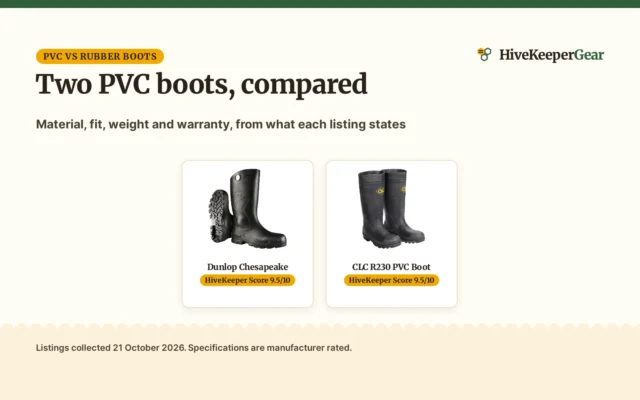
 Dunlop Chesapeake PVC Rain Boot9.5/10View on Amazon
- 2
 NINGO Men's Steel Toe Waterproof PVC Knee High Rain Boots9.7/10View on Amazon
- 3
 CLC Custom Leathercraft R230 PVC Rain Boot9.5/10View on Amazon
- 4
 Honeywell Safety Products Servus Comfort Technology 14" PVCView on Amazon
- 5
 Dunlop White PVC Plain ToeView on Amazon
- 6
 Servus MAX 15" PVC Chemical-Resistant Soft Toe Men's WorkView on Amazon
- 7
 HISEA Men's Steel Shank Rain Boots Waterproof PVC RubberView on Amazon
- 8
 PVC Rain Boots for Men And WomenView on Amazon
- 9
 Servus 12" PVC Polyblend Soft Toe Shrimp BootsView on Amazon
Spring inspection day, the grass is wet and the hive stand sits in mud. Pvc vs neoprene beekeeping boots comes down to the season you work in most: PVC shrugs off washdowns, chemicals and muck, while neoprene stays flexible and warmer when the mornings turn cold. If you hose your boots after every yard visit, pick PVC; if you work hives through a cold spring, look at neoprene.
Other hives and gear to compare
 Honeywell Safety Products Servus Comfort Technology 14" PVCCheck price on Amazon
 Dunlop White PVC Plain ToeCheck price on Amazon
 Servus MAX 15" PVC Chemical-Resistant Soft Toe Men's WorkCheck price on Amazon
 HISEA Men's Steel Shank Rain Boots Waterproof PVC RubberCheck price on Amazon
 PVC Rain Boots for Men And WomenCheck price on Amazon
 Servus 12" PVC Polyblend Soft Toe Shrimp BootsCheck price on Amazon
HiveKeeperGear earns a commission when you buy through links on this site, at no extra cost to you. As an Amazon Associate I earn from qualifying purchases. Read our affiliate disclosure.
Pvc vs neoprene beekeeping boots: the practical difference
PVC is the washdown boot: seamless, waterproof, and resistant to agricultural chemicals, fertilizers and animal waste, per the Servus listings. It hoses clean and does not care about mud, manure or spilled syrup. The trade is stiffness in the cold: PVC gets rigid when temperatures drop, and it breathes little, so feet sweat on warm days. For honey harvest days with sticky frames and spilled syrup, PVC is the easier cleanup. Socks matter more than marketing: a moisture-wicking sock keeps feet drier inside a non-breathing boot than any insole claim, and the Servus FOOT FORM insole is removable and washable, so it can be pulled out to dry between visits.
Neoprene is the cold-weather boot: it stays flexible in low temperatures and insulates better, which matters for winter checks and cold spring inspections. It is harder to wash clean of sticky propolis and wax. None of the listings here is neoprene, so the notes above are general guidance, not listing facts.
What the PVC listings show
All four listings here are PVC boots, ranked by what they state. First, the Servus Comfort Technology 14 inch: PVC polyblend, 14 inch height, scalloped top-line for flex, FOOT FORM cushion insole, deep angle cleated outsole, electrical hazard rated to ASTM F2413-11, at 4.4 pounds. Second, the Servus MAX 15 inch: chemical-resistant PVC, 15 inch height, triple density construction, steel shank, kick-off lugs, recommended for barns. Third, the Dunlop white PVC: waterproof, tall shaft, chemical and slip resistant, sizes 3 to 13, steel shank; the spec table lists a 0.27 g weight, which is implausible, and almost no other specs. Fourth, the HISEA knee-high: PVC rubber, knee-high shaft, steel shank, synthetic lining, but the title says waterproof while the spec table says water resistant, so confirm before ordering.
What to check on the listing
Toe style, shaft height, sole and closure: the Servus 14 inch lists a soft toe and slip-on closure, the Servus MAX a soft toe with kick-off lugs, the Dunlop a plain toe, and the HISEA a round toe with pull-on tabs. Three list a steel shank for arch support; the Servus 14 inch does not name one. Waterproof versus water resistant matters at the seams: the HISEA title says waterproof but its spec table says water resistant, so treat it as the weaker claim.
Fit and care
Buy boots to fit over your suit cuffs: a 14 or 15 inch shaft covers the ankle and lower leg, and the Servus scalloped top-line flexes when you kneel. Rinse PVC boots after yard visits, especially after contact with chemicals or syrup, and store them out of direct sun. Check the shaft circumference on the listing: the Servus 14 inch names 14 inches, the HISEA knee-high names 15 centimeters. Try boots on with the socks you will wear in the yard; a snug calf keeps bees out but should not cut circulation. The Dunlop lists sizes 3 to 13, a wide range that covers most feet.
FAQs for beekeepers
Are PVC boots good for beekeeping?
Yes for wet and dirty yards: the Servus listings name waterproof construction and resistance to agricultural chemicals and animal waste. Pair them with a suit that seals at the ankle. White boots like the Dunlop show dirt sooner but make it easy to spot debris.
Is neoprene warmer than PVC?
Generally, yes: neoprene insulates better and stays flexible in the cold, while PVC stiffens. None of the listings here is neoprene, so compare neoprene boots by their own stated specs.
How tall should beekeeping boots be?
The listings here name 14 inch, 15 inch and knee-high shafts, all mid-calf or higher. Tall enough to cover the suit cuff is the rule; measure your calf against the stated shaft circumference. Knee-high boots like the HISEA add coverage for deep grass and muddy yards.
Can you wash PVC boots?
Yes. The Servus Comfort Technology listing names a removable, washable insole, and PVC hoses clean. Rinse after contact with chemicals, syrup or manure.
Do these boots come in my size?
The Dunlop lists sizes 3 to 13. The Servus listings name single sizes in their titles (Size-9 and Size 7), so check the size options on the listing before ordering. Wide shafts fit over suit cuffs; the Servus 14 inch names a 14 inch shaft circumference.
More hive guides
Browse every guide by category: protective gear and beehives.