Neoprene Boots vs Rubber Beekeeping Boots: Which One Should You Buy?
A detailed comparison of neoprene boots and rubber beekeeping boots covering insulation, yard traction, flexibility, and mud protection for hive inspections.

On this page
Top picks at a glance
As an Amazon Associate I earn from qualifying purchases.
- 1
 NINGO Men's Steel Toe Waterproof PVC Knee High Rain Boots9.7/10View on Amazon
- 2
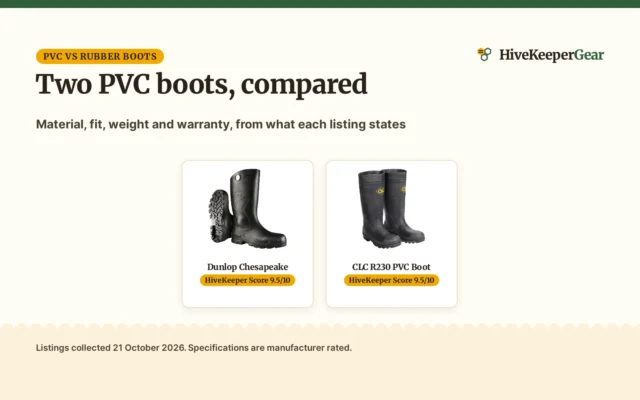
 Dunlop Chesapeake PVC Rain Boot9.5/10View on Amazon
- 3
 CLC Custom Leathercraft R230 PVC Rain Boot9.5/10View on Amazon
- 4
 DUNLOP Chesapeake Rubber Boots for Men & WomenView on Amazon
- 5
 HISEA Men's Steel-Toe Rain BootsView on Amazon
- 6
 Flats Boots Lightweight Neoprene Rubber Boots for Fishing &View on Amazon
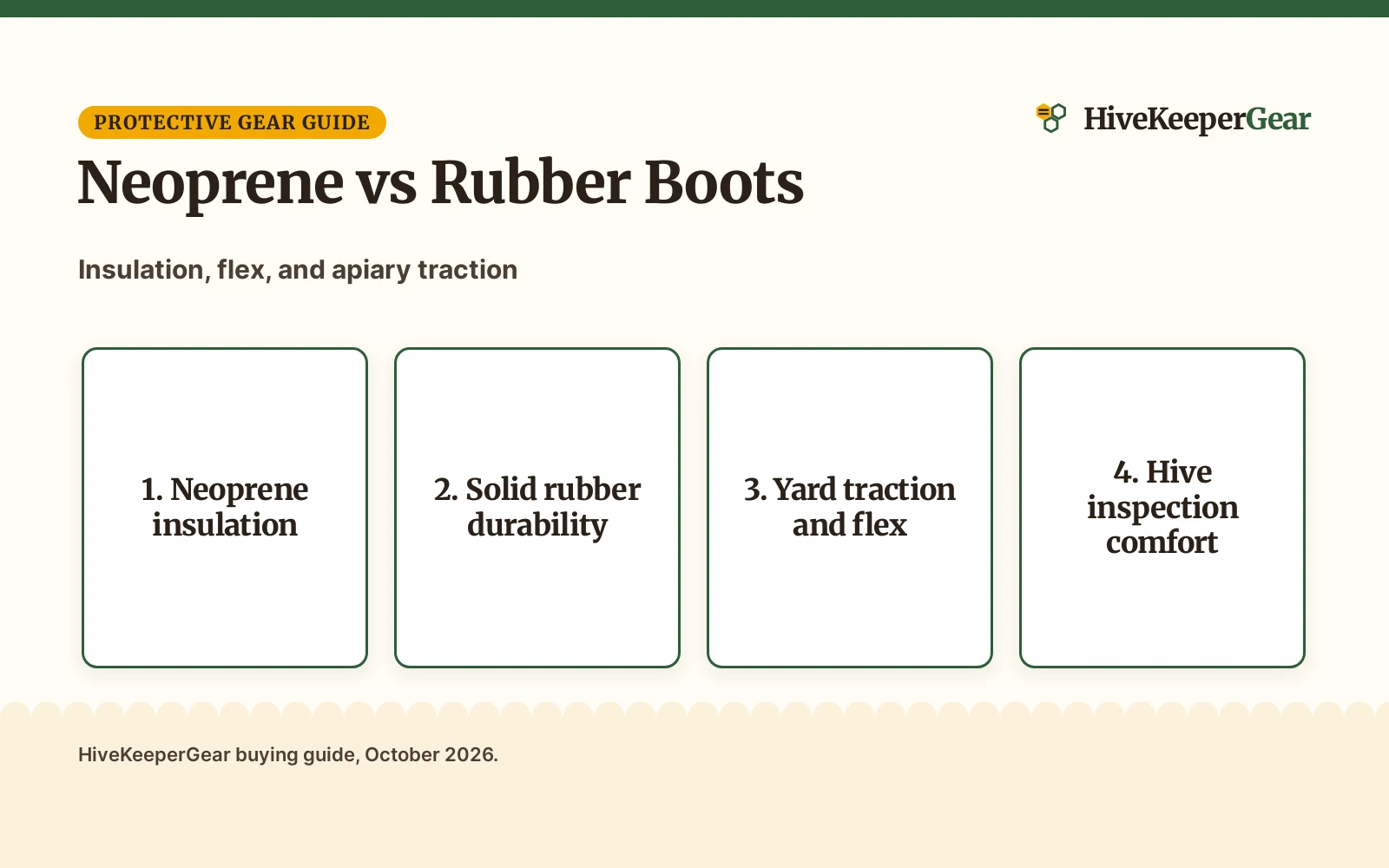
During early spring inspections when cold mud clings to hive stands, comparing neoprene boots vs rubber beekeeping boots comes down to insulation and flex versus summer breathability and cleanup. Neoprene boots offer warmth, cushioned arches, and ankle flexibility for chilly morning apiary chores, whereas solid rubber beekeeping boots provide rigid puncture defense, hose clean rapidly, and stay cooler during heavy summer honey flows. Beekeepers managing colonies in damp, frosty climates gain the most comfort from flexible neoprene, while keepers working primarily through humid summer afternoons should select traditional rubber boots.
Other hives and gear to compare
 DUNLOP Chesapeake Rubber Boots for Men & WomenCheck price on Amazon
 HISEA Men's Steel-Toe Rain BootsCheck price on Amazon
 Flats Boots Lightweight Neoprene Rubber Boots for Fishing &Check price on Amazon
HiveKeeperGear earns a commission when you buy through links on this site, at no extra cost to you. As an Amazon Associate I earn from qualifying purchases. Affiliate disclosure.
Before you choose: yard conditions and seasonal weather
Footwear is often overlooked until a beekeeper spends hours lifting brood boxes in wet grass or discovers bees clustering near shoe laces. A hive yard presents specific challenges that general garden shoes cannot handle. Heavy morning dew soaks into standard leather or canvas, while defensive bees drop downward when shaken from frames and crawl across boots searching for openings.
Apiary footwear must accomplish essential tasks: keep feet dry in damp grass, prevent crawling guard bees from finding a gap into your bee suit cuffs, and provide stable footing when carrying heavy honey supers. Both neoprene boots and rubber boots create a protective barrier against moisture and stings through their lower foot shells, but they behave differently when temperatures swing and seasonal work intensifies. Choosing between them depends on your local climate, hive yard terrain, and when you do most of your apiary inspections.
Neoprene boots vs rubber beekeeping boots: direct comparison
| Feature | Neoprene Boots | Rubber Beekeeping Boots |
|---|---|---|
| Cold weather warmth | Insulating closed-cell foam retains heat on frosty ground | Uninsulated shells conduct cold and chill feet quickly |
| Shaft flexibility | Supple upper bends easily during bending and crouching | Rigid upper resists creasing but feels stiffer at ankles |
| Hot weather breathability | Traps foot heat and can cause perspiration on warm days | Lined rubber breathes slightly better and dries faster inside |
| Puncture resistance | Tough rubber lower foot with snag-resistant fabric upper | Solid rubber or PVC shell deflects sharp hive tools and briars |
| Mud and propolis cleaning | Fabric collar requires brushing; rubber foot washes clean | Smooth outer surface rinses clean with a garden hose |
| Suit cuff integration | Snug flexible collar fits smoothly under suit elastic | Wider shaft opening allows quick pull-on over thick denim |
1. Insulation and cold weather warmth
Apiary work begins earlier in the season than many beginners expect. Early spring visits require checking food stores, feeding sugar syrup, and cleaning bottom boards while morning frost still covers hive covers. Standing on frozen soil or damp ground for extended inspections quickly chills your feet through uninsulated footwear.
Neoprene boots excel in cold conditions because neoprene is a closed-cell synthetic foam that traps microscopic air pockets. This construction creates an efficient thermal barrier between your feet and chilly ground moisture. Traditional rubber boots, by contrast, conduct cold directly from wet ground into the footbed. While thick socks help, keepers in northern climates who inspect colonies during late fall or early spring will find neoprene far more comfortable during cold weather chores.
2. Flexibility, crouching, and yard mobility
Beekeeping involves constant bending, kneeling, and lifting. When prying apart propolis-sealed hive bodies or inspecting brood frames in the lowest deep box, you spend considerable time crouching beside the hive stand. Rigid boots can pinch ankles and restrict circulation during prolonged kneeling.
Because neoprene stretches in all directions, boots with neoprene shafts offer superior ankle mobility and flex naturally with every step. Guide Gear lists a platform height of 13 inches for its rubber and neoprene boot, combining a waterproof rubber lower with a flexible upper that bends comfortably during hive work. Solid rubber boots offer a more structured, upright shaft that provides ankle support on uneven ground, which helps when balancing heavy boxes. You can read more about stable footing across uneven apiaries in our guide to the best beekeeping boots for rough terrain.
3. Puncture resistance and dropped hive tools
The bee yard is full of sharp edges. Heavy hive boxes have sharp corners, frames are scraped with sharp steel tools, and apiaries often sit near brambles or rough brush. Dropping a steel hive tool or setting a heavy box corner onto your foot is an ever-present risk during busy inspections.
Solid rubber and molded PVC boots provide superior outer puncture resistance across the entire boot surface. Honeywell lists a 15-inch boot shaft height for its Servus work boot, using injection-molded construction that resists abrasions from brush and accidental impacts. Dunlop lists sizes from 3 to 15 for its Chesapeake boot, featuring 100% waterproof PVC construction that deflects sharp hive tools and scrapes effortlessly. Neoprene boots feature thick rubber over the vamp, toe, and sole, but their upper shaft consists of fabric-laminated neoprene that can snag on barbed wire or thorny blackberry canes.
4. Hot weather performance and summer hive flows
While neoprene dominates cold mornings, beekeeping is predominantly a summer activity. Main honey flows occur during warm, sunny weather when foragers are out in the field. Working inside a full bee suit under bright sunshine quickly generates body heat.
Neoprene insulates both ways: it keeps cold out, but it also traps body heat inside. During long afternoon inspections in midsummer, neoprene boots can become uncomfortably warm and lead to sweaty feet. Solid rubber boots, especially those lined with thin moisture-wicking fabric, run noticeably cooler in direct summer sun. Honeywell lists an item weight of 16 ounces, while Dunlop lists an item weight of 1.6 kg, illustrating how boot materials and thicknesses influence overall weight and heat retention during extended apiary tasks.
5. Hive yard mud, propolis, and cleanup
Bee yards become muddy quickly after spring rains or around water stations. Furthermore, beekeepers constantly contend with sticky propolis, honeycomb wax drips, and hive debris that cling to footwear. At the end of an inspection, nobody wants to track propolis and dirt into vehicles or clean floors.
Solid rubber and PVC boots rinse clean with a spray from an outdoor garden hose. Smooth exterior rubber leaves nowhere for sticky wax or wet clay to hide. Neoprene boots also feature washable rubber lower shells, but the fabric exterior of the neoprene shaft can absorb fine clay particles and requires occasional scrubbing with soapy water to keep clean. If your priority is effortless maintenance, rubber boots hold a distinct advantage.
Seasonal footwear in the apiary
Late winter and early spring: colonies require supplemental feeding and emergency fondant checks while ground frost remains. Neoprene boots keep your feet warm against frozen grass and provide the flex needed to lean over open hive tops. Late spring buildup: rapid brood expansion requires frequent inspections, adding supers, and lifting boxes. Flexible footwear reduces leg fatigue as inspection counts increase. Summer honey flow: hives reach peak weight and temperatures soar. Rubber boots keep feet cooler and rinse clean quickly after sticky harvesting sessions. Fall preparation: final honey extractions and winter entrance reductions happen in cooler weather, where neoprene warmth again becomes valuable. Winter yard checks: snow and slush require waterproof footwear to check hive entrances without wetting socks.
Practical apiary footwear tips
- Tuck your bee suit pant legs inside tall boot shafts or pull elastic cuffs down securely over the outside to prevent crawling bees from finding ankles.
- Use boot bands or velcro gaiters to clamp suit legs against the boot collar if your bee suit elastic has stretched over time.
- Wear moisture-wicking wool or synthetic socks to regulate moisture, regardless of whether you choose neoprene or rubber shells.
- Keep a boot jack near your apiary storage shed to remove muddy boots without having to touch dirty shafts with bare hands.
- Pair your footwear with durable hand protection such as beekeeping gloves and a sturdy jacket or suit for balanced coverage from head to toe.
Taking care of your boots extends their working life. Store them indoors out of direct sunlight and ozone, which dry out natural rubber and cause surface cracking over time.
What to avoid in apiary footwear
Low-cut athletic sneakers, mesh running shoes, and open clogs have no place in a bee yard. Bees frequently drop into tall grass during inspections, and guard bees will crawl into shoe openings or sting through porous mesh fabric. Heavy leather work boots offer good support, but unsealed leather absorbs damp ground moisture and requires regular conditioning to avoid cracking. For an in-depth look at leather options, see our comparison of rubber beekeeping boots vs leather boots, or explore steel toe vs soft toe beekeeping boots if heavy hive moving is a concern.
FAQs for beekeepers
Can bees sting through neoprene boots?
Guard bees cannot penetrate the thick closed-cell foam and outer rubber shell of neoprene boots during normal apiary work. As long as your bee suit cuffs seal firmly around the boot shaft, your feet remain protected.
Can bees sting through rubber beekeeping boots?
Solid rubber and PVC boots form a impenetrable barrier that stings cannot pierce. The primary vulnerability is never the boot material itself, but rather an open gap where pant legs meet the boot collar.
Should bee suit pants go inside or outside beekeeping boots?
Pulling your bee suit legs down over the outside of your boots is generally safest because bees falling down the suit tumble harmlessly to the ground. If your suit legs lack elastic, tuck them inside tall boot shafts and secure the opening with boot bands.
Are neoprene boots too hot for summer hive inspections?
Neoprene boots trap internal foot warmth and will feel hot during midday summer inspections under direct sunlight. Beekeepers working primarily in warm weather often prefer thin-lined rubber boots paired with breathable socks.
How tall should beekeeping boots be?
Apiary boots should reach at least mid-calf or knee-high to ensure a generous overlap with bee suit legs. Honeywell lists a 15-inch boot shaft height and Guide Gear lists a 13-inch platform height, both providing ample vertical coverage to prevent ankle exposure when crouching.
More hive guides
Browse every guide by category: protective gear, beehives, hive tools and honey harvesting.
More picks: explore our overall roundup of the best beekeeping boots, compare rubber beekeeping boots vs leather boots, or review steel toe vs soft toe beekeeping boots.