Rubber Beekeeping Boots vs Leather Boots: Which One Should You Buy?
A direct comparison of rubber beekeeping boots and leather boots for hive work, covering water resistance, ankle support, sting defense, and yard traction.

On this page
Top picks at a glance
As an Amazon Associate I earn from qualifying purchases.
- 1
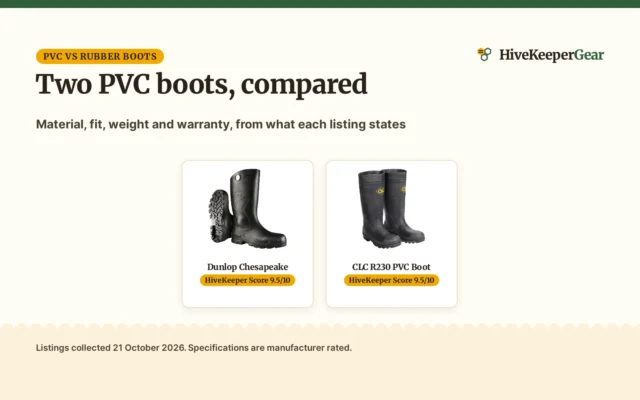
 Dunlop Chesapeake PVC Rain Boot9.5/10View on Amazon
- 2
 HISEA Men's Steel-Toe Rain BootsView on Amazon
- 3
 Hunthor Steel Toe Rubber Work BootsView on Amazon
- 4
 Cordova LBC10 Hazmat/Nuke BootsView on Amazon
- 5
 NINGO Men's Steel Toe Rain BootsView on Amazon
- 6
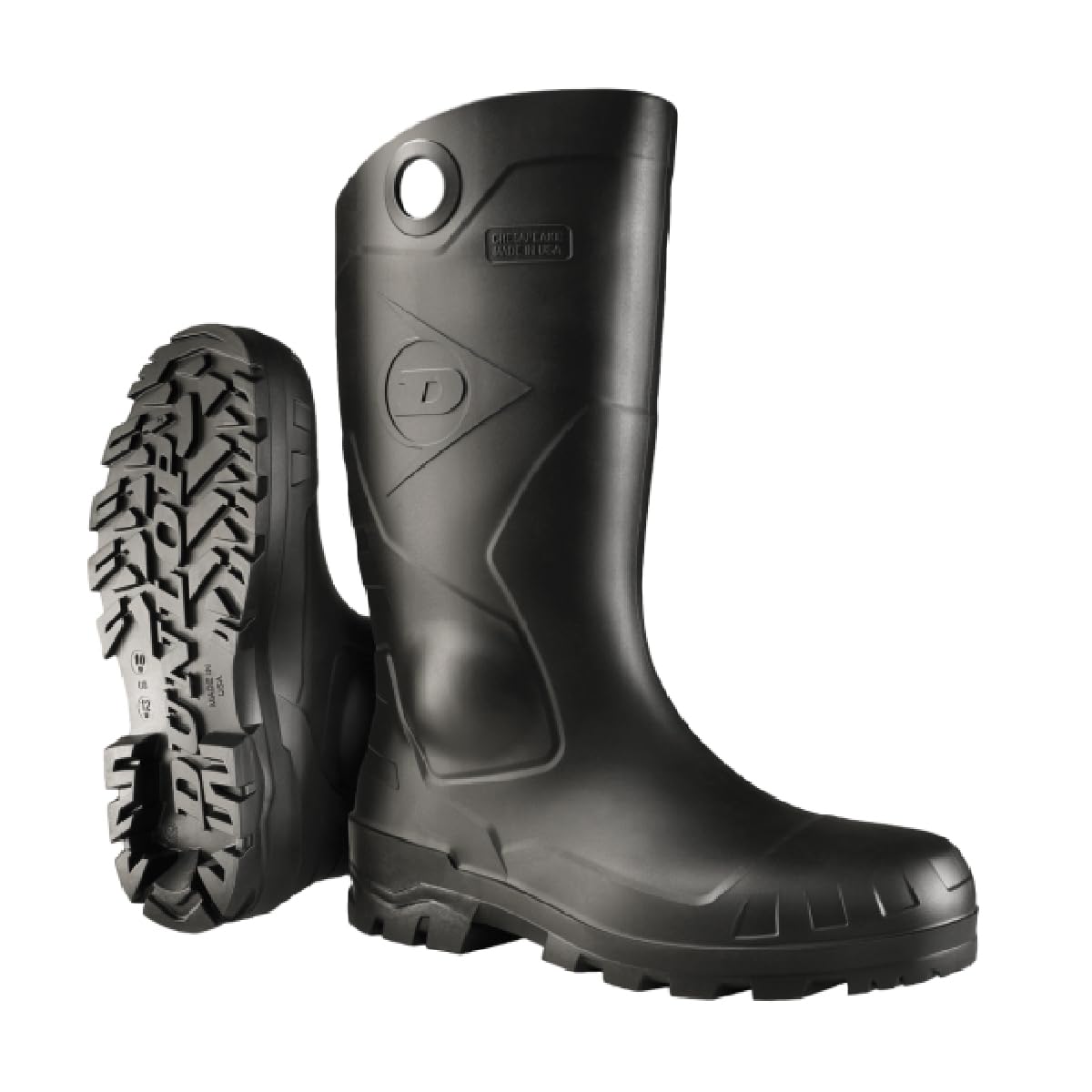 Dunlop Chesapeake Rubber Boots for men and womenView on Amazon
- 7
 DUNLOP Chesapeake Rubber Boots for Men & WomenView on Amazon
Walking through dew-soaked grass during an early morning hive inspection reveals the practical trade-offs between rubber beekeeping boots vs leather boots. We compared both styles across moisture resistance, ankle stability, sting defense, and apiary maintenance. If your apiary stands in wet grass where bees drop to the ground and hive debris clings to footwear, tall rubber boots offer dependable waterproofing, sting defense, and simple hose-down cleaning. If your hives sit on uneven, sloped terrain where lifting heavy boxes demands rigid joint stability and arch support, sturdy leather work boots deliver the structured footing you need.
Other hives and gear to compare
 HISEA Men's Steel-Toe Rain BootsCheck price on Amazon
 Hunthor Steel Toe Rubber Work BootsCheck price on Amazon
 Cordova LBC10 Hazmat/Nuke BootsCheck price on Amazon
 NINGO Men's Steel Toe Rain BootsCheck price on Amazon
 Dunlop Chesapeake Rubber Boots for men and womenCheck price on Amazon
 DUNLOP Chesapeake Rubber Boots for Men & WomenCheck price on Amazon
HiveKeeperGear earns a commission when you buy through links on this site, at no extra cost to you. As an Amazon Associate I earn from qualifying purchases. Affiliate disclosure.
Before you choose: evaluate your apiary terrain
Choosing suitable footwear begins with assessing your yard ground and inspection routine. Backyard hives often sit on grass lawns, orchard edges, or damp soil. During spring buildup and morning nectar flows, vegetation holds heavy dew that quickly soaks porous footwear, making calm colony work uncomfortable. Conversely, apiaries on slopes, gravel terraces, or rocky ground place greater strain on ankles and arches when lifting hive boxes packed with brood and honey. Matching your boot material to your terrain ensures dependable footing and protection throughout the season.
Rubber beekeeping boots vs leather boots: feature comparison
The comparison below outlines how rubber boots and leather footwear perform across essential apiary criteria.
| Evaluation Factor | Rubber Apiary Boots | Leather Work Boots | Preferred Option |
|---|---|---|---|
| Water resistance | Molded waterproof barrier against morning dew, wet turf, and mud | Water-resistant when treated, though seams and eyelets can leak | Rubber boots |
| Ankle support | Flexible pull-on shaft with relaxed fit for flat or rolling ground | Lace-up build delivers firm arch support and ankle stabilization | Leather boots |
| Sting defense | Thick rubber wall provides solid defense without fabric crevices | Stout leather stops stings, though eyelet recesses create bee pockets | Rubber boots |
| Breathability | Non-porous rubber retains perspiration during warm inspections | Natural leather breathes and permits moisture vapor transmission | Leather boots |
| Apiary cleanup | Rinses clean with a garden hose; propolis and honey wash off readily | Requires saddle soap, leather conditioner, and careful scraping | Rubber boots |
| Rough ground traction | Molded cleated outsoles provide grip on slick mud and wet grass | Deep lug outsoles bite firmly into loose rock, gravel, and steep grades | Leather boots |
Water resistance and morning dew
Morning inspections offer calm conditions before foragers leave the hive, but early hours also bring heavy dew on apiary grass. Tall rubber footwear provides dependable waterproof protection in standing puddles, boggy turf, and wet vegetation, provided water does not rise above the boot collar. Because quality pull-on rubber boots feature molded lower construction, moisture does not seep through lower seams or sole joints. Tingley lists a 15-inch shaft height and a 15-inch shaft circumference for its pull-on boot, providing extensive lower-leg coverage that keeps morning dew off your socks.
Leather work boots shed light moisture when regularly treated with beeswax or water-repellent sprays, but seams and stitching eventually let water through during prolonged contact with soaked grass. Wet leather becomes heavy, stretches, and requires extended drying time between apiary visits. When walking through damp morning vegetation, rubber construction remains the more dependable barrier against dampness.
Ankle support and lifting heavy hive boxes
Hive inspections require lifting, twisting, and carrying heavy equipment. A deep hive box full of honey, brood, and comb places significant strain on ankles and feet. Leather work boots excel in structural support because their lacing system fastens the boot snugly around your instep, ankle joint, and lower calf. This adjustable fit prevents foot slippage when stepping over hive stands or navigating rough ground. Beekeepers working hives on uneven ground benefit from the rigid heel counter and supportive leather collar. For challenging landscapes, explore our guide to the boots for rough terrain.
Pull-on rubber boots feature a looser fit designed for quick slip-on convenience, allowing slight foot movement when lifting heavy loads. Some reinforced models include internal steel shanks to enhance underfoot stiffness. Servus by Honeywell lists an ASTM F2413-11 rating and an item weight of 5.1 pounds for its knee-high PVC work boot with a thick steel shank. Hunthor lists an item weight of 4.41 pounds and a 6mm neoprene lining with a steel shank in its pull-on rubber boot, while Tingley lists an item weight of 4.9 pounds for an unlined model. While steel shanks add sole stability, leather lace-up boots deliver superior joint alignment on steep, irregular grades.
Sting defense and pant leg seal
Protecting feet and ankles from guard bees is vital when working colonies. Displaced foragers and guard bees climb upward from the ground. Dense rubber and sturdy leather provide effective barriers that resist bee stingers during routine inspections. Vulcanized rubber and dense PVC offer strong sting resistance because there is no fabric weave for a stinger to penetrate. Selecting proper protective beekeeping boots ensures your feet stay protected even when working defensive colonies.
Thick leather also protects well against stings, though eyelet recesses, stitching seams, and fabric tongue gussets create small crevices where crawling bees can gather. Securing bee suit pant legs over footwear requires care. If suit pant legs hang loose over boot tops, bees can crawl up the inside of the trouser leg. Conversely, tucking trousers into wide-topped rubber boots can leave an open gap where dislodged bees drop directly into footwear. Using snug elastic cuffs or ankle straps to seal pant legs firmly against the outside of your boot shafts prevents both hazards.
Breathability and hot summer inspections
Peak nectar flows bring demanding apiary work during the warmest weeks of summer. Working under direct sun inside a full suit generates considerable body heat. Leather is a natural, porous material that allows moisture vapor to escape through the grain, promoting airflow. When paired with moisture-wicking wool socks, leather boots keep feet cooler and drier during long yard sessions. Pair them with a breathable suit from our beekeeping suit selections to stay comfortable in summer heat.
Rubber boots are non-porous and do not breathe. Perspiration remains trapped inside the boot shaft, leaving socks damp by the end of an inspection. In cool weather, damp socks can chill your feet, while summer heat leads to condensation in the footbed. Using moisture-wicking socks and boot dryers helps keep rubber footwear fresh between inspections.
Maintenance, wax, and propolis cleanup
Beekeeping exposes footwear to beeswax, honey drippings, and propolis, the sticky tree resin bees use to seal hives. Propolis clings tenaciously, and honey on boot soles attracts robbing bees to your storage area. Rubber boots are exceptionally easy to clean after working colonies. Because smooth rubber does not absorb resins, you can wash boot exteriors with a brush, mild soap, and a garden hose. Propolis flakes off without damaging the outer surface, and mud rinses away cleanly.
Leather boots require more deliberate care. Hive debris, wet soil, and honey can dry out leather, leading to surface cracking along flex points. Cleaning leather boots requires scraping propolis carefully to avoid gouging the hide, wiping the surface clean with a damp cloth, and applying leather conditioner to preserve flexibility.
Seasonal yard conditions
Seasonal shifts influence boot performance in the bee yard. During spring buildup, apiary ground remains saturated with melting snow and rain. Rubber boots excel by keeping feet dry in cold, saturated mud while you feed colonies or clean bottom boards, provided you wear warm wool socks to offset rubber’s lack of insulation. In midsummer, dry ground and long inspections favor the arch support and ventilation of leather work boots.
In autumn, spilled sugar syrup and damp grass return during feeding routines. Sticky syrup washes effortlessly from rubber boots without staining, preventing robbing bees from following you between hives. During winter checks, tall rubber boots protect against slush and snowbanks when verifying hive entrance clearances.
Helpful footwear accessories for hive work
Simple accessories improve the performance, comfort, and safety of either boot style:
- Elastic pant cuffs or ankle straps: Sealing bee suit pant legs firmly against the outside of your boot collars stops crawling bees from entering trousers.
- Merino wool socks: Dense wool socks wick moisture away from skin in rubber boots and cushion pressure points in leather boots.
- Supportive insoles: Replacing factory footbeds with orthotic insoles enhances arch cushioning in pull-on rubber boots.
- Boot jack: A simple boot puller by the shed door allows you to slip out of muddy rubber boots without using your hands.
- Protective gaiters or over-shoes: Canvas gaiters over leather boots cover laces to eliminate bee crawl spaces. Alternatively, Cordova lists a 12-inch length for its rubber over-shoe, which fits over regular work shoes and meets ASTM 2413-05 and CSA standards with a textured sole for traction.
What this footwear guide excludes
This guide focuses on evaluating footwear materials for backyard beekeeping and apiary maintenance. We do not provide medical advice regarding insect stings or allergic reactions; consult a healthcare provider for sting care. We also exclude industrial safety footwear mandates and casual everyday shoes that lack the durability and coverage required for hive work.
FAQs for beekeepers
Can bees sting through leather work boots?
Stout leather typically deflects bee stings, but bees can occasionally work stingers into stitching holes, fabric tongue gussets, or open eyelets. Fastening pant cuffs outside the boot collar prevents bees from reaching these openings.
Should bee suit pant legs be tucked into rubber boots or worn outside?
Wearing suit pant legs outside the boot shaft and sealing them with an elastic cuff or ankle strap is safer than loose tucking. Tucking pants into a wide boot rim creates an open gap where falling bees can drop into footwear, while loose cuffs let bees crawl upward inside trousers.
How tall should rubber beekeeping boots be?
Mid-calf and knee-high designs offer the most reliable coverage. Tingley lists a 15-inch shaft height for its pull-on boot, which rises high enough to overlap comfortably with suit legs and shed wet morning dew.
Do leather boots hold up well against beehive propolis and wax?
Propolis and beeswax adhere firmly to leather and can dry out the hide over time. While leather requires careful scraping and conditioning, rubber boots allow beekeepers to wash residue away quickly with a garden hose.
Are steel toe boots necessary for working in the bee yard?
Steel toes are not required for routine hive inspections, but they add protection when moving heavy equipment. Servus by Honeywell lists an ASTM F2413-11 rating for protective toes, which adds peace of mind when carrying loaded honey supers.
More hive guides
Browse every guide by category: protective gear, beehives, hive tools and honey harvesting.
More protective gear guides: explore our reviews of beekeeping gloves, compare suit styles in our beekeeping suit guide, or discover dependable boots in our protective beekeeping boots roundup.