Muck Boots vs Rubber Beekeeping Boots: Which One Should You Buy?
A comparison of muck boots and rubber boots for beekeepers, evaluating neoprene cushioning, yard protection, ankle fit, and comfort during long apiary inspections.

On this page
Top picks at a glance
As an Amazon Associate I earn from qualifying purchases.
- 1
 NINGO Men's Steel Toe Waterproof PVC Knee High Rain Boots9.7/10View on Amazon
- 2
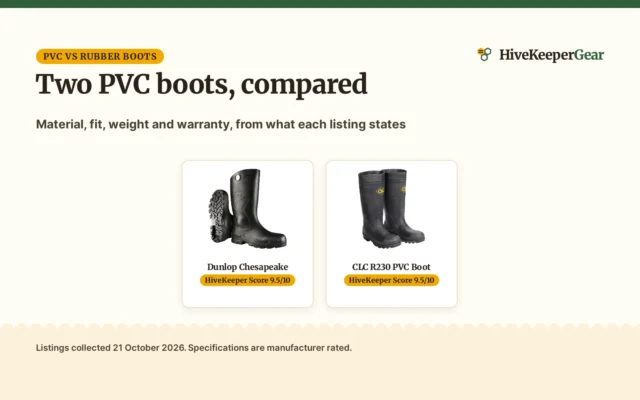
 Dunlop Chesapeake PVC Rain Boot9.5/10View on Amazon
- 3
 CLC Custom Leathercraft R230 PVC Rain Boot9.5/10View on Amazon
- 4
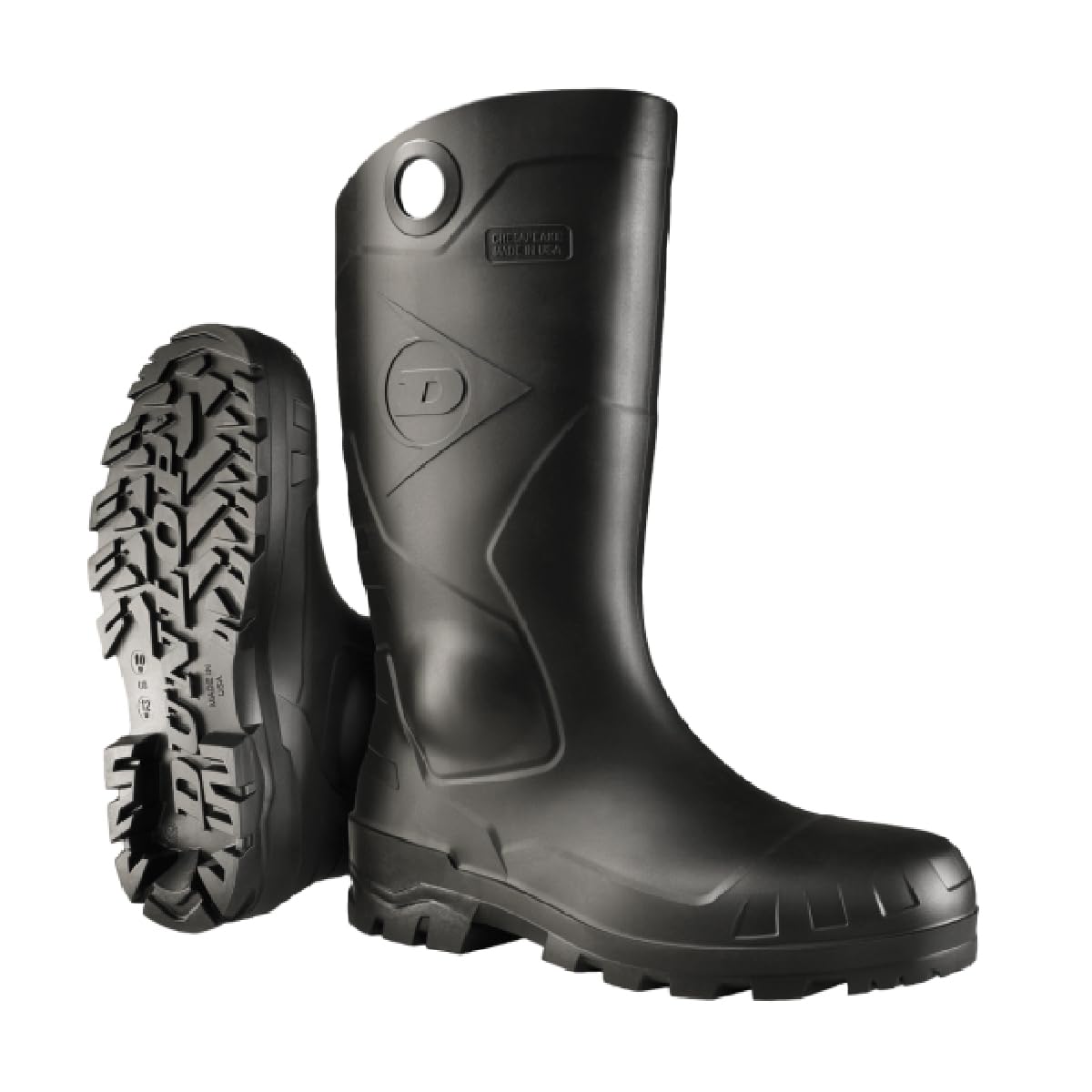 Dunlop Chesapeake Rubber Boots for men and womenView on Amazon
- 5
 MUCK Men's Chore Cool Tall BootView on Amazon
- 6Muck Boot Unisex-Adult Chm-000a Men's Chore Mid Soft ToeView on Amazon
- 7
 MUCK Men's Wetland BootView on Amazon
- 8
 MUCK Men's Edgewater Classic Mid BootView on Amazon
- 9
 MUCK Chore Classic Men's Steel Toe BootView on Amazon
During spring and summer hive inspections when lifting heavy honey supers across damp grass, choosing between muck boots vs rubber beekeeping boots comes down to whether you prioritize cushioned underfoot comfort or simple, hose-off washability. For beekeepers spending long hours on their feet managing multiple colonies, muck boots provide supportive midsoles, flexible upper shafts, and cushioned insoles that reduce foot and lower back fatigue. Traditional solid rubber boots provide a simpler, fully waterproof shell that rinses clean in seconds and creates a rigid, puncture-resistant barrier around the ankles, making them practical for quick yard checks or wet ground. We compared the upper materials, underfoot support, sting barrier protection, and seasonal comfort of both footwear styles to help you choose the right pair for your apiary routine.
Other hives and gear to compare
 Dunlop Chesapeake Rubber Boots for men and womenCheck price on Amazon
 MUCK Men's Chore Cool Tall BootCheck price on Amazon
- Muck Boot Unisex-Adult Chm-000a Men's Chore Mid Soft ToeCheck price on Amazon
 MUCK Men's Wetland BootCheck price on Amazon
 MUCK Men's Edgewater Classic Mid BootCheck price on Amazon
 MUCK Chore Classic Men's Steel Toe BootCheck price on Amazon
HiveKeeperGear earns a commission when you buy through links on this site, at no extra cost to you. As an Amazon Associate I earn from qualifying purchases. Affiliate disclosure.
Before you buy: check yard terrain and inspection time
Before selecting apiary footwear, assess your ground conditions and inspection duration. Wet morning pasture, clay soil, and sloped hive stands turn slick quickly, requiring dependable outsole traction when lifting heavy honey supers. For beekeepers checking a few hives in under an hour, basic waterproof protection suffices. When managing multiple colonies during long inspections, midsole cushioning and arch support become essential to prevent foot fatigue and lower back strain.
Muck boots vs rubber beekeeping boots: head-to-head comparison
| Feature | Muck Boots | Rubber Boots | Apiary Advantage |
|---|---|---|---|
| Upper Material | Neoprene shaft with rubber foot shell | Solid vulcanized rubber or PVC | Neoprene flexes with deep bending |
| Underfoot Support | Contoured footbed with shank support | Basic flat foam or molded footbed | Reduced fatigue during long inspections |
| Sting Defense | Thick neoprene and rubber barrier | Dense molded rubber or PVC wall | Both block bee stingers reliably |
| Thermal Performance | Insulated neoprene or specialized mesh linings | Uninsulated single-layer waterproof shells | Neoprene insulates cold; rubber stays simpler in heat |
| Cleaning & Care | Fabric uppers require brushing and drying | Smooth surface washes clean with hose | Rubber rinses propolis and mud faster |
Upper construction and shaft flexibility
The main structural difference lies in upper shaft design. Muck boots combine a flexible neoprene bootie with a rubber shell. For example, Muck lists its Wetland boot with 5mm neoprene throughout the shaft, bonded to a natural rubber foot shell. The pliable neoprene hugs the calf closely, expanding and bending as you kneel to inspect bottom boards or stoop for brood boxes without calf binding.
Traditional rubber boots feature seamless molded construction. Dunlop lists its Chesapeake boot with polyvinyl chloride construction throughout the shell and sole, paired with a polyester lining. This build creates a stiffer, self-supporting shaft with a wide top opening. While solid PVC provides dependable waterproofing, the rigid shaft flexes less smoothly than neoprene during active yard movement.
Underfoot cushioning and inspection fatigue
Footwear cushioning determines how your feet and lower back feel after standing beside hives. Basic PVC boots feature simple internal construction: Dunlop lists its Chesapeake boot at an item weight of 16 ounces with an economy foam insole. This lightweight shell pulls on easily for quick tasks, but flat insoles offer limited shock absorption when carrying heavy boxes across uneven ground.
Muck work boots provide far greater underfoot support. Muck lists its tall Chore boot with an item weight of 4.9 pounds, incorporating a steel shank and polyurethane insole to stabilize feet on hive stand edges. Muck also lists its Chore Mid boot with an item weight of 5.3 pounds, while Wetland listings state weights of 3.3 pounds and 4.9 pounds. Although heavier per step than a 16-ounce utility boot, their contoured footbeds and steel shanks reduce fatigue during long inspections.
Sting protection and bee suit cuff seals
Honey bees shaken onto the ground crawl upward toward shaded crevices, making ankle seals critical. Both footwear styles provide thick physical barriers that prevent bee stingers from reaching skin.
The difference lies in how suit cuffs seat over the shaft. Dunlop’s Chesapeake listing presents a contradiction: its title and bullets describe a wide calf design with a wide opening, yet the spec table records a shaft circumference of 10.5 inches. In practice, wider, stiffer shafts require stretching suit cuffs carefully over the outside collar to avoid bee entry gaps. Conversely, Muck lists a shaft height of 16 inches and a 16.5-inch circumference on its tall Chore boot, an 18-inch shaft height with a 17-inch circumference on Woody Max, and a 12-inch shaft height on Chore Mid. The tall neoprene shaft contours to the leg, providing a smooth anchor for the cuffs of a beekeeping suit to slide over securely.
Seasonal temperature regulation and moisture control
Beekeeping spans changing weather from early spring feeding to summer harvesting. Traditional uninsulated rubber boots lack thermal padding. In chilly spring, rubber transfers ground cold to your feet; in summer heat, it traps perspiration inside, though without adding thermal bulk.
Muck boots utilize neoprene as a dense thermal insulator. Muck lists a temperature rating of -20 °F to 50 °F for its 5mm neoprene Wetland and Woody Max boots. This insulation guards against cold ground during spring buildup and autumn feeding, but can overheat in midsummer. To address warm weather, specialized designs use ventilated linings: Muck builds breathable mesh into its Chore Cool tall boot to wick humidity during warm inspections.
Yard maintenance and cleaning propolis
Working around bees exposes footwear to sticky propolis, honey drips, and mud. Solid rubber and PVC boots rinse clean effortlessly under a garden hose. If propolis sticks to the exterior, you can scrape it off the slick rubber with a hive tool without harming the surface.
Muck boots require more care. While the lower rubber shell washes clean with water, the upper neoprene has a textile exterior. If propolis or clay embeds into the fabric weave, it requires light brushing with mild soap, followed by thorough air-drying between inspections.
An apiary season footwear plan
Matching footwear to the season ensures comfort and safety across the apiary calendar:
Early spring: Saturated soils draw warmth rapidly during early feeding checks. Tall insulated muck boots keep feet warm while navigating damp ground.
Late spring and summer: Frequent inspections and adding honey supers require prolonged standing. Breathable muck models or flexible rubber boots with moisture-wicking socks balance support and ventilation.
Late summer harvest: Hauling full supers demands deep outsoles for traction across slick grass and wet staging areas.
Fall and winter preparation: Applying entrance reducers and checking winter stores occur in cool, damp weather. Waterproof boots provide dependable ankle coverage against cold ground and defensive guard bees.
Nice to have later
- A boot puller near the apiary shed to remove snug boots without touching soiled soles with gloves.
- Elastic pant leg straps or gaiters to secure bee suit trousers firmly against boot shafts.
- Contoured aftermarket insoles to enhance arch support in basic rubber boots during long days.
- A stiff utility brush to scrub dried clay and hive debris from lugged outsoles.
- Moisture-wicking wool or synthetic socks to minimize perspiration inside waterproof footwear.
Store boots in a cool, dry area away from direct sunlight to prevent rubber from drying out or cracking prematurely.
What is not on this list
Protective boots represent only part of a complete apiary setup. Always wear a reliable veil, protective suit or jacket, and quality beekeeping gloves when opening hives. Non-waterproof leather boots are omitted here, as porous leather absorbs pasture moisture and creates seams where bees can lodge. We also provide no medical treatment advice regarding stings. For colony health questions, consult your local beekeeping association or state apiary inspector.
FAQs for beekeepers
Can honey bees sting through rubber boots or muck boots?
Honey bees cannot pierce dense rubber shells or thick neoprene walls. Ankle stings almost always happen when suit pant legs ride up, exposing bare skin above the boot collar.
Which boot style is more comfortable during long hive inspections?
Muck boots provide superior comfort during extended apiary work because contoured footbeds, supportive steel shanks, and flexible neoprene uppers cushion feet while lifting heavy boxes.
Are rubber boots or muck boots easier to clean after working bees?
Solid rubber and PVC boots rinse spotless with a garden hose. Muck boots feature textile-faced neoprene shafts requiring light brushing if propolis or mud dries on the fabric.
How tall should beekeeping boots be to seal bee suits?
Mid-calf to knee-high boots provide ample height to anchor suit pant legs. Dunlop lists its Chesapeake model as mid-calf height with a 10.5-inch circumference, while Muck lists shaft heights of 12 inches on Chore Mid, 16 inches on Chore tall, and 18 inches on Woody Max.
Do muck boots get too warm for summer beekeeping?
Insulated models rated down to -20 °F retain substantial heat in warm weather. For summer hive work, choose uninsulated boots or breathable mesh designs like the Muck Chore Cool to manage sweat.
More hive guides
Browse every guide by category: protective gear, beehives, hive tools and honey harvesting.
More protective gear guides: explore our roundup of the best beekeeping boots, compare beekeeping boots for rough terrain, or see our top-rated beekeeping suits.