Blue Sage Seeds vs Lavender Seeds: Which One Should You Buy?
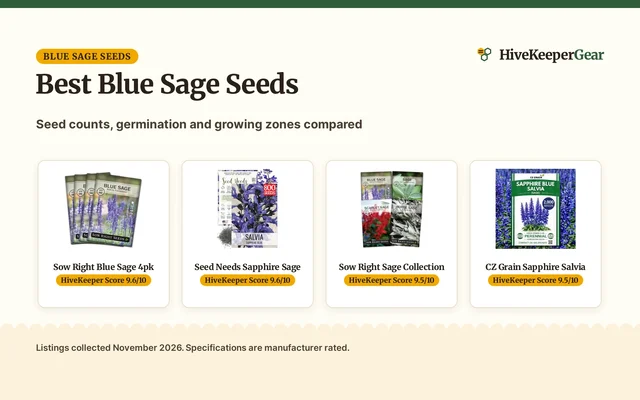
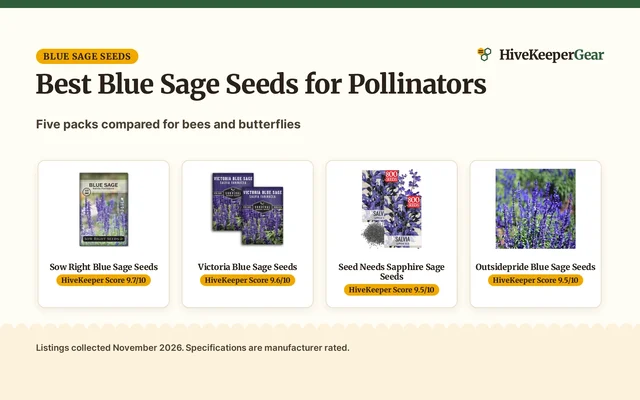
Four blue sage seed packs compared for zones, height, sowing, bloom season and pollinator draw, for a pollinator strip near the hives.

On this page
Top picks at a glance
As an Amazon Associate I earn from qualifying purchases.
- 1
 1View on Amazon
- 2
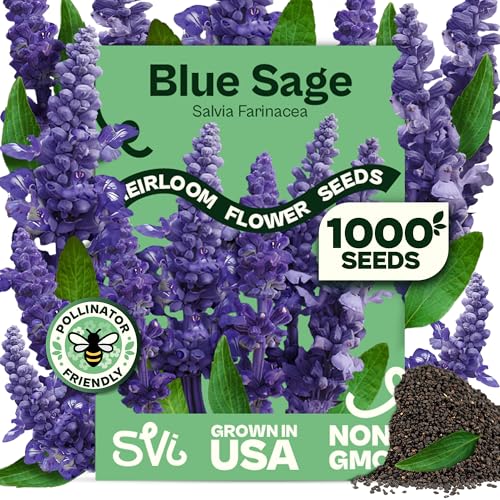 SVI 1000 Blue Sage Heirloom Flower SeedsView on Amazon
- 3
 Garden Seeds for PlantingView on Amazon
- 4
 Seed Needs Sapphire Sage Seeds to Plant Blue Salvia Flowers 5View on Amazon
- 5
 Outsidepride Blue Sage SeedsView on Amazon
- 6
 Sow Right SeedsView on Amazon
When the summer flow fades and the bees still work every open bloom, the question of blue sage seeds vs lavender seeds comes up for keepers planning a pollinator strip. No lavender seed pack was compared here, so this guide names no winner: the seed packs compared below are all blue sage, ranked on zones, height, sowing and pollinator draw, and the SVI and Outsidepride listings describe blue sage as a perennial wildflower that tolerates heat and drought and draws bees and hummingbirds.
Other hives and gear to compare
 1Check price on Amazon
 SVI 1000 Blue Sage Heirloom Flower SeedsCheck price on Amazon
 Garden Seeds for PlantingCheck price on Amazon
 Seed Needs Sapphire Sage Seeds to Plant Blue Salvia Flowers 5Check price on Amazon
 Outsidepride Blue Sage SeedsCheck price on Amazon
 Sow Right SeedsCheck price on Amazon
HiveKeeperGear earns a commission when you buy through links on this site, at no extra cost to you. As an Amazon Associate I earn from qualifying purchases. Affiliate disclosure.
Before you buy: check your zone and sun
Blue sage is a sun lover, and the listings make that plain: the SVI listing states full sun and rocky soils, and the Outsidepride listing states sunny areas with little upkeep once plants are established. Zones are where the listings differ. The SVI listing states USDA zones 2-12, while the Outsidepride listing states USDA zones 7-10, so the widest zone range sits with the SVI pack. The other 2 listings state no zones at all, so their fit for colder ground is not stated. Your local extension office can tell you what grows well in your area, and a strip near the hives keeps forage within easy reach of the bees.
Blue sage seeds vs lavender seeds at a glance
All 4 packs below are blue sage seed, so the comparison table lines them up by what each listing states: seed count, height and zones. Lavender seed packs are not among the picks.
| Rank | Seed pack | Seeds | Height | Zones |
|---|---|---|---|---|
| 1 | SVI Blue Sage | 1000 | 18 inch spikes | 2-12 |
| 2 | Outsidepride Blue Sage | Not stated | 24-36 inches | 7-10 |
| 3 | Seed Needs Sapphire Sage | Not stated | 12-24 inches | Not stated |
| 4 | CZ Grain Blue Sage | 50 | Not stated | Not stated |
1. SVI 1000 Blue Sage Seeds
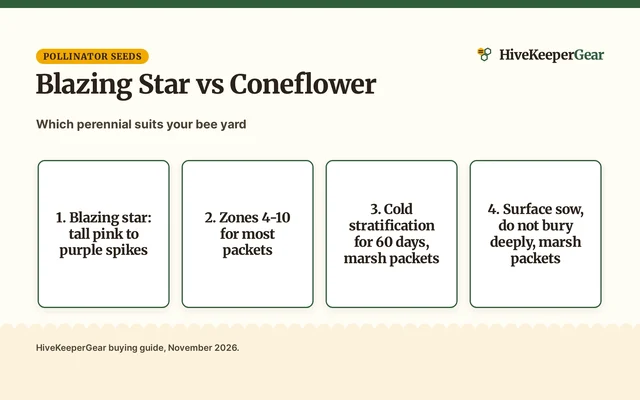
The SVI listing states a packet of 1000 heirloom blue sage seeds, Salvia farinacea, non-GMO and USA packed, grown as a perennial that tolerates heat and drought and stays deer resistant. The listing states 18 inch spikes in full sun and rocky soils, for USDA zones 2-12, and it gives the fullest sowing notes of the 4 packs: surface sow in late fall, since light is needed, or mix seed with moist sand for spring sowing and store in the refrigerator for 30 days before planting. Keep the soil lightly moist, with germination in 1-2 weeks, and thin or space plants 12-18 inches apart. The listing states the flowers attract bees and hummingbirds, and the seed suits borders, meadows and containers.
Who it’s for: keepers who want the widest zone range and clear sowing notes. Who should skip it: keepers sowing a large meadow, since this listing states a seed count rather than a sowing rate by area.
2. Outsidepride Blue Sage Seeds, 1/4 Lb
The Outsidepride listing states a 1/4 lb pack of blue sage seed, Salvia farinacea, sold as a perennial wildflower for pollinator gardens and landscaping. The listing states fragrant blooms from early summer through fall, drought tolerance with little upkeep once established, and flowers that attract bees, butterflies and hummingbirds. Plants grow 24-36 inches tall, the listing states USDA zones 7-10, and the sowing rate is 3 ounces per 1,000 square feet or 7 pounds per acre, which suits large borders and open spaces. The listing also states deer resistance.
Who it’s for: keepers sowing a large strip or meadow who want a stated sowing rate by area. Who should skip it: keepers in colder zones, since the listing states zones 7-10 and no wider range.
3. Seed Needs Sapphire Sage, 5 Packs
The Seed Needs listing states 5 packs of Sapphire Sage seed, a perennial blue salvia that returns yearly from established roots and draws pollinators to a butterfly garden. The listing states plants grow 12 to 24 inches in height and spread 12 inches wide, suited to beds and borders, along fences and walkways, or in naturalized settings. The listing states seeds are stored in a temperature controlled facility, packed in tear resistant and moisture resistant packaging, and never knowingly supplied as GMO seed. The listing contradicts itself on packet size: the bullets state each packet measures 3.25 inches wide by 4.50 inches tall, while the spec table states 3.5 inches by 5.0 inches by 0.7 inches, so the packet size is not consistent.
Who it’s for: keepers who want several packets to sow in several spots or share. Who should skip it: keepers who want a stated zone range or seed count, since this listing states neither.
4. CZ Grain 50 Blue Sage Seeds
The CZ Grain listing states a packet of 50 blue sage seeds for garden beds, raised beds, containers and pots, with seeds packaged by variety for planting, organizing, storing and sharing. The listing gives no height, no zones and no germination notes, so there is little here to judge the pack against the other picks. The listing contradicts itself on color: the title and size state blue sage, while the spec table lists the color as green.
Who it’s for: keepers who want a small packet for a pot or a short row and need little else. Who should skip it: keepers who want stated height, zones or sowing notes, since this listing states none of those.
A sowing timeline
Late fall: the SVI listing states surface sowing, since light is needed for germination. Spring: the SVI listing states mixing seed with moist sand and storing it in the refrigerator for 30 days before planting, then keeping the soil lightly moist. Germination: the SVI listing states sprouts appear in 1-2 weeks, and plants are thinned or spaced 12-18 inches apart. Early summer through fall: the Outsidepride listing states fragrant blue blooms that draw bees, butterflies and hummingbirds.
Nice to have later
- Moist sand for spring sowing, since the SVI listing mixes seed with sand before refrigerating it.
- Containers for sowing, since the SVI listing suits containers as well as borders and meadows.
- Extra packets to share with friends and family, since the Seed Needs listing notes sharing as a use for its generous quantities.
- A sunny spot with rocky soil, since the SVI listing states full sun and rocky soils.
Keep notes from the start. A simple record of what was sown and where is among the most useful tools for a pollinator strip, and it costs nothing.
What is not on this list
Lavender seed packs are not on this list: the 4 packs compared are blue sage only, so a lavender sowing guide would need its own listings. Bees themselves, sold as packages, nucleus colonies or caught swarms, are bought separately; this guide covers seed only. There is no bee health or treatment advice here. For colony health questions, contact your state apiary inspector or extension office.
FAQs for beekeepers
Which is better for bees, blue sage or lavender?
This guide compares blue sage seed packs only, so it names no winner over lavender: no lavender seed listing was compared. The SVI and Outsidepride listings state their flowers attract bees and hummingbirds.
What zones does blue sage grow in?
The SVI listing states USDA zones 2-12, and the Outsidepride listing states USDA zones 7-10. The Seed Needs and CZ Grain listings state no zones.
How do you sow blue sage seeds?
The SVI listing gives the fullest sowing notes: surface sow in late fall, since light is needed. For spring sowing, mix seed with moist sand, store in the refrigerator for 30 days before planting, and keep the soil lightly moist. Germination takes 1-2 weeks, and plants are spaced 12-18 inches apart. The other listings state no sowing instructions; the Outsidepride listing states only a sowing rate.
How tall does blue sage grow?
The SVI listing states 18 inch spikes, the Seed Needs listing states 12 to 24 inches in height, and the Outsidepride listing states 24-36 inches. The CZ Grain listing states no height.
How many seeds come in a packet?
The SVI packet holds 1000 seeds and the CZ Grain packet holds 50 seeds. The Seed Needs listing states 5 packs without a seed count per pack, and the Outsidepride listing states a 1/4 lb weight without a seed count.
More hive guides
More seed comparisons: blue sage seeds for pollinators, lavender seeds for pollinators, lavender seeds vs bee balm seeds and milkweed seeds vs pollinator seed mix.