Blazing Star Seeds vs Coneflower Seeds: Which One Should You Buy?
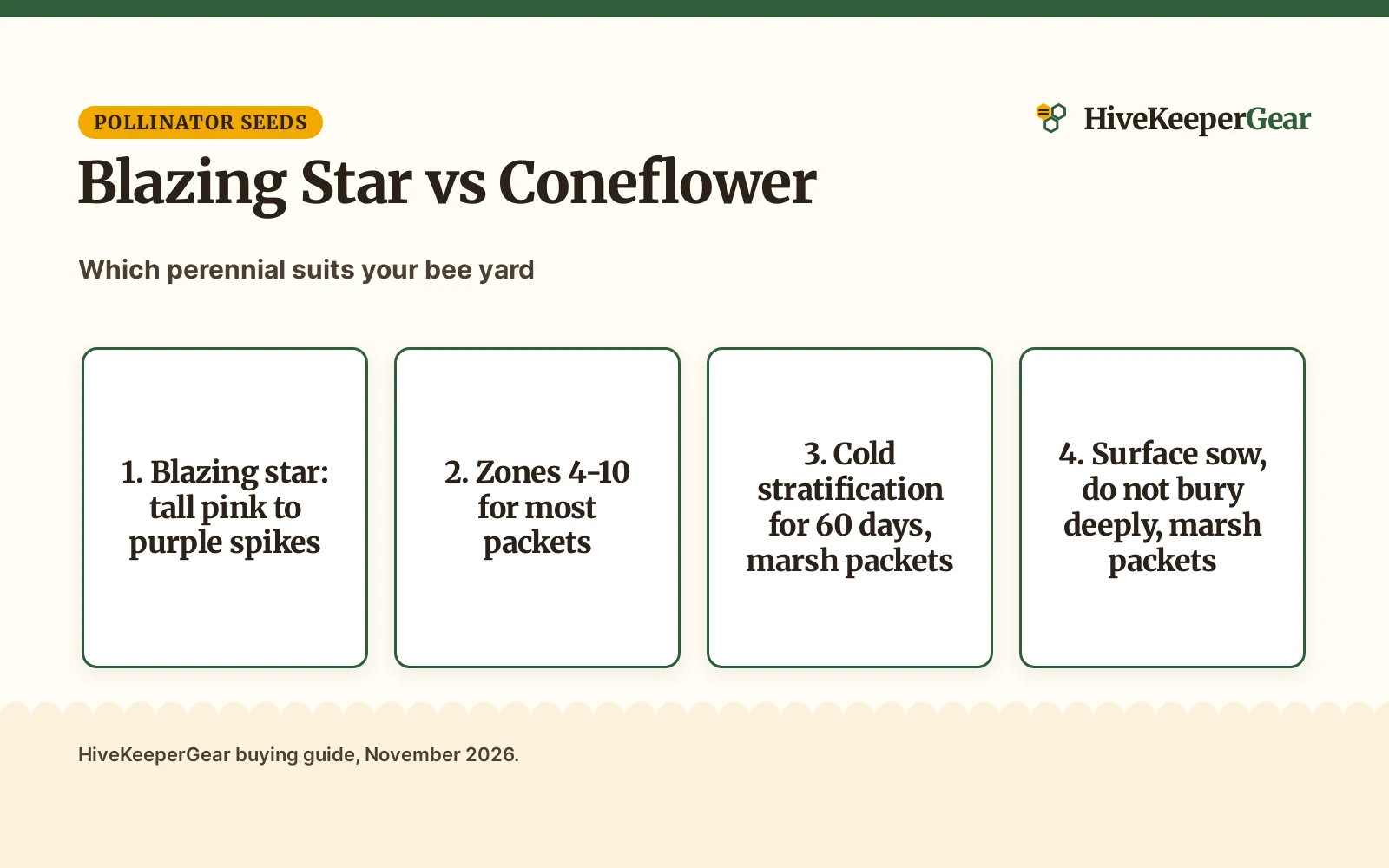
Blazing star seeds give tall pink to purple spikes for the bee yard; this guide compares them with coneflower seeds and looks at 3 blazing star packets.

On this page
Top picks at a glance
As an Amazon Associate I earn from qualifying purchases.
- 1
 Groundio Purple Coneflower Seeds9.5/10View on Amazon
- 2
 600 Marsh Blazing Star Heirloom Flower Seeds for PlantingView on Amazon
- 3
 SVI 300 Marsh Blazing Star Heirloom Flower SeedsView on Amazon
- 4
 1View on Amazon
- 5
 Dense Blazing Star Seeds for PlantingView on Amazon
- 6
 1200+ Blazing Star Seeds for PlantingView on Amazon
- 7
 KVITER 200 Blazing Star Flower Seeds for plantingView on Amazon
Blazing star seeds vs coneflower seeds is a choice between perennials for the bee yard, and the packets in this guide are blazing star, or Liatris spicata. Blazing star gives tall pink to purple spikes that attract butterflies, bees and hummingbirds, returns for years, and suits gardens, native landscapes and moist meadows. When you weigh a coneflower packet against a blazing star packet, compare the same lines on each listing: seed count, zones, cold stratification, sowing depth and bloom season.
Other hives and gear to compare
 600 Marsh Blazing Star Heirloom Flower Seeds for PlantingCheck price on Amazon
 SVI 300 Marsh Blazing Star Heirloom Flower SeedsCheck price on Amazon
 1Check price on Amazon
 Dense Blazing Star Seeds for PlantingCheck price on Amazon
 1200+ Blazing Star Seeds for PlantingCheck price on Amazon
 KVITER 200 Blazing Star Flower Seeds for plantingCheck price on Amazon
HiveKeeperGear earns a commission when you buy through links on this site, at no extra cost to you. As an Amazon Associate I earn from qualifying purchases. Affiliate disclosure.
Blazing Star Seeds vs Coneflower Seeds: How They Compare
Blazing star, or Liatris spicata, is a native perennial with tall upright spikes. The marsh packets list pink to purple blooms, and the dense packet lists purple blooms. The KVITER packet lists full sun to partial sun, the dense packet lists full sun, and the SVI packet describes sunny garden beds. The marsh blazing star packets list zones 4-10, with the dense packet listing zones 3-9. Each packet here describes a pollinator plant: butterflies, bees and hummingbirds visit the spikes, and the KVITER listing adds that the blooms suit cut flowers as well as beds and borders.
A coneflower packet earns its place the same way a blazing star packet does: check the seed count, the zones, whether the seeds need cold stratification, how to sow them, and when the blooms open. This guide covers blazing star packets only, so the coneflower side of the choice is a matter of reading the coneflower listing against the same lines. Our yarrow seeds vs coneflower seeds guide compares another pairing the same way.
The blazing star packets in this guide
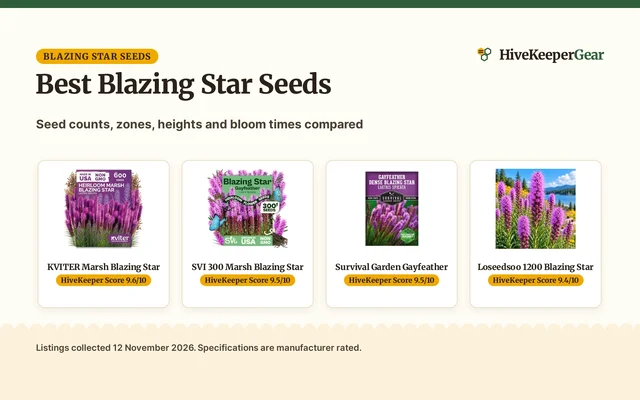
The packets below are listed in ranking order, from the fullest listing to the sparsest. Each one is Liatris spicata, heirloom and non-GMO.
| Packet | Seeds | Zones | Stratification | Sowing | Height and bloom |
|---|---|---|---|---|---|
| KVITER Marsh Blazing Star | 600 | 4-10 | 60 days cold | Indoors 6-8 weeks before spring, or surface sow outdoors | Tall spikes, pink to purple |
| SVI Marsh Blazing Star | 300 | 4-10 | 60 days cold, moist | Indoors 6-8 weeks before spring, or direct sow late fall | 48 inch upright |
| Survival Garden Seeds Dense Blazing Star | 1 pack | 3-9 | Not stated | Not stated | 3-4 foot purple blooms, July through September |
KVITER Marsh Blazing Star, 600 seeds
The KVITER packet holds 600 marsh blazing star seeds, the largest count here. The listing states heirloom, non-GMO seeds, USA packed, with tall upright blooms in pink to purple and deep roots that return yearly in zones 4-10. The seeds need 60 days of cold stratification and sprout in 3-4 weeks. Start them indoors 6-8 weeks before spring, or surface sow them outdoors, in full sun to partial sun. The blooms make cut flowers, and the planting suits gardens, native landscapes and moist meadows. The listing also calls the plant deer resistant and drought tolerant.
SVI Marsh Blazing Star, 300 seeds
The SVI packet holds 300 marsh blazing star seeds. The listing states a 48 inch upright perennial with pink to purple spikes, non-GMO and heirloom, USA packed, for zones 4-10. The seeds benefit from 60 days of cold moist stratification for spring sowing, then germinate in 3-4 weeks with lightly moist soil. Direct sow in late fall, or start indoors 6-8 weeks before spring, pressing the seeds onto the soil surface without burying them deeply. The plants usually bloom in the second year, then return for years; divide every 3-4 years after dormancy for vigor. For cut flowers, harvest stems when one third of florets open, or dry the spikes upside down for about 3 weeks.
Survival Garden Seeds Dense Blazing Star, 1 pack
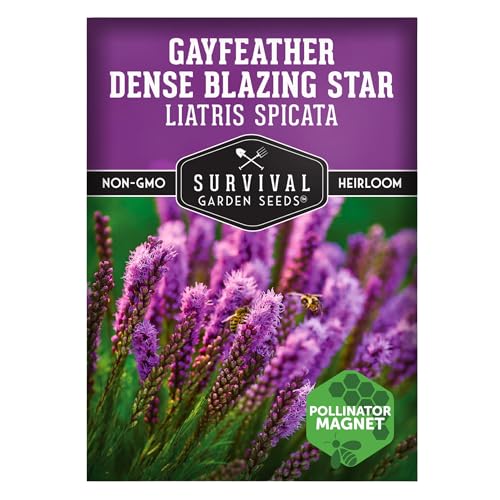
The Survival Garden Seeds packet is 1 pack of dense blazing star, or gayfeather, for zones 3-9. The listing states heirloom non-GMO open-pollinated seeds, untreated, with 3-4 foot purple blooms from July through September in full sun. The plant is drought tolerant, deer resistant and self-seeding, and the paper packet includes planting instructions, germination tips and seed-saving info. The packet weighs 0.01 pounds and measures 4.5 by 3.25 by 0.06 inches. The listing gives no stratification time and no sowing window, so read the packet when it arrives.
How to choose blazing star seeds for the bee yard
Seed count and packet size
Seed count is one line to compare when you weigh packets. The KVITER packet holds 600 seeds and the SVI packet holds 300, while the Survival Garden Seeds listing sells 1 pack without a seed count. When a listing gives no count, the listing gives the packet weight and size instead: the Survival Garden Seeds packet weighs 0.01 pounds and measures 4.5 by 3.25 by 0.06 inches.
Zones and sun
Match the zones on the listing to your yard. The marsh blazing star packets list zones 4-10, and the dense blazing star packet lists zones 3-9. The KVITER packet lists full sun to partial sun, the dense packet lists full sun, and the SVI packet describes sunny garden beds. A planting in full sun suits the blooms the listings describe.
Cold stratification and sowing
The marsh blazing star packets state that the seeds need cold before they sprout. The marsh packets state 60 days of cold stratification, with germination in 3-4 weeks after. The marsh packets say to start seeds indoors 6-8 weeks before spring: the KVITER packet adds surface sowing outdoors, and the SVI packet adds direct sowing in late fall, pressing the seeds onto the soil surface without burying them deeply. The dense blazing star packet states no stratification time, so follow the instructions printed on its paper packet.
Bloom and cutting
For cut flowers, harvest matters as much as planting. The dense blazing star packet lists 3-4 foot purple blooms from July through September, and the SVI listing says to harvest stems when one third of florets open, or dry the spikes upside down for about 3 weeks. The KVITER listing calls the blooms excellent cut flowers for the home garden. A planting that returns yearly gives cut stems season after season without replanting.
FAQs for beekeepers
Do blazing star seeds need cold stratification?
The marsh blazing star listings say yes: the seeds need 60 days of cold stratification, then sprout in 3-4 weeks. The dense blazing star packet states no stratification time, so check its printed instructions.
When do blazing star seeds bloom?
The dense blazing star packet lists purple blooms from July through September. The SVI listing says the plants usually bloom in the second year, then return for years.
What zones do blazing star seeds suit?
The marsh blazing star packets list zones 4-10, and the dense blazing star packet lists zones 3-9. Check the zones on the packet against your yard before sowing.
How do I sow blazing star seeds?
The SVI listing says to press the seeds onto the soil surface and not bury them deeply, start them indoors 6-8 weeks before spring or direct sow in late fall, with lightly moist soil. The KVITER packet starts indoors 6-8 weeks before spring or surface sows outdoors.
How tall does blazing star grow?
The SVI listing describes a 48 inch upright perennial, and the dense blazing star packet lists 3-4 foot purple blooms. The KVITER listing calls the blooms tall and upright, without giving a height.
More hive guides
See every beekeeping guide on the site.
More picks: lupine seeds, goldenrod seeds for bees and yarrow seeds for pollinators.