Entrance Reducer vs Mouse Guard: Which One Should You Buy?
Compare entrance reducers and mouse guards to understand how wooden blocks and metal guards manage hive ventilation, defend against robbers, and stop rodents.

On this page
Top picks at a glance
As an Amazon Associate I earn from qualifying purchases.
- 1
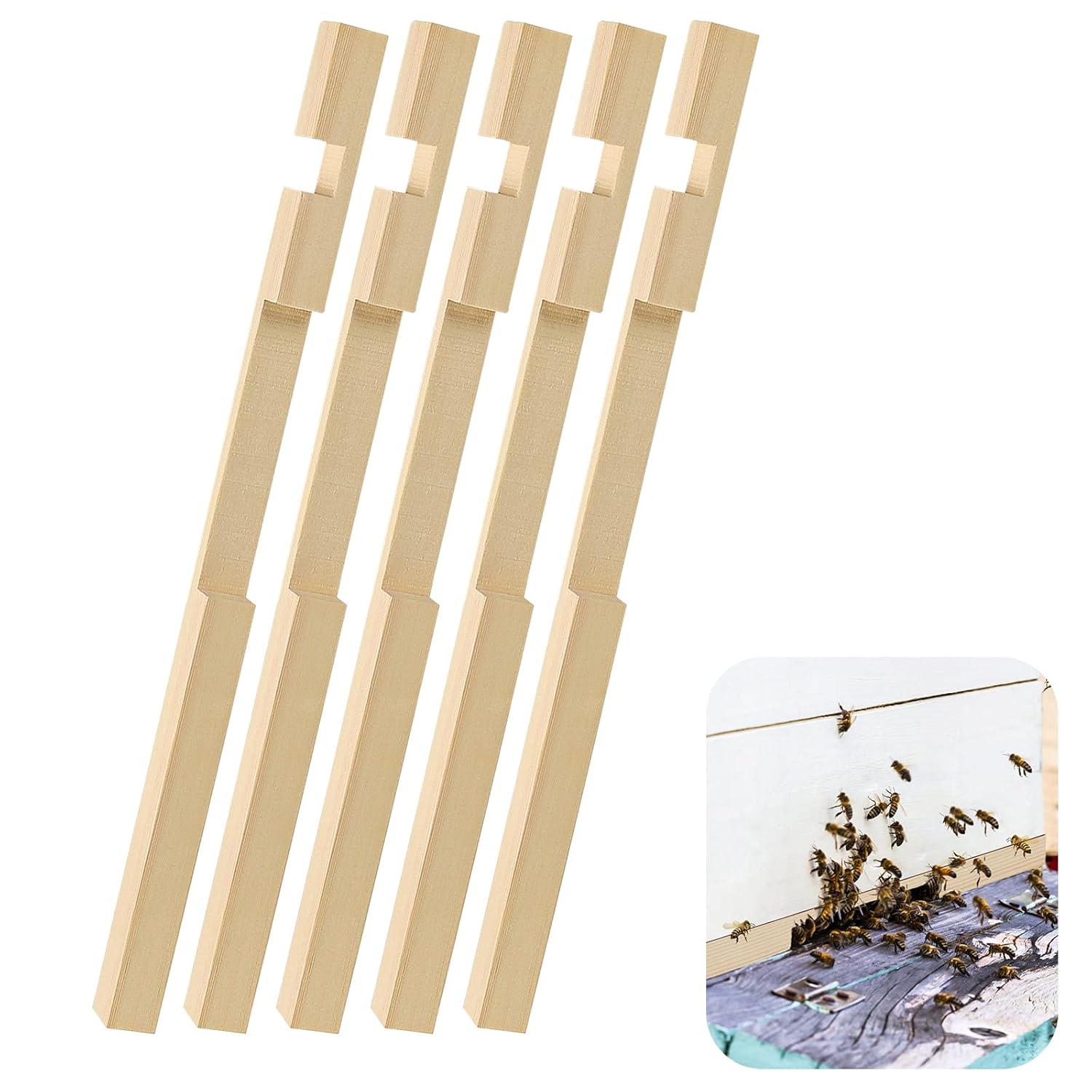 whumsdog 10 Frame Wooden Hive Entrance Reducer with 2 Size9.6/10View on Amazon
- 2
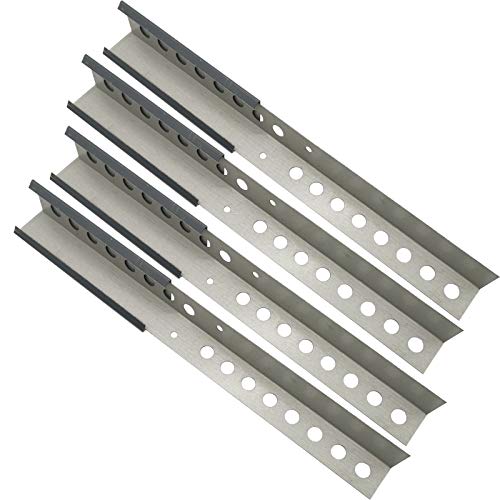 TIHOOD Sliding Beehive Mouse Guards9.6/10View on Amazon
- 3
 Amyhill Beehive Entrance Reducer 10 Frame Wooden Hive DoorView on Amazon
- 4
 6 Pack Red Beehive Entrance ReducerView on Amazon
- 5
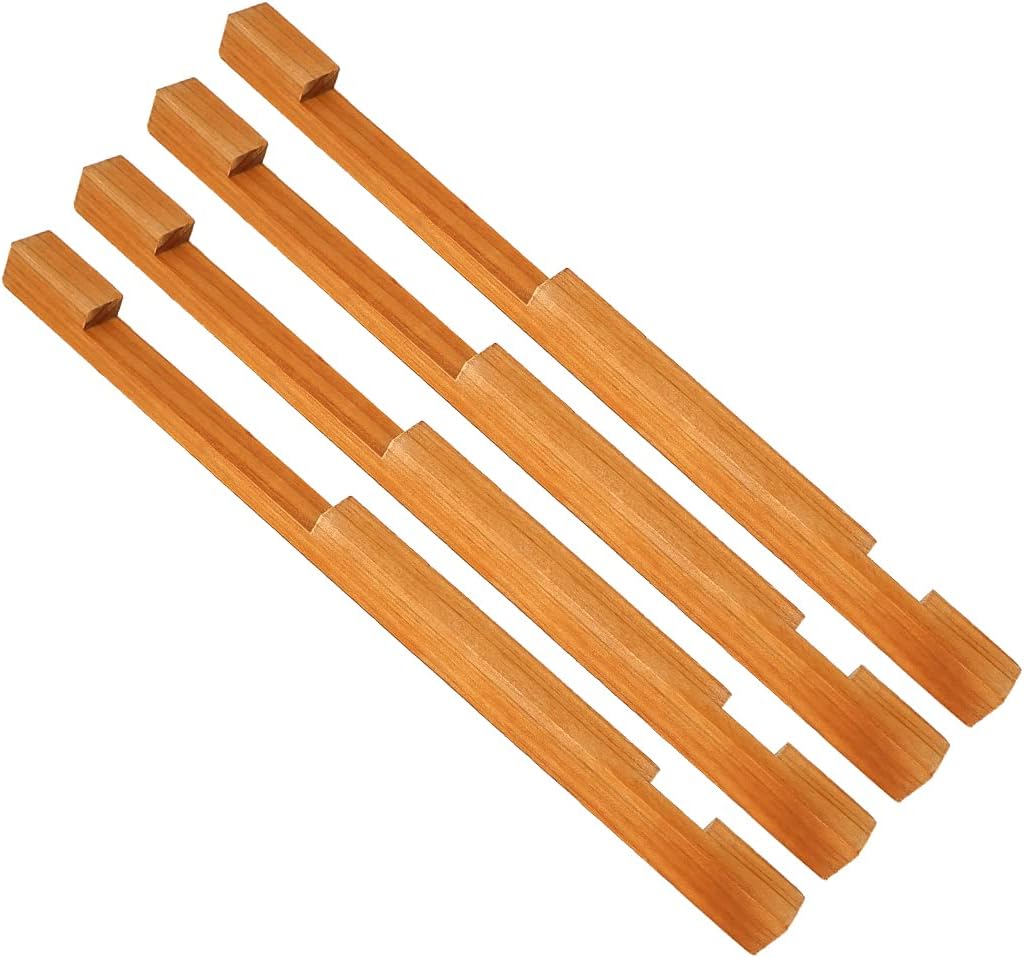 BeeCastle Beehive Entrance Reducer 10 Frame Wood HiveView on Amazon
- 6
 DECYOOL 6 Pack Wooden Bee Hive Entrance Reducer FrameView on Amazon
- 7
 DECYOOL 4 Pieces Beehive Entrance ReducerView on Amazon
- 8
 4 Pcs Beehive Entrance Reducer for 10 Frame HiveView on Amazon
During a late autumn hive inspection as brood rearing slows, deciding between an entrance reducer vs mouse guard comes down to whether your colony needs draft and robbing defense or physical protection against nesting rodents. An entrance reducer shrinks the bottom board opening using wood or plastic to help bees repel robber insects and regulate internal warmth, while a mouse guard uses rigid metal to block mice from entering during the winter cluster without restricting ventilation. For most backyard beekeepers, the practical approach is not choosing one over the other, but using an entrance reducer during autumn buildup and dearth, then installing a mouse guard as cold weather arrives, or combining both for winter defense.
Other hives and gear to compare
 Amyhill Beehive Entrance Reducer 10 Frame Wooden Hive DoorCheck price on Amazon
 6 Pack Red Beehive Entrance ReducerCheck price on Amazon
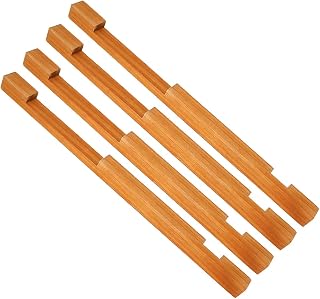 BeeCastle Beehive Entrance Reducer 10 Frame Wood HiveCheck price on Amazon
 DECYOOL 6 Pack Wooden Bee Hive Entrance Reducer FrameCheck price on Amazon
 DECYOOL 4 Pieces Beehive Entrance ReducerCheck price on Amazon
 4 Pcs Beehive Entrance Reducer for 10 Frame HiveCheck price on Amazon
HiveKeeperGear earns a commission when you buy through links on this site, at no extra cost to you. As an Amazon Associate I earn from qualifying purchases. Affiliate disclosure.
Before you install: understand hive entrance defense
A honey bee colony naturally guards its home at the bottom board entrance. During spring buildup and summer nectar flows, strong field populations easily patrol the wide wooden opening of a standard 10-frame Langstroth hive kit. As long as foragers pass through steadily, outside intruders rarely make headway past the entrance.
Vulnerability begins when colony dynamics shift in autumn. As nectar sources vanish, robbing pressure intensifies from neighboring hives and wasps. Later, as cold arrives, bees form a tight winter cluster to conserve heat. Clustered bees cannot leave the cluster to defend the bottom board without chilling. That seasonal shift leaves the wide entrance unguarded against flying insect robbers that steal honey stores and field mice seeking warm shelter.
Entrance reducer vs mouse guard: key differences
An entrance reducer vs mouse guard comparison highlights two distinct mechanical roles. An entrance reducer restricts the opening size to create a narrow, defensible gateway that cuts down drafty air currents. A mouse guard covers the entrance with chew-proof barriers that allow bees and air to pass across the full entrance width while barring rodents.
| Feature | Entrance Reducer | Mouse Guard |
|---|---|---|
| Primary purpose | Draft control and robbing defense | Rodent exclusion during clustering |
| Standard material | Wood or plastic | Enamel coated steel or metal |
| Entrance openings | 2 sizes of openings | Perforated bee channels |
| Ventilation effect | Restricts airflow to conserve warmth | Maintains ventilation across entrance |
| Chew resistance | Vulnerable to gnawing rodents | Chew-proof metal barrier |
| Hive compatibility | 10-frame or 8-frame specific width | 10-frame or 8-frame adjustable |
1. Wooden and plastic entrance reducers
A wooden entrance reducer is a milled cleat cut to fit between the bottom board rails directly beneath the lowest brood box. On 10-frame equipment, manufactured wooden reducers span the entrance width. Amyhill lists wooden reducers measuring 14.75 by 0.75 by 0.75 inches for 10-frame hives, and BeeCastle lists cedar reducers measuring 14.60 by 0.74 by 0.74 inches for 10-frame hives. DECYOOL lists wooden entrance reducers measuring 14.75 by 0.75 by 0.75 inches featuring 2 sizes of openings, and TAKASHIIQI lists beeswax-coated wood measuring 14.72 by 0.78 by 0.78 inches. HIMO lists sliding plastic entrance reducers measuring 13.8 by 1.28 by 1.35 inches for 10-frame hives that adjust entrance widths along a track.
Rotating a notched wooden reducer presents different opening sizes: a larger notch for moderate foraging, and a smaller notch that shrinks the entrance down so guard bees can defend against intruders. However, hungry mice easily chew through soft pine or cedar to enlarge the notch and slip inside.
2. Metal mouse guards
A mouse guard solves the gnawing problem by substituting metal for wood. Field mice have sharp incisors that chew through wood and plastic, but they cannot penetrate steel. Commercial mouse guards feature rigid stamped plates or sliding metal strips that fasten across the entrance rails.
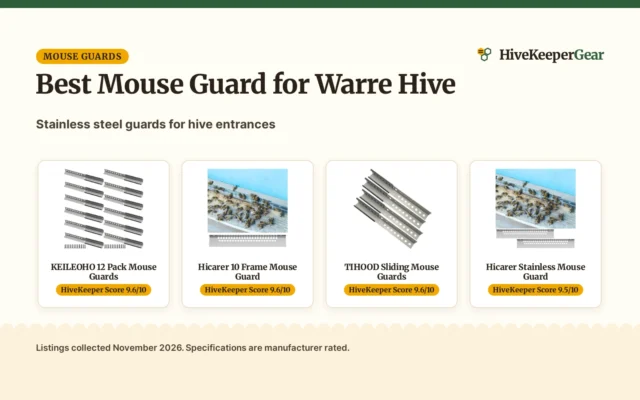
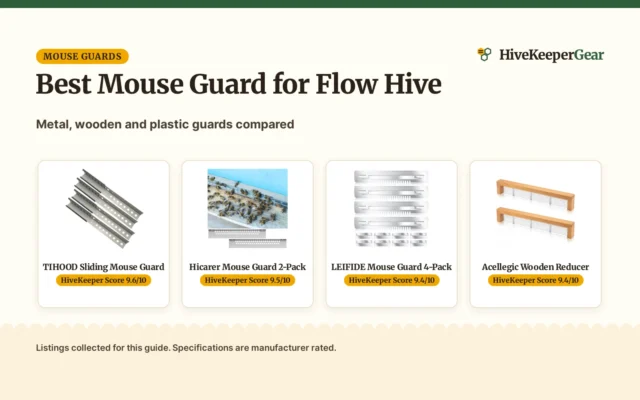
TIHOOD lists sliding mouse guards constructed from 24-gauge steel with an enamel finish designed to fit both 8-frame and 10-frame hives, secured through two 3/16 inch center screw holes. Perforations allow worker bees to pass freely, carrying pollen and dead bees, while remaining too small for a mouse skull to squeeze through. Because perforations span the full guard, a metal mouse guard maintains bottom ventilation while keeping out pests. For model comparisons, see our best hive entrance reducer for winter guide.
3. Robbing pressure and draft control
The seasonal advantage of an entrance reducer comes during the autumn nectar dearth. When flowers dry up, strong hives scout for weaker colonies to raid, accompanied by yellowjackets. A wide entrance allows robber insects to slip past the edges. A mouse guard does not stop robbing because its perforated holes span the full width, presenting dozens of entry points that an autumn colony cannot patrol.
An entrance reducer forces incoming and outgoing bees through a single small notch, creating a bottleneck where resident guard bees inspect every visitor. Wooden reducers also block cold autumn wind gusts from sweeping across the bottom board. For apiaries facing harsh winds, our best hive entrance reducer review compares guards designed for draft defense.
4. Rodent defense and winter cluster protection
While an entrance reducer handles insect pressure, winter brings rodent threats. Field mice seek sheltered spaces with food, and a beehive in late autumn is an ideal target. If a mouse slips past a wooden reducer notch, the intruder builds a nest of grass and chewed comb, feeding on stored honey and bee bread.
Bees cannot defend themselves because cold keeps them clustered tightly around the queen higher on the frames. Breaking cluster to attack a mouse would cause bees to chill and die. In addition to eating honey stores, mice chew through wooden frames and foul equipment with droppings. A metal mouse guard stops rodent entry, keeping the bottom board clean throughout winter.
5. Combining reducers and mouse guards
Because entrance reducers and mouse guards address different challenges, beekeepers often combine them rather than choosing between them. Installing both pieces creates a dual barrier: the wooden reducer blocks drafts and controls opening width, while the metal guard stops teeth and claws from enlarging the entrance.
Some equipment is designed specifically for this combined setup. As noted in the TIHOOD listing, beekeepers can slide a reducer behind the mouse guard and screw the assembly to the front of the hive box. Alternatively, you can insert a wooden reducer on its smaller notch setting, then fasten a metal mouse guard over the front face. On mild winter days, check the metal openings to clear dead bees so airflow remains open.
A seasonal entrance management timeline
Managing hive entrances follows the seasons. In early spring, colonies emerge with modest populations. Keep an entrance reducer on the smaller notch to conserve brood warmth and assist hive defense. As the colony expands and drones begin flying, turn the reducer to the larger notch to ease congestion.
During late spring and summer, when nectar flows arrive and temperatures rise, remove entrance reducers entirely. Strong colonies need unrestricted entrance space for foragers and cooling ventilation. In late summer, as nectar flows end, reinstall the entrance reducer to guard against robbing. By mid autumn, before outside temperatures drop and mice seek winter dens, install a metal mouse guard. Leave the guard in place until steady spring warmth allows bees to resume full flight.
Fit, bottom boards and equipment compatibility
Before ordering entrance gear, confirm the width of your hive equipment. A standard 10-frame Langstroth hive body requires entrance equipment sized around 14.60 to 14.75 inches across the bottom board rails, matching the Amyhill, DECYOOL, and BeeCastle listings. For dimensions and frame layout details, see our 10 frame beehive dimensions guide.
An 8-frame beehive uses a narrower box profile, as detailed in our 8 frame hive dimensions guide. Solid wooden reducers made for 10-frame boxes will not fit an 8-frame hive without trimming, whereas adjustable metal designs like the TIHOOD sliding guard adjust across both 8-frame and 10-frame widths. Both styles work whether your hive rests on a traditional solid board or a screened board. If you are choosing hive bases, our screened vs solid bottom board guide outlines airflow considerations.
What entrance barriers do not solve
Entrance reducers and mouse guards provide protection at the bottom board, but they do not solve every hive threat. They protect only the lower entrance threshold. If your winter setup includes an upper entrance hole in an inner cover for moisture venting, mice and robber bees can exploit that upper gap unless it is covered with wire mesh.
Furthermore, entrance barriers do not solve food shortages, winter moisture buildup, or large predator attacks. Raccoons, skunks, and bears require secure straps, elevated hive stands, or electric apiary fences. Bottom board guards simply secure the front door so your bees can focus their energy on clustering and winter survival.
FAQs for beekeepers
Can honey bees fly through a mouse guard?
Worker bees fly and walk through perforated mouse guard openings without difficulty, carrying pollen into the hive. Drones may struggle with smaller metal perforations, which is why mouse guards are installed in late autumn after colonies evict drones for the winter.
Will a wooden entrance reducer keep mice out of a beehive?
A wooden reducer can temporarily deter mice if the opening is small, but mice frequently chew through soft pine or cedar wood once cold weather arrives. A metal mouse guard provides chew-proof defense that rodents cannot gnaw through.
When should I install a mouse guard on my beehive?
Install a mouse guard during mid to late autumn before freezing weather arrives and before field mice seek warm winter nesting spots. Remove the guard in early spring when the colony expands and regular flight resumes.
Can you use an entrance reducer and a mouse guard together?
Yes. Installing an entrance reducer behind a metal mouse guard provides both benefits: the wooden reducer reduces drafts and narrows the entrance, while the metal guard stops mice from chewing into the hive.
Do entrance reducers cause moisture problems in winter?
An entrance reducer restricts bottom airflow, which can contribute to internal condensation if the hive lacks upper ventilation. Providing an upper exit or moisture quilt box helps humid air escape while the reducer blocks cold wind at the bottom board.
More hive guides
Browse every guide by category: beehives, protective gear, hive tools and honey harvesting.
Compare related hive equipment: our best hive entrance reducer guide, the best hive entrance reducer for winter comparison, our screened vs solid bottom board guide, and standard 10 frame beehive dimensions. New to beekeeping? Start with our beekeeping supplies for beginners guide.