Screened vs Solid Bottom Board: Which One Should You Buy?
A complete comparison of screened and solid bottom boards, examining hive ventilation, winter cold protection, and which floor fits your apiary.

On this page
Top picks at a glance
As an Amazon Associate I earn from qualifying purchases.
- 1
 Honey Lake 10-Frame Screened Bottom Board with Metal Insert9.7/10View on Amazon
- 2
 Premium Screened Bottom Board 10 Frame Langstroth for Wood9.7/10View on Amazon
- 3
 Langstroth 10 Frame Beehive Metal Screened Bottom Board9.6/10View on Amazon
- 4
 4Pcs Beehive Screened Bottom Board 10 Frame Thickened 100%View on Amazon
- 5
 2 Pack Bee Hive Screened Bottom Board Beeswax CoatedView on Amazon
- 6
 10 Frame Beehive Screened Bottom BoardView on Amazon
- 7
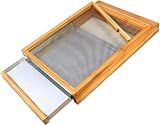 Bee Hive Metal Screened Bottom Board 10 Frame Screen BottomView on Amazon
- 8
 DoubleFill 3 Pcs 10 Frame Beehive Metal Screened Bottom BoardView on Amazon
- 9DoubleFill 3 Pcs 8 Frame Beehive Metal Screened Bottom BoardView on Amazon
As spring buildup turns into the summer nectar flow, deciding between a screened vs solid bottom board comes down to your local climate and how you manage hive ventilation. If your apiary faces hot, humid summers where moisture accumulates inside the hive, a screened bottom board provides open airflow through its wire mesh, with the option to slide in a tray for debris inspection. For beekeepers in areas with severe, windy winters who prefer maximum warmth retention without bottom drafts, a solid bottom board remains the dependable traditional choice. We compared wooden bottom boards across dimensions, airflow characteristics, winter performance, and maintenance needs to help you choose the right base for your colonies.
Other hives and gear to compare
 4Pcs Beehive Screened Bottom Board 10 Frame Thickened 100%Check price on Amazon
 2 Pack Bee Hive Screened Bottom Board Beeswax CoatedCheck price on Amazon
 10 Frame Beehive Screened Bottom BoardCheck price on Amazon
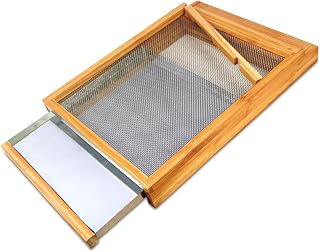 Bee Hive Metal Screened Bottom Board 10 Frame Screen BottomCheck price on Amazon
 DoubleFill 3 Pcs 10 Frame Beehive Metal Screened Bottom BoardCheck price on Amazon
- DoubleFill 3 Pcs 8 Frame Beehive Metal Screened Bottom BoardCheck price on Amazon
HiveKeeperGear earns a commission when you buy through links on this site, at no extra cost to you. As an Amazon Associate I earn from qualifying purchases. Affiliate disclosure.
Before you choose: understand your climate
Every wooden beehive rests on its bottom board, which serves as the floor of the brood nest and the landing porch for foraging bees. Because heat rises and cold air sinks, the design of your bottom board directly influences how air, humidity, and temperature move through the entire hive stack. Before purchasing equipment, consider your seasonal weather patterns, summer humidity, and the intensity of winter winds. Pairing the right bottom board with a complete setup, such as a Langstroth beehive kit or an 8-frame beehive, gives your bees the environmental support they need throughout the year.
Screened vs solid bottom board: core comparison
The fundamental distinction between these two hive floors lies in the floor surface. A solid bottom board consists of flat wooden planks joined together, creating an unbroken barrier between the ground and the brood box. A screened bottom board replaces the central wooden floor with woven wire mesh, allowing air to pass freely while keeping bees inside. Most modern screened models also include a slide-out tray underneath the wire mesh, giving beekeepers a way to close the floor or inspect fallen debris without disturbing the brood nest.
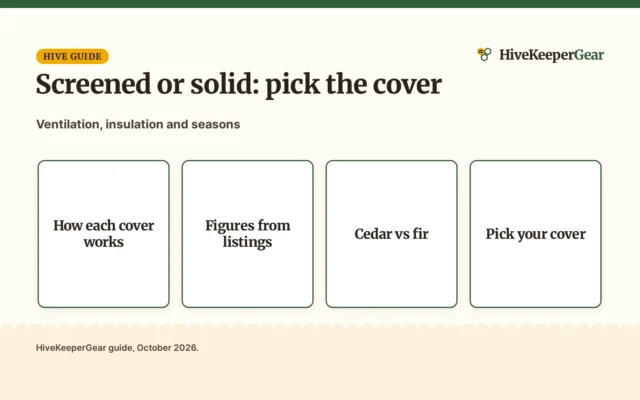
| Feature | Screened Bottom Board | Solid Bottom Board | Our guide |
|---|---|---|---|
| Primary ventilation | High airflow through wire mesh floor | Entrance opening airflow only | Screened bottom boards |
| Summer heat management | Assists cooling and nectar evaporation | Relies on bee fanning and top ventilation | Plastic bottom boards |
| Winter cold protection | Insert can be closed to reduce drafts | Solid wood barrier blocks upward wind | Winter hive wraps |
| Debris and hygiene inspection | Removable tray catches fallen debris | Debris lands on floor board | Entrance reducers |
| Entrance reduction fit | Compatible with standard reducers | Compatible with standard reducers | Winter entrance reducers |
| Hive kit compatibility | Standard Langstroth footprint | Standard Langstroth footprint | Langstroth hive kits |
1. Summer ventilation and moisture management
During the height of summer, a strong honey bee colony generates substantial internal heat. Nurse bees maintain warmth for developing larvae, while field foragers return with loads of thin nectar. Nectar contains significant water content that bees must evaporate before capping cells as ripe honey. To drive off moisture, worker bees fan their wings near the entrance to create air currents through the hive boxes.
A screened bottom board aids this cooling process. By providing open wire mesh across the floor of the lowest box, air circulates up through the frames, reducing internal humidity and preventing heat buildup. On a solid bottom board, ventilation enters and exits primarily through the front entrance, requiring colonies to spend more energy fanning during hot afternoons.
2. Winter warmth retention and cold wind protection
When temperatures drop in autumn, honey bees do not heat the empty hive space. Instead, they form a tight winter cluster around the queen and remaining honey stores, generating warmth in the center of the ball. In freezing weather, cold wind blowing directly into the cluster from below can break their heat envelope, forcing bees to consume honey stores at a faster rate to stay warm.
Solid bottom boards have long been the traditional choice for overwintering in cold climates because the continuous wooden floor blocks upward drafts. Wind striking the hive stand cannot penetrate the bottom of the brood box, keeping the airspace beneath the cluster still. While screened bottom boards can also overwinter colonies successfully, many beekeepers choose to slide in an insert tray to reduce bottom drafts before freezing weather arrives, while others in sheltered apiaries leave the mesh open to help moisture escape.
3. Debris inspection and pull-out trays
A practical advantage of a screened bottom board is monitoring hive conditions without opening the boxes. Most modern screened designs include a removable pull-out tray positioned beneath the wire mesh. When the tray is slid into place, debris from uncapping, grooming, and comb building falls through the mesh floor onto the surface below.
Because the wire mesh keeps bees separate from the tray space, the beekeeper can slide out the tray from behind the hive, examine fallen wax flakes and pollen grains, and wipe the surface clean. When maximum summer ventilation is desired, the tray can be removed entirely so air circulates freely through the open mesh.
4. Equipment fit and entrance reducers
Standard Langstroth equipment requires exact sizing so that boxes stack squarely and entrance accessories fit firmly. For its screened models, DoubleFill lists dimensions of approximately 22 by 16-1/4 by 2-9/16 inches for a 10-frame hive, and 22 by 14-1/4 by 2-9/16 inches for an 8-frame hive. Because 10-frame and 8-frame hive widths differ, bottom boards must match box dimensions and cannot be swapped between different widths. Checking your equipment width, whether consulting our 10-frame beehive dimensions or 8-frame hive dimensions, ensures a proper seal against drafts.
Entrance management is equally important. Listings from DoubleFill and BeeQuestify include 1 entrance reducer with each bottom board set. Both screened and solid wooden boards feature raised side rails that accept standard wooden reducers, giving you full control over the entrance opening during seasonal changes.
5. Durability, materials, and wood coatings
Because the bottom board sits closest to the ground, it faces more environmental moisture than any other wooden hive component. Rain runoff, wet morning grass, and rising ground dampness all challenge the timber. Listings from brands such as witbee and BeeQuestify feature cedar wood finished with 100% beeswax. The thick beeswax coating penetrates the wood grain, creating a water-resistant barrier that helps protect the cedar from weathering and cracking.
Construction materials extend to the insert and mesh as well. NUOMIC lists a 10-frame screened bottom board measuring 16.25 by 22 by 2.56 inches with a product weight of 5.28 pounds, featuring cedar wood and a removable plastic tray. In contrast, DoubleFill and BeeQuestify equip their screened boards with pull-out metal inserts and woven wire mesh. Both designs protect the timber while providing a sturdy base for heavy honey supers.
A seasonal management timeline
Early spring: As temperatures moderate and queens resume laying, inspect the bottom board for winter accumulation. If using a screened floor, keep the solid insert tray slid beneath the mesh while the colony builds brood, protecting young larvae from chilly nights. Late spring and summer: When the main nectar flow begins and temperatures climb, remove the insert tray on screened boards to maximize bottom airflow, or insert it periodically to check hive debris. If running solid bottom boards, verify that the front entrance is clear and consider upper ventilation if heat causes bees to beard on the box face. Fall: As ambient temperatures decline, slide the solid insert tray back into place beneath your screened mesh. Install a wooden entrance reducer across the front landing porch. Winter: Keep the bottom entrance reduced and ensure your hive tilts slightly forward so condensation drains toward the entrance and out of the hive rather than pooling on the floor.
Helpful accessories for hive floors
- A wooden entrance reducer to adjust the front hive opening during seasonal weather changes.
- A metal mouse guard to keep rodents from entering the bottom entrance during cold winter months.
- A spare pull-out tray to swap quickly under screened floors when inspecting bottom debris.
- A sturdy hive stand to lift your bottom board off wet soil, vegetation, and ground dampness.
- A hive tool to scrape propolis and wax buildup from landing boards during routine inspections.
Lifting your bottom board off the ground is an effective way to extend the working life of wooden hive gear. A dedicated hive stand improves air circulation beneath screened mesh and keeps solid wood floors dry, preventing ground moisture from entering the brood chamber.
What this guide does not cover
This guide compares physical hive floor equipment and wooden Langstroth components only. We do not provide bee health, disease, pest, or chemical treatment advice. For colony health questions and apiary regulations in your area, contact your state apiary inspector or local beekeeping extension office.
FAQs for beekeepers
Can you leave a screened bottom board on during winter?
Yes. Many beekeepers slide in a solid tray beneath the wire mesh during winter to block cold winds, while others leave the screen open in sheltered yards to help winter moisture escape.
Do screened bottom boards help bees stay cool in summer?
Yes, the open wire mesh allows warm air and moisture to circulate freely, reducing heat buildup inside brood boxes. This airflow assists worker bees during heavy nectar flows when colonies generate substantial heat evaporating water from honey stores.
Are bottom boards interchangeable between 10-frame and 8-frame hives?
No, bottom boards must match the width of your hive boxes. For example, DoubleFill lists its 10-frame screened boards at approximately 16-1/4 inches wide and its 8-frame screened boards at 14-1/4 inches wide, so the two widths cannot be swapped.
What is the purpose of the slide-out tray under a screened bottom board?
The removable tray allows beekeepers to inspect hive debris, wax flakes, and fallen particles without lifting heavy brood boxes. Removing the tray periodically lets you clear out accumulated debris to support hive cleanliness.
Which bottom board is better for beginning beekeepers?
Beginners in warm or humid regions often appreciate the ventilation and debris checks of a screened board with a slide-out tray. Beginners in cold, windy northern climates often start with a solid bottom board for straightforward winter insulation.
More hive guides
See every beehives guide, explore Langstroth hives, and check our 8-frame hives guides.
More picks: screened bottom boards, plastic bottom boards, and starter hive kits. New to beekeeping? Start with our beekeeping supplies for beginners checklist.