Screened Inner Cover vs Solid Inner Cover: Which One Should You Buy?
An informational guide comparing screened and solid inner covers by ventilation, insulation, feeding and seasonal use, with figures from real listings.

On this page
Top picks at a glance
As an Amazon Associate I earn from qualifying purchases.
- 1
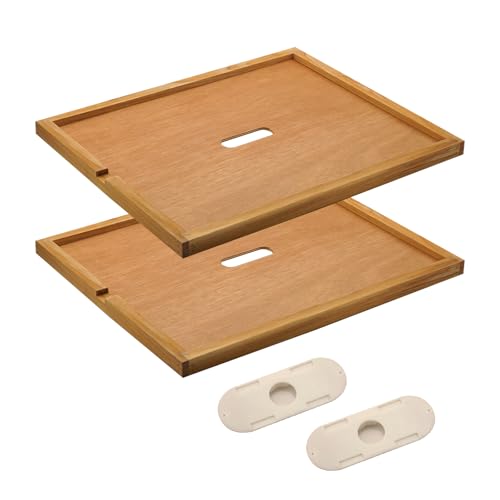 ENGAMEGURI Cedar Beehive Inner Cover with 2 Bee Escapes9.7/10View on Amazon
- 2
 Colingmill 2 Pack Bee Hive Inner Cover and Bee EntranceView on Amazon
- 3
 Beehive Inner Cover 10 FramesView on Amazon
- 4
 2Pcs Beeswax-Coated Beehive Inner Cover for 10-Frame BoxView on Amazon
- 5
 Telescoping Cover Wax Dipped 8 Frame Used for Beehive DurableView on Amazon
- 6
 4 Pack 10 Frame Beeswax Beehive Inner CoverView on Amazon
Screened inner cover vs solid inner cover comes down to how much air you want moving through the top of the hive. A solid inner cover is a flat board with a ventilation notch and often a feeding hole; every reference listing here is one or includes one, from the cedar BEEXTM 2-pack at 4.34 pounds to the fir DoubleFill 4-pack with a feeding hole. A screened inner cover replaces the center of the board with mesh, adding top ventilation and a window into the hive without lifting the lid. For most beekeepers the solid cover is the default and the screened cover is a summer upgrade. Listings referenced were collected 15 October 2026.
Other hives and gear to compare
 Colingmill 2 Pack Bee Hive Inner Cover and Bee EntranceCheck price on Amazon
 Beehive Inner Cover 10 FramesCheck price on Amazon
 2Pcs Beeswax-Coated Beehive Inner Cover for 10-Frame BoxCheck price on Amazon
 Telescoping Cover Wax Dipped 8 Frame Used for Beehive DurableCheck price on Amazon
 4 Pack 10 Frame Beeswax Beehive Inner CoverCheck price on Amazon
HiveKeeperGear earns a commission when you buy through links on this site, at no extra cost to you. As an Amazon Associate I earn from qualifying purchases. Affiliate disclosure.
Every reference listing for this guide is a solid inner cover or a parts kit that includes one; no screened inner cover is among them. The screened side below is explained from general beekeeping knowledge, without listing figures, and every number in this guide comes from the solid-cover listings cited by brand.
Screened inner cover vs solid inner cover: the short answer
Choose the solid inner cover for the standard setup. It is what the listings sell: the BEEXTM cedar 2-pack covers ventilation and feeding for 10-frame Langstroth hives and fits an escape device, while the DoubleFill fir 4-pack adds a feeding hole and, per its listing, enough insulation for cold months. Choose the screened inner cover for hot, humid summers or for checking the colony without opening the hive: the mesh vents the top and lets you look down at the cluster. Many beekeepers run both and swap with the season.
What a solid inner cover does
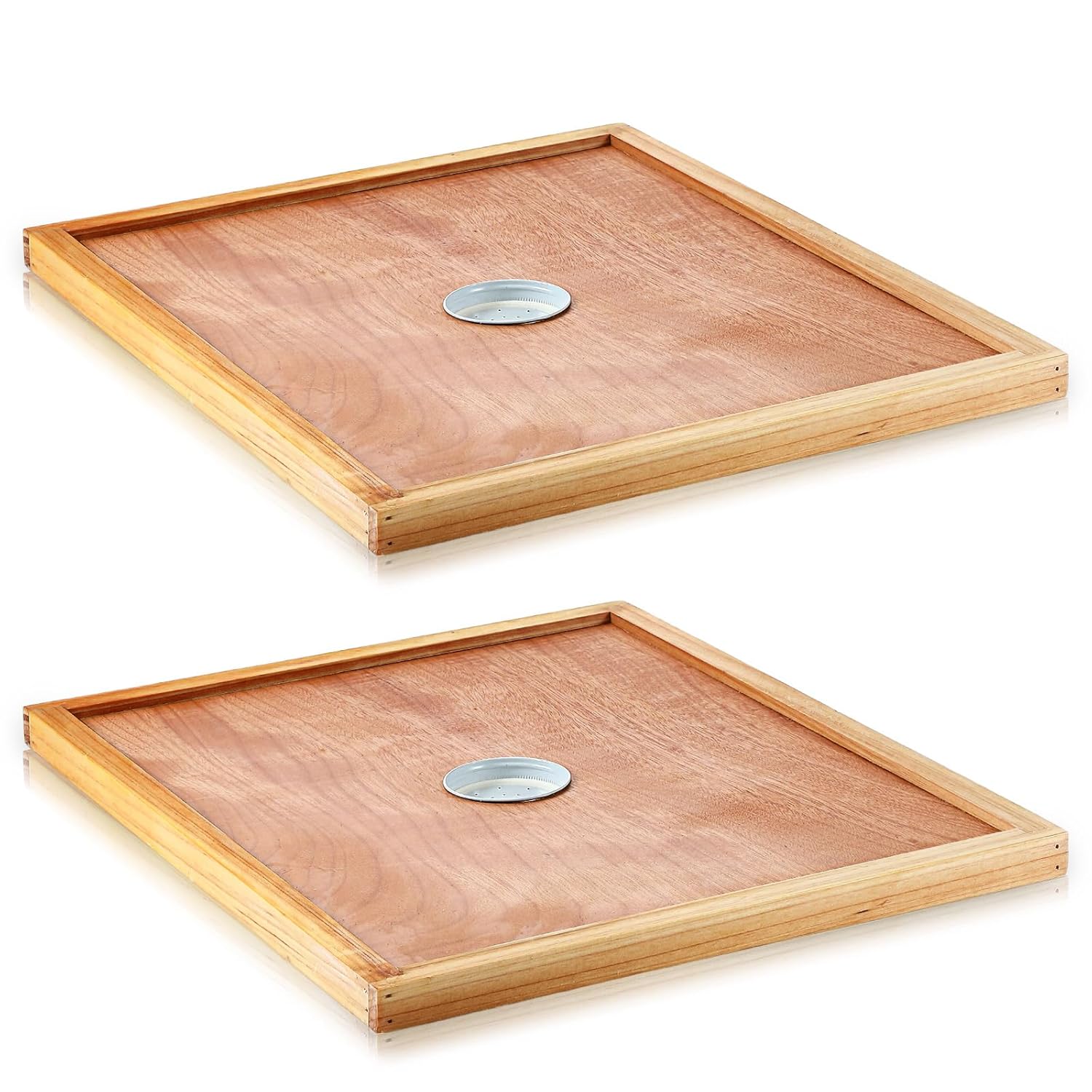
A solid inner cover sits between the top box and the outer cover and does four jobs. It ventilates through a notch, it feeds through a hole, it insulates, and it stops the outer cover from gluing itself to the boxes with propolis. The DoubleFill listing spells all of this out: feeding hole, insulation for a warm protected environment in cold months, and a fit that comes off without tools. The BEEXTM listing adds that its cover matches an escape device, the oval gadget that clears bees from a super before harvest. Sizes run 20.25 x 16.75 x 2.3 inches on the BEEXTM and 16.3 x 19.9 x 0.8 inches on the DoubleFill, at 4.34 pounds for the 2-pack and 6.72 for the 4-pack. Wood choice matters here: the BEEXTM is cedar, listed as durable, while the DoubleFill is fir, which its listing says is less likely to shrink, expand, warp or twist in rain. Our cedar vs fir beehive guide compares the two woods in full.
What a screened inner cover does
A screened inner cover does the same structural job with the center cut out and replaced by mesh. The mesh turns the whole cover into a vent: warm moist air rises out of the hive instead of condensing under a solid board, which is why hot-climate beekeepers favor it in summer. It also doubles as an observation window; you can check the cluster or confirm the bees are up in the super without breaking the propolis seal. The trade is heat loss: in cold weather the mesh passes warmth straight out, so northern beekeepers usually swap back to solid for winter. No screened cover appears in the reference listings, so treat the above as general practice rather than a listed spec.
Side by side: what the listings show
| Solid inner cover | Screened inner cover | |
|---|---|---|
| Ventilation | Notch plus feeding hole | Full mesh panel |
| Insulation | Board insulates; DoubleFill listed for cold months | Less; mesh passes heat |
| Feeding | Feeding hole on the DoubleFill | Not listed here |
| Summer | Fine, with less airflow | Better cooling |
| Winter | The standard choice | Often swapped out for solid |
| Listed examples | BEEXTM 2-pack cedar, 4.34 lb; DoubleFill 4-pack fir, 6.72 lb | Not listed here |
The table pairs the listed solid covers against the general screened layout. Where the screened column has no figure, the listings cover only solid boards.
Which one suits your apiary
- Solid, for the default setup. Cold winters, feeding seasons, and any hive where you want the top sealed. The 4-pack and 2-pack listings make spares easy to keep on hand.
- Screened, for heat and humidity. If your summers cook the hive, the mesh vents what a notch cannot. It also suits beekeepers who like checking the colony without a full inspection.
- Both, for seasonal swappers. Screened from spring build-up through summer, solid from fall feeding into winter. The covers are light enough to keep a set of each.
FAQs for beekeepers
Can I run a screened inner cover in winter?
Most beekeepers do not. The mesh that cools the hive in July bleeds heat in January, so the usual practice is solid for winter; the DoubleFill solid is explicitly listed for cold months.
Do I need an inner cover at all?
It earns its place. The DoubleFill listing notes it keeps the outer cover from sticking to the boxes, and the board adds insulation plus a feeding port that a bare outer cover lacks. See our inner cover vs quilt box guide for the moisture-control alternative.
What is the oval escape the kits mention?
A one-way bee exit. The Colingmill kits pair their inner cover with an oval escape that lets bees leave the super but not return, clearing it for harvest. The BEEXTM cover is listed as matching an escape device the same way.
Will a 10-frame inner cover fit my hive?
Match the frame count. The BEEXTM and DoubleFill covers are standard 10-frame Langstroth size, while the Hoover Hives kit is built for 8-frame boxes. A 10-frame cover will not sit right on an 8-frame hive.
Screened inner cover or screened bottom board?
Different jobs. The bottom board vents the floor of the hive; the inner cover vents the top. Many beekeepers run both screened in summer. Our screened vs solid bottom board guide covers the floor side.
More hive guides
Browse every guide by category: beehives, protective gear, hive tools and honey harvesting.