Inner Cover vs Quilt Box: Which One Should You Buy?
Compare inner covers and quilt boxes to manage hive moisture and winter insulation, choosing the right top setup for your local climate.

On this page
Top picks at a glance
As an Amazon Associate I earn from qualifying purchases.
- 1
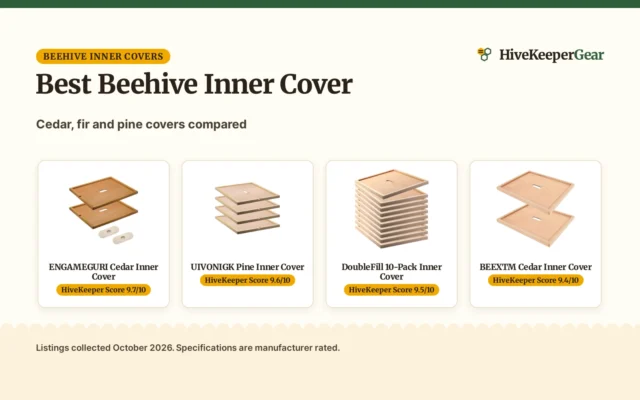
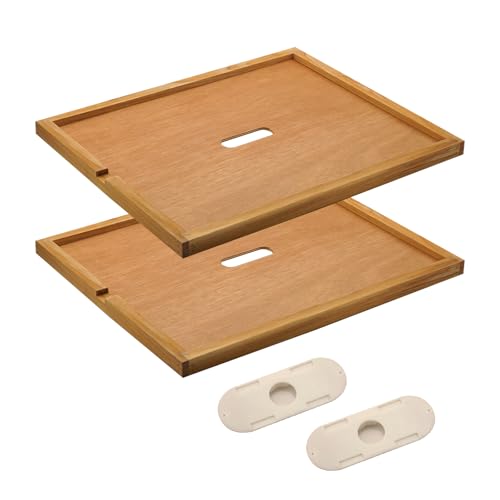 ENGAMEGURI Cedar Beehive Inner Cover with 2 Bee Escapes9.7/10View on Amazon
- 2
 HiveSweet 2 Pack Cedar Quilt Box for 10 Frame Langstroth Hives9.6/10View on Amazon
- 3
 2Pcs Beeswax-Coated Beehive Inner Cover for 10-Frame BoxView on Amazon
- 4
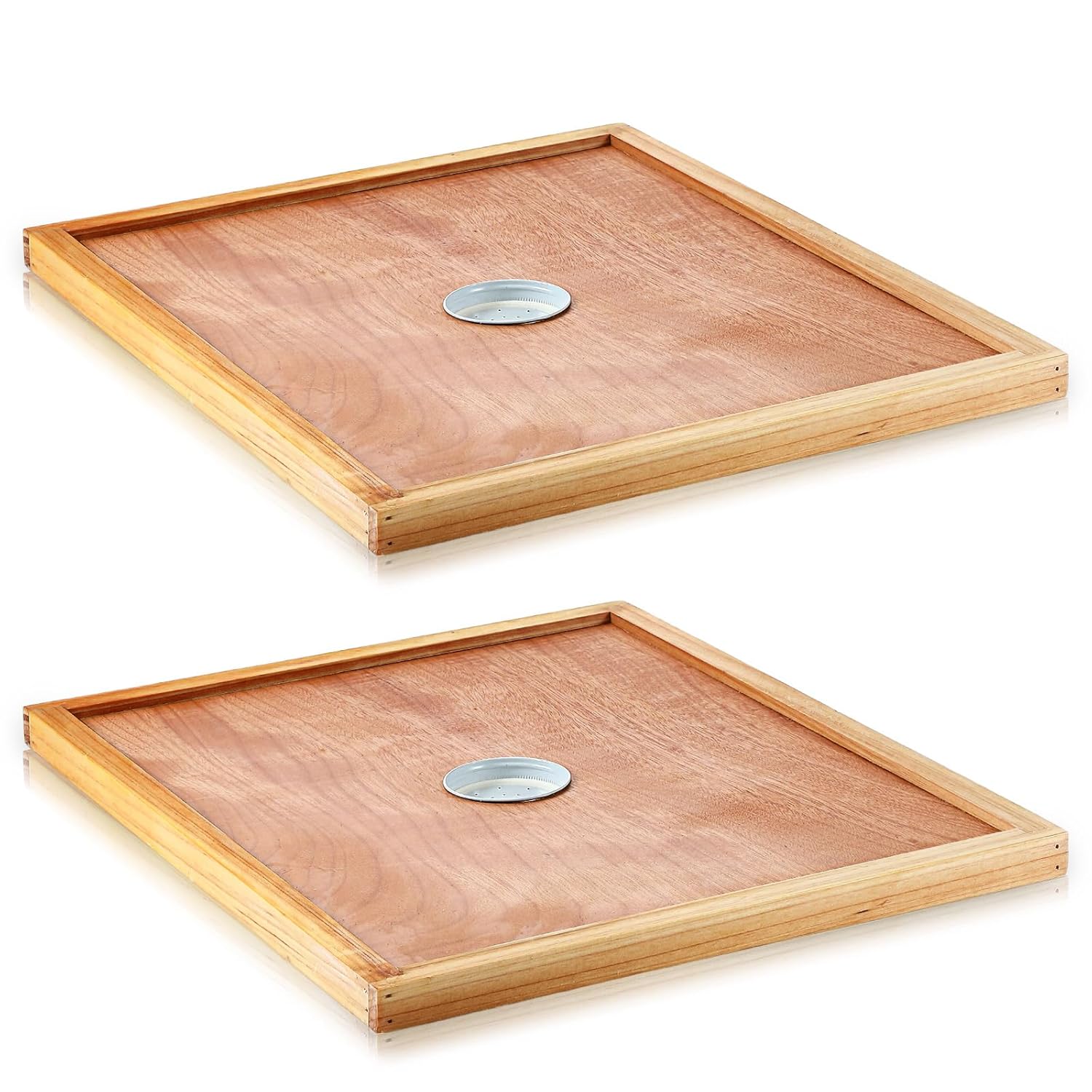 Colingmill 2 Pack Bee Hive Inner Cover and Bee EntranceView on Amazon
- 5
 Beehive Inner Cover 10 FramesView on Amazon
- 6
 Telescoping Cover Wax Dipped 8 Frame Used for Beehive DurableView on Amazon
- 7
 4 Pack 10 Frame Beeswax Beehive Inner CoverView on Amazon
- 8
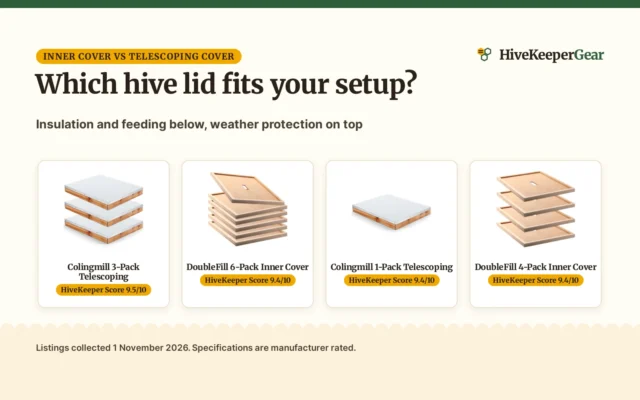
 Colingmill 3 Pcs Bee Hive Cover 10 Frame Telescoping TopView on Amazon
When autumn winds cool the apiary, winter preparation turns to protecting colonies from cold moisture. In the debate of inner cover vs quilt box, the right choice depends on your local winter climate and how your hive vents damp air. A standard inner cover serves as standard equipment across the active beekeeping season, providing upper air space beneath the outer roof, a center feeding hole, and an access port for feeding and ventilation. A quilt box is a specialized winter accessory that captures rising moisture vapor in absorbent bedding before it can condense and drip onto the cluster. In mild winter climates, a standard inner cover provides adequate ventilation. In cold northern climates with heavy overhead condensation, adding a quilt box gives your colony essential moisture protection.
Other hives and gear to compare
 2Pcs Beeswax-Coated Beehive Inner Cover for 10-Frame BoxCheck price on Amazon
 Colingmill 2 Pack Bee Hive Inner Cover and Bee EntranceCheck price on Amazon
 Beehive Inner Cover 10 FramesCheck price on Amazon
 Telescoping Cover Wax Dipped 8 Frame Used for Beehive DurableCheck price on Amazon
 4 Pack 10 Frame Beeswax Beehive Inner CoverCheck price on Amazon
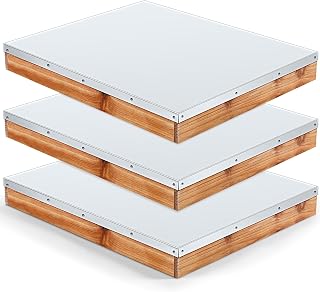 Colingmill 3 Pcs Bee Hive Cover 10 Frame Telescoping TopCheck price on Amazon
HiveKeeperGear earns a commission when you buy through links on this site, at no extra cost to you. As an Amazon Associate I earn from qualifying purchases. Affiliate disclosure.
Before you decide: winter moisture versus airflow
Winter bees do not freeze from cold air alone; they chill and perish when condensation drips directly onto the winter cluster. As bees consume honey stores and respire, they release warm water vapor. In an uninsulated hive, this warm vapor rises toward the top of the box. When warm air meets a cold inner cover or uninsulated roof, it reaches its dew point and condenses into liquid water drops that fall back onto the bees.
Beekeepers manage condensation through ventilation, which lets moist air escape, and absorption, which traps moisture in breathable bedding above the cluster. Understanding this distinction helps you choose the right top setup for your wintering strategy.
The inner cover vs quilt box decision for your apiary
Choosing between an inner cover and a quilt box comes down to seasonal versatility versus cold-weather moisture management. The table below compares how each option performs across core apiary functions.
| Feature | Standard Inner Cover | Quilt Box | Apiary Notes |
|---|---|---|---|
| Primary Role | Cover separation and upper venting | Moisture absorption and insulation | Used year-round or swapped for winter covers |
| Moisture Handling | Vents moisture through upper openings or notches | Absorbs moisture into organic bedding | Quilt boxes stop cold ceiling drips |
| Insulation | Minimal thermal barrier | Deep overhead insulation barrier | Reduces heat loss through the outer roof |
| Feeding Support | Center hole holds jars or pails | Pairs with candy rims or sugar boards | See our guide to bee fondant for winter |
| Hive Compatibility | Sized for 10 frame Langstroth boxes | Sized for 10 frame Langstroth boxes | Check standard 10-frame hive dimensions |
| Active Season | Active season through mild winters | Late fall through early spring | Store quilt boxes dry during warm months |
1. How a standard inner cover works
A standard inner cover sits directly above the top brood box or honey super, beneath the telescoping roof. Its raised wooden rim maintains proper bee space above the frames, preventing worker bees from sealing the outer cover with propolis. This allows clean removal of the roof during inspections. An oval or circular center hole provides a port for jar feeding and accepts a bee escape device during the honey harvest.
Inner covers are sized for standard Langstroth equipment. Maker DoubleFill lists a 10 frame inner cover measuring 16.3 x 19.9 x 0.8 inches made from fir wood to resist warping from rain, while Colingmill pairs a 10 frame fir inner cover measuring 19.88 x 16.34 x 0.98 inches with a galvanized iron outer cover measuring 21.85 x 17.83 x 2.56 inches. Other brands use cedar; BEEXTM lists cedar wood 10 frame inner covers with package dimensions of 20.25 x 16.75 x 2.3 inches. Certain designs, including listings from ECRIZA with package dimensions of 20.3 x 17 x 4 inches, feature a ventilation notch cut into the rim to let damp air exit under the roof.
2. How a quilt box works
A quilt box is a wooden rim with an open top and a breathable bottom made from cotton canvas, muslin, or wire mesh lined with fabric. The box cavity is filled with absorbent natural material such as coarse pine or cedar wood shavings. Ventilation holes drilled along the upper sides of the box allow air to circulate above the shavings.
Warm, moist air from the winter cluster rises through the breathable fabric floor into the bedding layer. The shavings absorb the moisture vapor before it can touch a cold ceiling and condense. Meanwhile, the side ventilation holes allow cross-ventilation to slowly dry the top of the shavings, keeping the ceiling above the bees dry and warm.
3. Moisture management in cold weather
Managing winter moisture requires balancing airflow against excessive heat loss. With a standard inner cover, ventilation relies on convective airflow: air enters the bottom board, rises past the cluster, and exits through an upper rim notch or propped roof opening. Paired with a hive entrance reducer for winter, upper ventilation allows humidity to escape, though strong winter winds can pull warm air out rapidly if openings are too wide.
A quilt box captures moisture through absorption instead of direct venting. Moisture diffuses into the bedding while heat remains trapped in the hive cavity. In regions where winter temperatures remain below freezing, this absorption stops frost from accumulating on cold inner lids. For hives with screened bottom boards and winter insert trays, a quilt box provides overhead moisture control without creating an updraft through the cluster.
4. Overhead insulation and temperature control
Heat loss in a winter beehive occurs mostly through the roof. A standard inner cover has a thin wooden panel that offers minimal resistance to thermal transfer. When freezing winds chill the telescoping lid, cold transfers through the inner cover. Beekeepers using standard inner covers in cold climates often add foam insulation beneath the roof or wrap the hive in an exterior bee hive winter wrap to reduce heat loss.
A quilt box provides a thick buffer of overhead insulation. The loose wood shavings trap pockets of still air, creating an insulating layer that slows heat escape. Keeping the ceiling warm prevents the internal air from reaching its dew point, keeping the colony warm while reducing winter honey consumption.
5. Feeding options and seasonal transitions
Feeding methods differ between these designs. A standard inner cover is an active apiary tool designed for syrup feeding during spring buildup and autumn prep. Inverted jars or pail feeders placed over the center hole let bees access syrup directly, shielded by an empty box. In late winter, beekeepers can also place emergency dry sugar over the center hole.
Quilt boxes are designed for winter insulation rather than liquid feeding, as syrup can chill bees in cold weather. Beekeepers using quilt boxes place winter sugar patties or candy boards beneath the quilt box, directly above the brood frames. In spring, once warm weather returns, the quilt box is removed and stored dry, and the standard inner cover is returned to the hive. To prepare for early spring syrup feeding, explore our guide to the best beehive feeder designs.
A seasonal top cover timeline
Late summer: Inspect colonies, remove honey supers, and evaluate winter honey stores. Keep standard inner covers in place for fall feeding.
Early fall: Finish syrup feeding before cold weather arrives. Install entrance reducers to protect against cold drafts and mice.
Late fall: In cold winter climates, install your quilt box filled with clean wood shavings over the top brood box, storing your inner cover in a dry shed.
Winter: Leave the hive closed during freezing weather. On sunny winter days, check under the outer roof; if the top layer of shavings feels damp, replace it with dry shavings.
Early spring: Once freezing nights pass and early nectar flows begin, remove the quilt box, clean the rim, and reinstall your standard inner cover for spring inspections.
Helpful accessories for winter setups
- An entrance reducer or mouse guard to restrict lower drafts and prevent rodents from entering the warm brood box.
- A candy board or feeding shim to hold solid emergency sugar above the cluster without squishing bees.
- A telescoping outer cover with metal flashing to shed rain and melting snow.
- Clean pine or cedar shavings to replenish quilt box bedding during winter checks.
- A hive strap or heavy weight to hold the outer cover secure against winter storms.
Keeping clean spare equipment in your apiary shed makes seasonal transitions easier. Clean propolis from wooden rims each season and store idle covers in a dry area to prevent wood rot.
What these covers do not replace
Neither an inner cover nor a quilt box can compensate for insufficient winter honey stores or a weak colony. A hive entering winter requires an adequate population of bees and capped honey located directly above and around the cluster. Windbreaks and sunny hive placement remain essential for winter survival.
We do not provide colony health or treatment advice. For regional guidance on overwintering colonies, contact your state apiary inspector or local agricultural extension office.
FAQs for beekeepers
Can you use an inner cover and a quilt box together?
Some beekeepers place a quilt box on top of an inner cover, letting moisture pass through the center hole. However, placing the quilt box directly above the frames gives wider, more even moisture absorption across the cluster.
What type of wood is best for hive inner covers?
Fir and cedar are common choices because they resist warping from humidity. DoubleFill lists fir wood for 10 frame inner covers to withstand rain, while BEEXTM lists cedar wood for durability in 10 frame hives.
What material should you put inside a quilt box?
Coarse pine or cedar wood shavings are preferred because they absorb moisture while allowing air circulation. Avoid fine sawdust, which can pack down tightly and drop dust through the screen onto the bees.
Do 10 frame inner covers fit standard Langstroth hives?
Yes, standard 10 frame inner covers match standard 10 frame Langstroth boxes. DoubleFill lists dimensions of 16.3 x 19.9 x 0.8 inches for 10 frame hives, while Colingmill lists inner cover dimensions of 19.88 x 16.34 x 0.98 inches.
When should you remove a quilt box in the spring?
Remove the quilt box in early spring when steady warm weather returns. Once freezing weather ends, swap the quilt box for your standard inner cover to start regular inspections and spring feeding.
More hive guides
Browse every guide by category: beehives, protective gear, hive tools and honey harvesting.
More guides: learn about our recommended Langstroth hive kits, explore screened bottom boards, and compare bee hive winter wraps. New to hive setup? Review our beekeeping supplies for beginners checklist.