Flow Frames vs Langstroth Frames: Which One Should You Buy?
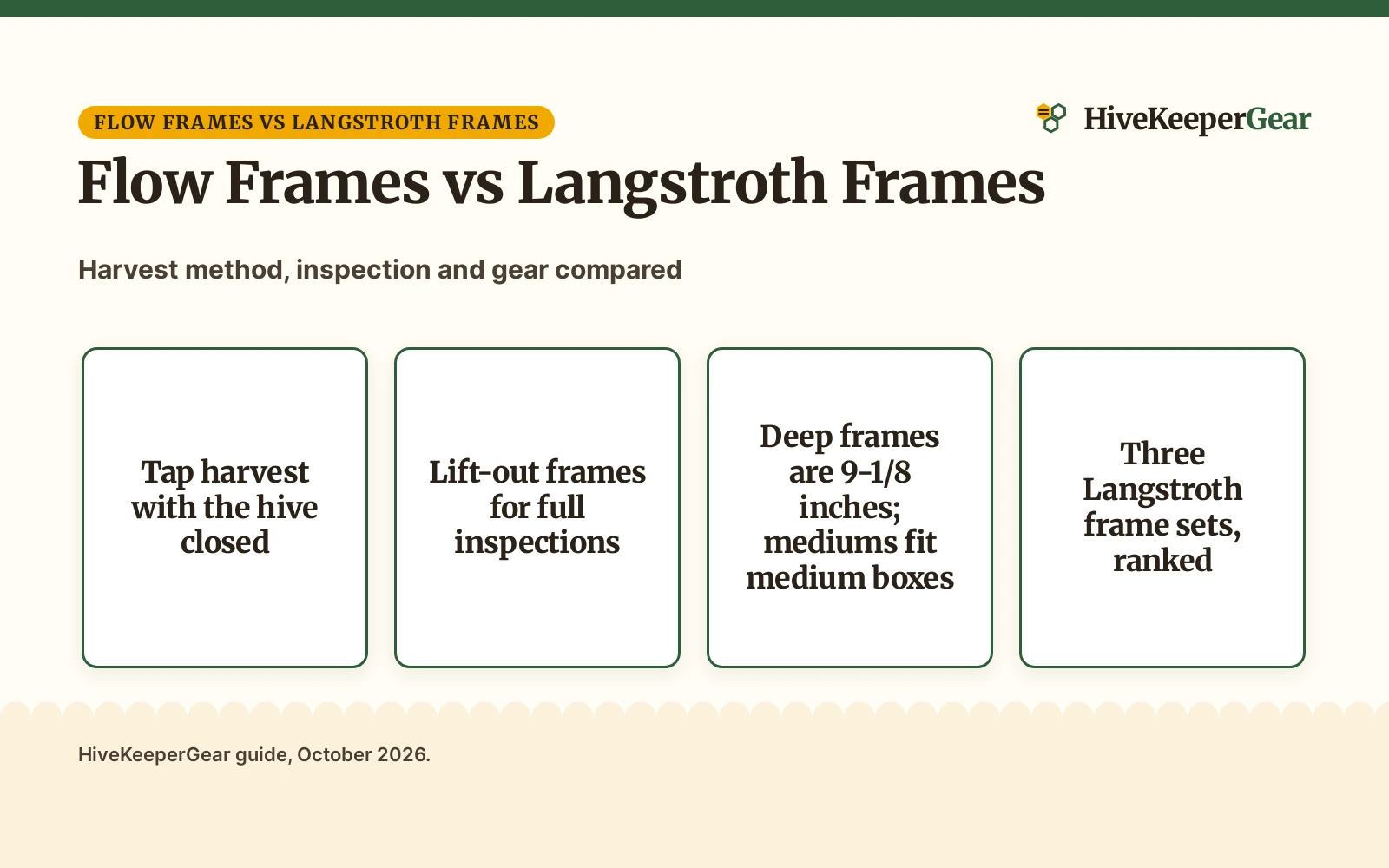
Flow frames drain honey through a tap with the hive closed, while Langstroth frames lift out for inspection and extractor harvest; a comparison of both systems and three sets.

On this page
Top picks at a glance
As an Amazon Associate I earn from qualifying purchases.
- 1
 Krylon Fusion All-In-One Matte Spray Paint9.6/10View on Amazon
- 2
 BeeCastle 10 Frame Langstroth Bee Hive Coated with Beeswax9.7/10View on Amazon
- 3
 Deep Wooden Frames with Black Plastic Foundations Coated inView on Amazon
- 4
 Wooden Medium Frames with Beeswax Coated Yellow FoundationsView on Amazon
- 5
 Wooden Deep FramesView on Amazon
- 6
 Deep Frames Langstroth Size Deep Brood Beehive Frames with 65View on Amazon
- 7
 10 Pack Deep Beekeeping Frames with Wax Coated Foundation forView on Amazon
- 8
 Beehive Frames Medium LANGSTROTH SizeView on Amazon
Standing at the hive in late summer, frames heavy with capped honey, every beekeeper faces the same question about how that honey gets out: flow frames vs langstroth frames comes down to harvest method. Flow frames let honey drain from the comb through a tap at the back of the super, so the hive stays closed. Langstroth frames lift out of the box for a full inspection, and the honey comes out with an extractor. Neither is wrong; the right choice depends on how you want to work your bees.
Other hives and gear to compare
 Deep Wooden Frames with Black Plastic Foundations Coated inCheck price on Amazon
 Wooden Medium Frames with Beeswax Coated Yellow FoundationsCheck price on Amazon
 Wooden Deep FramesCheck price on Amazon
 Deep Frames Langstroth Size Deep Brood Beehive Frames with 65Check price on Amazon
 10 Pack Deep Beekeeping Frames with Wax Coated Foundation forCheck price on Amazon
 Beehive Frames Medium LANGSTROTH SizeCheck price on Amazon
HiveKeeperGear earns a commission when you buy through links on this site, at no extra cost to you. As an Amazon Associate I earn from qualifying purchases. Affiliate disclosure.
flow frames vs langstroth frames: the quick answer
| Flow frames | Langstroth frames | |
|---|---|---|
| Harvest | Honey drains from the comb through a tap | Frames lift out; honey spins out in an extractor |
| The hive during harvest | Stays closed | Opened for frame removal |
| Frame sizes | Sized for a flow super | Deep frames are 9-1/8 inches; mediums fit medium boxes |
| Foundation | Comb structure built into the frame | Plastic or beeswax-coated foundation, per the listings below |
Harvest day looks different
With flow frames, harvest means turning the tap and watching honey run into a jar while the bees stay inside the hive. There is no lifting of heavy supers, no uncapping and no extractor to borrow, buy or clean. With Langstroth frames, harvest is a bigger event: supers come off, frames come out, cells are uncapped and the extractor spins the honey out before the wet frames go back for the bees to clean up.
That difference shapes the gear you own. A flow setup concentrates the cost and complexity in the super itself, while a Langstroth setup spreads it across boxes, frames, foundation and harvest equipment. Keepers who harvest a little at a time often like the tap; keepers who harvest whole supers at once often prefer the extractor rhythm.
Inspections and colony checks
Langstroth frames lift out one at a time, which is how most beekeepers check brood pattern, stores and space. Pulling frames is the core skill of hive management, and standard frames fit standard boxes from any maker, so gear stays interchangeable. Flow frames stay in the super, so inspections of the brood area below work the same, but the flow super itself is not pulled apart frame by frame the way a honey super is.
New keepers should weigh what they want to learn in the first seasons. If the goal is to get comfortable reading frames, standard Langstroth equipment gives the most practice. If the goal is honey with the least disturbance on harvest day, the tap has an obvious appeal.
The gear: three Langstroth frame sets
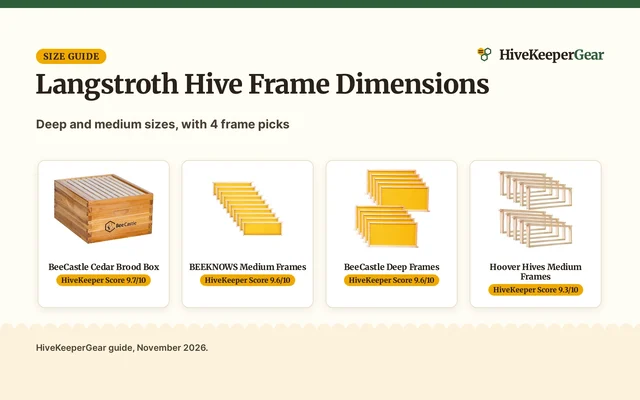
The listings below are all standard Langstroth frames, ranked by how completely each listing describes what is in the box. For frame sizing basics, see the types of bee hive frames guide, and for more frame comparisons, the best beehive frames roundup.
1. Honey Keeper 10 Deep Frame Kit
The most detailed listing of the three: a 10-pack of 9-1/8-inch unassembled frames for deep hive boxes, built from New Zealand pine with pre-cut finger joints and heavy duty nails. It is the only set here that names its foundation: plastic Rite-Cell foundations with textured cell interiors, stated to hold up through honey extraction. The spec table lists 9 pounds for the kit.
2. Hoover Hives Medium Frames with Beeswax Coating
A 10-pack of wooden frames for standard Langstroth medium hive boxes, paired with yellow foundations dipped in 100 percent natural beeswax over food-grade plastic. The listing positions the beeswax coating as the draw for faster comb acceptance. Assembly is not described, so count it as not stated.
3. Hoover Hives Deep Frames, 10 Pack
A 10-pack of wooden deep frames for standard Langstroth deep boxes, described as easy to assemble and suited to brood rearing or honey storage. This is the simplest listing: wood and fit are covered, but no foundation is mentioned, so plan on buying foundation separately if you need it.
FAQs for beekeepers
What size frames fit my hive boxes?
Match the frame to the box depth: deep boxes take deep frames, which the Honey Keeper listing measures at 9-1/8 inches, while medium boxes take medium frames like the Hoover Hives medium set.
Do these frame sets come with foundation?
The Honey Keeper deep kit includes plastic Rite-Cell foundations, and the Hoover Hives medium set includes beeswax-coated yellow foundations. The Hoover Hives deep set mentions no foundation.
Are these frames assembled?
The Honey Keeper kit arrives unassembled with pre-cut finger joints and heavy duty nails, and the Hoover Hives deep frames are described as easy to assemble. The Hoover Hives medium listing does not state assembly.
Can flow frames and Langstroth frames share one hive?
Both are made for Langstroth-dimension equipment, but the flow super is its own unit, so check the maker sizing for the boxes you own before planning a mixed setup.
Which system suits a first-year beekeeper?
Standard Langstroth frames keep every part of the operation interchangeable and teach frame handling from the start. Flow frames trade some of that harvest-day labor for tap-and-jar simplicity. Either way, the brood boxes below the honey super are managed the same.
More hive guides
Browse every guide by category: beehives, hive frames and langstroth hives.