How to Test for Varroa Mites in Your Hive
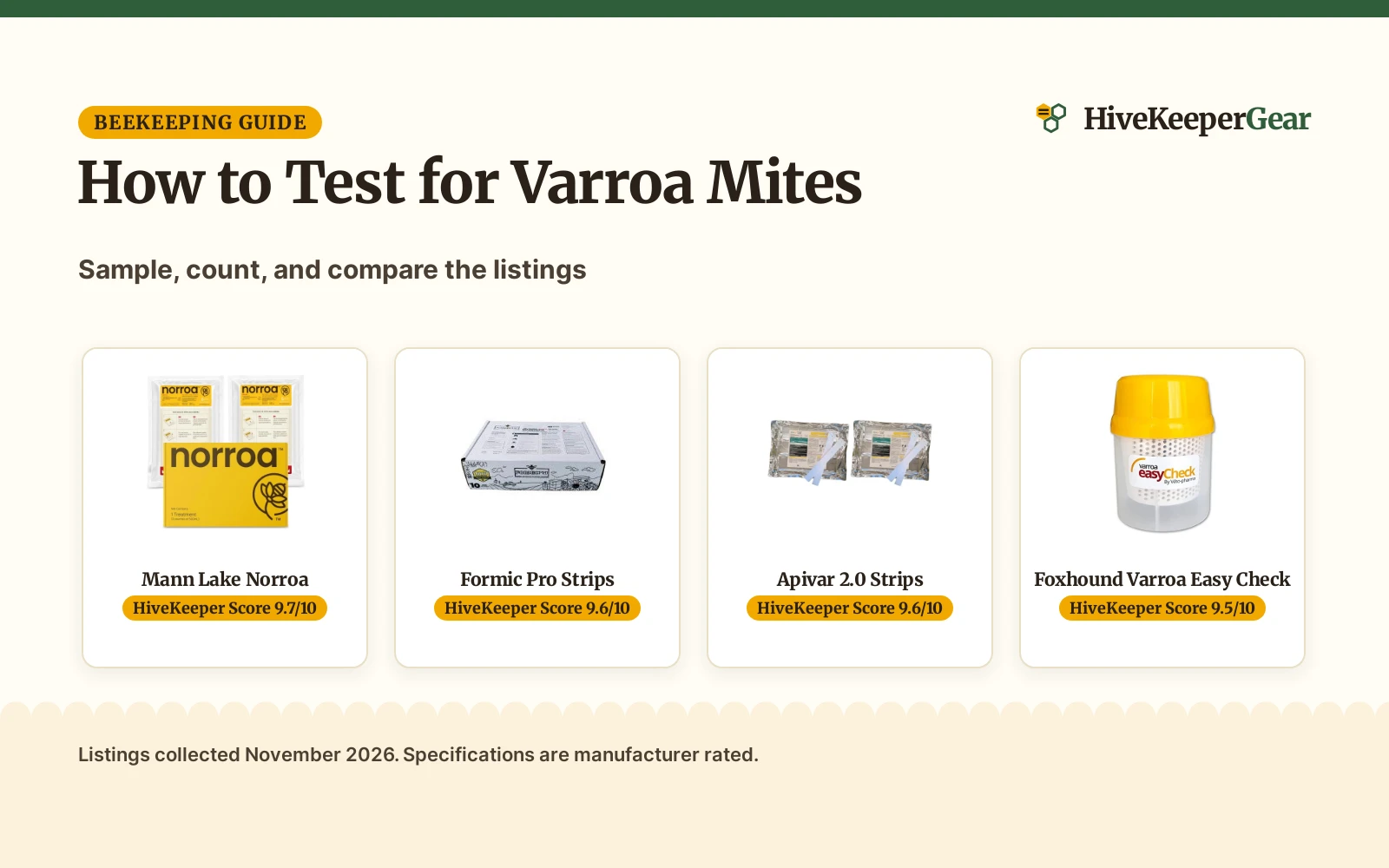
Sample bees from the brood area, count the mites that fall through a checker basket, and compare the control listings for the season ahead.

On this page
Top picks at a glance
As an Amazon Associate I earn from qualifying purchases.
- 1
 Mann Lake Norroa9.7/10View on Amazon
- 2
 Formic Pro Strips9.6/10View on Amazon
- 3
 Apivar 2.0 Strips9.6/10View on Amazon
- 4
 Foxhound Varroa Easy Check9.5/10View on Amazon
A quiet inspection can turn on the lift of a brood frame into the light, when dark mites on the bees raise the question that shapes the rest of the season. The direct answer to how to test for varroa mites is to take a sample of bees from the brood area into a dedicated mite checker, then count the mites that fall through its basket. This guide walks through that sampling step, the gear the listings describe, and the control options named for the period after a count.
HiveKeeperGear earns a commission when you buy through links on this site, at no extra cost to you. As an Amazon Associate I earn from qualifying purchases. Affiliate disclosure.
| # | Product | HiveKeeper Score | Buy |
|---|---|---|---|
| 1 | Mann Lake Norroa | 9.7/10 | Buy on Amazon |
| 2 | Formic Pro Strips | 9.6/10 | Buy on Amazon |
| 3 | Apivar 2.0 Strips | 9.6/10 | Buy on Amazon |
| 4 | Foxhound Varroa Easy Check | 9.5/10 | Buy on Amazon |
Mann Lake Norroa
A 2-pack of pouches listed for up to 18 weeks of mite control, placed on top of frames or the bottom board with no mixing or measuring.
Pros
- One application is listed for up to 18 weeks of control
- EPA-approved, with a novel mode of action that targets mite reproduction
- No mixing or measuring: peel back the label and place the pouch
- Listed as safe for queen and brood; field trials show up to 75 percent winter survival
Cons
- No warranty term is stated
- The listing gives pouch dimensions but no weight
- Seasonal timing for application is not stated
- The 12-pack and 24-pack counts are named without their contents detailed
Formic Pro Strips
A 10-dose pack of 20 pads listed as a residue-free, eco-friendly mite control with a choice of 14-day or 10-day use.
Pros
- Each pack provides enough strips for two complete treatments
- Listed as leaving no residue in honey, for use during the honey flow season
- Extended shelf life, with no special temperature storage stated as needed
- A choice of a full 14-day use with two strips or a 10-day phased approach
Cons
- No warranty term is stated
- Pad dimensions and materials are not stated
- Pails must be stored indoors and away from direct sunlight
- The 30-dose pack is named without its contents detailed
Apivar 2.0 Strips
A pack of 2 holding 60 amitraz strips that release gradually through the labeled treatment period.
Pros
- Controlled-release polymer strips release amitraz gradually over the labeled period
- Strips install directly between brood frames with no mixing or measuring
- A pack of 2 holds 60 strips in total
- Minimal intervention once strips are placed per label directions
Cons
- No warranty term is stated
- The number of strips per hive is left to the label and colony size, not stated here
- The listing alone gives no treatment duration; duration follows the EPA-approved label
- Individual strip dimensions are not stated
Foxhound Varroa Easy Check
A patented mite checker with a built-in measuring basket and molded lines, for sampling with an alcohol wash, powdered sugar or a CO2 canister.
Pros
- Patented basket lets mites fall through for a quick count
- Built-in measuring cup with molded lines measures the bee sample
- Works with an alcohol wash, powdered sugar or a CO2 canister
- Three measuring techniques in the same tool
Cons
- No warranty term is stated
- Basket capacity and the sample size the molded lines mark are not stated
- The listing names a CO2 canister as an option without stating whether one is included
- No dimensions or materials are stated in the listing
As an Amazon Associate I earn from qualifying purchases.
Other hives and gear to compare
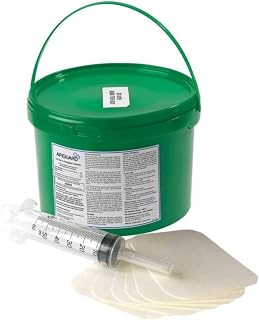 Apiguard 3kg Tub for Control of Varroa Mites 6.61 lbsCheck price on Amazon
 Oxalic Acid Vaporizer for Beehive Portable Oxalic AcidCheck price on Amazon
 CheckMite+ Bee Hive Pest Control StripsCheck price on Amazon
How to Test for Varroa Mites
Sampling starts with bees from the brood area, where the mites ride on the adult bees. The Foxhound Varroa Easy Check carries a built-in measuring basket with molded lines, so the sample is measured in the same tool that holds it. Mites fall through the basket, and the keeper counts what drops through.
The listing names 3 ways to use the checker: an alcohol wash, powdered sugar, or a CO2 canister. Each method ends the same way, with a count from the basket. Keep the count with the inspection notes, so the next visit can be compared with the last.
Checking Through the Season
Mite pressure shifts with the season, and a count taken during spring buildup reads differently from a count taken as the colony prepares for winter. The checker fits into a routine inspection, since sampling uses the same brood frames the keeper is already handling.
The Formic Pro listing states its strips leave no residue in honey and are listed for use during the honey flow season, while the Norroa listing states an application delivers up to 18 weeks of control, and the checker itself stays a sampling tool through every season.
The Gear for Checking Mite Levels
The checker basket handles the sampling and the count, while the remaining listings describe the control options named for mite management after a count.
Reading the Count
The count is the whole point of the sample: mites that fall through the basket are counted, and the molded lines keep the sample steady from visit to visit. Without a steady sample, counts from separate visits are harder to compare.
Note the count beside the date and the frame it came from, then check again at the next inspection. A record across the season shows whether mite levels are holding steady or climbing.
FAQs for beekeepers
What gear is needed to check for varroa mites?
A mite checker with a basket and molded measuring lines, such as the Foxhound Varroa Easy Check, which works with an alcohol wash, powdered sugar or a CO2 canister.
Can mite levels be checked during the honey flow?
Yes. Sampling with a checker is separate from any control step. The Formic Pro listing separately states its strips leave no residue in honey.
Do the control pouches and strips need mixing or measuring?
It depends on the listing. The Norroa listing states the pouch needs no mixing or measuring: peel back the label and place the pouch on top of frames or the bottom board. The Apivar listing states the strips install directly between brood frames, with the number of strips per hive set by the EPA-approved label and colony size, while the Formic Pro listing states a choice of a 14-day use with two strips or a 10-day phased approach.
How long does a Norroa application last?
The listing states one application delivers up to 18 weeks of mite control.
More hive guides
Browse the hive tools guides, compare the varroa treatment picks, learn how to clean beekeeping tools, or start with how to start a bee hive.