Metal vs Plastic Queen Excluder: Which One Should You Buy?
A practical comparison of metal wire and plastic queen excluders, covering durability under hive tool pressure, ease of cleaning propolis, bee movement, and apiary lifespan.

On this page
Top picks at a glance
As an Amazon Associate I earn from qualifying purchases.
- 1
 Neorexon Adjustable Metal Beehive Stand with Frame Rack and9.6/10View on Amazon
- 2
 Yinkin 6-Pack Plastic Queen Excluder for 10-Frame Hives9.5/10View on Amazon
- 3
 2 Pack Galvanized Metal Queen ExcluderView on Amazon
- 4
 3 Pack Queen Excluder Galvanized MetalView on Amazon
- 5
 Wooden Bound Metal Queen Excluder 3 Pcs 8 Frames QueenView on Amazon
During a late spring hive inspection when the honey flow begins, placing a barrier between the brood nest and honey supers is a routine task that brings up the metal vs plastic queen excluder question. For beekeepers wanting equipment that lasts for seasons and withstands scraping with a hive tool without deforming, metal queen excluders are the better choice, whereas plastic excluders offer a lightweight option with lower initial purchase costs for expanding apiaries. Choosing between them depends on how you clean propolis, manage hive inspections, and balance long-term durability against upfront gear costs.
Other hives and gear to compare
 2 Pack Galvanized Metal Queen ExcluderCheck price on Amazon
 3 Pack Queen Excluder Galvanized MetalCheck price on Amazon
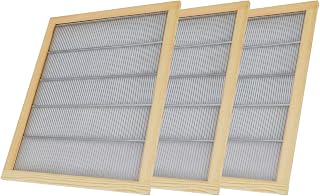 Wooden Bound Metal Queen Excluder 3 Pcs 8 Frames QueenCheck price on Amazon
HiveKeeperGear earns a commission when you buy through links on this site, at no extra cost to you. As an Amazon Associate I earn from qualifying purchases. Affiliate disclosure.
Before you buy: verify hive box width
Before selecting any queen excluder, confirm the width of your hive equipment. Langstroth hives standardly use 10-frame or 8-frame boxes, and excluders designed for 10-frame hives cannot fit 8-frame equipment. An excluder must match your box perimeter completely, resting flat across the upper brood box without gaps along the edges where a queen could bypass the grid into honey supers. Determining whether you manage 8-frame or 10-frame hives is the essential first step before choosing between metal and plastic materials.
Metal vs plastic queen excluder: direct comparison
Both metal and plastic excluders serve to confine the queen bee to the lower brood chambers while allowing smaller worker bees to pass upward into honey supers. However, their materials lead to noticeable differences in hive management, cleaning methods, and durability over multiple honey flows.
| Feature | Metal Queen Excluder | Plastic Queen Excluder | Relevant Guide |
|---|---|---|---|
| Durability | Rigid welded wire resists warping and wear across seasons | Flexible polymer sheet can curl or crack over time | 10-frame excluders |
| Hive tool cleaning | Tolerates firm scraping along wires to remove propolis | Scraping can gouge slots; soaking or freezing preferred | Hive tools guide |
| Worker passage | Rounded wires provide smooth edges for passing bees | Punched flat slot edges can create slight resistance | 8-frame excluders |
| Hive stability | Weight keeps the sheet seated flat in breezy conditions | Lightweight sheet can lift or shift during hive visits | Beehive frames guide |
| Off-season storage | Holds shape when stacked flat in an apiary shed | Needs careful flat storage to avoid permanent bending | Wooden vs plastic excluders |
1. Material build and frame rigidity
The physical distinction between these styles lies in material rigidity. Metal queen excluders are manufactured from steel wire grids, often treated with a corrosion-resistant galvanized finish. NUOMIC lists its 10-frame galvanized metal excluders with rounded wires and dimensions of 16.25 by 20 by 0.3 inches. For added edge protection, ECRIZA specifies secure metal edges across 4 sides on its 10-frame excluder measuring 20.08 by 16.14 inches. Welded wire grids and reinforced borders help metal excluders remain rigid and flat across hive boxes.
Plastic queen excluders consist of a single flat sheet of flexible polymer with punched slots. Because makers do not publish sheet thickness ratings across these listings, beekeepers evaluate them by material feel. While plastic will not rust or corrode, thin polymer sheets lack the rigid structure of welded wire. Over seasons of use and exposure to hive warmth or direct sunlight, plastic sheets can curl or warp along the edges if stored unevenly.
2. Hive tool cleaning and propolis care
Every honeybee colony coats hive equipment with propolis, a sticky resin collected from tree buds. During seasonal inspections and fall hive teardowns, removing propolis from an excluder is essential to maintain open passages for worker bees. Cleaning an excluder reveals a clear operational difference between metal and plastic designs.
Metal excluders tolerate direct maintenance. A beekeeper can rest a metal excluder on a flat surface and scrape along the wires with a hive tool to peel away propolis and wax buildup. Welded metal wires tolerate blade pressure that would damage softer materials. Plastic excluders require gentle handling during cleanup. The steel edge of a hive tool can pare away shavings of plastic or distort precision-punched slots. Expanding a slot allows the queen to slip into honey supers. Instead of scraping with sharp steel, beekeepers soak plastic excluders in warm water with washing soda or freeze them so brittle propolis can be flaked off by flexing the sheet.
3. Worker bee passage and comb building
An effective excluder must restrict the queen and drones while allowing foraging worker bees to move freely between boxes. Metal excluders feature cylindrical wires that offer minimal surface area contact. Worker bees slipping between rounded metal wires encounter smooth contours that cause little friction against their wings. BEEXTM notes that worker bees move smoothly between brood and super boxes through metal wire grids.
Plastic excluders are stamped from flat sheets, leaving square edges along the length of each slot. While worker bees navigate these openings successfully, the flat edges create slightly more resistance during periods of heavy foraging traffic. In some colonies, worker bees show initial reluctance to cross a plastic barrier into fresh supers, a behavior beekeepers describe as a honey barrier. When this happens, workers pack nectar into brood chambers below rather than moving into the honey supers. Providing a frame of drawn comb above the excluder helps draw bees upward across either material.
4. Weight, wind resistance, and hive handling
Handling qualities during regular yard inspections also distinguish these materials. Plastic excluders are light and easy to carry in stacks when managing multiple colonies. However, that light weight can become a nuisance on open apiary sites. A sudden gust of wind can lift a loose plastic sheet off an open hive box, scattering bees and disrupting an inspection.
Metal excluders provide substantial weight that keeps them seated on the hive rim even in breezy conditions. For example, NUOMIC lists a 2-pack of 10-frame galvanized metal excluders at 4.4 pounds, and a 4-pack of 10-frame excluders at 8.8 pounds. BEEXTM lists a 2-pack for 8-frame hives at 4.49 pounds, while witbee lists a 4-pack of 10-frame excluders at 10.27 pounds. When lifting an excluder off a brood box that has been sealed with propolis, a rigid metal excluder can be gently separated at the corners with a hive tool, whereas a flexible plastic sheet can bend abruptly when pulled, disturbing the colony.
5. Initial purchase cost and long-term value
The upfront price point is where plastic queen excluders hold an advantage. Manufacturing a stamped plastic sheet requires less raw material and fabrication labor than welding and plating a wire grid. For beekeepers assembling multiple hives at once or operating on a modest seasonal budget, plastic sheets reduce startup expenses.
Long-term value favors metal construction. While plastic excluders may crack, warp, or suffer slot damage after seasons of hive tool cleaning, galvanized metal excluders can serve in an apiary for years without losing structural integrity. Choosing durable metal equipment avoids periodic replacement and ensures consistent queen exclusion season after season.
A seasonal workflow with queen excluders
Early spring: leave excluders in storage during population buildup so the queen has full room to lay. Late spring flow: place the excluder above the brood chamber before adding honey supers, ensuring the queen is below. Midsummer: inspect supers to verify workers are moving through the grid to draw comb and store honey without crowding below. Late summer: pull supers for harvest and check the excluder for burr comb or trapped drones. Fall and winter: remove the excluder so the winter cluster can move up into honey stores without stranding the queen below.
Nice to have for excluder management
- A dedicated hive tool with a clean scraper edge to separate propolis seals at the box corners.
- A flat storage shelf or wooden box in your apiary shed to keep excluders level during winter months.
- A soft bee brush to gently sweep workers off excluder surfaces during hive teardowns.
- A wooden rim spacer to provide proper bee space above frame top bars on non-standard boxes.
- A shallow wash bin to soak plastic sheets in warm water for chemical-free propolis removal.
Keeping spare excluders stored flat ensures they maintain their original shape and sit tight across hive bodies when spring flows arrive.
What an excluder will not do
A queen excluder confines the queen to the brood chamber, but it will not prevent a colony from preparing to swarm if the brood nest becomes congested with bees and nectar. Managing colony room and monitoring brood expansion remain necessary tasks regardless of the excluder material you choose. We do not provide colony health, disease, or medical treatment advice. For assistance with colony health and seasonal management in your area, contact your local beekeeping association or state extension apiary program.
FAQs for beekeepers
Do metal queen excluders harm worker bees?
Smooth metal wire excluders allow worker bees to move between boxes with minimal friction. NUOMIC lists excluders with rounded wires and finished edges designed to reduce sharp contact points as bees pass through the grid into honey supers.
Can I clean a plastic queen excluder with a hive tool?
Avoid scraping plastic excluders with a steel hive tool because the metal blade easily shaves or widens the plastic slots. Expanding a slot allows the queen to pass into honey supers, so soaking the sheet in warm water or freezing it to flake off brittle propolis is much safer.
What dimensions do 10-frame and 8-frame queen excluders have?
Dimensions vary slightly by maker to match standard hive box rims. For 10-frame hives, BEEXTM lists an excluder at 20 by 16.14 inches, while NUOMIC lists an 8-frame excluder at 14 by 20 inches.
Why do bees sometimes avoid crossing a queen excluder?
Colonies occasionally hesitate to move through an excluder if supers contain only bare foundation rather than drawn comb. Adding a frame of drawn comb above the excluder encourages worker bees to move upward promptly and begin storing nectar.
Can a queen excluder remain on the beehive through winter?
Never leave an excluder on a hive during cold winter months. When honeybees form a winter cluster to stay warm, the cluster moves upward toward honey stores, and an excluder will trap the queen below where she can perish.
More hive guides
See every beehives guide and all Langstroth hives guides.
More picks: 10-frame queen excluders, 8-frame queen excluders, and wooden vs plastic queen excluders. New to beekeeping? Start with our beekeeping supplies for beginners.