Wooden vs Plastic Queen Excluder: Which One Should You Buy?
Compare wooden and plastic queen excluders by frame rigidity, bee space, durability, cleaning, and 10-frame hive fit to pick the right option for your honey supers.

On this page
Top picks at a glance
As an Amazon Associate I earn from qualifying purchases.
- 1
 Neorexon Adjustable Metal Hive Stand9.5/10View on Amazon
- 2
 Yinkin 6-Pack Plastic Queen Excluder for 10-Frame Hives9.5/10View on Amazon
- 3
 Wooden Bound Metal Queen Excluder 3 Pcs 8 Frames QueenView on Amazon
- 4
 Hoover Hives Deep Wooden Frames with Black PlasticView on Amazon
- 5
 BeeTech 10-Pack Medium Super Box Wooden Beehive Frames andView on Amazon
- 6
 BeeTech 10-Pack Deep Brood Box Wooden Beehive Frames and 100%View on Amazon
- 7
 10 Pack Bee Frames Medium UnassembledView on Amazon
During the spring nectar flow when colonies expand and honey supers go onto the hive, deciding between a wooden vs plastic queen excluder comes down to frame rigidity, bee space, and equipment care. For most backyard beekeepers, plastic queen excluders are the practical choice because seamless plastic sheets are lightweight, easy to clean by flexing, fit standard 10-frame hive bodies, and store flat in stacks. Wooden framed excluders remain the traditional option for beekeepers who want a rigid perimeter frame that maintains built-in bee space and prevents the grid from flexing under the weight of clustered bees and comb. We compared published manufacturer specifications for plastic excluder sheets and wooden framed excluders to clarify how each material performs across the season.
Other hives and gear to compare
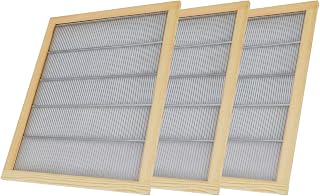 Wooden Bound Metal Queen Excluder 3 Pcs 8 Frames QueenCheck price on Amazon
 Hoover Hives Deep Wooden Frames with Black PlasticCheck price on Amazon
 BeeTech 10-Pack Medium Super Box Wooden Beehive Frames andCheck price on Amazon
 BeeTech 10-Pack Deep Brood Box Wooden Beehive Frames and 100%Check price on Amazon
 10 Pack Bee Frames Medium UnassembledCheck price on Amazon
HiveKeeperGear earns a commission when you buy through links on this site, at no extra cost to you. As an Amazon Associate I earn from qualifying purchases. Affiliate disclosure.
Before you buy: how queen excluders work
A queen excluder sits between the brood chamber and upper honey supers. Its slot openings allow worker bees to pass through to store surplus nectar, but block the larger queen bee from entering upper boxes. Confining the queen below prevents brood rearing in surplus honey frames, ensuring clean comb for extraction. The main choice is between a flexible plastic sheet laid across the hive opening and a framed wooden excluder with an integrated perimeter rim.
Wooden vs plastic queen excluder: comparison at a glance
| Feature | Wooden framed excluder | Plastic sheet excluder |
|---|---|---|
| Construction | Perimeter wood frame surrounding grid | Seamless molded plastic sheet |
| Bee space | Raised wood rim preserves space above top bars | Flat profile rests flush between box walls |
| Rigidity | Rigid wooden frame prevents sagging | Flexible sheet, can bow if unsupported |
| Cleaning | Scraped with a hive tool; avoid soaking wood | Flexed to pop off propolis; surface wipes clean |
| Hive fit | Rests on outer box walls with raised rim | Rests flush on outer box walls without rim |
| Storage | Raised rims require vertical shelf space | Stacks flat in minimal space |
1. Frame rigidity and bee space
The primary structural difference between these designs is the outer frame. A wooden excluder features an exterior wooden rim that rests squarely on hive box walls. This perimeter elevates the grid, maintaining clearance above brood frame top bars so worker bees move freely across the brood nest. The wooden frame also provides continuous rigidity, preventing the grid from sagging downward under the weight of clustered bees or burr comb between inspections beneath honey supers.
In contrast, a plastic queen excluder is a flat sheet without an exterior rim. It rests directly across the box opening, guiding worker bees through open grid slots into the super above. While plastic excluders remain flat across standard box widths, prolonged hive warmth can cause thin plastic to conform slightly to uneven top bars if frames are misaligned.
2. Durability and cleaning propolis
Honeybees coat interior equipment with propolis and burr comb, which narrows grid openings over an active season. Cleaning these deposits highlights the distinct maintenance needs of each material, an important consideration when cleaning beekeeping tools and equipment.
Plastic excluders simplify maintenance. Listing specifications from benefitbee highlight smooth, burr-free edges made from corrosion-resistant plastic that cleans by wiping with water for surface dirt and honey spills. Because propolis is resinous and insoluble in water, beekeepers clean propolis buildup by chilling the flexible plastic sheet and gently flexing it, popping brittle propolis away without damaging grid slots. Plastic also tolerates hive moisture without rotting.
Wooden framed excluders require mechanical scraping. Soaking wooden excluders in water can soften glued joints or warp the outer frame, and wood should not have prolonged water contact. Cleaning requires scraping propolis with a flat hive tool along the grid. While wood withstands hive tool prying during inspections, rough scraping can nick wooden edges or loosen grid wires over time.
3. Hive fit and handling in the bee yard
Proper fit on the hive body ensures worker bees pass through cleanly while the queen remains barred below. Published specifications for standard 10-frame Langstroth hive equipment show consistent sizing across major suppliers. Listing specifications for 10-frame plastic queen excluders demonstrate exact measurements: benefitbee publishes dimensions of 20 by 16 inches (51 by 41 cm) with an item weight of 2.2 pounds in a 12-piece set. Marsui lists plastic excluders measuring 20.1 by 16.5 inches (51 by 42 cm) with an item weight of 1.79 pounds in a 3-piece set alongside 3 wooden entrance reducers measuring 16.5 by 0.8 by 0.8 inches (42 by 2 by 2 cm). ShouRong lists a 10-piece pack of 10-frame excluders measuring 20 by 16.5 inches with a thickness of 0.12 inches and an item weight of 3.99 pounds. Generic lists a 10-frame plastic excluder measuring 20.08 by 16.54 by 0.12 inches.
Soft plastic excluder sheets, such as those listed by ShouRong and Generic, allow beekeepers to freely cut the material to fit customized or slightly irregular hive boxes. Wooden excluders cannot be trimmed because their rigid perimeter dimensions match square factory boxes. When outfitting standard boxes, beekeepers choose dedicated 10-frame queen excluders to prevent gaps along box walls.
4. Colony acceptance and honey flow
Worker bees sometimes hesitate to cross a new excluder, especially when honey supers contain bare foundation rather than drawn comb on beehive frames. Worker acceptance depends on grid spacing, edge smoothness, and nectar flow strength.
Grid edge quality influences bee movement. The listing for benefitbee emphasizes rounded, burr-free slot edges engineered to avoid scratching worker bee wings during foraging traffic. Traditional wooden excluders typically incorporate rounded metal wires or rigid inserts that offer minimal surface friction. To encourage rapid acceptance, place drawn comb directly above the excluder or install the grid during an active nectar flow when bees seek storage space.
5. Storage, weight and apiary management
Managing equipment outside the hive is a practical consideration for growing apiaries. Wooden excluders are bulkier and heavier. When you operate multiple hives, stacking wooden excluders during winter storage requires substantial vertical shelf space because raised rims prevent pieces from nesting flat.
Plastic excluders offer clear storage advantages. Thin plastic sheets stack together flat, occupying minimal room in an apiary shed. Low equipment weight also simplifies handling during inspections: Marsui lists a pack of 3 excluders with wooden reducers at 1.79 pounds, benefitbee lists 12 excluders at 2.2 pounds, and ShouRong lists 10 excluders at 3.99 pounds. For beekeepers outfitting complete Langstroth beehive kits, lightweight plastic sheets streamline seasonal storage.
When to install and remove queen excluders
Install the queen excluder in late spring after the colony has established brood in lower boxes and nectar begins coming in. Adding an excluder too early over an undersized brood nest can discourage workers from entering empty supers, increasing congestion below.
Always remove queen excluders in early fall when harvesting surplus honey. Never leave an excluder on a hive over winter. Honeybees form a winter cluster that moves upward through stored honey to stay warm. If an excluder remains in place, worker bees will move through the grid into upper honey boxes while the queen is trapped below, causing her to perish in cold temperatures.
Which queen excluder should you buy?
Choose a plastic queen excluder if you want an economical, lightweight solution that stacks flat and cleans easily. Plastic sheets from makers like benefitbee, Marsui, ShouRong, and Generic provide reliable queen exclusion for standard 10-frame boxes and clean up quickly by flexing, with soft plastic options from ShouRong and Generic allowing trimming if your boxes have irregular dimensions. Plastic suits beekeepers managing several hives who value simple maintenance and compact off-season storage.
Choose a wooden framed queen excluder if you prefer traditional wooden hive components with built-in bee space. The perimeter rim preserves clearance above brood frame top bars, preventing the grid from sagging under heavy comb. For beekeepers who want rigid equipment that stays firmly seated on box rims during inspections, wooden framed excluders deliver sturdy service.
Apiary tips for queen excluder success
- Confirm the queen is below the excluder before stacking honey supers so she is not trapped in upper boxes.
- Use a flat hive tool to break propolis seals at box corners rather than prying against the excluder grid.
- Store plastic excluders flat on a level shelf between seasons to prevent warping or creasing.
- Scrape wax burr comb and propolis from excluder slots before the spring flow to maintain clear worker passage.
What queen excluders do not do
While queen excluders separate brood from surplus honey frames, they do not replace routine colony management. An excluder does not prevent swarming if the brood nest becomes crowded, nor does it regulate hive ventilation. Equipment guides on HiveKeeperGear focus on physical hive components, not bee health treatments, medications, or pest controls. For regional management schedules and colony health advice, consult your local beekeeping club or extension office.
FAQs for beekeepers
Do plastic queen excluders harm worker bees?
Quality plastic excluders feature rounded, burr-free edges designed to allow worker bees to pass without damaging wings. Benefitbee specifies smooth plastic grids that protect foragers during heavy nectar flows while keeping the queen confined below.
Can a plastic queen excluder be cut to fit custom hive boxes?
Certain soft plastic models, such as those from ShouRong and Generic, can be trimmed along the edges to fit custom hive dimensions. Rigid plastic models and wooden framed excluders have fixed exterior dimensions and cannot be resized.
Why must queen excluders be removed before winter?
During cold weather, the honeybee cluster moves upward through stored honey frames to feed and maintain warmth. If an excluder remains on the hive, worker bees will move through the grid into upper boxes while the queen is blocked below, causing her to perish from cold.
How do you clean propolis off plastic compared to wooden excluders?
Plastic excluders can be flexed so brittle propolis cracks and flakes away, while surface residues wipe clean with water as listed by benefitbee. Wooden framed excluders should be scraped by hand with a hive tool rather than soaked, as water can loosen wood joints and warp the outer frame.
What are the dimensions of a 10-frame queen excluder?
Published manufacturer specifications for 10-frame hives include benefitbee at 20 by 16 inches (51 by 41 cm), Marsui at 20.1 by 16.5 inches (51 by 42 cm), ShouRong at 20 by 16.5 inches with a thickness of 0.12 inches, and Generic at 20.08 by 16.54 inches.
More hive guides
Browse every guide by category: beehives, Langstroth hives, hive tools and honey harvesting.
More picks: explore our guides to 8-frame queen excluders, 10-frame beehive dimensions, hive entrance reducers, and beekeeping supplies for beginners.