Plastic Queen Cage vs Wooden Queen Cage: Which One Should You Buy?
A comparison of plastic and wooden queen cages for queen introduction, examining candy tube timing, screen mesh protection, hive frame fit, and reusable apiary durability.

On this page
Top picks at a glance
As an Amazon Associate I earn from qualifying purchases.
- 1
 Walfront Queen Bee Rearing Kit9.5/10View on Amazon
- 2
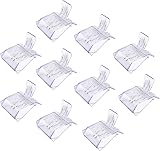 Flexzion Queen Bee Catcher ClipsView on Amazon
- 3
 Sweet Bee 50 pcs JZBZ Queen cage Plastic Hair Roller CagesView on Amazon
During spring buildup or late-summer requeening, introducing a new queen safely is a pivotal apiary task. When weighing a plastic queen cage vs wooden queen cage, choose plastic queen cages if you want reusable, washable equipment with molded candy tubes for multiple seasons, or choose wooden queen cages if you prefer the traditional, biodegradable standard favored by commercial breeders for one-time shipments. Both styles protect the queen while colony workers adjust to her scent, but they differ in durability, sanitation, candy release channels, and frame spacing.
Other hives and gear to compare
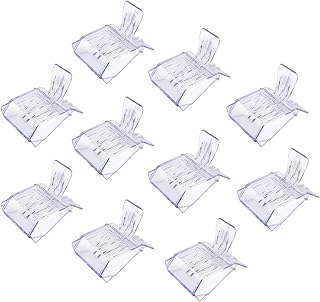 Flexzion Queen Bee Catcher ClipsCheck price on Amazon
 Sweet Bee 50 pcs JZBZ Queen cage Plastic Hair Roller CagesCheck price on Amazon
HiveKeeperGear earns a commission when you buy through links on this site, at no extra cost to you. As an Amazon Associate I earn from qualifying purchases. Affiliate disclosure.
Before you buy: how queen introduction cages work
A queen introduction cage protects an unfamiliar queen while resident worker bees accept her scent. Releasing a queen directly onto the comb risks workers balling and killing her. Confining her inside a protective cage allows nurse bees to feed her through the openings and receive her queen mandibular pheromone without stinging her.
Most introductions rely on a slow candy release. The cage opening is filled with firm sugar candy. Over several days, resident worker bees chew through the candy plug from the outside to release the queen. By the time the channel clears and the queen steps onto the comb, the colony has accepted her scent.
Plastic queen cage vs wooden queen cage comparison
Choosing between plastic and wooden cages comes down to whether you want reusable apiary gear or disposable mailing cages. Comparing their core specifications highlights how their materials impact daily hive management:
| Feature | Plastic queen cage | Wooden queen cage | Apiary consideration |
|---|---|---|---|
| Construction | Molded rigid polymer or ABS plastic | Solid milled wood block with wire screen | Plastic resists moisture; wood is biodegradable |
| Candy release | Molded candy tube with break-off cap | Bored wooden tunnel with cork plug | Plastic provides uniform channels; wood requires pulling corks |
| Sanitation | Washable in hot water and hive sanitizer | Porous wood absorbs wax, propolis, and moisture | Plastic allows multi-season reuse; wood is single-use |
| Frame fit | Varies from flat cages (such as LAPXSNZD at 2.6″ X 1″ X 0.58″) to round roller models | Uniform rectangular wood block profile | Flat cages slip between frames; round cages require cell bar mounts |
| Worker contact | Molded slots and ventilation holes | Woven wire mesh screen stapled over face | Both allow nurse bees to feed the queen safely through gaps |
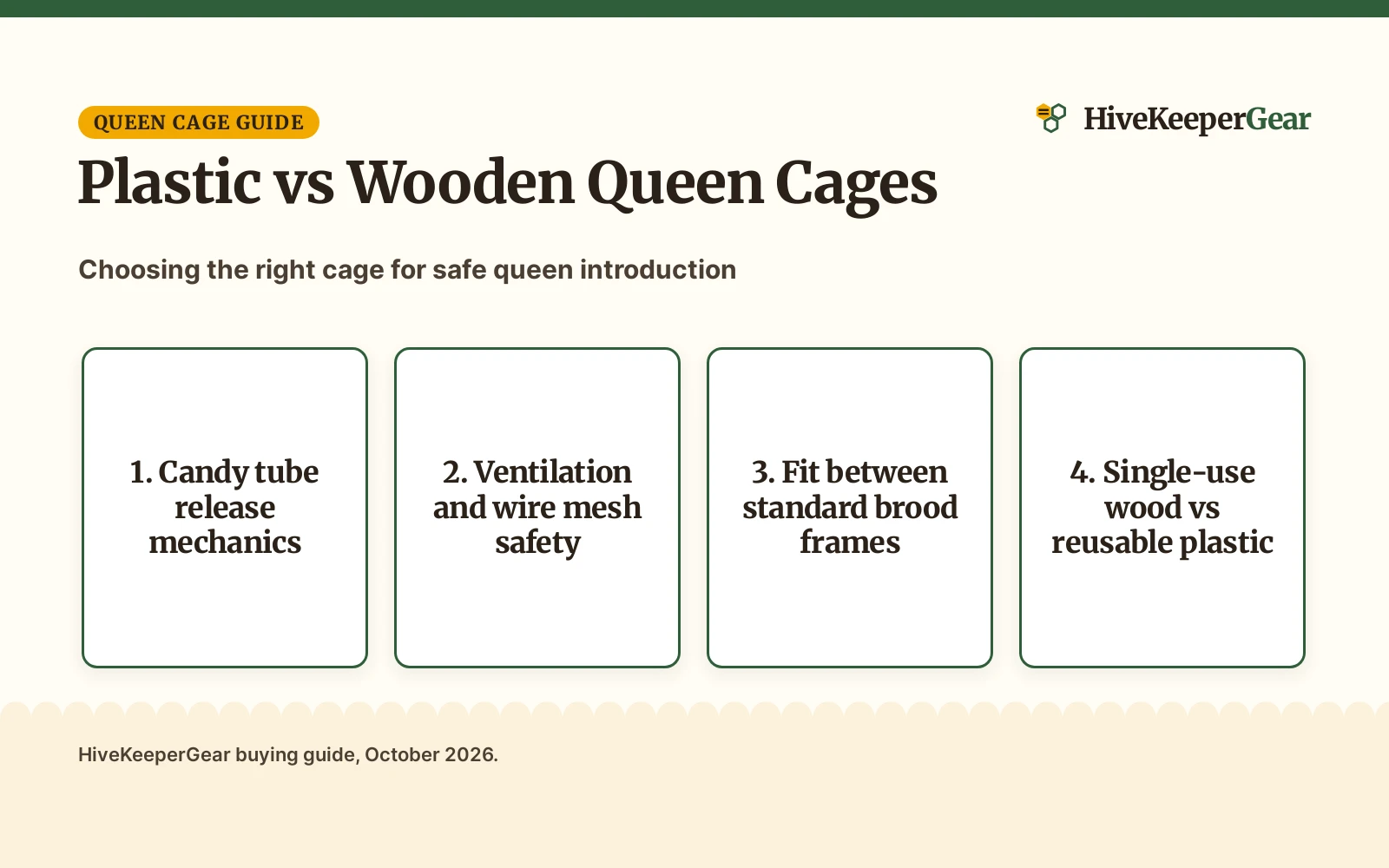
1. Candy tube and slow release mechanics
The candy release mechanism governs how quickly bees free their new queen. In traditional wooden cages, a hole is drilled through one end of the block. Queen breeders pack this tunnel with sugar fondant and seal it with a cork. When installing the cage, the beekeeper removes only the cork over the candy end. If the candy dries out, bees struggle to chew through; if too soft, workers hollow it out before accepting her.
Plastic cages standardize this release channel through precision molding. Many models feature an integrated candy tube with a snap-off cap. For instance, the LAPXSNZD plastic cage includes an outer tube size of approximately 0.88″ X 0.46″ to hold candy securely. Other designs, like the yellow cage from APlayfulBee with dimensions of 8 x 3.8 x 2cm, include dedicated compartments for the queen and 10 bees along with secure candy chambers. Non-porous plastic walls do not wick moisture from fondant, helping candy maintain its intended consistency.
2. Ventilation, screen mesh, and worker bee contact
A queen cage must balance airflow and antennal contact with physical protection. Wooden cages use a woven metal wire screen stapled across the face of the wood block. The wire mesh allows colony bees to cluster tightly, pass nectar, and sample pheromones, though rough wire edges can snag bees if not neatly trimmed.
Plastic cages replace wire screens with molded perimeter slots. Makers like RyanDesign produce ABS plastic cages weighing 0.317 ounces in a 6-Pack with precision ventilation slots designed to protect queens during transport and hive integration. Smooth molded plastic surfaces have no sharp wire burrs to injure bees, while slotted grills allow nurse bees to feed the queen nectar while preventing hostile workers from entering.
3. Fit between brood frames and hive spacing
To keep the queen warm, the cage should sit in the center of the brood cluster between two drawn combs, with the candy end angled upward. Rectangular wooden cages have a uniform block thickness. Suspended between frames, the wood body can push adjacent top bars apart if frames are crowded, prompting bees to build irregular burr comb that can crush bees during later inspections.
Plastic cages vary by design. Flat plastic introduction cages, such as LAPXSNZD models measuring 2.6″ X 1″ X 0.58″, offer a slim profile that slips between combs with minimal frame displacement, preserving proper bee space between wax faces. In contrast, cylindrical roller cages (such as MIZORLIE models with a 2.6cm diameter) are wider and designed for cell bar fixtures or pressing into comb. When working with beehive frames, selecting the right cage style maintains an orderly brood nest. Our guide on a push in queen cage vs roller cage explores alternative options that press directly over existing brood comb.
4. Durability, sanitation, and apiary reuse
Apiary hygiene is a key factor when choosing between reusable equipment and disposable cages. Wood is porous, absorbing propolis, wax, moisture, and queen pheromones. If a colony suffers from mold in damp weather, cleaning a wooden cage thoroughly without warping the wood or rusting staples is nearly impossible, making wooden cages single-use items.
Plastic queen cages excel in durability and repeated sanitation. Rigid plastic and ABS polymer resist propolis and do not rot. After an introduction, you can soak plastic cages in warm water, scrub away wax, and sanitize them for future apiary tasks. For beekeepers raising queens or splitting hives throughout the season, reusable plastic equipment lowers recurring costs. Using a clean hive tool to scrape propolis off plastic lugs keeps them ready for repeated inspections.
5. Queen mailing and shipping protection
When purchasing mated queens through the mail, packaging must survive postal transit and temperature shifts. Wooden cages remain the industry standard for shipping. Thick wooden walls provide natural thermal insulation against sudden cold snaps or hot delivery trucks, protecting the queen from external crushing during transit.
Plastic cages are widely utilized for local transport, queen banking, and queen rearing systems. Cylindrical roller cages, such as MIZORLIE cages measuring 2.6cm in diameter and 7.8cm in height sold in a 20pcs pack, or alblinsy roller cages measuring 7.6cm X 2.6cm in a 30pcs set weighing 7.4 ounces, clip directly onto cell bar fixtures. Similarly, Lucky Farm provides queen cages with cell cups measuring 1X1X1cm/0.4X0.4X0.4in in sets of 20pcs for banking queens inside nursery colonies.
A seasonal timeline for queen introduction
Spring buildup: inspect overwintered colonies for queen performance. If a hive is queenless or failing, order a replacement queen and prepare your protective gear, candy supplies, and cages. Installation day: remove the old queen if present, wait briefly for the colony to sense queenlessness, and position the caged queen between central brood combs with the candy end pointing upward so dead bees cannot block the release hole. Midweek check: inspect the candy plug without pulling frames to confirm workers are chewing candy calmly rather than biting at the cage mesh. Release and laying: verify the queen has walked out into the brood nest, remove the empty cage, push frames back to standard bee space, and leave the colony undisturbed while the new queen establishes her laying pattern.
Nice to have in the bee yard
- A dedicated queen catcher, such as the ROYHOO transparent clip with dimensions of 2.6in * 2in * 1.89in and a slot gap size of 0.15 in, allows worker bees to escape while capturing the queen safely during inspections; see our guide on a one handed queen catcher vs marking tube for marking options.
- Extra cage corks or wooden plugs to seal candy tubes temporarily during transport.
- Prepared queen candy stored in an airtight container for refreshing plugs.
- A clean queen rearing kit for propagation; read our overview on how to use a queen rearing kit for colony management.
- A fine wire hanger to suspend cages securely between top bars without slipping to the bottom board.
Keeping queen management tools in your toolbox ensures unexpected queen failures or split opportunities can be handled calmly without scrambling for supplies.
What is not included with queen cages
Queen cages are sold as empty enclosures. They do not come with live queens or worker attendants, which must be purchased separately from local apiaries or commercial queen breeders. Many cages also do not include prepared candy fondant, requiring beekeepers to fill candy chambers prior to introduction. We cover equipment specifications only and do not provide veterinary or chemical treatment recommendations. For colony health questions, consult your state apiary inspector or local extension office.
FAQs for beekeepers
Should a beginner beekeeper choose a plastic queen cage or a wooden queen cage?
Beginners usually receive wooden cages from breeders with package bees or replacement queens, which work reliably for single introductions. If you plan to raise queens or split hives regularly, reusable plastic cages make long-term cleaning and storage much easier.
Can you clean and reuse a wooden queen cage?
Reusing wooden queen cages is generally discouraged because porous wood absorbs propolis, wax, and moisture that cannot be sterilized effectively without warping wood or rusting staples. Plastic cages can be washed in warm water and sanitized for repeated seasons.
How does candy stay in place inside a plastic queen cage?
Plastic queen cages utilize molded internal chambers or designated candy tubes, such as the 0.88″ X 0.46″ outer tube on LAPXSNZD cages, that hold sugar paste securely so nurse bees can chew through from the outside without candy collapsing inward.
Do plastic queen cages disrupt the spacing between hive frames?
It depends on the cage design. Flat plastic introduction models, such as LAPXSNZD cages measuring 2.6″ X 1″ X 0.58″, slip between frames with little comb disruption, whereas cylindrical roller cages measuring 2.6cm in diameter require wider frame spacing or dedicated cell bar frames.
Can attendant bees be placed inside plastic queen cages?
Yes, many plastic cages are proportioned to house attendant worker bees alongside the queen during transit. For example, APlayfulBee lists a yellow cage sized at 8 x 3.8 x 2cm with capacity for a queen and 10 bees to keep her fed and groomed during shipping.
More hive guides
Browse every guide by category: beehives, protective gear, hive tools and honey harvesting.
More picks: compare push in queen cages vs roller cages, discover the best queen catcher options for your apiary, or review plastic vs wood bee frames. New to beekeeping? Start with our beekeeping supplies for beginners checklist.