Pullover vs Zippered Bee Jacket: Which One Should You Buy?
A side-by-side comparison of pullover and zippered bee jackets for apiary inspections, covering closure security, ease of removal, ventilation, and pocket storage.

On this page
Top picks at a glance
As an Amazon Associate I earn from qualifying purchases.
- 1
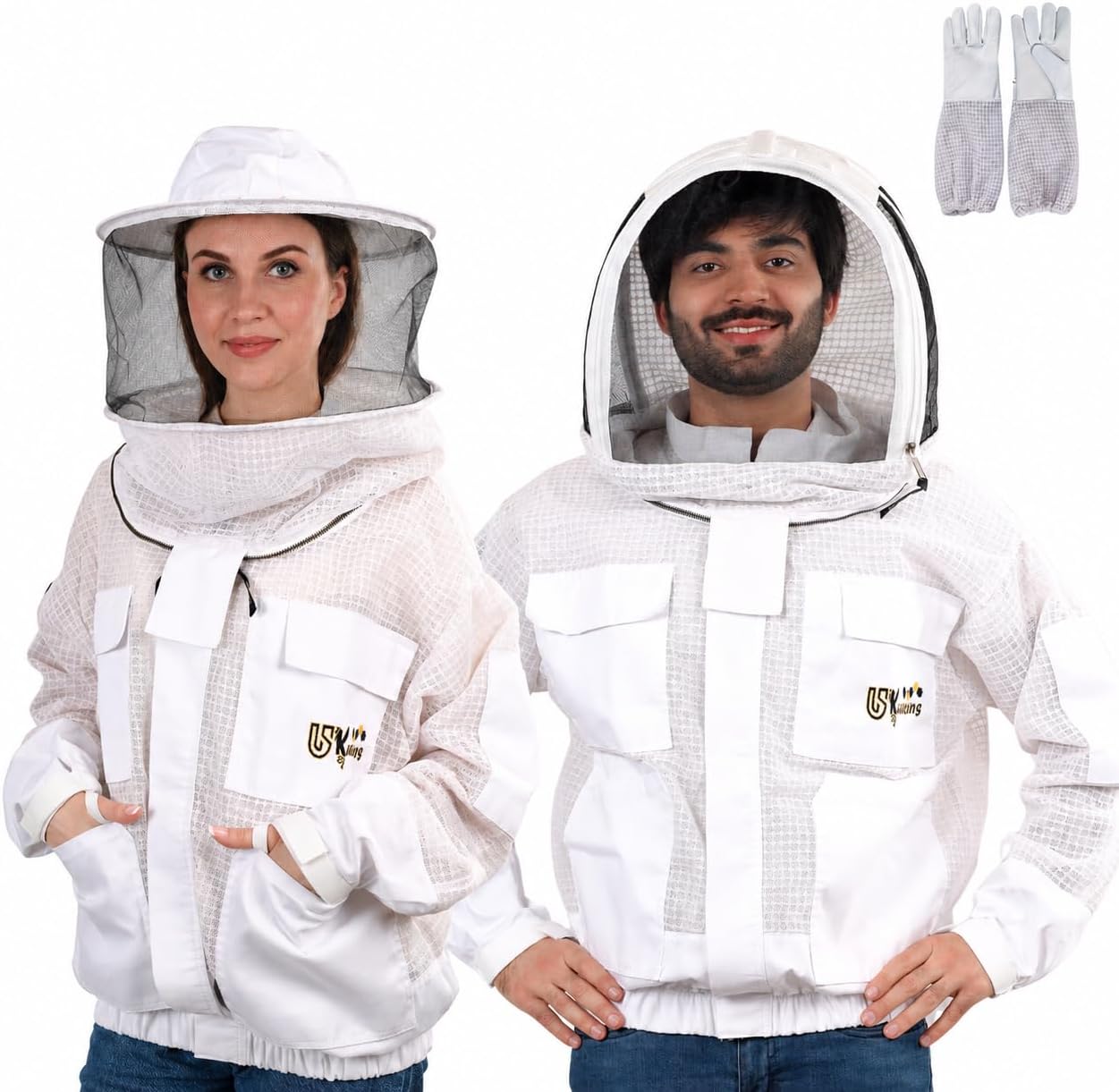 3 Layer Ventilated Sting Proof Bee Jacket for Men & Women9.7/10View on Amazon
- 2
 3 Layer Ventilated Sting Proof Bee Jacket for Men & Women9.7/10View on Amazon
- 3
 Beekeeping Ventilated Jacket 3 Layers Mesh for Beekeepers9.7/10View on Amazon
- 4
 VIVO Professional XL Beekeeping Suit JacketView on Amazon
- 5VIVO Professional L Beekeeping Suit WhiteView on Amazon
- 6
 VIVO Professional White XXL Beekeeping SuitView on Amazon
- 7
 Ventilated Beekeeping JacketView on Amazon
- 8
 Brutul Bee 3 Layer Beekeeping Ultralight Ventilated JacketView on Amazon
- 9
 Humble Bee 310 Polycotton Beekeeping Jacket with Round VeilView on Amazon
When stepping into the apiary during warm weather inspections, choosing a pullover vs zippered bee jacket comes down to whether you prefer an unbroken front panel or the convenience of a full-length zipper. For most backyard beekeepers, a zippered jacket is the more practical choice because it slips off easily when you overheat, whereas a pullover smock provides a simpler build with fewer parts to catch propolis. We compared both designs across closure styles, fabric weights, ventilation, and veil attachments to help you decide which style fits your apiary routine.
Other hives and gear to compare
 VIVO Professional XL Beekeeping Suit JacketCheck price on Amazon
- VIVO Professional L Beekeeping Suit WhiteCheck price on Amazon
 VIVO Professional White XXL Beekeeping SuitCheck price on Amazon
 Ventilated Beekeeping JacketCheck price on Amazon
 Brutul Bee 3 Layer Beekeeping Ultralight Ventilated JacketCheck price on Amazon
 Humble Bee 310 Polycotton Beekeeping Jacket with Round VeilCheck price on Amazon
HiveKeeperGear earns a commission when you buy through links on this site, at no extra cost to you. As an Amazon Associate I earn from qualifying purchases. Affiliate disclosure.
Before you buy: assess your yard routine
Before choosing a jacket, consider your local climate and how you manage inspections throughout the season. In spring buildup, colony checks are brief and temperatures are mild. As the summer nectar flow arrives, lifting heavy boxes in high heat makes quick ventilation essential. While full coverage suits protect the entire body, many beekeepers prefer waist-length jackets for standard hive maintenance. Our bee suit vs bee jacket guide compares both silhouettes, and our roundup of the best beekeeping jacket options reviews top designs.
Pullover vs zippered bee jacket: key differences compared
Both designs protect your upper body, but their closures create distinct trade-offs in comfort and handling. The table below outlines how slip-on smocks compare with front-zip jackets.
| Feature | Pullover bee jacket | Zippered bee jacket | Our guide |
|---|---|---|---|
| Front closure | Solid fabric panel without front zipper | Full-length front zipper track | Bee jackets |
| Garment removal | Pulls over head and shoulders | Opens down center front | Bee suits |
| Fabric options | Common in lightweight polyester or cotton | Available in canvas and ventilated mesh | Ventilated bee jackets |
| Veil options | Zippered hood or attached veil | Detachable fencing or round veil | Bee veils |
| Pocket layout | Single large front pocket | Multiple separate pockets | Hive tools |
1. Front closure and seal integrity
The main difference between these jackets is the front closure. A pullover jacket uses a continuous front panel of fabric across the chest and torso. Without a front zipper, there are no zipper teeth for bees to explore and no slider mechanisms to gum up with propolis. For keepers seeking an unbroken front shield, a slip-on smock offers dependable simplicity.
Zippered jackets rely on a center front zipper to join the garment. To maintain safety, makers use protective fabric flaps behind the zipper track to block crawling bees. For example, FOREST BEEKEEPING SUPPLY lists a canvas jacket with a brass zipper and a shoulder-to-bottom-hem length of 32 inches on size Large. Robust metal zippers hold up against sticky propolis far better than delicate plastic coils.
2. Putting on and taking off
Putting on a pullover jacket requires pulling the entire garment over your head and shoulders. If you wear glasses or headwear, sliding the collar past your face requires care so gear is not knocked loose. Taking off a damp pullover after yard work can be awkward, as pulling the fabric upward risks brushing hive debris near your face.
Zippered jackets put on and take off like an everyday coat. Stepping away from the hives and unzipping the front provides immediate cooling relief. Sleeve measurements also reflect the relaxed cut needed for movement. For example, VIVO lists sizing measurements of 22.5 inches from shoulder to elastic sleeve on its Medium pullover jacket and 29 inches on its X-Large jacket.
3. Ventilation and fabric materials
Hive inspections on sunny afternoons generate considerable body heat. Many pullover smocks are made from lightweight woven fabrics such as polyester, providing a flexible layer that packs easily into an apiary tote.
Zippered jackets are available in both traditional canvas and multi-layer ventilated mesh. For example, BeeProGear lists a 3-layer ventilated mesh jacket made from 80 percent polyester and 20 percent cotton. Similarly, USKEEPERS lists a 3-layer ventilated jacket using three layers of raised fabric to keep bees away from skin while permitting airflow. Keepers working humid summer flows often prefer these mesh options, as explored in our comparison of a cotton vs ventilated bee suit and our review of ventilated bee suits.
4. Pockets and hive tool storage
Accessible pockets keep hive tools and small equipment ready while handling frames. Pocket styles differ between designs. For example, VIVO lists a 7-inch front pocket on its Medium pullover jacket and an 8-inch front pocket on its X-Large jacket, offering a single central space for markers or small accessories.
Zippered jackets often distribute storage across several dedicated pockets. USKEEPERS lists 6 pockets on its zippered jacket, including 2 front pockets with hook-and-loop flaps to secure gear when bending over boxes. Keeping your sharp hive tools separated prevents damage to fragile equipment. Fabric weight also factors into how pockets hang when loaded; for example, FOREST BEEKEEPING SUPPLY lists an item weight of 2 pounds for its canvas jacket, reflecting the substantial feel of raw cotton canvas.
5. Veil options and neck closure
Both jacket styles connect veils around the collar with perimeter zippers that close securely against bees. However, zippered jackets more frequently feature interchangeable veils, allowing beekeepers to select between fencing hoods and round hats.
Fencing veils fold back cleanly when unzipped, while round veils use a circular brim to hold mesh away from the face and neck. USKEEPERS lists 2 veils with its jacket, providing both a fencing veil and a round veil with 360-degree mesh for open sightlines across brood combs. To understand how these styles compare during inspections, see our guide on the fencing veil vs round veil.
Choosing the right jacket for your apiary
Your choice between a pullover and a zippered jacket depends on your inspection routine and yard conditions.
Choose a pullover bee jacket if: you want a simple, lightweight protective smock with no front zipper to maintain. Pullover designs fold down compactly and provide an unbroken front torso panel. They suit beekeepers who prefer minimal hardware and do not mind pulling the garment over their head at the end of an inspection.
Choose a zippered bee jacket if: you want convenient removal, multiple pockets, and ventilated mesh options. Being able to unzip the front once clear of the hives provides rapid cooling during hot summer afternoons. Zippered jackets also offer greater versatility with interchangeable veil configurations.
Key features to look for
When comparing bee jackets of either design, check for these practical yard features:
- Elastic thumb loops: Loops at the cuffs stop sleeves from riding up your arms when lifting hive bodies.
- Zipper cover flaps: Hook-and-loop tabs over veil zipper ends cover small gaps where pullers meet.
- Sturdy metal zippers: Large brass or metal sliders resist sticking from propolis better than small plastic coils.
- Detachable veils: Veils that unzip completely allow the jacket body to be washed without damaging wire or mesh.
- Reinforced pockets: Double-stitched pocket corners support the weight of heavy steel hive tools.
What a bee jacket does not replace
A bee jacket protects your head, neck, and torso, but leaves your legs dependent on regular work pants. When managing defensive hives, hiving swarms from brush, or moving hives, a full suit provides complete ankle-to-neck coverage. Our guide to the best beekeeping suit options covers full suits in detail.
Always combine your jacket with protective gloves, reviewed in our best beekeeping gloves guide, and a reliable smoker, detailed in our bee smokers guide. Protective garments complement gentle handling and steady smoking. We cover equipment specifications only and provide no veterinary or medical advice. For colony health questions, contact your local extension office or state apiary inspector.
FAQs for beekeepers
Can bees sting through a pullover bee jacket?
Bees can sting through single-layer fabric if the cloth is pulled taut against the skin. Wearing loose clothing underneath helps prevent stings, while multi-layer ventilated designs use raised fabric to keep distance from the skin.
Is a pullover or zippered bee jacket easier to wash?
Washing requirements depend on the garment construction and maker instructions. For example, VIVO specifies hand washing for its polyester pullover jacket and hood, whereas FOREST BEEKEEPING SUPPLY notes that its canvas jacket is machine washable after removing the veil.
Which jacket style is better for hot summer inspections?
Zippered jackets offer more flexible temperature control because you can unzip the front to cool down as soon as you step away from the hives. Pullover smocks cannot be opened down the chest for quick venting and must stay on until you pull the garment over your head.
Do pullover bee jackets have pockets for hive tools?
Pocket arrangements vary by model. For example, VIVO lists a 7-inch front pocket on its Medium pullover jacket and an 8-inch pocket on its X-Large jacket, whereas zippered jackets typically offer multiple separate pockets for organizing tools.
How should a beekeeping jacket fit?
A bee jacket should fit loose across the chest and shoulders so fabric does not stretch taut when bending over hives. Loose sizing also ensures elastic cuffs and waistbands remain firmly seated during inspections.
More hive guides
Browse every guide by category: beehives, protective gear, hive tools and honey harvesting, or explore our dedicated bee jackets and veils section.
More protective gear: see our bee jacket guide, ventilated bee jacket guide, and bee suit guide. New to beekeeping? Start with our beekeeping supplies for beginners checklist.