Solar vs Electric Wax Melter: Which One Should You Buy?
A comparison of solar and electric wax melters for backyard beekeepers, covering heat sources, batch speeds, wax clarity, and setup needs.

On this page
Top picks at a glance
As an Amazon Associate I earn from qualifying purchases.
- 1
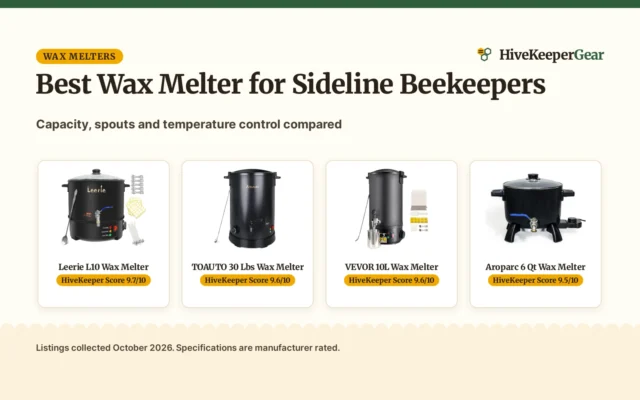
 Leerie L10 Commercial Wax Melter with Heated Faucet and9.7/10View on Amazon
- 2
 VOISEN Wax Melter for Candle MakingView on Amazon
- 3
 OFFNOVA Wax Melter for Candle MakingView on Amazon
- 4
 Yuuchail Wax Melter for Candle MakingView on Amazon
- 5
 TOAUTO 8Lbs Electric Wax Melter for Candle MakingView on Amazon
- 6
 TOAUTO 20Lbs Digital Wax Melter for Candle Making CommercialView on Amazon
- 7
 TOAUTO 30Lbs Digital Commercial Wax Melter for Candle MakingView on Amazon
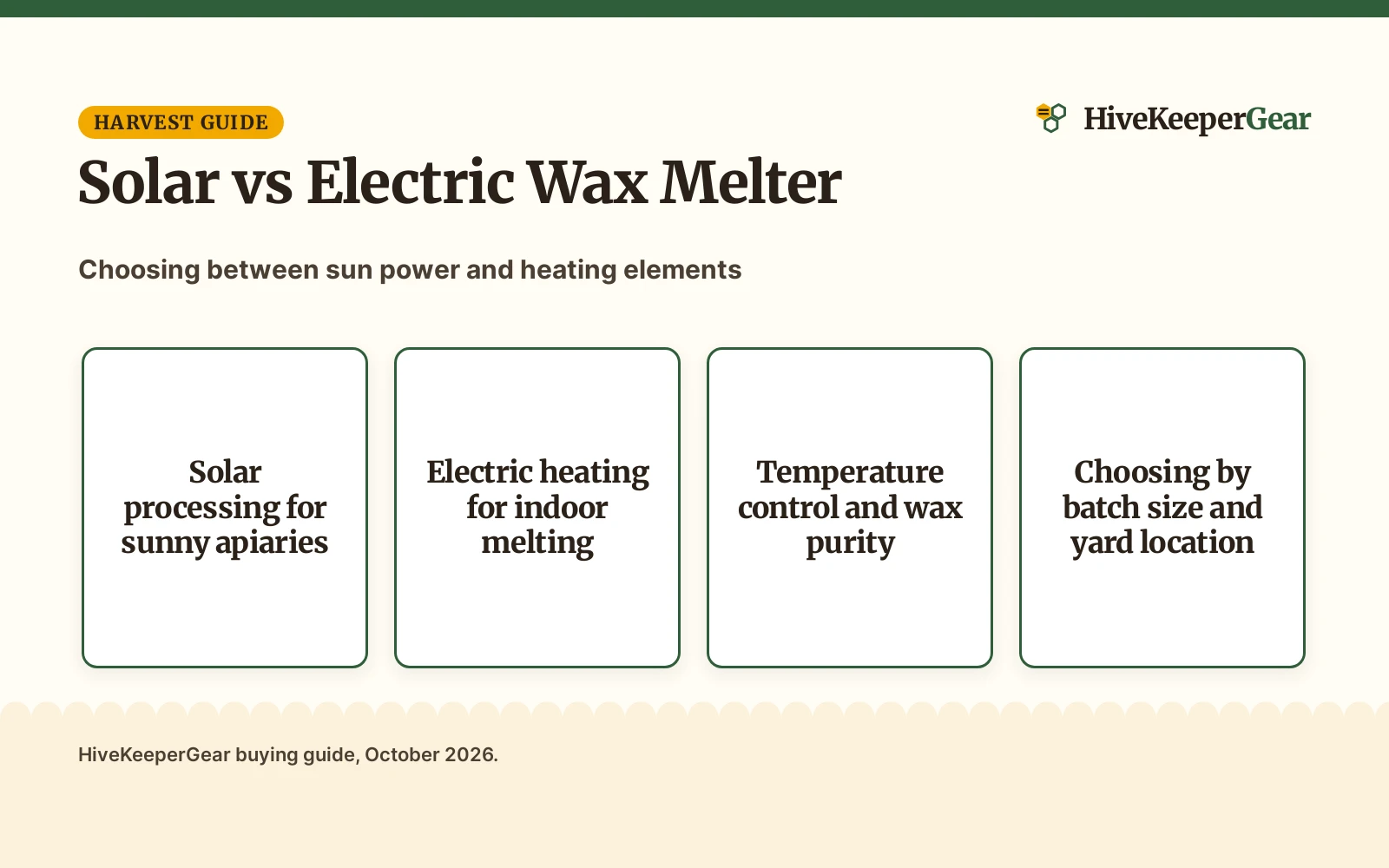
After extracting honey late in the summer flow, beekeepers face tubs of sticky cappings and scrapings that need rendering, bringing up the choice of a solar vs electric wax melter. If you manage a small backyard apiary and process wax during warm, sunny weather, a solar wax melter is the practical choice because sunlight provides free heat and produces clean, light-colored wax without electricity. An electric wax melter suits beekeepers who manage larger apiaries, need to process wax indoors, and prefer steady heat on demand.
Other hives and gear to compare
 VOISEN Wax Melter for Candle MakingCheck price on Amazon
 OFFNOVA Wax Melter for Candle MakingCheck price on Amazon
 Yuuchail Wax Melter for Candle MakingCheck price on Amazon
 TOAUTO 8Lbs Electric Wax Melter for Candle MakingCheck price on Amazon
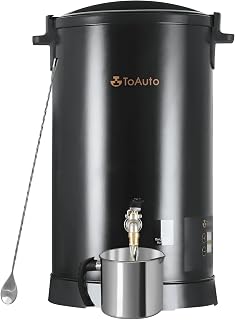 TOAUTO 20Lbs Digital Wax Melter for Candle Making CommercialCheck price on Amazon
 TOAUTO 30Lbs Digital Commercial Wax Melter for Candle MakingCheck price on Amazon
HiveKeeperGear earns a commission when you buy through links on this site, at no extra cost to you. As an Amazon Associate I earn from qualifying purchases. Affiliate disclosure.
Solar vs electric wax melter: key differences
Both tools liquefy raw combs, burr comb, and cappings so pure beeswax separates from slumgum and propolis. The key distinction lies in the heat source and operating environment. A solar melter uses passive sunlight trapped under a clear lid outdoors, while an electric melter relies on an internal heating element indoors.
| Feature | Solar Wax Melter | Electric Wax Melter | Best Fit |
|---|---|---|---|
| Heat source | Direct sunlight under glazed lid | Electric heating element | Solar for off-grid; electric for power |
| Location | Outdoors in full sun | Indoors in workshop or honey house | Solar keeps mess outside; electric avoids rain |
| Season | Warm months with clear skies | Year-round on demand | Solar for summer; electric for winter |
| Wax clarity | Slow drip with natural solar bleaching | Fast melting through straining screens | Solar for pale wax; electric for speed |
| Power cost | Free solar energy | Standard household electricity | Solar saves power; electric saves daylight |
| Apiary scale | Small backyard apiaries | Expanding apiaries with heavy cappings | Solar for hobbyists; electric for volume |
Understanding these practical differences helps you decide how wax rendering fits into your seasonal apiary routine. When your uncapping tub fills during harvest, having the right melter ready keeps wax processing from becoming an overwhelming bottleneck.
How solar wax melters work
A solar wax melter relies on the greenhouse effect to transform solar radiation into usable heat. The unit consists of an insulated box, a dark metal drip tray, an angled glass or polycarbonate lid, and a collection pan placed at the lower end. Beekeepers set the melter in an open apiary area receiving direct sunlight, angling the glass face toward the sun.
Raw cappings sliced off with an uncapping knife rest on the upper metal tray, lined with cheesecloth or fine filter fabric. As sunshine penetrates the glazed cover, interior air warms past the melting point of beeswax. The wax softens, liquefies, and slowly runs down the sloped tray into the catch pan below, leaving slumgum and debris behind on the cloth filter.
The slow pace of solar melting provides a distinct benefit: natural bleaching. Sun exposure lightens beeswax naturally, producing pale, fragrant blocks that look appealing for crafts without scorching.
How electric wax melters work
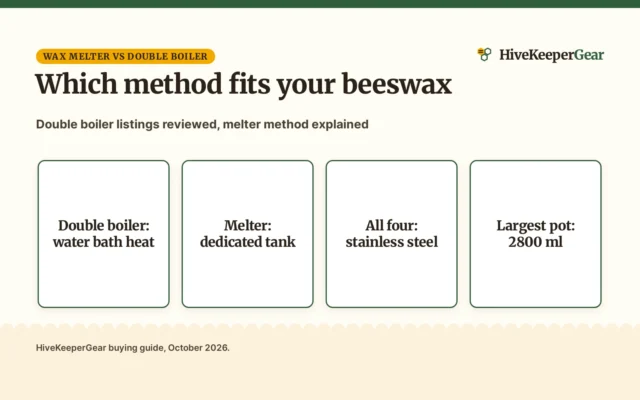
Electric wax melters bypass the weather entirely by generating controlled heat through an internal electrical element. These units range from insulated melting tanks with heating coils to water-jacketed melters where hot water transfers heat evenly through stainless steel walls. A beekeeper plugs the unit into an outlet and renders wax whenever convenient.
Operation is fast and predictable. The beekeeper loads cappings or comb directly into the melting chamber, resting inside a stainless strainer basket or mesh filter bag. As the heating element warms, wax melts rapidly and drips into a settling tank or drain spout. An adjustable thermostat dial allows the operator to maintain steady heat without burning the wax.
For beekeepers who harvest honey with a honey extractor, an electric melter keeps pace with extracting days, rendering cappings on the same afternoon without checking cloud forecasts.
Wax clarity, temperature control, and purity
Wax quality depends on temperature management and effective filtration. Beeswax darkens and loses its honey aroma if overheated. Both solar and electric melters preserve wax quality when managed properly, but each system approaches heat differently.
Solar melters provide self-regulating heat. Because energy input is limited by ambient sunlight, temperatures stay moderate. The slow flow down the sloped pan allows liquid wax ample time to filter through cloth, producing clean wax with minimal sediment. Sunlight also bleaches yellow pigments, turning golden wax into a lighter shade.
Electric melters excel at consistency. A steady thermostat prevents hot spots that can scorch the bottom of a dry pan. Water-jacketed models offer uniform heat transfer, wrapping the wax chamber in a buffer of hot water. To achieve high clarity in an electric melter, run the molten wax through a fine honey strainer before pouring it into cooling molds.
Apiary size and harvest workflow
Matching your wax melter to your apiary size ensures that processing wax remains manageable. A hobby beekeeper keeping a small cluster of hives in the backyard produces modest amounts of wax each summer, mostly cappings and burr comb. For this volume, a solar melter is ideal. You load fresh cappings into the unit after an inspection, close the glazed lid, and let the sun work while you clean other gear.
As apiary operations expand and you harvest multiple supers of honey, cappings accumulate faster than a solar tray can process. Waiting for sunny days during an unsettled autumn can delay comb rendering, leaving sticky wax exposed to pests. An electric melter handles continuous batches, clearing your workspace quickly.
Consider comb type as well. Light honey cappings melt cleanly in either unit. Dark brood combs, however, hold cocoons that absorb wax. When cleaning bee frames for reuse, electric melters handle tough brood comb more effectively because sustained heat extracts trapped wax from dense cocoons.
Safety, equipment setup, and care
Working with molten wax requires care. Liquid beeswax is combustible, and hot wax causes painful skin burns. Safe operation starts with thoughtful setup.
Solar wax melters generate intense heat inside their glazed chambers. The glass lid and metal drip tray become hot, so wear protective gloves when removing catch pans. Position your solar melter outdoors on level ground, away from dried brush. Ensure the lid seals tightly against the box. The aroma of warm wax attracts curious foraging bees, and an unsealed melter becomes a fatal trap if bees crawl inside.
Electric melters demand electrical safety and watchful attendance. Never leave an operating melter unattended, and place the unit on a heat-resistant surface in a well-ventilated space. Allow rendered wax to cool undisturbed in flexible silicone molds before handling.
Which wax melter should you buy?
Your decision between a solar vs electric wax melter comes down to location, batch volume, and seasonal timing. Choose a solar wax melter if you want a quiet, free processing method that requires minimal attention once loaded. It is the premier choice for backyard hobbyists who harvest honey during summer, appreciate naturally bleached wax, and prefer keeping sticky rendering chores out of the house. A solar melter has no electrical parts to fail and operates entirely on free sunshine.
Choose an electric wax melter if you manage an expanding apiary, live in a region with frequent overcast skies, or prefer to process wax indoors during winter. The ability to melt wax on demand makes an electric melter an indispensable investment. For beekeepers who coat foundation onto beehive frames with wax foundation, electric heat provides reliable, steady warmth.
FAQs for beekeepers
Can a solar wax melter melt old brood comb as well as cappings?
A solar melter can melt brood comb, but cocoons and propolis absorb significant amounts of wax on the flat drip tray. Solar units work best for clean honey cappings, while dark brood comb renders more efficiently in electric equipment with deeper straining baskets.
Do solar wax melters work on cloudy or cool days?
Solar melters require direct sunlight to generate enough internal heat to liquefy wax. On overcast or chilly days, internal temperatures remain below the threshold needed for melting.
Can an electric wax melter be used outdoors?
Electric melters should be operated indoors in a garage, honey house, or workshop. Outdoor use risks moisture damage to electrical parts and attracts foraging bees that follow the sweet scent of warm wax.
Does solar melting produce cleaner beeswax than electric melting?
Solar melting naturally bleaches wax to a lighter shade through sun exposure and slow gravity filtration. Electric melters produce wax that is just as pure when filtered through fine strainers, but they do not alter the wax hue.
How do you prevent beeswax from catching fire during rendering?
Never expose beeswax to direct open flames. Electric melters use thermostats or water jackets to maintain safe temperatures, while solar melters rely on passive ambient heat that stays well below combustion points.
More hive guides
Browse every guide by category: honey harvesting, hive tools, beehives, and beekeeping guides.
More picks: uncapping knives, honey extractors, honey strainers. New to beekeeping? Start with our beekeeping supplies for beginners checklist.