Ventilated Bee Suit vs Traditional Bee Suit: Which One Should You Buy?
A direct comparison of ventilated and traditional cotton bee suits, covering airflow, sting protection, suit weight, durability, and apiary maintenance.

On this page
Top picks at a glance
As an Amazon Associate I earn from qualifying purchases.
- 1
 ANDES 3-Layer Mesh Ventilated Bee Suit with 2 Veils &9.7/10View on Amazon
- 2
 3-Layer Ultra Ventilated Sting Proof Bee Suit for Men & Women9.7/10View on Amazon
- 3
 USKEEPERS 3-Layer Ultra Ventilated Bee Suit9.7/10View on Amazon
- 4
 Brutul Bee 3 Layer Beekeeping Ultralight Ventilated Suit WithView on Amazon
- 5
 Humble Bee 431 Ventilated Beekeeping Suit With Fencing VeilView on Amazon
- 6
 3 Layer Ventilated Bee Suit for Men & WomenView on Amazon
- 7
 Humble Bee 430 Ventilated Beekeeping Suit with Round VeilView on Amazon
- 8
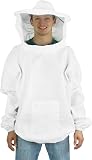 VIVO Professional L Beekeeping Suit WhiteView on Amazon
- 9VIVO Professional XL Beekeeping Suit JacketView on Amazon
During a midsummer hive inspection when the sun beats down on the apiary and the nectar flow is in full swing, choosing between a ventilated bee suit vs traditional bee suit comes down to cooling airflow versus simple, snag-resistant fabric durability. If you work in hot or humid weather and struggle with heat buildup, a ventilated bee suit is the better choice because its layered mesh lets breezes pass through to cool your skin while providing standoff depth to reduce stings. If you keep bees in mild or cooler climates, prioritize easy washing, or want a lighter garment that slips through brush, a traditional cotton bee suit remains a dependable option. Below, we compare both suit styles step by step across airflow, sting protection, fabric weight, durability, and daily apiary care.
Other hives and gear to compare
 Brutul Bee 3 Layer Beekeeping Ultralight Ventilated Suit WithCheck price on Amazon
 Humble Bee 431 Ventilated Beekeeping Suit With Fencing VeilCheck price on Amazon
 3 Layer Ventilated Bee Suit for Men & WomenCheck price on Amazon
 Humble Bee 430 Ventilated Beekeeping Suit with Round VeilCheck price on Amazon
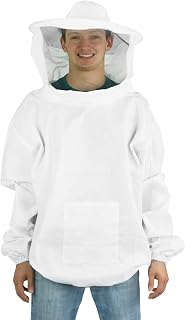 VIVO Professional L Beekeeping Suit WhiteCheck price on Amazon
- VIVO Professional XL Beekeeping Suit JacketCheck price on Amazon
HiveKeeperGear earns a commission when you buy through links on this site, at no extra cost to you. As an Amazon Associate I earn from qualifying purchases. Affiliate disclosure.
Ventilated bee suit vs traditional bee suit: key differences
Both garments shield the beekeeper from defensive stings while providing a snug veil and sealed closures at the wrists and ankles. However, their construction methods solve sting protection differently. A traditional bee suit relies on a single layer of woven cotton canvas or twill that presents a dense textile surface. A ventilated bee suit uses a sandwich of synthetic and polycotton mesh layers that provide structural depth, allowing air to circulate freely across the body.
| Comparison Factor | Ventilated Bee Suit | Traditional Cotton Bee Suit |
|---|---|---|
| Primary construction | Layered open mesh (Brutul Fight lists 3 layers; GAIACOLMEIA lists 3-layer mesh) | Single layer of woven cotton canvas or polycotton twill |
| Air circulation | Open mesh allows continuous breeze penetration and cooling | Dense fabric weave restricts breeze penetration, reducing cooling in heat |
| Sting defense method | Fabric standoff depth reduces sting risk when suit hangs loosely | Dense textile weave resists stings until fabric pulls tight |
| Fabric thickness | Thick, cushioned profile (Brutul Fight lists 4mm total thickness) | Thin, flexible single cloth layer |
| Garment weight | Heavier, multi-layer build (Bee Proof lists 4.38 pounds; GAIACOLMEIA lists 4.51 pounds) | Lighter, single-layer fabric build without internal spacer mesh |
| Suit maintenance | Gentle cycle or hand washing; separate veil care | Standard machine washable cloth; air or low-heat drying |
| Briar resistance | Mesh outer can snag on sharp brambles or rough hive corners | Smooth, tough cotton surface slides past briars and brush |
Airflow and cooling during summer hive work
Beekeeping demands physical labor during warm afternoons when field bees are actively foraging and colonies are calmest to inspect. In a traditional cotton suit, perspiration has nowhere to evaporate quickly because the tightly woven fabric restricts air movement, creating a warm environment against the skin that accelerates fatigue during colony inspections.
A ventilated suit addresses this heat problem through open mesh construction. Rather than trapping air, the porous layers allow natural breezes to pass through the garment, helping sweat evaporate and regulating body temperature. For example, GAIACOLMEIA lists 3x airflow for its 3-layer mesh construction compared to traditional suits, while Humble Bee combines ultra-breathable 220 gsm synthetic ventilation panels with 280 gsm blend cloth to vent heat in hot weather conditions. For apiaries in warm climates, choosing a best ventilated bee suit or dedicated best beekeeping suit for hot weather significantly improves comfort during extended colony work.
Sting protection: fabric depth versus dense weave
Understanding how bees sting reveals why both suit styles can protect an apiary worker, yet fail under different conditions. A honeybee stinger has a finite physical length. For venom to enter the skin, the stinger must completely penetrate the outer clothing and reach the epidermis beneath. Traditional cotton suits prevent stings by presenting a dense weave that bees struggle to push through. When the suit hangs loosely away from the body, protection is dependable. However, whenever you bend over a brood box, kneel in the grass, or lift heavy supers, the cotton pulls taut across the shoulders, back, and knees. In those compressed areas, the single layer of cloth sits flush against the skin, allowing a worker bee to drive its stinger through the fabric.
A ventilated suit relies on physical standoff depth rather than weave density alone. By stacking multiple mesh layers, the garment creates distance between the outside environment and your skin. For example, Brutul Fight lists a total thickness of 4mm across its 3 layers, combining an outer polycotton layer, a thick latex mesh middle layer, and an inner polycotton lining. When the suit fits loosely, this 4mm depth keeps the stinger from reaching the skin beneath. However, no suit stops every sting under all conditions: if you lean hard against a hive body or pull fabric tight over a bent joint, the mesh layers compress and can allow a stinger to penetrate. In our guide to the best beekeeping suit options and our comparison of a cotton vs ventilated bee suit, maintaining a loose fit is essential to preserve this standoff depth.
Garment weight, mobility, and apiary movement
While ventilated suits offer superior cooling and standoff depth, they carry trade-offs in weight and flexibility. The separate textile layers and thick spacer mesh make a ventilated suit heavier and stiffer than traditional clothing. For instance, Bee Proof lists a suit weight of 4.38 pounds, and GAIACOLMEIA lists an item weight of 4.51 pounds. Over long inspections, this additional weight is noticeable on the shoulders, and the thicker fabric creates extra bulk around the elbows and knees when bending.
By comparison, a traditional suit made from cotton or a cotton blend is lighter, softer, and drapes naturally over everyday work clothes without the bulk of internal spacer mesh. Traditional suits also fold down compactly for storage in a hive box or gear bag between yard visits. To offset garment bulk and simplify getting dressed over boots, ventilated suit makers often integrate specialized hardware. Bee Proof incorporates a 24-inch zipper at the bottom of each leg, allowing beekeepers to step into and out of the suit without removing heavy footwear. For beekeepers who prefer minimal bulk during quick yard checks, our guide to a bee suit vs bee jacket helps clarify whether full-body coverage or a lighter top garment best matches your inspection routine.
Durability, snagging risks, and cleaning
The working environment of an apiary exposes protective gear to sharp wire, rough hive woodenware, sticky propolis, and dense vegetation. In these conditions, traditional woven cotton proves exceptionally durable. The tight, flat surface of cotton twill slides smoothly past blackberry brambles, wire fences, and rough hive edges without catching. If a small tear occurs, cotton cloth is simple to patch. Furthermore, cotton suits tolerate regular washing: after detaching the veil, you can launder a cotton suit in warm water with mild detergent to break down propolis and honey residues.
Ventilated mesh demands greater caution around thorns and brush. The open weave of the outer synthetic layer can catch on sharp twigs or rough wooden splinters, pulling threads that compromise bee-tight integrity. Cleaning a ventilated suit also requires a gentler approach. Brutul Fight specifies washing the suit on a gentle cycle, removing the hood beforehand, and washing the hood separately by hand. Both suit styles provide practical pocket layouts: Foxhound Bee Company includes 4 total pockets, Bee Proof provides 5 pockets, US APIARY provides Eight pockets, and Humble Bee provides Ten double-stitched pockets across the chest, legs, and sleeves to keep hive tools and marking pens within easy reach.
How to choose between ventilated and traditional bee suits
Selecting the right protective garment depends on your local climate, the size of your apiary, your personal heat tolerance, and your yard terrain. Reviewing these practical guidelines will point you toward the most functional choice for your seasonal routine:
Choose a ventilated bee suit if:
- You manage colonies in regions with hot, humid summer weather where heat fatigue poses a safety risk during hive inspections.
- You want engineered fabric thickness that provides standoff depth while the suit hangs loosely during hive handling.
- You spend extended hours in the bee yard inspecting multiple hives or harvesting honey supers in midsummer.
- You pair your suit with breathable accessories such as goatskin beekeeping gloves for complete apiary coverage.
Choose a traditional cotton bee suit if:
- You keep bees in northern or coastal climates with moderate temperatures where overheating is rarely an issue.
- Your apiary is situated near thick briars, thorny bushes, or dense brush where mesh fabric could snag and tear.
- You value a lightweight, flexible garment that folds compactly into a standard hive box or field bag.
- You prefer straightforward laundering that allows regular machine washing to remove honey, propolis, and hive smoke odors.
- You are a beginner seeking a reliable, straightforward option featured in our guide to the best bee suit for beginners.
FAQs for beekeepers
Can bees sting through a ventilated bee suit?
No suit stops every sting, but ventilated suits reduce stings by using layered mesh to create standoff distance from the skin. Brutul Fight lists a 4mm total thickness across its 3 layers of mesh and polycotton. When the suit fits loosely, this depth keeps stingers from reaching your skin, though bees can still sting through if the mesh is pressed flat against your body.
Are ventilated bee suits heavier than traditional cotton suits?
Yes, ventilated suits are generally heavier because they incorporate multiple distinct fabric layers and structured spacer mesh. Bee Proof lists a suit weight of 4.38 pounds and GAIACOLMEIA lists 4.51 pounds, whereas single-layer cotton suits feel noticeably lighter on the body.
How do you wash a ventilated bee suit?
Always unzip and remove the veil before washing, as veil netting should be washed by hand to prevent mesh damage. For example, Brutul Fight specifies washing the suit on a gentle cycle and washing the hood separately by hand. The suit body must be hung to air dry, as high dryer heat can damage synthetic mesh.
Do traditional cotton suits snag less than ventilated suits?
Traditional cotton suits have a smooth, tightly woven twill surface that resists snags from briars, brambles, and rough hive wood. The outer porous layer of a ventilated suit can catch on sharp thorns or splinters, requiring more care when walking through brush.
Which veil style works best with a beekeeping suit?
Both fencing veils and round veils work effectively on ventilated and traditional suits. A collapsible fencing veil keeps mesh compact and out of the way, while a round veil provides panoramic vision and holds mesh well away from the face. GAIACOLMEIA includes 2 interchangeable veils with its suit, and our guide comparing a fencing veil vs round veil covers each design in detail.
More hive guides
Explore our category guides for bee suits, bee jackets, and beekeeping gloves in the protective gear section.
More picks: Compare full apiary gear in our guides to the best beekeeping suit, the best ventilated bee suit, and the best bee suit for beginners.