Where to Buy Buckwheat Seed: Two Bags Compared
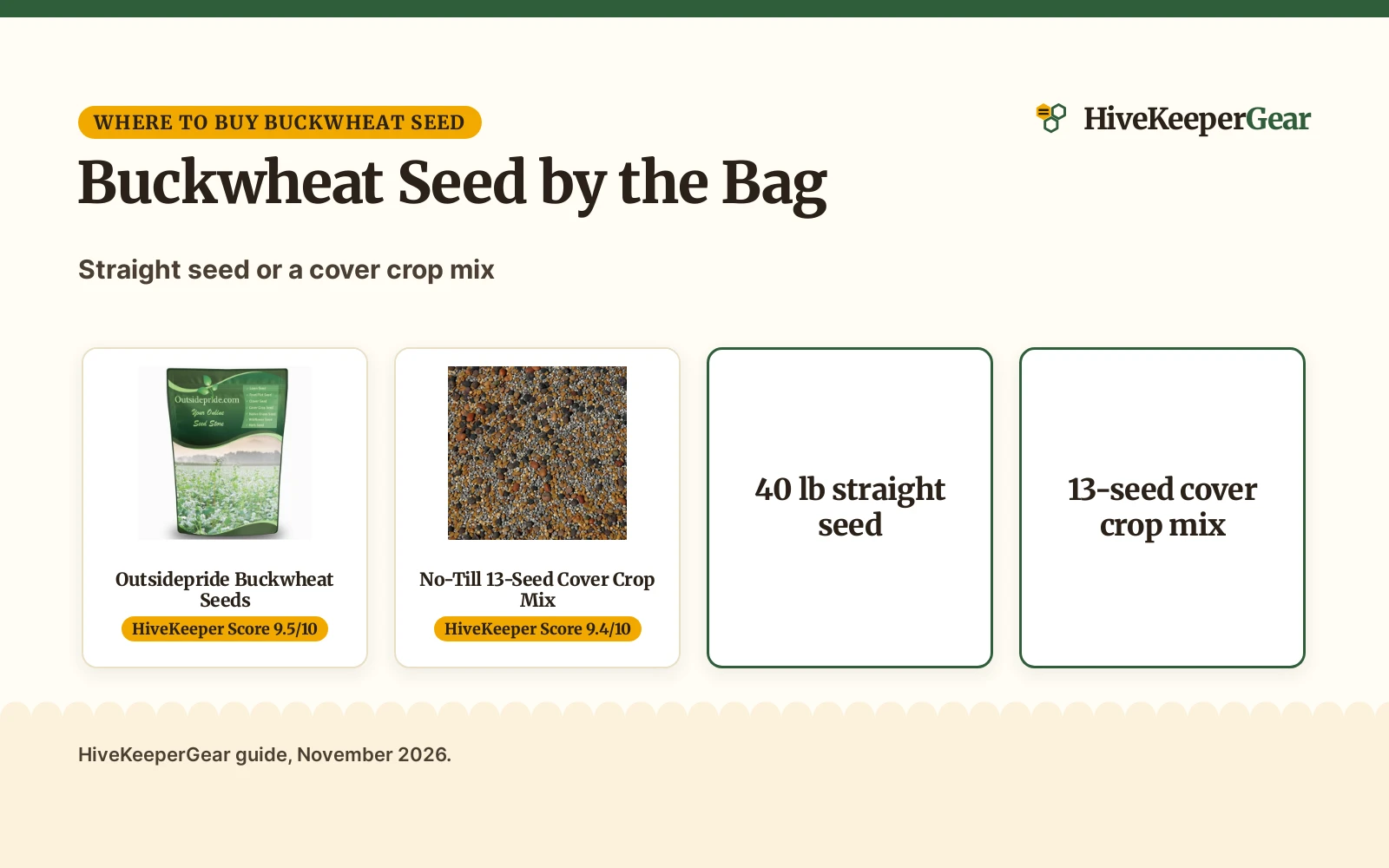
Buckwheat seed comes by the bag as straight seed or in a cover crop mix, and the two bags here show what size, contents and sowing rate to check.

On this page
Top picks at a glance
As an Amazon Associate I earn from qualifying purchases.
- 1
 Outsidepride Buckwheat Seeds9.5/10View on Amazon
- 2
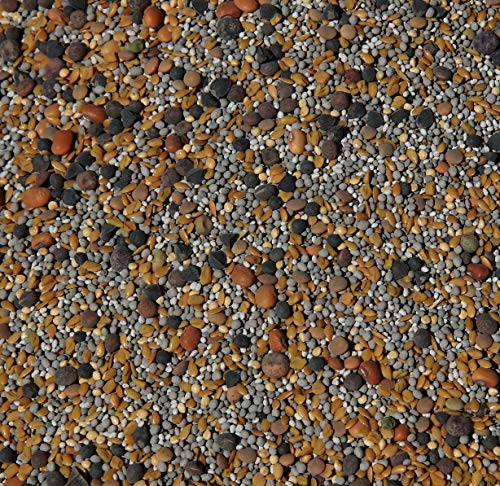 No-Till 13-Seed Cover Crop Mix9.4/10View on Amazon
When the spring flow ends and the bee yard needs forage, a patch of buckwheat fills the gap fast, and the question of where to buy buckwheat seed comes down to the bag, not the shop. Seed suppliers sell buckwheat seed by the bag in two forms: straight buckwheat seed for bee pasture and cover cropping, and cover crop mixes that include buckwheat among other seed. Only one bag here holds straight buckwheat seed, and the other holds a cover crop mix that includes buckwheat, so this guide compares the two bags on size, contents and sowing rate before you order.
HiveKeeperGear earns a commission when you buy through links on this site, at no extra cost to you. As an Amazon Associate I earn from qualifying purchases. Affiliate disclosure.
Outsidepride Buckwheat Seeds
A 40 lb bag of annual buckwheat seed for bee pasture, green manure, cover cropping and erosion control, sown at 40 to 50 lbs per acre.
Pros
- Straight buckwheat seed in a 40 lb bag for bee pasture and cover cropping
- Stated sowing rate of 40 to 50 lbs per acre or 3 lbs per 1,000 sq. ft.
- Grows as a fast-growing summer annual in almost any soil type
- Suits green manure, forage, hay, silage and pasture use
Cons
- 40 lb bag is a large amount for a small bee yard plot
- Annual seed, so it needs sowing again each season
- Needs sowing after all danger of frost has passed, so timing matters
- No warranty term is stated
No-Till 13-Seed Cover Crop Mix
A 1 lb bag of a 13-seed cover crop mix, half clovers, that includes buckwheat among fenugreek, vetch, flax, cowpeas, forage peas, millet and lentils.
Pros
- 13 cover crop varieties in one 1 lb bag, including buckwheat
- 50% clovers with fenugreek, vetch, flax, cowpeas, forage peas, millet and lentils
- Inoculated with Rhizobium and nitro-coated, all-natural non-GMO seed
- Suits raised beds and no-till container gardening
Cons
- Buckwheat is only one of 13 varieties, not straight buckwheat seed
- 1 lb bag suits a raised bed, not a field
- Not suited to a pure buckwheat stand for bee pasture
- No warranty term is stated
As an Amazon Associate I earn from qualifying purchases.
Before you buy: match the bag to the area
Bag size, with the sowing rate, decides how much ground the seed covers. The straight buckwheat bag here holds 40 lb, and the maker gives a sowing rate of 40 to 50 lbs per acre or 3 lbs per 1,000 sq. ft., so a 40 lb bag suits a field-scale planting rather than a small bed. The cover crop mix comes in a 1 lb bag and suits raised beds and no-till container gardening, which is the use its maker names. Sow after all danger of frost has passed, in spring or summer, since buckwheat grows as a summer annual and the straight seed’s maker states that timing in the sowing guidance.
Where to Buy Buckwheat Seed: Two Bags to Compare
The two bags below cover the two ways to buy: a straight 40 lb bag of buckwheat seed, and a 1 lb cover crop mix with buckwheat in it.
How to choose buckwheat seed
Straight seed or a mix?
Straight seed suits bee pasture and green manure, since every seed in the bag is buckwheat. A mix suits a diverse cover crop, since buckwheat is one of 13 varieties alongside clovers, fenugreek, vetch, flax, cowpeas, forage peas, millet and lentils. If the goal is a pure buckwheat stand for bees, the straight bag is the pick; if the goal is soil cover with many species, the mix is the pick. Our buckwheat seeds vs phacelia seeds guide compares buckwheat with another cover crop seed.
How much seed do you need?
Work from the sowing rate, not the bag. The straight seed lists 40 to 50 lbs per acre or 3 lbs per 1,000 sq. ft., so measure the area first and match the bag to it. A 1 lb mix bag suits a raised bed, while a 40 lb bag suits a field. Pollinator mixes follow the same idea: see our clover seed vs pollinator seed mix guide for how mixes compare.
When to sow?
Sow after all danger of frost has passed, in spring or summer. Buckwheat grows as a fast-growing summer annual, and the maker states it thrives in almost any soil type with minimal fertilizer. As a short-season crop it fits into rotations when fields might otherwise sit idle, so it suits a gap between other plantings.
FAQs for beekeepers
Where can I buy buckwheat seed?
Seed suppliers sell buckwheat seed by the bag, as straight seed or in a cover crop mix. The two bags here are a 40 lb bag of straight buckwheat seed and a 1 lb bag of a 13-seed cover crop mix that includes buckwheat.
Is the cover crop mix pure buckwheat seed?
No. The mix holds 13 cover crop varieties, half clovers, and buckwheat is one of them, alongside fenugreek, vetch, flax, cowpeas, forage peas, millet and lentils.
How much buckwheat seed do I need per acre?
The straight seed’s maker states a sowing rate of 40 to 50 lbs per acre, or 3 lbs per 1,000 sq. ft. for smaller areas.
When should I sow buckwheat seed?
Sow after all danger of frost has passed, in spring or summer. Buckwheat grows as a fast-growing summer annual.
Is buckwheat good for bees?
Yes, for forage. The straight seed’s maker calls the seed highly attractive to bees and other pollinators, and lists honey bee pasture among its uses, along with deer food plots, wildlife habitat, green manure and erosion control.
More hive guides
Browse more seed comparisons: buckwheat seeds vs phacelia seeds, milkweed seeds vs pollinator seed mix, zinnia seeds vs pollinator seed mix and bee balm seeds vs pollinator seed mix.