Why Does Honey Crystallize in the Bottle: Causes and Fixes
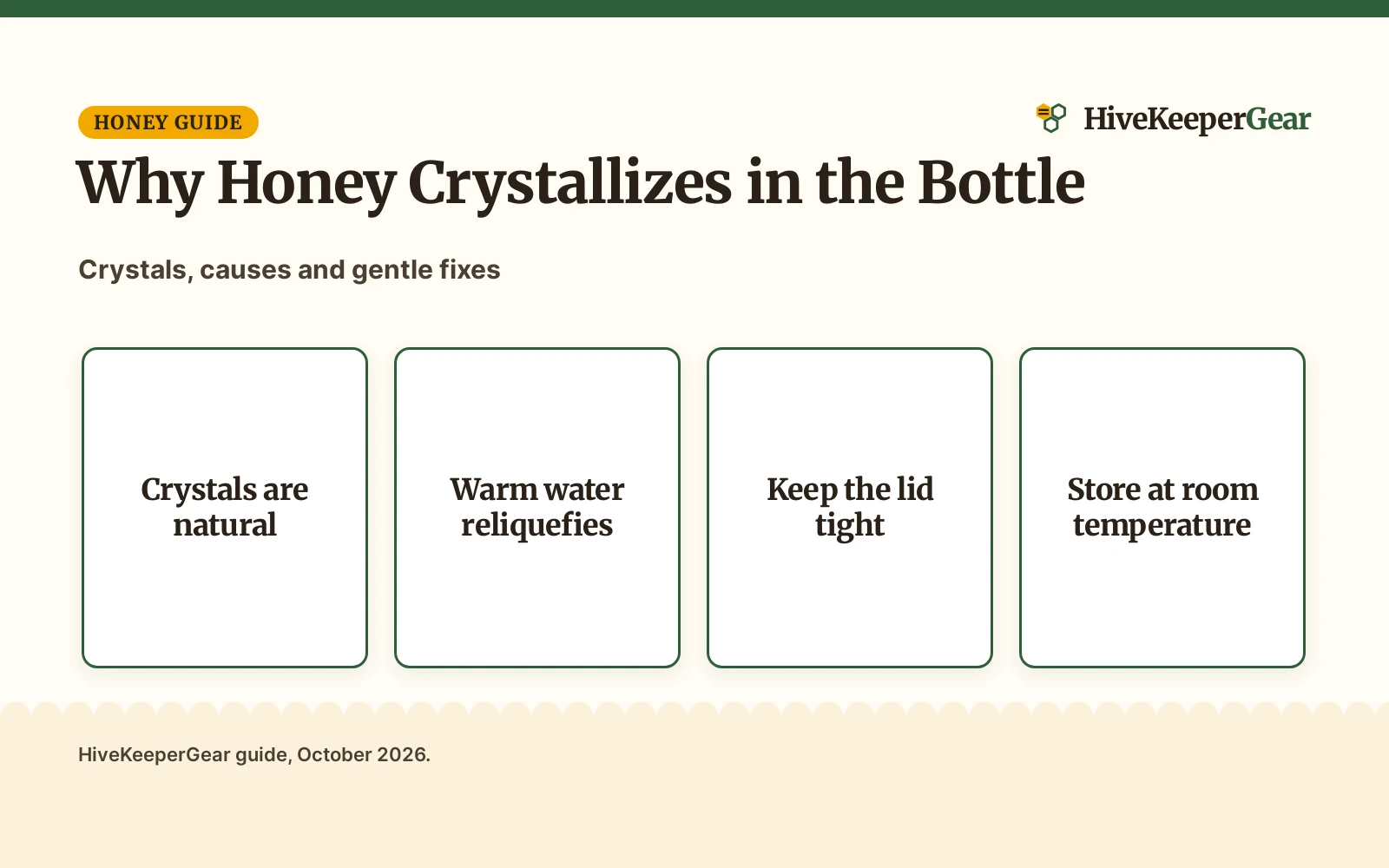
Honey crystallizes in the bottle because its sugars settle out as crystals, and gentle warmth brings the jar back to liquid.

On this page
Top picks at a glance
As an Amazon Associate I earn from qualifying purchases.
- 1
 LepoHome 50-Pack 6 Inch Wooden Honey Dipper Sticks9.6/10View on Amazon
- 2
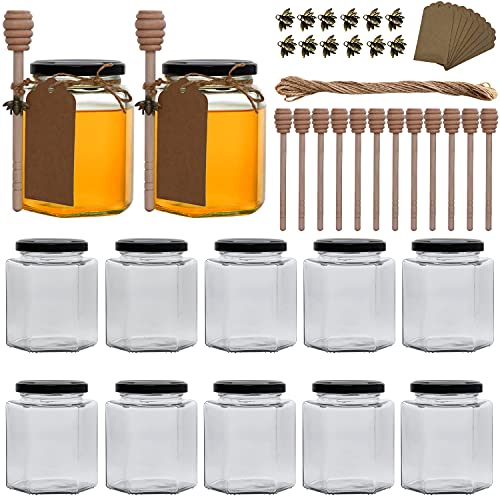 Woaiwo-q 12 oz Hexagon Glass Honey Jars with Black Lids and9.6/10View on Amazon
- 3
 Little Giant 16 oz Skep Design Glass Honey Jars with Airtight9.6/10View on Amazon
Why does honey crystallize in the bottle? Honey is a thick solution of sugars in water, and when sugars settle out of the liquid they form crystals, which turn clear honey cloudy and grainy. Crystallisation is natural, it does not mean the honey has gone bad, and gentle warmth brings it back to liquid.
HiveKeeperGear earns a commission when you buy through links on this site, at no extra cost to you. As an Amazon Associate I earn from qualifying purchases. affiliate disclosure.
What crystallisation looks like
Crystallised honey turns cloudy, then grainy, and the crystals often start at the bottom of the jar or around the lid, where the honey meets air. A jar that was clear at harvest can turn opaque on the shelf, and a squeeze bottle can stiffen until the honey barely moves. The change is gradual, and it can affect part of a jar while the rest stays liquid. A jar that clouds is not broken, and the honey inside is still the honey that went into the jar.
Why does honey crystallize in the bottle
Honey holds more sugar than water can keep dissolved, so the sugars slowly settle out as crystals. Glucose crystallises faster than fructose, so honeys rich in glucose cloud sooner, while honeys rich in fructose stay liquid longer. Cool storage speeds the change, and tiny particles of pollen and wax in raw honey give crystals a place to start. Warm storage slows it, and honey that has been strained fine may take longer to cloud, since fewer particles remain to seed crystals.
Why some honey stays liquid longer
Not every jar clouds at the same pace. Honey rich in fructose stays liquid longer, while honey rich in glucose clouds sooner. Warm rooms slow the change, cool rooms speed it, and a jar that moves between warm and cool will cloud faster than a jar kept steady. Strained honey with few particles may stay clear longer, while raw honey with pollen and wax clouds sooner. The pace varies by jar, so a cloudy jar beside a clear jar is normal, not a sign that either jar is wrong.
Signs and what they mean
| Sign | What it means | What to do |
|---|---|---|
| Cloudy honey | Crystals are forming | Warm the jar gently |
| Grainy texture | Crystals have grown | Warm the jar gently and stir |
| Crystals at the bottom | Sugars settling out | Warm the jar gently and stir |
| Stiff squeeze bottle | Honey too cool to flow | Warm the bottle gently |
How to reliquefy crystallised honey
Stand the jar in warm water with the lid on, and leave it until the crystals clear. Warm water from the tap is enough; boiling water is not needed and can harm the flavour. Stir the honey as it warms so the crystals dissolve evenly, and repeat the soak if the jar is large or the crystals are stubborn. Keep the lid tight so no water gets into the jar, and dry the outside before putting the jar away. A bottle warmer that holds a steady warm temperature can do the same job, as long as the heat stays gentle and the lid stays on.
How to slow crystallisation
Store honey at steady room temperature with the lid tight, away from cool draughts. A cool pantry speeds crystals, and the fridge speeds them further, so the kitchen shelf suits honey better than the cold store. Use clean, dry jars and a clean dipper, since crumbs give crystals a place to start and moisture can spoil the honey. Honey that has been warmed and cooled many times will cloud again, so warm only the jar in use and leave the rest sealed.
What is not a problem
Crystals do not mean the honey has spoiled, gone bad, or turned to sugar. Honey keeps well when the lid stays tight and the jar stays dry, and crystallised honey is still honey. Do not throw a cloudy jar away: warm it gently and it returns to liquid. If the honey smells off or ferments, that is a storage problem, not crystallisation, and the jar should go.
FAQs for beekeepers
Is crystallised honey safe to eat?
Yes. Crystals are a natural part of honey, and they do not mean the honey has spoiled. Warm the jar gently and the honey returns to liquid.
Why does honey crystallise faster in some jars?
Floral source, storage temperature and particles in the honey all play a part. Honey rich in glucose clouds sooner, cool storage speeds crystals, and pollen and wax particles give crystals a place to start.
Can I reliquefy honey in warm water?
Yes. Stand the jar in warm water with the lid on until the crystals clear, stir as it warms, and keep water out of the jar.
Should I store honey in the fridge?
No. Cool storage speeds crystallisation, so the fridge makes honey cloud faster. Keep honey at steady room temperature with the lid tight.
Does crystallisation mean the honey is fake?
No. Real honey crystallises, and crystals form when sugars settle out over time, but fake honey can crystallise too, so crystallisation alone does not prove honey is real or fake.
More hive guides
Browse every guide by category: honey harvesting. Also see our how to get honey out of bottle, honey strainers, fine vs coarse honey strainers and honey thermometers guides.