Wireless vs Wired Rain Gauge: Which One Should You Buy?
Three wireless rain gauges with self-emptying collectors, compared on rainfall readings and alarms, with a clear answer on when a wired gauge is the better buy.

On this page
Top picks at a glance
As an Amazon Associate I earn from qualifying purchases.
- 1
 Sainlogic 12-in-1 Wireless Weather Station with Rain Gauge9.5/10View on Amazon
- 2
 Digital Rain Gauge Outdoor with ThermometerView on Amazon
- 3
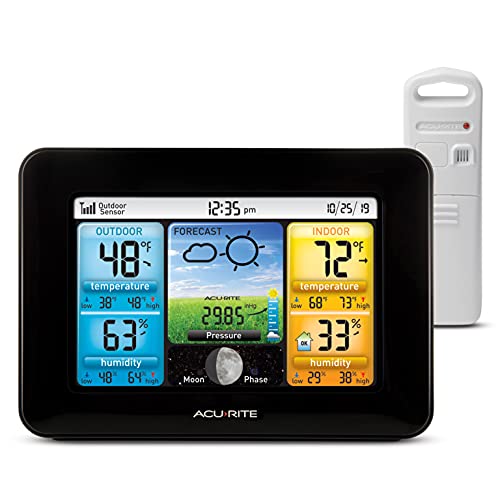 AcuRite Wireless Home Weather Station with Color DisplayView on Amazon
- 4
 Wireless Rain Gauge Outdoor with ThermometerView on Amazon
- 5
 Sainlogic Wireless Weather StationView on Amazon
- 6
 AcuRite Wireless Rain Gauge with Self-Emptying Rain CollectorView on Amazon
- 7
 AcuRite Wireless Digital Rain Gauge with Self-EmptyingView on Amazon
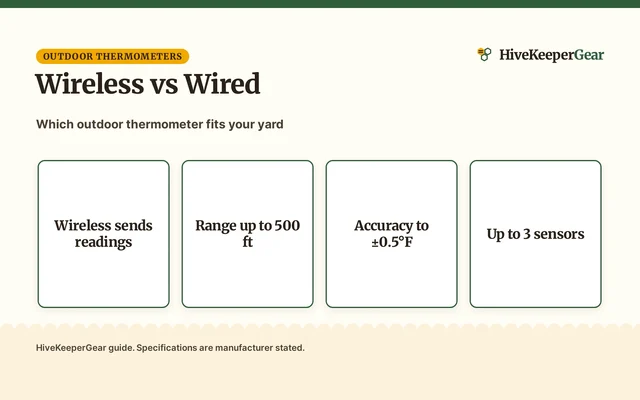
A spring inspection often starts with the same question: how much rain fell since the last visit, and did the bees get a soaking or just a sprinkle. A wireless vs wired rain gauge answers that question from inside the house, and the short answer is that a wireless gauge suits most backyard watchers because the outdoor collector sends readings to an indoor display with no cable to run. Every gauge in this guide is wireless, and no wired gauge is among the picks, so the wired side is judged here on what a cable connection means in plain terms. The picks below all have self-emptying collectors, and they differ on rainfall readings and alarms.
Other hives and gear to compare
 Digital Rain Gauge Outdoor with ThermometerCheck price on Amazon
 AcuRite Wireless Home Weather Station with Color DisplayCheck price on Amazon
 Wireless Rain Gauge Outdoor with ThermometerCheck price on Amazon
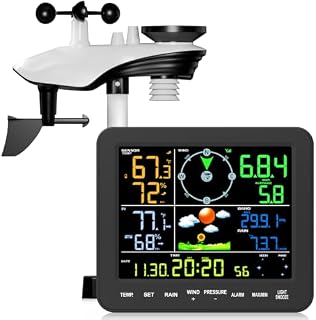 Sainlogic Wireless Weather StationCheck price on Amazon
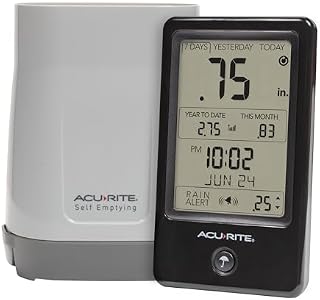 AcuRite Wireless Rain Gauge with Self-Emptying Rain CollectorCheck price on Amazon
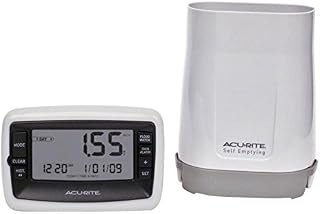 AcuRite Wireless Digital Rain Gauge with Self-EmptyingCheck price on Amazon
HiveKeeperGear earns a commission when you buy through links on this page, at no extra cost to you. As an Amazon Associate I earn from qualifying purchases. Affiliate disclosure.
Wireless vs wired rain gauge at a glance
The three gauges below are all wireless. Each one has a self-emptying collector and an indoor display.
| Gauge | Connection | Rainfall readings | Extras |
|---|---|---|---|
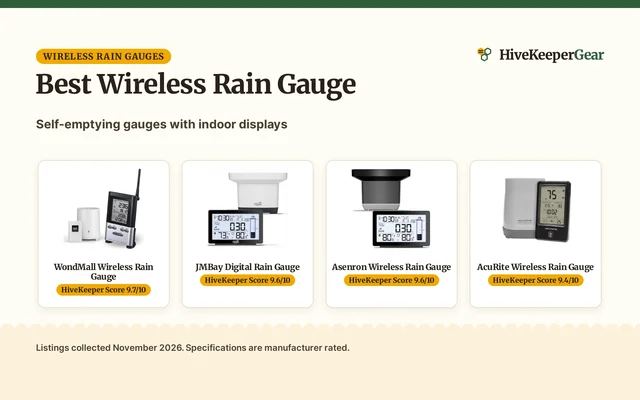
| WondMall Wireless Rain Gauge | Wireless | 9 days of record, 0.1mm or 0.01inch resolution | 300FT/100M range, outdoor temperature, self-emptying tipping bucket |
| JMBay Digital Rain Gauge | Wireless | 8 measurements: now, 1 hour, 24 hours, today, 7 days, month, year, total | Indoor and outdoor temperature, WWVB radio time, dual alarm clock |
| AcuRite Wireless Rain Gauge 02446M | Wireless | Current day, yesterday, past week, month, year | Customizable alarm, current date and time, limited one-year warranty |
The gear: three wireless gauges
The WondMall gauge leads this guide. Its tipping bucket sensor records rainfall and sends it to an indoor display over a 300FT/100M wireless range, and it reads rainfall at 0.1mm or 0.01inch resolution. The display keeps 9 days of rainfall record, switches between mm and inch units and between °C and °F, and shows outdoor temperature with a clock and calendar. The collector is self-emptying and freeze proof, and the maker lists the unit at 10.0 by 4.0 by 0.7 inches.
The JMBay gauge lists 8 rainfall measurements: now, 1 hour, 24 hours, today, 7 days, month, year and total, shown on an indoor display console with a cylindrical rainfall graph. It also reads indoor and outdoor temperature, keeps WWVB radio control time, and adds a dual alarm clock with snooze and a calendar. A programmable rain alarm flags flood conditions, and the blue backlight stays on for 15 seconds for nighttime checks. The unit measures 7.1 by 4.3 by 5.1 inches.
The AcuRite gauge keeps the feature list short, and it is the only one here with a stated warranty: a limited one-year warranty. Its self-emptying collector sends rainfall readings to an indoor display, and the display shows rainfall for the current day, yesterday, the past week, by month and year, plus the current date and time. A customizable alarm gives an audible beep once a set rainfall total is reached. The unit weighs 0.9 lb and measures 2.3 by 4.9 by 6.0 inches.
How to choose the best wireless vs wired rain gauge
Start with where the display will sit, then match the readings and alarms to what the yard needs.
Check the wireless range first
A wireless gauge is only useful if the signal reaches the house. The WondMall gauge states a 300FT/100M wireless transmission range. The JMBay and AcuRite gauges do not state a range, so place their collectors where the signal has a clear path to the display and watch the first readings before trusting the spot. For a wider look at home weather gear, see the barometer vs weather station guide.
Count the rainfall windows you will actually read
Rainfall totals matter by window: today for watering, the past week for the garden, the month and year for the record. The JMBay gauge lists 8 measurements from now to total, the AcuRite gauge covers the current day, yesterday, the past week, month and year, and the WondMall gauge keeps 9 days of rainfall record. Pick the set of windows that matches how often the display gets checked. Rainfall totals also shape what to plant where water collects; the pollinator seed mix for rain gardens picks cover plantings for wet spots.
Look for a self-emptying collector
All three gauges in this guide have self-emptying collectors, so no daily emptying is needed. The WondMall gauge uses a sensitive tipping bucket sensor that records and transmits rainfall data, and the AcuRite gauge pairs its self-emptying collector with a simple connect-and-measure setup. The JMBay and WondMall gauges are both listed as freeze proof.
Weigh the alarms and extras
A rain alarm turns a gauge into a warning tool. The JMBay and WondMall gauges both have programmable rain alarms, and the AcuRite gauge has a customizable alarm with an audible beep. Beyond alarms, the JMBay gauge adds WWVB radio time, a dual alarm clock with snooze and a blue backlight, while the WondMall gauge adds outdoor temperature with a clock and calendar. A hive thermometer is a separate tool for the apiary; see the hive thermometer picks for that job.
When a wired gauge wins
A wired gauge connects its outdoor collector to the indoor display by cable, so there is no wireless signal to drop and no pairing step. That suits a short, sheltered run where a cable can be routed once and left alone. Where the collector must sit far from the house, or where a cable would cross a path or a mowing line, the wireless picks above are the easier fit; the WondMall gauge is the only one here that states a range, at 300FT/100M.
FAQs for beekeepers
How far can a wireless rain gauge sit from its display?
It depends on the gauge. The WondMall gauge states a 300FT/100M wireless transmission range. The JMBay and AcuRite gauges do not state a range, so check the first readings after setup before trusting a distant spot.
What does a self-emptying rain gauge do?
It empties its collector on its own after measuring, so there is no daily emptying to do. All three gauges in this guide are self-emptying, and the WondMall gauge uses a tipping bucket sensor that records and transmits the rainfall.
How much rain history do these gauges keep?
The JMBay gauge lists 8 measurements, from now and 1 hour out to month, year and total. The WondMall gauge keeps 9 days of rainfall record, and the AcuRite gauge shows the current day, yesterday, the past week, month and year.
Do these rain gauges show temperature too?
The JMBay gauge reads indoor and outdoor temperature, and the WondMall gauge shows outdoor temperature. The AcuRite gauge does not list a temperature reading, so pair it with a separate thermometer if temperature matters.
Which of these gauges is wired?
None of them. The JMBay, WondMall and AcuRite gauges are all wireless, with an outdoor collector that sends readings to an indoor display. A wired gauge suits a short cable run where no wireless signal is wanted.
More hive guides
Browse every guide by category: weather and nature watching and wildlife feeding.