Are Bee Houses a Good Idea for Your Garden?
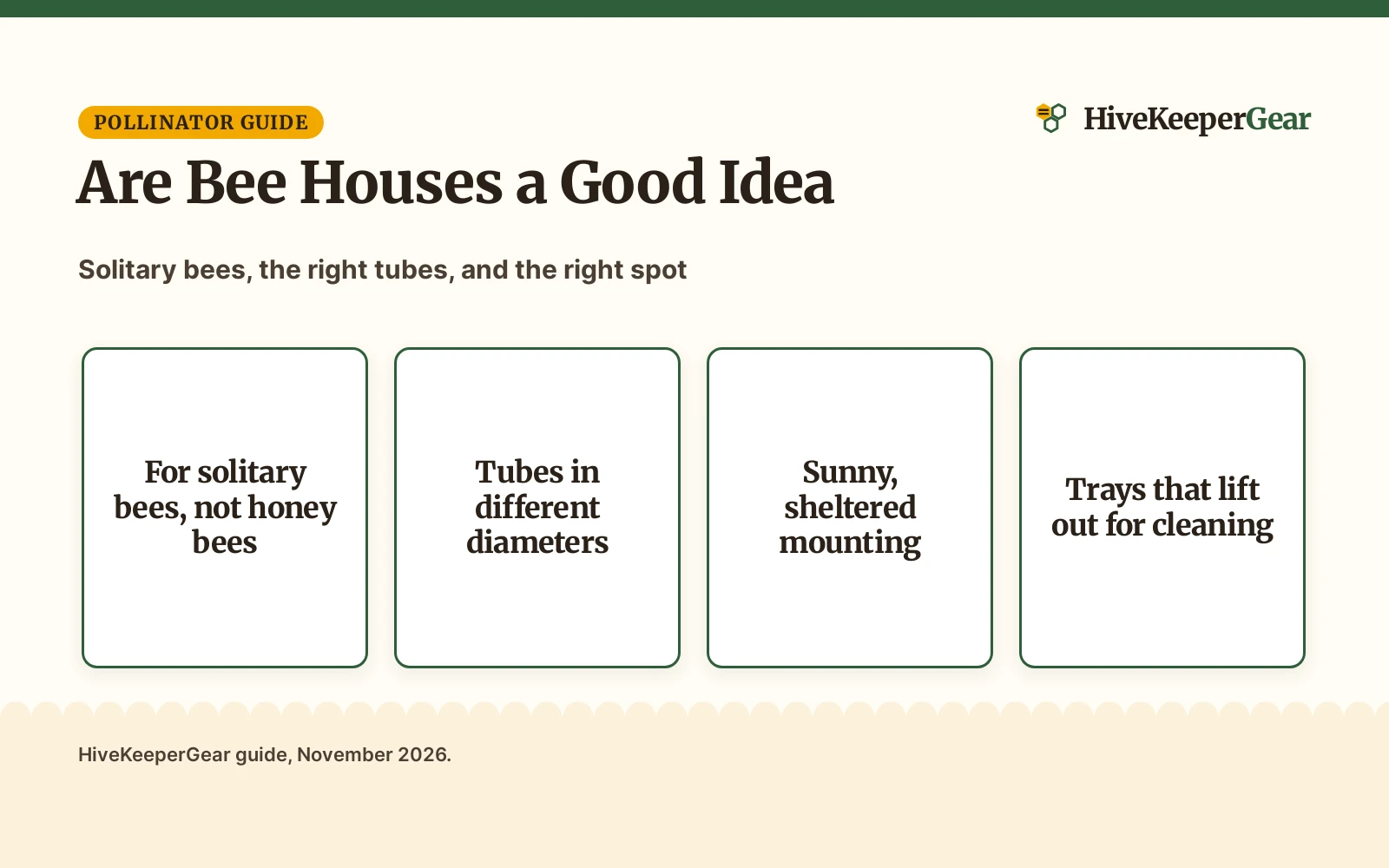
A bee house suits solitary bees in a garden with flowers, if the tubes fit the bees and the house hangs in a sunny, sheltered spot.

On this page
Top picks at a glance
As an Amazon Associate I earn from qualifying purchases.
- 1
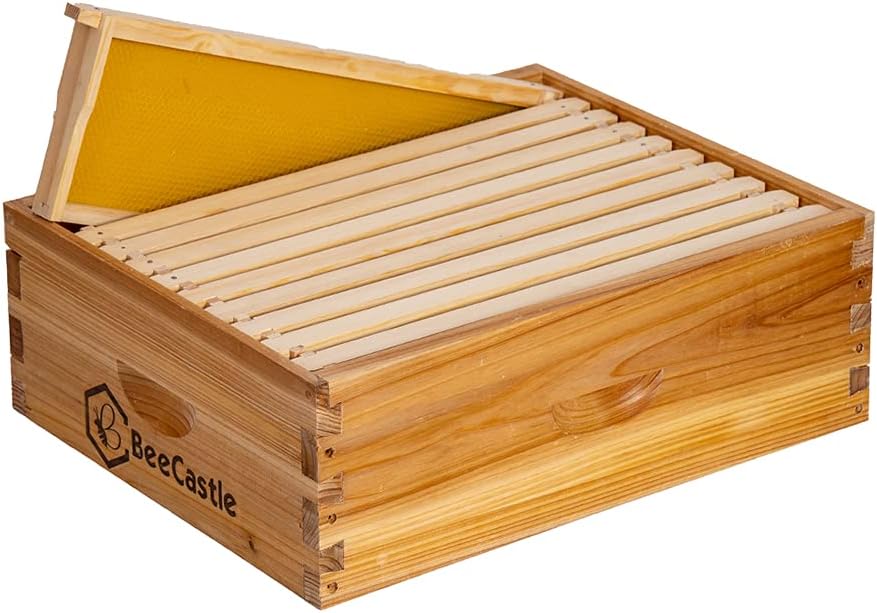
 BeeCastle 8 Frame Langstroth Bee Hive Boxes Coated with9.7/10View on Amazon
- 2
 BeeCastle 10 Frame Medium Super Bee Hive Box with 10 Wooden9.7/10View on Amazon
- 3
 MayBee 2 Pack Winter Bee Hive Wrap for 8 and 10 Frame Hives9.7/10View on Amazon
In spring, mason bees work the fruit blossom while the honey bee hive still builds up, and a small wooden house on a fence post can look like the easiest way to help them. So are bee houses a good idea? Yes, for solitary bees in a garden with flowers, when the house gives them dry tubes in sizes they can use and hangs where sun reaches it. A bee house is not a hive, and it will not hold a honey bee colony or give honey. It is a nesting aid for mason bees and leafcutter bees, and its worth turns on the tubes, the mounting and the cleaning.
HiveKeeperGear earns a commission when you buy through links on this site, at no extra cost to you. As an Amazon Associate I earn from qualifying purchases. Affiliate disclosure.
Are bee houses a good idea?
A bee house earns its place when the garden already feeds bees. Flowers, fruit and vegetables give solitary bees the pollen and nectar they gather, and the house gives them a dry place to nest near that food. Without flowers nearby, a house stands empty, however fine the wood. With flowers, a house with tubes in sizes the bees can use fills as females lay eggs and seal the tubes. The sections below walk through tubes, mounting and cleaning, so the reader can judge a listing on those parts.
What a bee house is for
A bee house is a nesting aid for solitary bees. A female mason bee or leafcutter bee lays eggs in a tube, seals the end, and leaves the young to grow without a colony to feed them. The JZDF listing states its holes suit mason bees, leafcutter bees and other solitary bees; the BalterFF listing names leafcutter and carpenter bees; and the Panacea listing names mason, orchard and horn-faced bees. Mason, leafcutter, orchard and horn-faced bees nest alone, in one tube at a time, and they do not build comb or store honey. Carpenter bees are the exception here: they bore their own tunnels in wood rather than laying in ready-made tubes.
Honey bees are a different case. They live in a hive as a colony, and they do not nest in tubes, so a bee house will not hold a honey bee colony. They visit the same flowers, but the house itself is for solitary bees. That distinction matters when reading listings. See the solitary bee house vs mason bee house comparison for how the names differ. Other visitors come for the feeding tray, not the tubes: the GUBEARE listing states its house attracts bees, butterflies and ladybugs, and its tray holds water, nectar or fruit as a nutrition station for visiting insects.
When a bee house earns its place
Flowers come first. A house near fruit, vegetables and flowers gives nesting bees food within flight range, and a house far from flowers stays empty. The Dmnnlp listing states its house stands among flowers on its metal stake. Flowers do the feeding, so plant them before hanging the house.
Sun and shelter come next. The GardeningProducts4Less listing states its house hangs from a sturdy tree branch or a post in a sunny, sheltered spot. A house that faces the morning sun warms early. The Panacea listing states its extended overhanging roof directs rain away from the nesting tunnels, and the Dmnnlp listing states its clear varnish coating resists rain erosion.
Mounting options vary by listing. The GUBEARE house (on Amazon) hangs on trees or walls. The NASIDE house (on Amazon) mounts on a wall with a metal wall buckle or hangs from a rope. The Dmnnlp house (on Amazon) stands on a 32 in metal stake among flowers, rests on a flat surface, or hangs from its top hook. The Panacea houses (on Amazon) mount to posts or walls through predrilled holes, or rest on a level surface. Pick the mounting that fits the spot.
What to check on the listing
Check the tubes first. The tube diameter decides which bees can use the house, and the listings state tubes in a spread of sizes. The Dmnnlp house holds tubes from 0.15 to 0.6 in. The JZDF listing states holes in different sizes. The GUBEARE house holds bamboo tubes in different diameters. The NASIDE house lists bamboo tubes 3.5 in long. See the mason bee hole size guide for choosing a diameter.
| House | Nesting | Cleaning | Mounting |
|---|---|---|---|
| JZDF | Holes in different sizes | Clean in fall and winter | Simple to hang and install |
| Panacea | Six removable trays with deep grooves | Trays lift out for end-of-season cleaning | Predrilled holes; posts, walls, or a level surface |
| Dmnnlp | Tubes 0.15 to 0.6 in | 3 cleaning brushes | 32 in metal stake, flat surface, or top hook |
| GUBEARE | Bamboo tubes in different diameters; 1 feeding tray | Not stated | Hang on trees or walls |
Check the material next. Pine is the common wood in these listings: the JZDF, GUBEARE and Dmnnlp houses state solid pine wood. The Panacea houses state natural cedar, which the listing states resists rot and insect damage. The NASIDE house states natural wood coated with beeswax for durability and water resistance.
Check the size next. The GardeningProducts4Less house (on Amazon) measures 4.0 x 5.0 x 7.0 in, and the Dmnnlp house measures 10.24 x 5.71 x 3.15 in. The Panacea houses come as a pack of 3 and measure 7.75 x 6.0 x 9.5 in.
Check the cleaning last. The Panacea houses hold six removable trays with deep grooves that lift out for end-of-season cleaning. The JZDF listing tells the reader to clean in fall and winter, remove dead or diseased eggs, and reuse the house next year. The Dmnnlp house includes 3 cleaning brushes. The BalterFF house has a detachable nesting frame.
What a bee house will not do
A bee house will not hold a honey bee colony, and it will not give honey. Honey bees live in a hive, and honey comes from hive frames, not from tubes. A reader who wants honey needs a hive and bees, not a bee house.
A bee house will not bring bees to a garden with no flowers. Bees nest where they feed, and a house beside bare lawn or paving stays empty. Plant flowers first, then hang the house where the bees already work.
A bee house will not look after itself. Houses with trays that lift out, like the Panacea houses, or a frame that comes apart, like the BalterFF house, let the reader clean the nest at the end of the season.
FAQs for beekeepers
Do bee houses attract honey bees?
Not to nest in. Bee houses suit solitary bees such as mason and leafcutter bees. Honey bees live in a hive and nest there, not in tubes. They visit the same flowers, and the GardeningProducts4Less listing states its house can attract honey bees among other species, but it will not house a colony.
What size holes do mason bees need?
The listings state tubes in a spread of sizes. The Dmnnlp house holds tubes from 0.15 to 0.6 in, and the JZDF and GUBEARE houses list holes and bamboo tubes in different diameters. The NASIDE house lists bamboo tubes 3.5 in long. See the mason bee hole size guide for choosing a diameter.
Where should a bee house hang?
In a sunny, sheltered spot, hung from a sturdy tree branch or a post, as the GardeningProducts4Less listing states. The GUBEARE house hangs on trees or walls, the NASIDE house mounts on a wall or hangs from a rope, and the Dmnnlp house stands on its 32 in metal stake among flowers, rests on a flat surface, or hangs from its top hook.
How do you clean a bee house?
Pick a house with a stated way to clean it. The Panacea houses hold six removable trays with deep grooves that lift out for end-of-season cleaning. The JZDF listing tells the reader to clean in fall and winter, remove dead or diseased eggs, and reuse the house next year. The Dmnnlp house includes 3 cleaning brushes, and the BalterFF house has a detachable nesting frame.
Do bee houses need food or water?
Bees feed on flowers, so a house near flowers needs no feeder. The GUBEARE house adds 1 feeding tray: the listing says to add water, nectar, or fruit to make a nutrition station for bees, butterflies, dragonflies, and other insects.
More hive guides
Browse every guide by category: beehives and beekeeping guides, or compare solitary bee house vs mason bee house and where to buy mason bees.