Solitary Bee House vs Mason Bee House: Which One Should You Buy?
A mason bee house is one kind of solitary bee house, and this guide compares 4 houses by size, material and mounting to help you match a house to your garden bees.

On this page
Top picks at a glance
As an Amazon Associate I earn from qualifying purchases.
- 1
 WHITEHORSE Cedar Bee House with 6 Inch Replaceable Tubes9.7/10View on Amazon
- 2
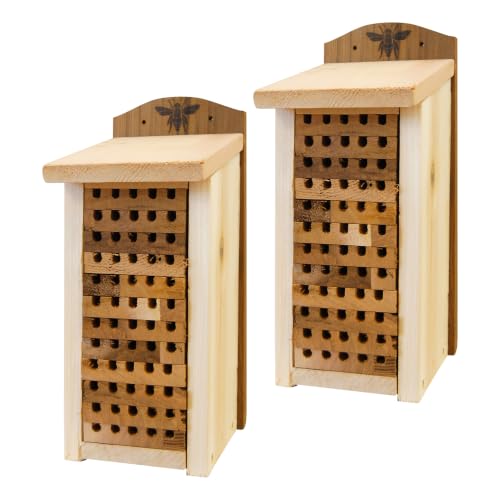 Woodlink Heavy Duty Cedar Mason Bee House9.5/10View on Amazon
- 3
 bambeco 12 in. Mason Tower Bee House9.4/10View on Amazon
- 4
 Pollinating Palace-Mason Bee HouseView on Amazon
- 5
 Mason Bee HouseView on Amazon
- 6
 2 Pack Hanging Solitary Bee HouseView on Amazon
- 7
 Mason Bee House with Feeding TraysView on Amazon
- 8
 antiai Extra Large Wooden Insect House with StakesView on Amazon
- 9
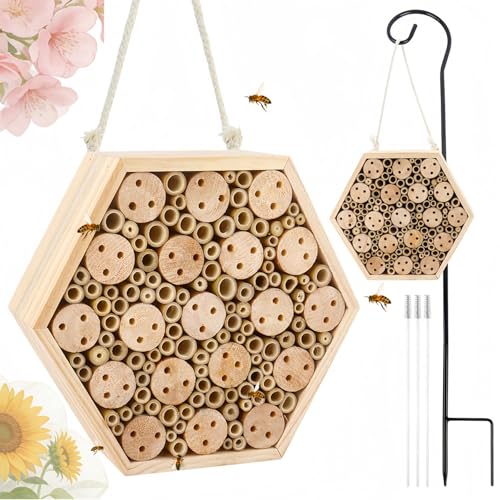 Dmnnlp Mason Bee HouseView on Amazon
A solitary bee house vs mason bee house choice is simpler than the names suggest. Mason bees are solitary bees, so a mason bee house is a kind of solitary bee house. The labels overlap, and the houses in this guide differ in hole variety, material and mounting. This guide sets the types side by side and compares the houses below by what each listing states, so you can match a house to the bees already working your garden.
Other hives and gear to compare
 Pollinating Palace-Mason Bee HouseCheck price on Amazon
 Mason Bee HouseCheck price on Amazon
 2 Pack Hanging Solitary Bee HouseCheck price on Amazon
 Mason Bee House with Feeding TraysCheck price on Amazon
 antiai Extra Large Wooden Insect House with StakesCheck price on Amazon
 Dmnnlp Mason Bee HouseCheck price on Amazon
HiveKeeperGear earns a commission when you buy through links on this site, at no extra cost to you. As an Amazon Associate I earn from qualifying purchases. Affiliate disclosure.
Solitary bee house vs mason bee house: the short answer
A mason bee house is a solitary bee house built around the nesting habits of mason bees. Mason bees nest in tubes and holes, so a house made for them offers tube-shaped nesting spaces. A general solitary bee house may offer varied hole sizes that also suit leafcutter bees and other solitary bees, and the labels overlap: the JZDF house carries a mason bee name yet lists different sized holes for mason bees, leafcutter bees and other solitary bees. If mason bees visit your garden, a mason bee house fits; if you want to welcome the wider set of solitary bees, look for varied holes and bamboo tubes. The listings below show how each house handles that choice.
The houses in this guide
The houses below are ranked by how completely each listing states its size, material, mounting and warranty, with the fullest listing at the top. Sizes come from the listings as stated, and where a listing states no figure, this guide says so.
| House | Size | Material | Mounting |
|---|---|---|---|
| JZDF Mason Bee House | 3.5 x 7.1 x 11.4 inches | Pine wood | Hang and install |
| Pollinating Palace Mason Bee House | 4.0 x 5.0 x 7.0 inches | Natural wood, bamboo tubes | Rope, hang from a branch or post |
| Nature’s Way Teal Bee House | 8 inches high, 6 inches wide, 3.5 inches deep | Not stated | Easy-mount hanger |
| Elipark Bamboo Bee House | Not stated | Pine and bamboo fill | Hanging hooks |
JZDF Mason Bee House
The JZDF house lists pine wood, a weight of 1.9 pounds and dimensions of 3.5 x 7.1 x 11.4 inches, with a 2-year manufacturer warranty, the fullest set of stated figures in this guide. Its bullets promise different sized holes for mason bees, leafcutter bees and other solitary bees, colorless and odorless paint on the roof, and no paint or coating elsewhere, plus a clean-out in fall and winter so the house can be reused the next year. The title also calls it a bug hotel and a carpenter bee house, so read it as a general solitary bee house rather than a mason-only house. The listing says it is simple to hang and install.
Pollinating Palace Mason Bee House
The Pollinating Palace lists natural wood, bamboo tubes and dimensions of 4.0 x 5.0 x 7.0 inches, with a 30-day warranty term and a rope for hanging. The listing says to hang the house from a sturdy tree branch or a post in a sunny, sheltered spot, and it names honey bees, solitary bees and mason bees as visitors. The wide visitor list reads as a general pollinator house rather than a mason-only house, so weigh the bamboo tubes and the stated size against the room you have.
Nature’s Way Teal Bee House
The Nature’s Way house lists dimensions of 8 inches high by 6 inches wide by 3.5 inches deep, an easy-mount hanger and a teal finish, and it names mason bees, leafcutter bees and solitary bees as the visitors it attracts. The maker says the gentle solitary bees it attracts can pollinate up to 20x that of honeybees. No weight, material or warranty term is stated in the listing, so compare it on size and mounting alone.
Elipark Bamboo Bee House
The Elipark house is listed by title only: a bamboo bee house with pine and bamboo fill, a metal roof and hanging hooks. No dimensions, weight or warranty term is stated, so it sits at the end of this guide until the listing states more.
How to choose the best solitary bee house vs mason bee house
Match the house to the bees you see and the spot you have. The sections below use the listings in this guide as examples.
Start with the bees you see
If mason bees already work your garden, a mason bee house with tubes suits them; the Pollinating Palace lists bamboo tubes, and the JZDF house lists different sized holes for mason bees, leafcutter bees and other solitary bees. A house that names a wide set of bee types, like the Nature’s Way house, fits a garden where leafcutter bees and solitary bees visit alongside mason bees. Our what is a mason bee guide covers the bee itself.
Check size, material and mounting
Compare the stated dimensions against the spot you have: the JZDF house measures 3.5 x 7.1 x 11.4 inches, the Nature’s Way house 8 inches high by 6 inches wide by 3.5 inches deep, and the Pollinating Palace 4.0 x 5.0 x 7.0 inches. Pine and natural wood are the stated materials, with bamboo tubes or bamboo fill inside, and each house hangs. The Pollinating Palace listing is the one that names a spot: a sunny, sheltered place, hung from a sturdy tree branch or a post. See where to put a bee house for placement.
Mind the warranty and the clean-out
The houses in this guide that state a warranty term are the JZDF house, with a 2-year manufacturer warranty, and the Pollinating Palace, with a 30-day warranty term, while the other listings state none. The JZDF listing also asks for a clean-out in fall and winter before reuse the next year, which is the only upkeep the listings state. If a listing states no warranty, treat that as part of the value picture.
FAQs for beekeepers
Is a mason bee house the same as a solitary bee house?
A mason bee house is a kind of solitary bee house. Mason bees are solitary bees that nest in tubes and holes, so a house built for them offers tube-shaped nesting spaces. A general solitary bee house may offer varied hole sizes for leafcutter bees and other solitary bees, and the labels overlap: the JZDF house carries a mason bee name yet lists different sized holes for mason bees, leafcutter bees and other solitary bees.
Where should I hang a bee house?
The Pollinating Palace listing directs hanging its house from a sturdy tree branch or a post in a sunny, sheltered spot. The other listings state a hanger or hooks without naming a spot, so check the listing for the house you buy. Our where to put a bee house guide covers placement in more detail.
What size holes do solitary bees need?
The listings in this guide do not state hole diameters. The JZDF house lists different sized holes for mason bees, leafcutter bees and other solitary bees, and the Pollinating Palace lists bamboo tubes, so compare the houses on the hole variety the listings state rather than on a stated diameter.
How do I clean a bee house?
The JZDF listing says to clean the hive in the fall and winter, remove dead or diseased eggs, and reuse it again next year. The other listings in this guide state no cleaning steps, so follow the instructions that come with the house you buy.
Do bee houses attract honey bees?
No. Honey bees live in hives and do not nest in the tubes and holes of a solitary bee house. The Pollinating Palace listing names honey bees among the species it says the house can attract, while the Nature’s Way listing names mason bees, leafcutter bees and solitary bees. The houses in this guide are built for solitary bees that nest in tubes and holes, so read the visitor list on each listing before you buy.
More hive guides
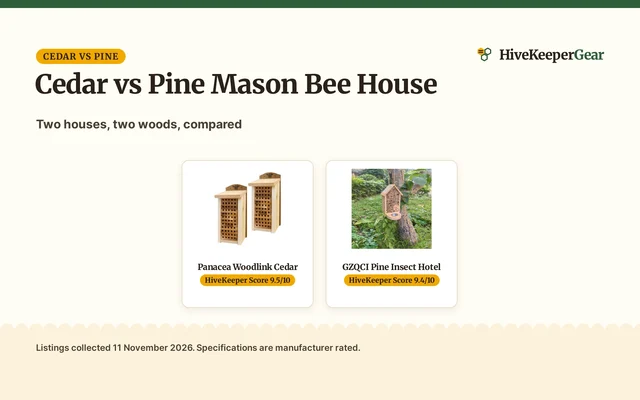
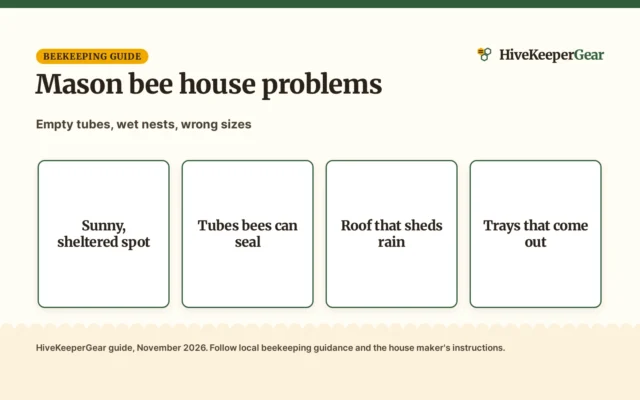
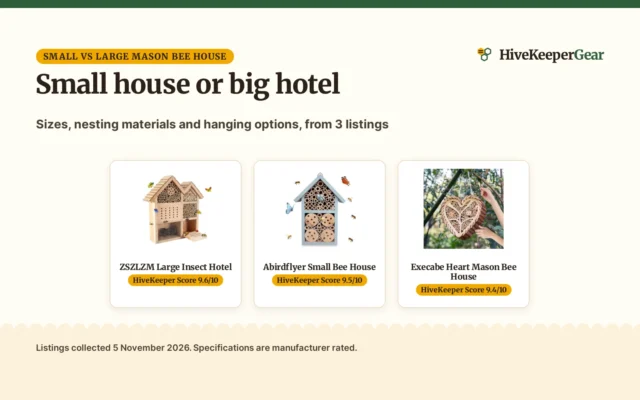
Browse every beehives guide, compare cedar vs pine mason bee house and small vs large mason bee house, or read mason bee house problems before you hang a house.