Wood vs Plastic Mason Bee House: Which One Should You Buy?
Wood vs plastic mason bee house: the wood houses in the listings compared, and the checks to run on any plastic house before buying.

On this page
Top picks at a glance
As an Amazon Associate I earn from qualifying purchases.
- 1
 UUMENHA Pine Wood Bee House9.6/10View on Amazon
- 2
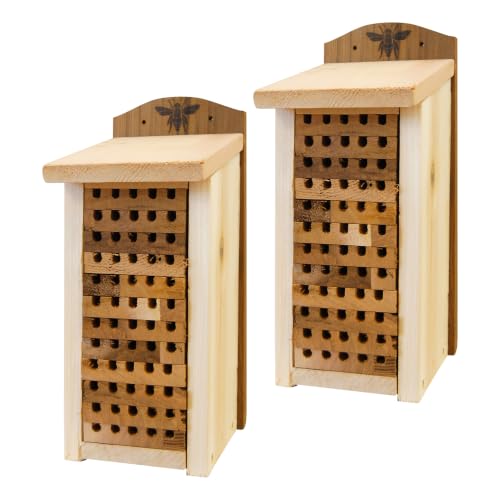 Woodlink Heavy Duty Cedar Mason Bee House9.5/10View on Amazon
- 3
 Mason BeeView on Amazon
- 4
 Mason Bee House Wooden Butterfly House with Feeders and MetalView on Amazon
- 5
 Wooden Insect Hotel for GardenView on Amazon
- 6
 Mason Bee House with Feeding TraysView on Amazon
- 7
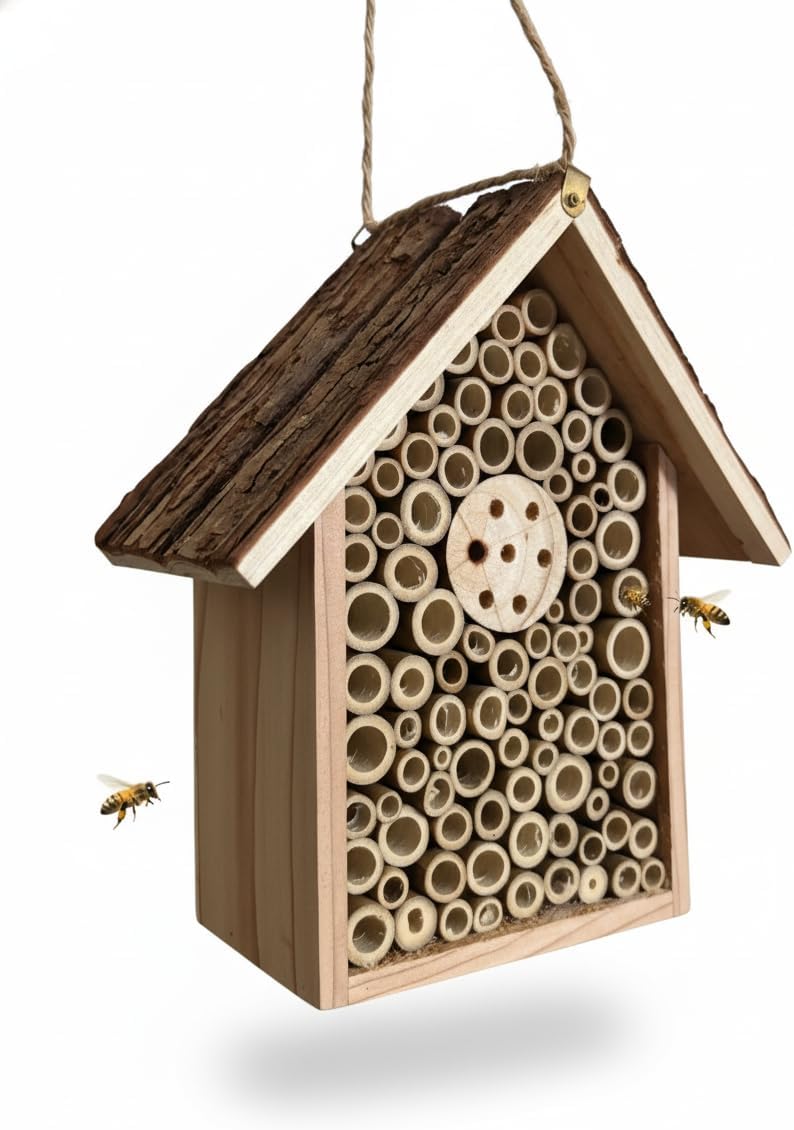 Redwood Mason Bee HouseView on Amazon
- 8
 Mason Bee HouseView on Amazon
The wood vs plastic mason bee house question comes down to what a listing actually states about tubes, shelter and care, because a house that looks right in a photo can still leave bees with tubes that are too short, too wide or exposed to rain. This guide answers that question from the wood houses in the listings, ranked by how much each listing states, and sets out the checks to run on any plastic house, since no plastic house is featured in the listings compared here. The wood side is the only side with stated evidence in these listings, because every featured house states a wood or bamboo build, while two of the three state tube detail.
Other hives and gear to compare
 Mason BeeCheck price on Amazon
 Mason Bee House Wooden Butterfly House with Feeders and MetalCheck price on Amazon
 Wooden Insect Hotel for GardenCheck price on Amazon
 Mason Bee House with Feeding TraysCheck price on Amazon
 Redwood Mason Bee HouseCheck price on Amazon
 Mason Bee HouseCheck price on Amazon
HiveKeeperGear earns a commission when you buy through links on this page, at no extra cost to you. As an Amazon Associate I earn from qualifying purchases. Affiliate disclosure.
Wood vs plastic at a glance
| Material | Tubes | Placement | Care |
|---|---|---|---|
| Wood and bamboo, in the listings | Stated tube length and diameter on the detailed listings | Varies by listing: covered, sheltered, or sun-exposed spot | Only the care detail each listing states |
| Plastic, not featured here | Not stated in these listings | Not stated in these listings | Not stated in these listings |
That table is the honest shape of this comparison: the wood side has stated facts, and the plastic side has no featured listing here, so this guide turns each wood fact into a check for a plastic listing.
The wood houses in the listings, ranked
KAWAHAYO mason bee house with butterfly house and feeders
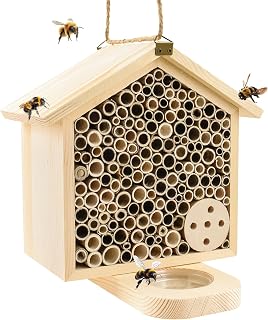
The KAWAHAYO listing states the most complete set of facts in this group, so it ranks first. It also includes a butterfly house with openable doors on one side, 2 feeding trays for water, nectar or fruit, and 2 installation options: wall mounting or ground staking with an adjustable stake. The listing states that the house is not suitable for long-term placement in environments exposed to sun and rain, and that it should be installed in a covered area protected from exposure to sunlight and rain. The title describes the house as waterproof, but the bullets win here: treat covered placement as the rule. Who it is for: a gardener who wants a wood house with stated tube sizes, a stake option and feeding trays in one listing. Who should skip it: anyone who cannot give it a covered spot, since the listing rules out long-term sun and rain exposure.
Cestari bamboo tube bee house in FSC certified wood
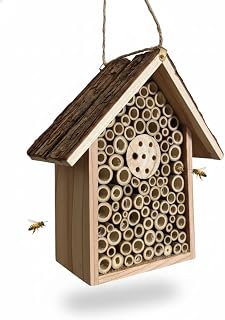
The Cestari listing ranks second, with strong tube detail and a stated wood source. The listing states that the house is hand crafted from FSC certified wood, with bamboo tubes, and that the approximately 75 tubes are all over 4 inches long, with varying diameters to attract different species. It states that the house is designed specifically for 140 species, including mason bees and orchard bees, and that mason bees visit 1000 plants a day, as the maker claims. The listing also states that the house is designed to last 1 to 2 seasons. Note the two dimension lines differ: the spec table gives item dimensions of 4 inches deep by 4 inches wide by 4 inches high, while the package dimensions are 8.31 by 7.72 by 5.28 inches with a weight of 2.12 pounds, so the item line is the figure for the house itself. Who it is for: a gardener who wants many stated tubes, a stated wood source and clear placement height. Who should skip it: anyone who wants a house stated to last beyond 1 to 2 seasons, since that is the stated design life here.
Made Easy Kit mason bee house
The Made Easy Kit listing ranks third, because it states the fewest checkable details. The listing states that the house is designed for gardens and greenhouses, that it can endure intense heat and heavy downpour outdoors, and that mounting is simple: hang the house in an elevated spot where the sun can hit it. No tube count, tube length or tube diameter is stated in this listing, so tube fit cannot be compared from this listing alone, and no warranty term is stated either. Who it is for: a gardener who wants a compact bamboo house with a stated size for a garden or greenhouse spot. Who should skip it: anyone who needs stated tube sizes before buying, since this listing does not state them.
How to choose the best wood vs plastic mason bee house
Start with tube size, not the outside shape
Tube size decides whether mason bees can nest at all, so it comes before colour or shape. The KAWAHAYO listing states bamboo tubes 100mm long with a 6 to 10mm inner diameter, and the Cestari listing states approximately 75 tubes over 4 inches long with varying diameters. The Made Easy Kit listing states no tube size, which is itself a finding: a listing with no tube size gives no way to compare fit. For any plastic house, ask for the same two figures, tube length and inner diameter, in the listing itself. If a plastic listing states neither, it cannot be compared on the point that matters most.
Check shelter before checking material
Shelter matters for both materials, and the wood listings prove the point in opposite directions. The Cestari listing asks for a sheltered area near a garden, about 4 ft off the ground, with an overlapping roof, while the KAWAHAYO listing asks for a covered area protected from sunlight and rain, even though its title uses a waterproof description. The Made Easy Kit listing, by contrast, states that its bamboo house can endure heavy downpour outdoors. Those three shelter notes do not agree, which is why shelter must be read listing by listing rather than assumed from the material name. For a plastic house, look for a stated shelter note in the same way: a roof, a covered placement note, or a stated exposure limit.
Weigh size, weight and mounting together
Size, weight and mounting decide where a house can actually live. The KAWAHAYO house at 10.24 by 8.66 by 7.87 inches and 4.7 pounds offers wall mounting or ground staking, the Cestari house lists package dimensions of 8.31 by 7.72 by 5.28 inches at 2.12 pounds for hanging on a post, tree, fence or wall, and the Made Easy Kit house at 5.5 by 5.5 by 10 inches and 2.62 pounds is for hanging in an elevated spot. Measure the post, wall or lawn spot before ordering, and check that the mounting option in the listing matches that spot.
Plan care around the stated design life
Care is where wood and plastic claims usually diverge, so keep the check to what a listing states. The Cestari listing states a design life of 1 to 2 seasons, which sets a clear replacement horizon. The KAWAHAYO listing states bamboo tubes, feeding trays and a butterfly section, plus a covered placement rule, which together mean checking tubes, trays and cover. The Made Easy Kit listing states no care or replacement detail beyond hanging the house. For a plastic house, the parallel checks are whether tubes can be replaced or cleaned, whether the listing states a care step, and whether any part is stated as replaceable. If none of that is stated, the care case for that house is unstated, not proven.
FAQs for beekeepers
Is wood or plastic better for a mason bee house?
On the listings compared here, wood is the only side with stated evidence, because all three featured houses state wood or bamboo builds, and two of them state tube detail, while no plastic house is featured. A plastic house could still suit a garden, but only if its listing states tube length, inner diameter and shelter guidance to match the wood detail here.
What tube size should a mason bee house state?
Look for both figures in the listing. The KAWAHAYO listing states 100mm tube length with a 6 to 10mm inner diameter, and the Cestari listing states tubes over 4 inches long with varying diameters. A listing that states neither figure cannot be compared on tube fit.
Where should a mason bee house be placed?
Follow the listing for the house you buy. The Cestari listing states about 4 ft off the ground in a sheltered area near a garden, and the KAWAHAYO listing states a covered area protected from sunlight and rain. The Made Easy Kit listing states an elevated spot where the sun can hit the hive.
How long does a wood mason bee house last?
It depends on the listing. The Cestari listing states a design life of 1 to 2 seasons. The other two listings state no design life, so no longer figure can be claimed for them from the data here.
Does a mason bee house need feeding trays?
Not necessarily, but the KAWAHAYO listing includes 2 feeding trays for water, nectar or fruit, which the other two listings do not state. If feeding trays matter for your garden, that listing is the only one here that states them.
More hive guides
Browse every guide by category: beehives, protective gear, hive tools and honey harvesting. Also see our best mason bee house for fruit trees guide.