Mason Bee House Problems and How to Fix Them
Empty tubes, damp nests, wrong tube sizes and houses that cannot be cleaned: the common mason bee house problems, what to check, and the fix for each.

On this page
Top picks at a glance
As an Amazon Associate I earn from qualifying purchases.
- 1
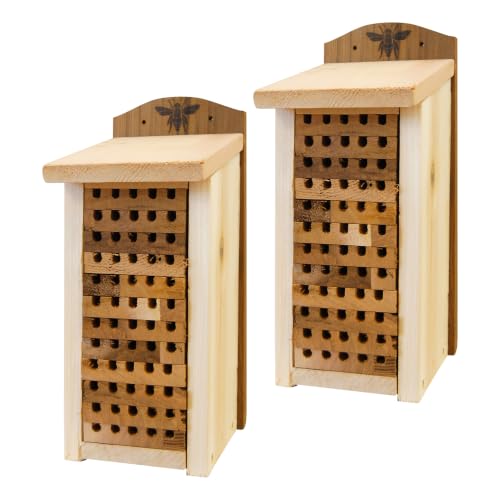 Woodlink Heavy Duty Cedar Mason Bee House9.5/10View on Amazon
- 2
 bambeco 12 in. Mason Tower Bee House9.4/10View on Amazon
- 3
 Execabe Heart-Shaped Mason Bee House9.4/10View on Amazon
Spring is the season a mason bee house shows whether it works. The house went up last fall or in early spring, full of hope, and now the tubes sit empty, or damp, or sealed with mud and nothing emerges. Mason bee house problems usually come down to a few causes: the house is in the wrong spot, the tubes are the wrong size or cannot be cleaned, or water gets in. This guide works through each problem, what to check, and the fix, using the houses in the listings as examples.
HiveKeeperGear earns a commission when you buy through links on this site, at no extra cost to you. As an Amazon Associate I earn from qualifying purchases. Affiliate disclosure.
Mason Bee House Problems: The Quick Checks
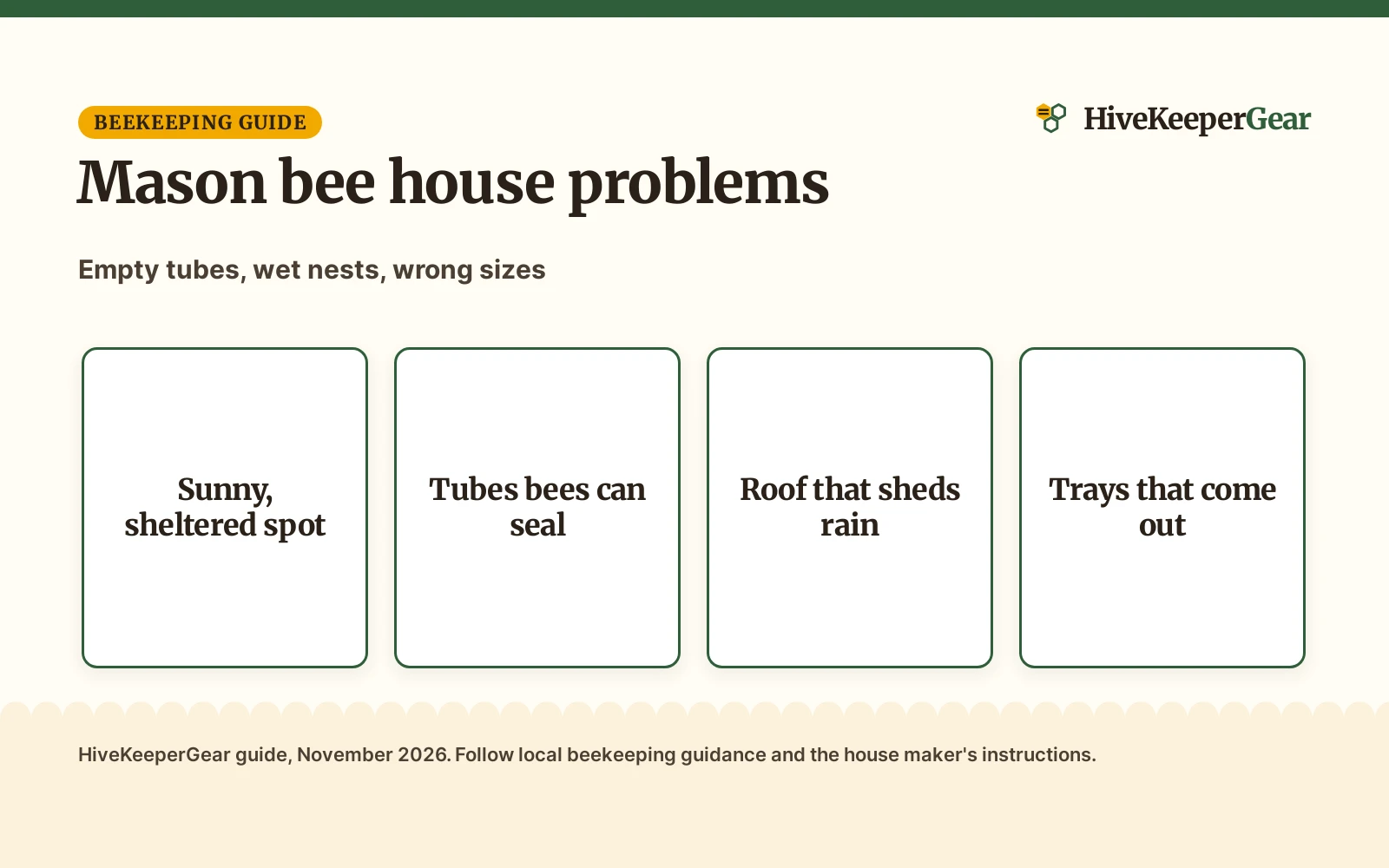
Start here. Most houses fail for a reason in the table, and the fix is usually a move, a cleaning, or a different house, not a new garden.
| Problem | What to check | Fix |
|---|---|---|
| No bees move in | Sun, shelter, flowers nearby | Move the house to a sunny, sheltered spot near flowers |
| Tubes stay wet | Roof overhang and hanging angle | Hang where rain runs off, under cover |
| Wrong tube size | Tube diameters in the house | Choose a house with varied tube diameters |
| Cannot be cleaned | Removable trays or replaceable tubes | Pick trays that come out |
| House will not stay put | Mounting: rope, hook, stake or screws | Hang from a sturdy branch or post, or mount on a wall |
1. No bees move in
Placement shapes whether bees find the house. The GardeningProducts4Less listing says to hang the house from a sturdy tree branch or a post in a sunny, sheltered spot. A house in deep shade or far from flowers is less likely to fill than a house on a sunny wall near flowers. Flowers matter as much as sun: the Dmnnlp listing suggests standing the house among flowers, and bees nest near the flowers they visit. See the guide to where to put a bee house for the full placement picture.
Size plays a part too. The smallest house in the listings, the GZQCI at 2.9 x 2.9 x 5.0 in, is far smaller than the Panacea Large at 7.75 x 6.0 x 14.0 in, which holds twelve grooved trays. A small house is fine to start with, but a house with more nesting room offers more nesting space. If the house has stayed empty for a full season, move it before buying a bigger one.
2. Tubes stay wet
Wet tubes are a common cause of a dead season. Rain runs into tubes that sit under a drip line, and damp nesting material rots. The Panacea houses use an extended overhanging roof that directs rain away from the nesting tunnels, and the Dmnnlp house (on Amazon) is coated with a clear, waterproof varnish. The NASIDE house (on Amazon) is coated with beeswax for water resistance, and the JZDF house (on Amazon) uses paint on the roof to increase the waterproof effect. The fix is part placement and part house: hang the house where the roof keeps rain off the tubes, tilt it slightly so water runs off the front, and pick a house with a real roof overhang rather than a flat top.
3. The tubes are the wrong size
Mason bees seal each tube with mud, and a tube that is too wide or too narrow may be passed over. The Dmnnlp house holds a bundle of natural tubes with varied diameters from 0.15 to 0.6 in, so different bee species can choose the size that suits them. The NASIDE house uses bamboo tubes 3.5 in long and 6×6 in in size, and the GUBEARE house (on Amazon) uses bamboo tubes of different diameters. A house with a mix of diameters gives different species a size to choose from. For the tube materials, see reed vs bamboo mason bee tubes.
4. The house cannot be cleaned
A mason bee house needs cleaning at the end of the season, and a house that cannot be opened cannot be cleaned. The Panacea Large holds twelve grooved trays that come out for cleaning, and the Panacea Small holds six removable trays. The BalterFF house (on Amazon) has a detachable wooden nesting frame that simplifies cleaning, and the Dmnnlp house comes with 3 cleaning brushes. The JZDF listing says to clean the hive in the fall and winter and reuse it again next year. The fix is to clean out old nesting material in fall and winter, and to pick a house with trays that come out.
5. The house will not stay put
A house that swings in the wind or falls to the ground is less likely to fill, and a fall can crack the tubes. The GardeningProducts4Less house hangs by an attached rope, and the NASIDE house comes with a rope for tree hanging and a metal wall buckle for wall mounting. The Dmnnlp house stands on a 32 in metal stake among flowers, or hangs from a tree or wall with a top hook. The Panacea houses mount to posts or walls through predrilled holes, and the GUBEARE house comes with screws for mounting. Hang the house from a sturdy branch or post, or mount it on a wall, and check the rope, hook, or screws at the start of each season.
What to look for in a mason bee house
A good house is easy to sum up: solid wood, a roof that sheds rain, tubes in varied diameters, and a way to clean it. Pine and cedar are the woods in the listings: the GZQCI, JZDF, and GUBEARE houses are pine, and the Panacea houses are cedar. Sizes run from the GZQCI at 2.9 x 2.9 x 5.0 in to the Panacea Large at 7.75 x 6.0 x 14.0 in. Check the listing for a warranty term too: the JZDF house states a 2 Year Manufacturer warranty, and the GardeningProducts4Less house states a 30 day warranty. The GUBEARE listing states different sizes for the same house, 8.4 x 8.26 x 4.56 in in its bullets and 7.24 x 8.2 x 8.4 in in its spec table, so measure the house on arrival.
FAQs for beekeepers
Why are there no bees in my mason bee house?
Placement is the first thing to check. Hang the house in a sunny, sheltered spot near flowers, from a sturdy branch or post.
What size tubes do mason bees need?
The listings give a range, not a set size: the Dmnnlp tubes run 0.15 to 0.6 in across. The NASIDE bamboo tubes are 3.5 in long. A house with varied diameters lets bees choose.
How do I clean a mason bee house?
Clean it in the fall and winter, when the season is over. Houses with removable trays, like the Panacea houses with twelve and six trays, come apart for cleaning, and the Dmnnlp house comes with 3 cleaning brushes.
Where should I hang a mason bee house?
In a sunny, sheltered spot, hung from a sturdy branch or a post, or mounted on a wall. The Dmnnlp house also stands on a 32 in stake among flowers. Keep it out of driving rain and where you can reach it for cleaning.
Can a mason bee house get wet?
Yes, and wet tubes are a common problem. Look for an overhanging roof, like the Panacea houses, or a waterproof coating, like the varnish on the Dmnnlp house or the beeswax on the NASIDE house. Hang the house where rain runs off the front.
How big should a mason bee house be?
Big enough to hold the tubes the garden needs. The listings run from the GZQCI at 2.9 x 2.9 x 5.0 in to the Panacea Large at 7.75 x 6.0 x 14.0 in, with twelve grooved trays.
More hive guides
Browse every beehives guide, and see how to attract mason bees, where to put a bee house, small vs large mason bee house, what is a mason bee and mason bee house DIY.