Mason Bee House DIY: Build a Nesting Home for Solitary Bees
A mason bee house diy build turns hollow tubes and a wooden box into a nesting place for solitary bees, with steps for the build, placement and care.

On this page
Top picks at a glance
As an Amazon Associate I earn from qualifying purchases.
- 1
 Leinuosen 3 Pcs Mason Bee House with DIY Painting KitsView on Amazon
- 2
 2PCS-3D Honeycomb Pillar Candle Silicone Mold DIY EmbossedView on Amazon
In spring, when fruit trees open and the garden wakes, a mason bee house diy project gives solitary bees a place to nest close to the flowers they visit. Mason bees do not live in a hive and do not store honey for harvest; each female finds a narrow tube, lays eggs inside, and seals the end with mud. A house built from hollow tubes inside a simple wooden shelter copies the hollow stems and old beetle holes these bees use in the wild. This guide walks through the materials, the build, where to place the house, and how to care for it through the seasons.
Other hives and gear to compare
 Leinuosen 3 Pcs Mason Bee House with DIY Painting KitsCheck price on Amazon
 2PCS-3D Honeycomb Pillar Candle Silicone Mold DIY EmbossedCheck price on Amazon
HiveKeeperGear earns a commission when you buy through links on this site, at no extra cost to you. As an Amazon Associate I earn from qualifying purchases. Affiliate disclosure.
What a mason bee house is
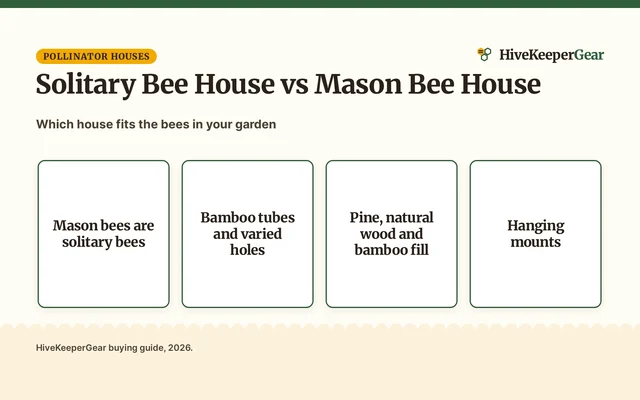
Mason bees are solitary pollinators. Unlike honey bees, they do not form a colony, keep a queen, or build comb, and they do not make honey for people to harvest. A female mason bee works alone, visiting flowers for pollen and nectar, then carrying pollen back to a tube where she lays eggs in a row, with a wall of mud between each egg. A mason bee house is a shelter that holds a set of hollow tubes closed at the back, so the bees can nest in a dry place that stays still through wind and rain. The house does not need paint, stain, or a latch; it needs dry tubes, a solid back, a roof that sheds rain, and a spot that holds still.
A house near a garden, orchard, or flower bed puts the nest close to food, and the bees repay the spot with steady visits to the bloom around it. The house suits a keeper who wants pollinators in the garden without keeping a hive, and it suits a gardener who wants help with fruit and flowers. A bee hotel vs mason bee tubes guide explains how a mason bee house differs from a general bee hotel, and the small vs large mason bee house guide compares house sizes for a garden of any shape.
The mason bee house diy, step by step
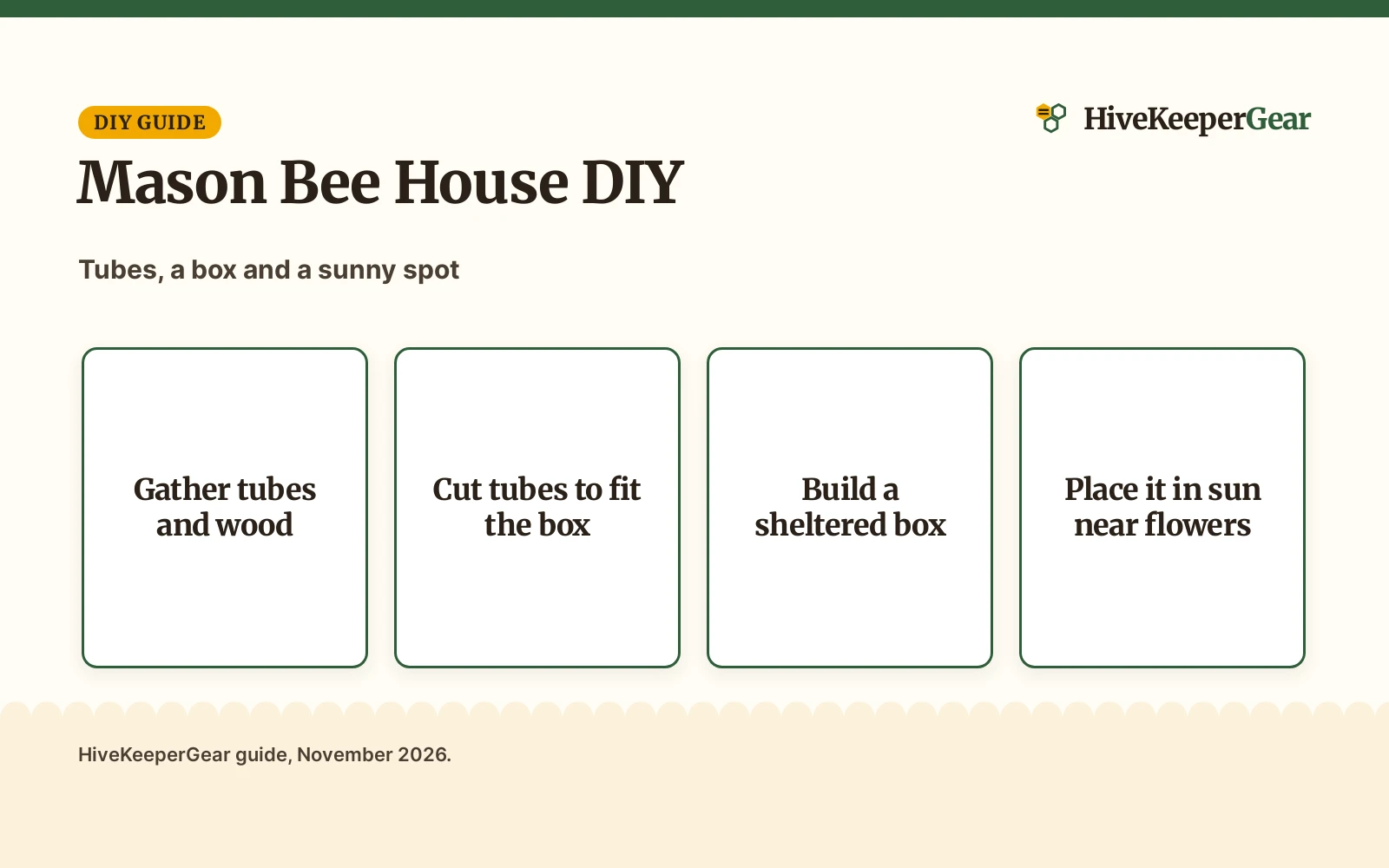
Start with the parts below, then follow the steps in order. Untreated wood suits the house, since paint and stain can leave a smell that puts bees off, and smooth plastic tubes can hold damp where paper and reed breathe. The tubes guide compares reed and bamboo for nesting, and the mason bee tubes picks list tubes that suit raised beds and garden houses.
| Part | Material | Notes |
|---|---|---|
| Tubes | Hollow reeds or paper tubes | Closed at the back, open at the front |
| Box | Untreated wood | Deep enough to hold the tubes with a small lip at the front |
| Roof | Wood offcut or a flat board | Slopes forward so rain runs off |
| Back | Wood board | Seals the rear of the box |
| Fixing | Screws or a sturdy hook | Holds the house still on a wall or post |
- Cut the tubes to match the depth of the box, and trim any ragged ends so the opening stays clear.
- Close the back of each tube with mud, a wood plug, or a fold of paper, so the bee can build from the back toward the front.
- Pack the tubes into the box with the open ends facing out, snug enough that they do not shift when the house moves.
- Fit the back board and the roof, and check that rain runs off the front rather than into the tubes.
- Hang the house where it stays still, with the open tubes facing the morning sun and shelter from wind and rain.
Pack the tubes tight so they do not rattle, and leave the front faces flush with the lip of the box so the bees can find each opening. A loose tube can slide out in a storm, and a tube that sits too far back leaves a ledge where rain can pool. The mason bee cocoons vs mason bee tubes guide explains the difference between starting with cocoons and starting with empty tubes.
Where to place the house
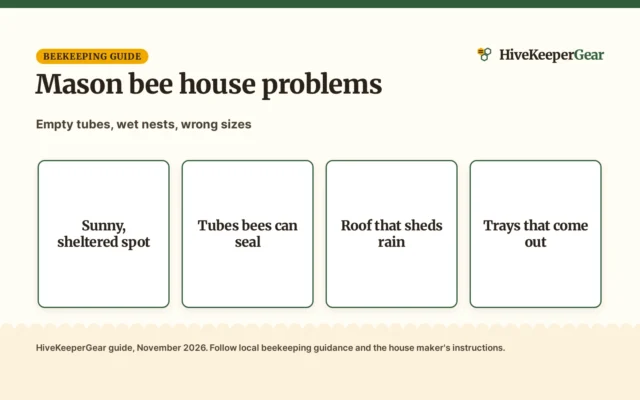
Place the house where it catches morning sun and stays dry, with flowers nearby and a patch of bare mud within easy flight for the bees to seal their tubes. A wall, fence, or sturdy post that does not sway suits the house, and a spot under an overhang or a deep eave helps keep rain out of the tubes. Face the open tubes toward the sun and away from the wind that brings rain, and keep the house clear of branches that brush the front and knock the tubes loose. A garden with flowers through the season gives the bees food from spring into fall, and a pollinator seed mix can fill gaps where bloom is thin. The pollinator seed mix vs flower bulbs guide compares seed mixes and bulbs for planting near the house.
Avoid a spot that faces driving rain or sits low where water pools after a storm. A house that stays dry lasts longer, and dry tubes keep the mud caps firm through the season. If the garden has no bare mud, a shallow dish of damp soil near the house gives the bees what they need to seal their tubes.
Care through the seasons
At the end of the season, take the tubes out and look for mud caps on the open ends, which show that bees nested inside. Set the mud-capped tubes aside in a dry place over winter, since the bees inside emerge in spring; replace only tubes that are damaged, damp, or empty and clogged with old mud, and keep fresh tubes ready for the next spring. Store spare tubes in a dry place, and keep the box dry over winter so the wood stays sound. A house left damp can grow mold on the tubes, so a dry roof and a dry spot matter as much as the build. When the next spring comes, put the house back out as flowers open, with the mud-capped tubes and fresh tubes in place.
Old tubes can hold damp and debris, so do not leave them in place season after season. A clean set of tubes each spring gives the new bees a fresh start, and a quick look at the box each year shows whether the roof still sheds rain and the back still seals tight.
Mistakes to avoid
- Treated wood or fresh paint near the tubes, which can leave a smell that keeps bees away.
- Tubes open at the rear, which give the bees no back wall to build against.
- A house that swings or shakes, which can spill the tubes and disturb the nest.
- A spot that faces driving rain, which wets the tubes and the mud caps.
- Old tubes left in place season after season, which can hold damp and debris.
FAQs for beekeepers
Do mason bees make honey?
No. Mason bees are solitary pollinators that do not build hives or store honey for harvest. They visit flowers for pollen and nectar, and they raise their young in tubes they seal with mud.
What tubes work in a mason bee house?
Hollow reeds and paper tubes suit the house, and the reed vs bamboo mason bee tubes guide compares reed and bamboo for nesting. The tubes need a closed back and an open front, and they should stay dry inside the box.
How do I tell if bees moved in?
Look for mud caps on the open ends of the tubes, which show that a female sealed eggs inside. You may also see bees coming and going on warm days while flowers are open.
When should I put the house out?
Put the house out in spring as flowers open, so it is ready when mason bees start looking for nest sites. A house put out late may sit empty until the next season.
Can I move the house after bees moved in?
Leave the house where it is while bees are nesting, since moving it can disturb the tubes and the bees inside. Wait until the season ends, then move the house and fit fresh tubes.
More hive guides
Browse every guide by category: beehives, protective gear, hive tools and honey harvesting.