Best Hive Entrance Reducer: 4 Wooden and Plastic Guards Compared
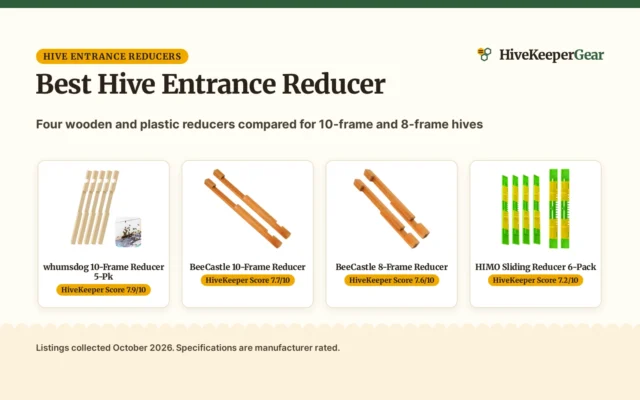
Four hive entrance reducers compared by dimensions, notch openings, cedar and plastic materials, and colony protection for 10-frame and 8-frame beehives.



Four hive entrance reducers compared by dimensions, notch openings, cedar and plastic materials, and colony protection for 10-frame and 8-frame beehives.
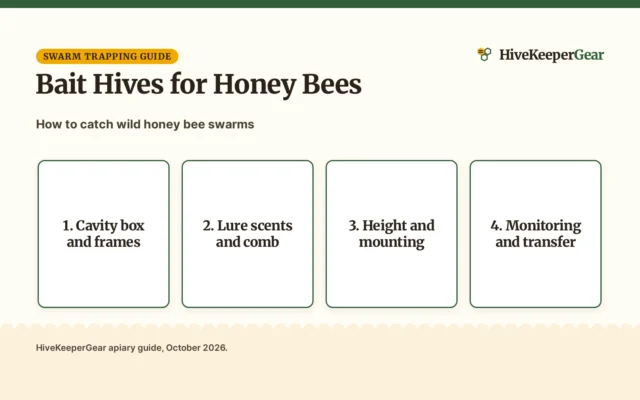
How to set up bait hives for honey bees: choosing cavity boxes, baiting with comb, selecting elevated locations, protecting entrances, and hiving captured swarms.
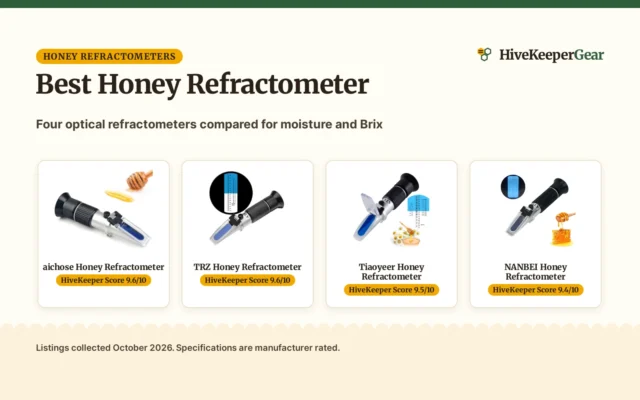
Four honey refractometers compared by moisture range, Brix scale resolution, calibration method, metal build, and automatic temperature compensation for apiary harvesting.
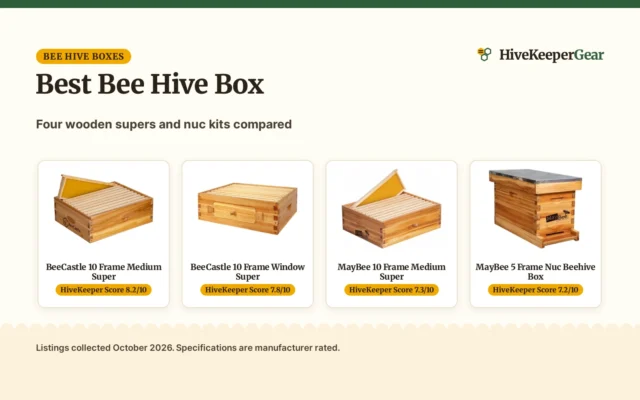
Four bee hive boxes compared by cedar and fir lumber, beeswax waterproofing, dovetail joinery, observation windows, and included frame assemblies.
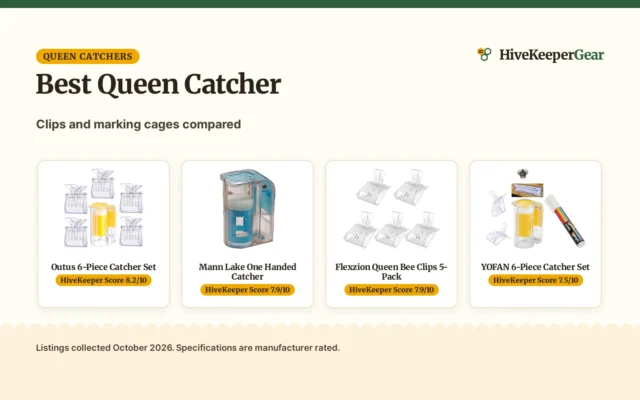
Five queen catchers compared by one-handed handling, worker escape slots, spring tension, and marking safety, from transparent hairclip cages to plunger bottles.
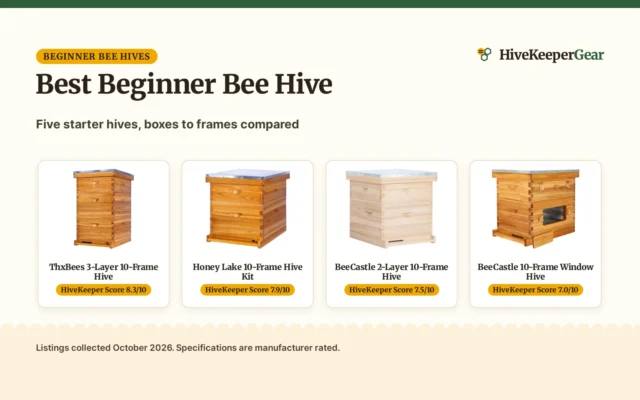
Five beginner bee hives compared by box capacity, cedar and fir wood construction, dovetail joints, frame counts, and food-grade foundations.
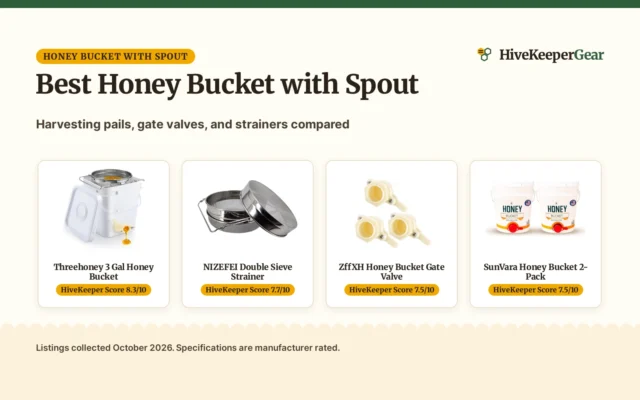
Five honey harvesting buckets, gate valves, and strainers compared by volume, food-grade materials, seal reliability, and pouring control for backyard beekeepers.
Five bee hive frame and plastic foundation options compared by frame depth, foundation wax coating, wood construction, assembly state, and hive box fit.
Five beekeeping suits compared by ventilated mesh layers, fabric materials, veil designs, gloves, and sizing, from youth cotton suits to multi-layer ventilated gear.
Nitrile gloves allow bees to sting through thin material, but heavy thickness, proper sizing, and gentle hive handling significantly reduce stings and propolis buildup.